REVIEW · AKAROA
Akaroa: Akaroa Marine Reserve Sea Kayaking Tour
Book on GetYourGuide →Operated by Akaroa Guided Kayak Safari · Bookable on GetYourGuide
Dolphins can be a few paddle strokes away. This Akaroa Marine Reserve sea kayaking tour pairs big scenery with real wildlife odds, especially around the sea-flooded extinct volcanic crater. I like the combination of guided exploration and the sense that you’re gliding through a living coastal ecosystem. One possible drawback: the paddling can feel tiring, and if wind picks up you may get some choppy water on the way back.
You’re also not stuck with a huge crowd. You ride with a guide and a max group size of 8, which makes it easier to get help, ask questions, and feel safe as you learn the kayak.
In This Review
- Key points that make this tour worth your time
- From Christchurch to Akaroa Harbour: why this start point matters
- Sea-flooded extinct volcanic crater paddling: what makes the route special
- Akaroa Marine Reserve wildlife odds: dolphins, penguins, seals, and birds
- Your guide and small-group setup: getting confidence fast
- The 150 minutes on the water: pacing, effort, and where you’ll likely spend your time
- What to pack for Akaroa: wind, sun, and the basics that keep you comfortable
- Price and value: does $80 make sense for a 2.5-hour guided kayak safari?
- Who should book this tour (and who should think twice)
- Should you book the Akaroa Marine Reserve Sea Kayaking Tour?
- FAQ
- FAQ
- How long is the sea kayaking tour in Akaroa?
- How much does the tour cost?
- Where do I meet for the tour?
- Is the tour guided?
- What’s included with the price?
- What languages are the guides available in?
- What should I bring?
- Are bags or luggage allowed?
- Is this tour suitable if I’m not an expert kayaker?
Key points that make this tour worth your time
- Small-group feel (up to 8 people) with one guide watching the whole group
- Sea-flooded extinct volcanic crater route with caves and other paddling features
- Hector dolphins and other wildlife chances that guides actively look for
- Stable, comfortable sea kayaks plus full instruction and a safety briefing
- Photos included, so you can focus on the water and not your phone
From Christchurch to Akaroa Harbour: why this start point matters
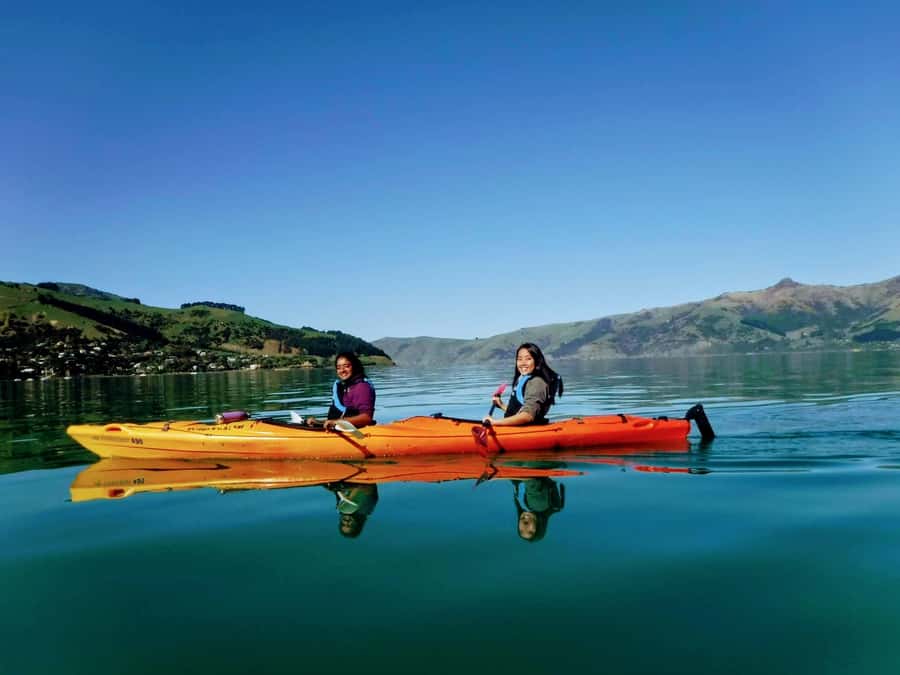
Akaroa sits close enough to Christchurch that a sea-kayak day doesn’t feel like a full-on expedition. The tour is designed for that easy rhythm: you get out on the water for about 150 minutes and come back while there’s still time for dinner or a relaxed wander in town.
The meeting spot is simple too: opposite the bowling club in Akaroa, at the picnic benches on the grass. That matters because in small towns, the difference between a smooth start and a stressful one is often just whether you know exactly where to go.
What really makes this area work is how “local” it feels. You’re on a marine reserve environment that guides treat as something you move through carefully, not something you blast through for the photo.
You can also read our reviews of more tours and experiences in Akaroa.
Sea-flooded extinct volcanic crater paddling: what makes the route special
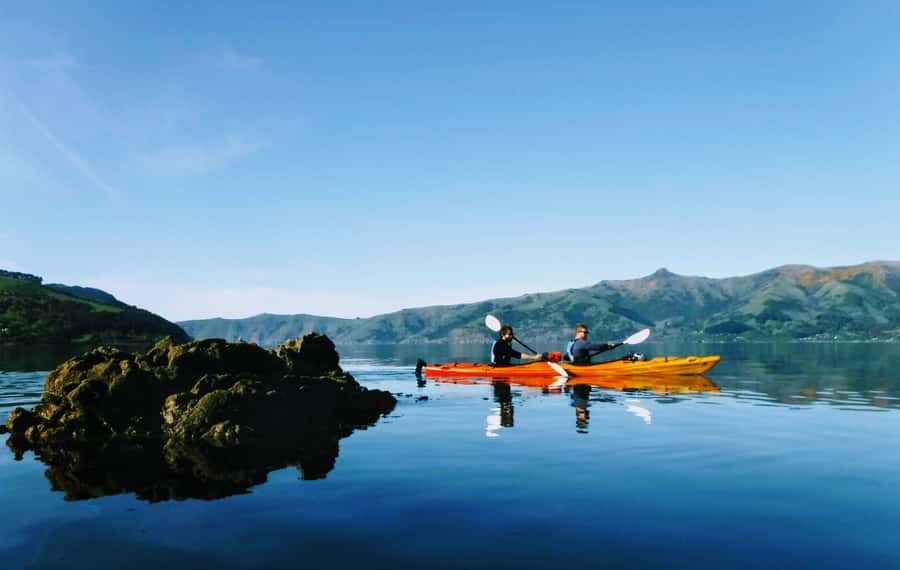
The core of this experience is the chance to paddle through a turquoise, sea-flooded volcanic crater. Even if you know nothing about geology, the effect is obvious once you’re out there: the water and coastline shape your route in a way that feels natural, not random.
You’ll also be navigating serene inlets and bays as you move around the harbour and into the marine reserve zone. In practical terms, that means you’re not just doing one long straight paddle. You’re constantly changing angles, scanning ahead, and adjusting your stroke as the shoreline and rock features pull you along.
Then there are the caves and paddling features. Guides bring you to spots where you can actually experience them from the water level, not just stare at them from a lookout. If you love “small moments” like entering a sheltered pocket and hearing the water change texture, this kind of route keeps delivering.
Akaroa Marine Reserve wildlife odds: dolphins, penguins, seals, and birds
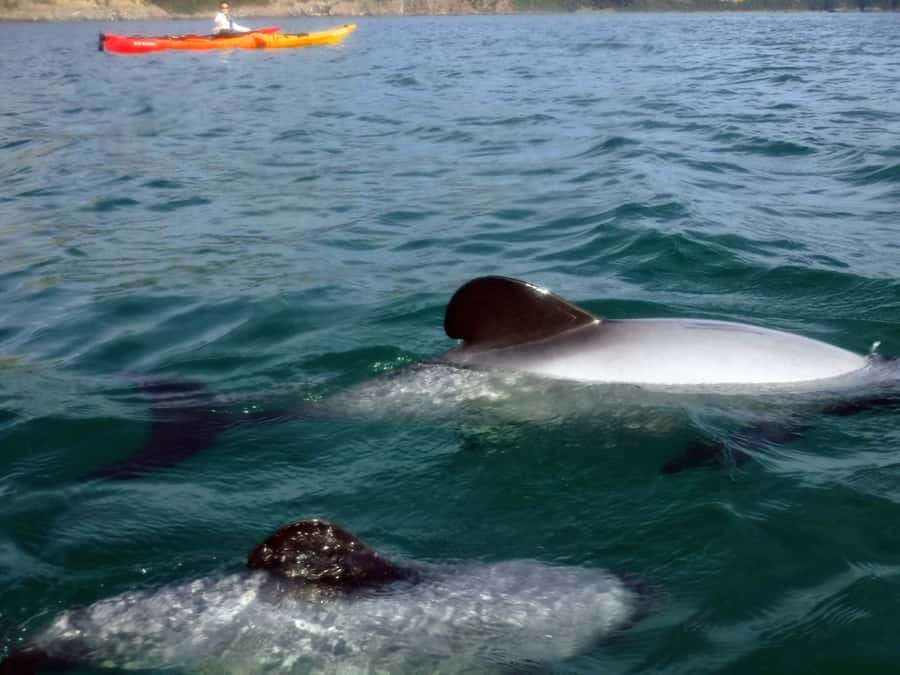
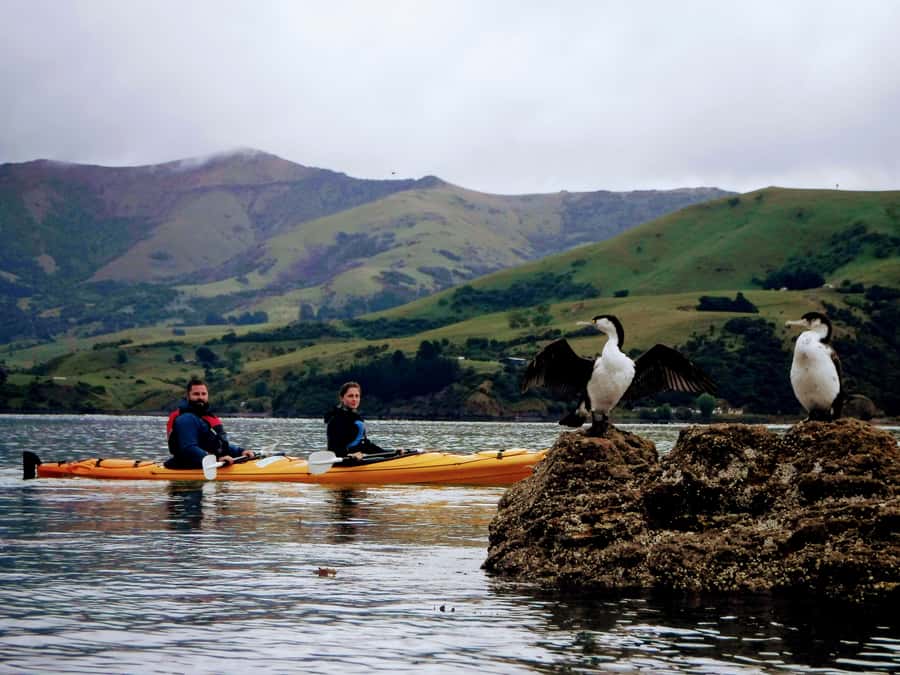
This tour is built around wildlife chances in a place where marine animals are part of daily reality. The guide shares info on rare marine mammals, and you’re explicitly set up to watch for Hector dolphins and white-flippered penguins, plus fur seals and lots of birdlife.
The big word to understand here is chance. You’re not guaranteed every species every day. But you are paddling in the kind of environment where sightings can be frequent during kayaking season, which is exactly what you want when you’re paying for time on the water.
A few review-style moments hint at what that “chance” can look like. People have reported natural seals and penguins, and one standout dolphin day included Hector dolphins swimming around the kayaks for ages, with a dolphin even popping up between kayaks. That’s the best-case scenario, but the key takeaway for you is this: your guide is paying attention and positioning the group for opportunities, not just letting you wander.
Equally important, the operator emphasizes minimum impact in the fragile reserve. That doesn’t just sound good on paper. It usually means slower, quieter approach and careful handling of distance—exactly what wildlife responds to.
Your guide and small-group setup: getting confidence fast
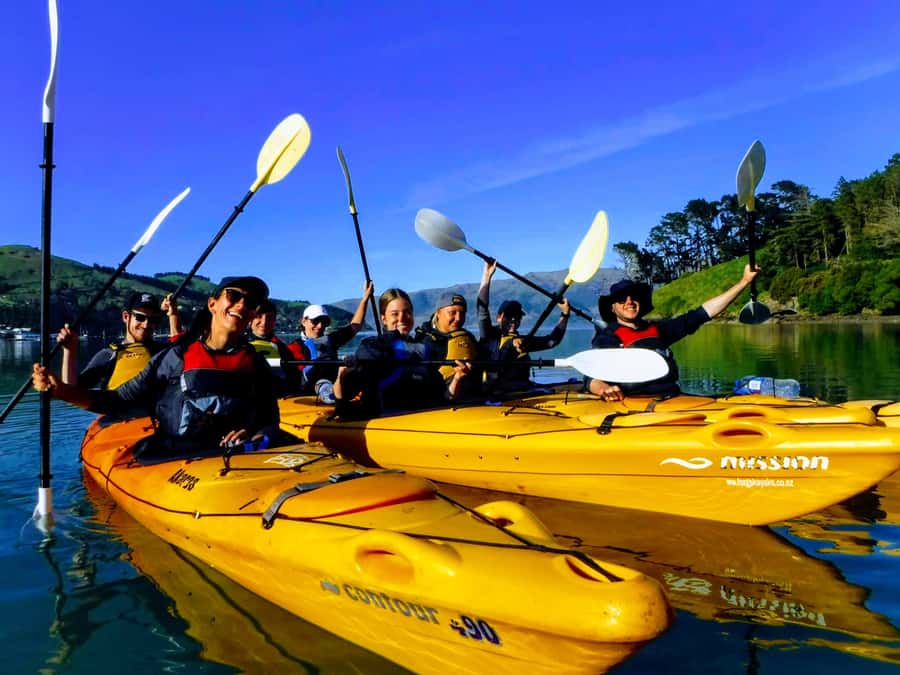
A lot of sea-kayak tours live or die by the guide. Here, you get one guide for a maximum of 8 people, and the tour includes full instruction plus a safety briefing. That combination is what turns a maybe-tiring activity into something you can actually enjoy instead of fear-checking every wobble.
You’ll likely be in a double kayak setup (some groups in the feedback specifically noted double kayaks). If you’d strongly prefer a single kayak, it’s worth noting that preference up front so the operator can advise what’s available for your group.
The reviews also show a pattern: guides focus on making you comfortable with the kayak and the group rhythm. Names that come up include Alex, Luan, Max, Adam, William, Lucia, Thomas, Jack, Jake, and John. Across those experiences, people praised guides for clear instructions at the start, friendly encouragement, and good timing once they were out on the water.
One detail I’d take seriously: you’re not just a passenger. Some people mention feeling instantly at ease even if they were nervous. That usually comes from step-by-step setup help—adjusting to the kayak, explaining how to hold your paddle, and then keeping a close eye while you paddle.
And yes, photos are included. That’s a practical perk. It means your hands stay on the paddle and you don’t have to choose between wildlife or capturing it.
The 150 minutes on the water: pacing, effort, and where you’ll likely spend your time
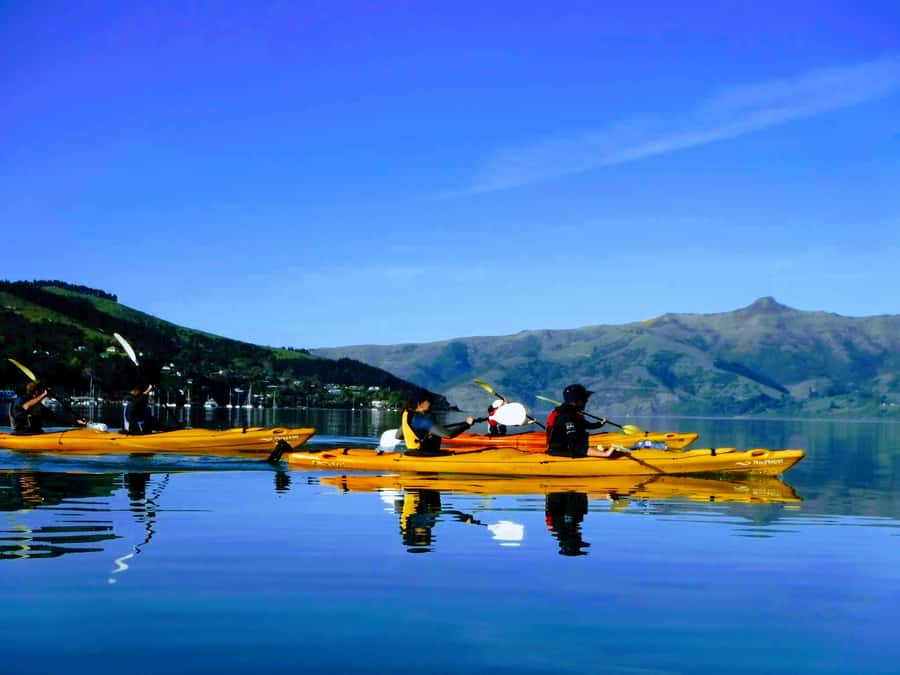
The entire tour runs for 150 minutes, which is long enough to feel like you’re doing more than a quick spin, but short enough to keep the experience fun rather than exhausting.
Here’s how it typically feels in the real world of sea kayaking:
- Start and safety briefing: you learn the basics, get gear set up, and get the rules for how the group moves.
- Paddle into the crater and sheltered bays: you work on steady strokes while the scenery keeps changing.
- Marine reserve exploring: this is where your guide starts scanning for animals and points out features.
- Caves and paddling features: you slow down where the water and rocks demand it.
- Return while conditions can shift: wind and waves can change the ride back.
That last part is the one to plan for. People mentioned wind picking up on the return route and bringing extra waves. It’s normal. Coastal kayaking is weather-dependent, and your guide’s job is to keep everyone safe while still giving you a great experience.
Also, expect some effort. One review called it a bit tiring. Another encouraged people to bring some arm strength and lots of sunscreen. That doesn’t mean it’s extreme fitness. It means you’ll be paddling enough that you’ll feel it in your arms and shoulders—especially if you aren’t used to it.

What to pack for Akaroa: wind, sun, and the basics that keep you comfortable
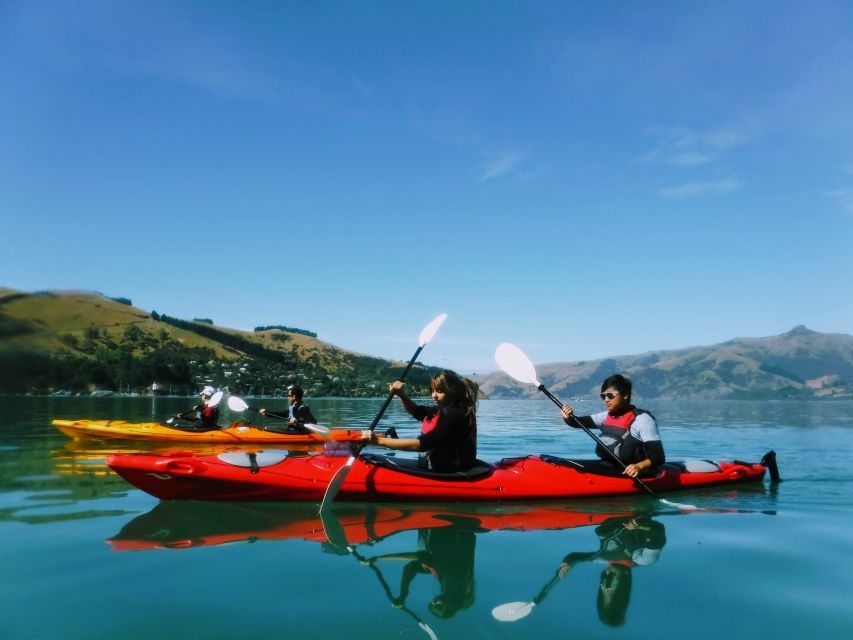
The tour tells you what matters most: windbreaker, sun hat, and water. It also asks you to bring drinking water in a reusable bottle, plus sunscreen and a light wind/rain jacket.
Here’s my practical take: in Akaroa, you can get sun and wind in the same hour. That’s why layering works better than bringing one heavy item. A windbreaker helps when the breeze hits your face and your kayak rhythm slows down near caves or wildlife.
Sunscreen is not optional. You’re out on open water, and you’re likely moving but not shielding yourself like you would on a long hike.
Water matters because the tour is exercise plus ocean air. Even if you don’t feel thirsty right away, it’s smart to sip during the outing.
And keep your bag situation simple. You’re not allowed luggage or large bags. Bring what you need, keep it lightweight, and you’ll avoid a last-minute scramble when you’re preparing to launch.
Price and value: does $80 make sense for a 2.5-hour guided kayak safari?
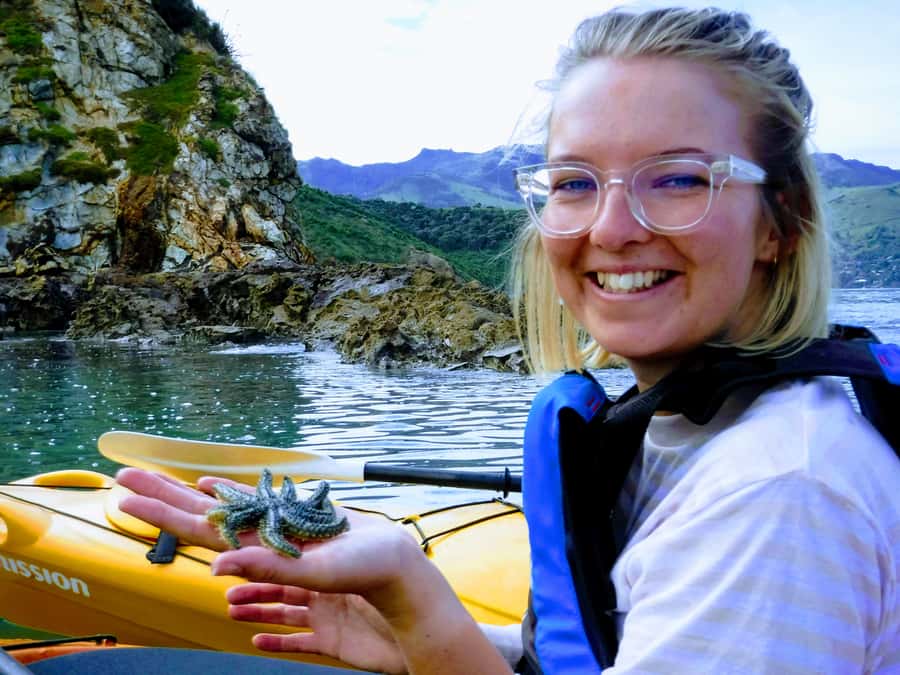
At $80 per person for about 150 minutes, the best way to judge value is what you’re actually getting for that price: a sea kayak, kayaking gear, full instruction, and a safety briefing, plus a guide for a maximum of 8 people and photos included.
You’re also paying for something you can’t fake: a guide who knows where to look and how to keep you safe around a reserve environment. The wildlife element is a big part of the reason people book this. But even if you had an off wildlife day, you’d still be paying for the combination of volcanic crater scenery, caves, and the chance to paddle Akaroa’s harbour from the water.
What you should understand in advance is that this is guided time outdoors, not a guided lecture. You’ll be doing real paddling. If you want zero exertion, you might feel frustrated. If you like gentle-to-moderate movement and don’t mind some effort, this price feels pretty reasonable for a small-group outing.
Who should book this tour (and who should think twice)
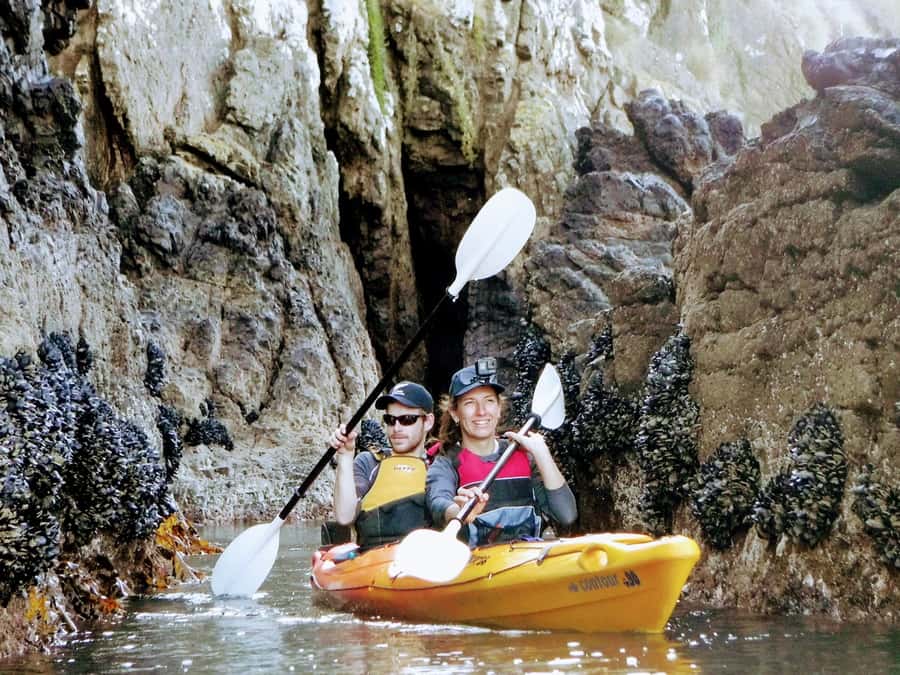
This is a good fit if you want:
- Wildlife watching from very close range (especially Hector dolphins and other marine life)
- A small group where your guide can actually help you as you paddle
- Scenery based on geology and coastline features like caves and crater water
- A mix of fresh air and a real workout without needing technical kayaking skills
It also sounds like it works across ability levels. The tour states it’s suitable for all abilities, and reviews back up that guides focus on confidence-building. Families have done it too, including a group that highlighted how supportive the guides were for a nervous parent.
Think twice if:
- You dislike any paddling effort. Expect arm work, and if you’re sensitive to fatigue, plan for it.
- You get uncomfortable in wind or choppy water. Some feedback mentioned wind and waves on the return.
- You strongly prefer solo kayaks, since some groups are set up with double kayaks.
Should you book the Akaroa Marine Reserve Sea Kayaking Tour?
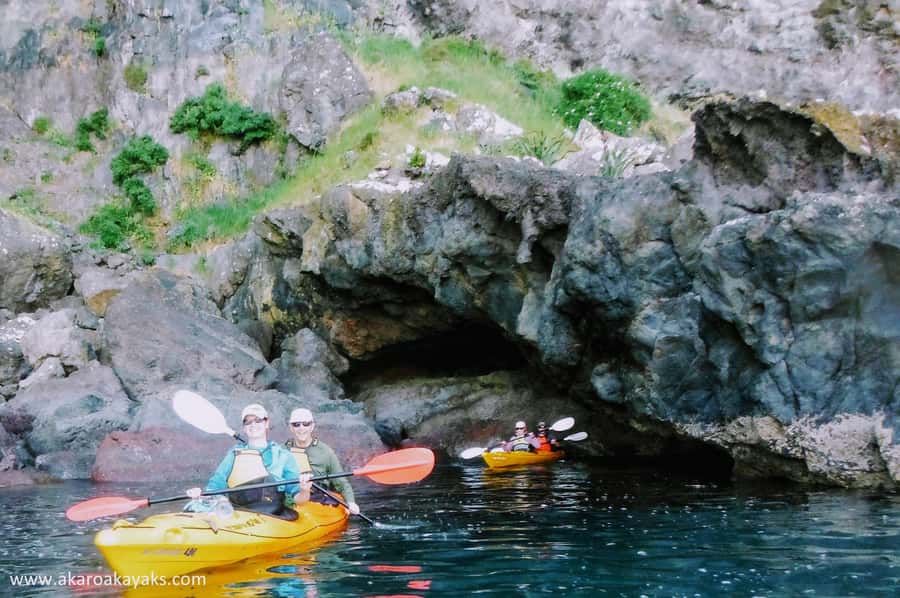
If you’re the type of traveler who likes wildlife chances, loves geological scenery you can actually paddle through, and wants a guide-led small-group experience, I think you’ll enjoy this. The combination of crater route, caves, and the focus on Hector dolphins and other marine mammals is exactly what makes Akaroa stand out as a kayaking place.
Book it if you can handle moderate effort and you’re happy to dress for wind and sun. Skip it if you’re chasing a fully effortless activity or you know wind and waves are a hard no for you.
FAQ
FAQ
How long is the sea kayaking tour in Akaroa?
The tour duration is 150 minutes, or about 2.5 hours.
How much does the tour cost?
It costs $80 per person.
Where do I meet for the tour?
Meet opposite the bowling club in Akaroa, at the picnic benches on the grass.
Is the tour guided?
Yes. You’ll have a live tour guide, and there is one guide for a maximum of 8 persons.
What’s included with the price?
The tour includes a safe, stable, and comfortable sea kayak, all kayaking gear, full instruction and information, a safety briefing, and photos.
What languages are the guides available in?
Guides are available in English, Spanish, and French.
What should I bring?
Bring a windbreaker, a sun hat, and water. You should also bring drinking water in a reusable bottle, plus sunscreen and a light wind/rain jacket.
Are bags or luggage allowed?
No. Luggage or large bags are not allowed.
Is this tour suitable if I’m not an expert kayaker?
The tour is stated to be suitable for all abilities, and the instruction and safety briefing are part of how they help you get comfortable.