REVIEW · CANTERBURY NEW ZEALAND
Akaroa: Guided Sunrise Sea Kayaking Tour
Book on GetYourGuide →Operated by Akaroa Guided Kayak Safari · Bookable on GetYourGuide
Morning on the water feels like cheating time. This Akaroa sunrise kayak tour puts you in the marine reserve early, with a local nature guide who stops often to point out wildlife and local facts while you paddle through quiet turquoise water. I love being first on the water, which means you often get the harbour to yourself before other boats start, and I love the maximum water time because there’s no long transfer to a launch point. One thing to consider: early starts can be cold, and if the guide is turned away while explaining, you may catch less if you’re not positioned well.
You’ll still be glad you came. I’ve found that the best value comes from doing this while the bay is calm and the light is low, but wildlife sightings aren’t guaranteed every single morning. If you’re hoping for Hector dolphins on the nose, I’d treat it as a strong possibility, not a certainty—though when it clicks, it’s the kind of New Zealand moment you remember for years.
In This Review
- Key highlights that matter on the water
- Why Akaroa’s guided sunrise kayaking feels special
- Meeting at Akaroa Bowling Club and the pre-paddle setup
- The 3-hour route: how the morning pacing works
- Being in the harbour before the crowds (and why it helps wildlife)
- Wildlife encounters you can actually plan for
- Your guide’s style: what to watch for and how to get the most out of it
- What the kayak experience is like (comfort, technique, and safety)
- Price and value: is $92 fair for 3 hours?
- Who should book this Akaroa sunrise kayak safari
- Should you book Akaroa’s guided sunrise sea kayaking tour?
- FAQ
- How long is the Akaroa guided sunrise sea kayaking tour?
- What is included in the price of $92 per person?
- Where do I meet for the tour?
- What should I bring for the sunrise paddle?
- Are jeans allowed on the tour?
- What wildlife might I see during the tour?
- What if the weather affects the meeting point?
Key highlights that matter on the water
- You’re usually the first boat out: calmer paddling and less crowd noise in the harbour.
- Your nature guide leads the route: short information stops that keep you oriented and safe.
- A marine reserve focus: small, careful touring around conservation areas.
- Wildlife encounters are a real target: including Hector dolphins, penguins, seals, and seabirds.
- More paddling, less logistics: minimal time wasted before you’re moving.
Why Akaroa’s guided sunrise kayaking feels special
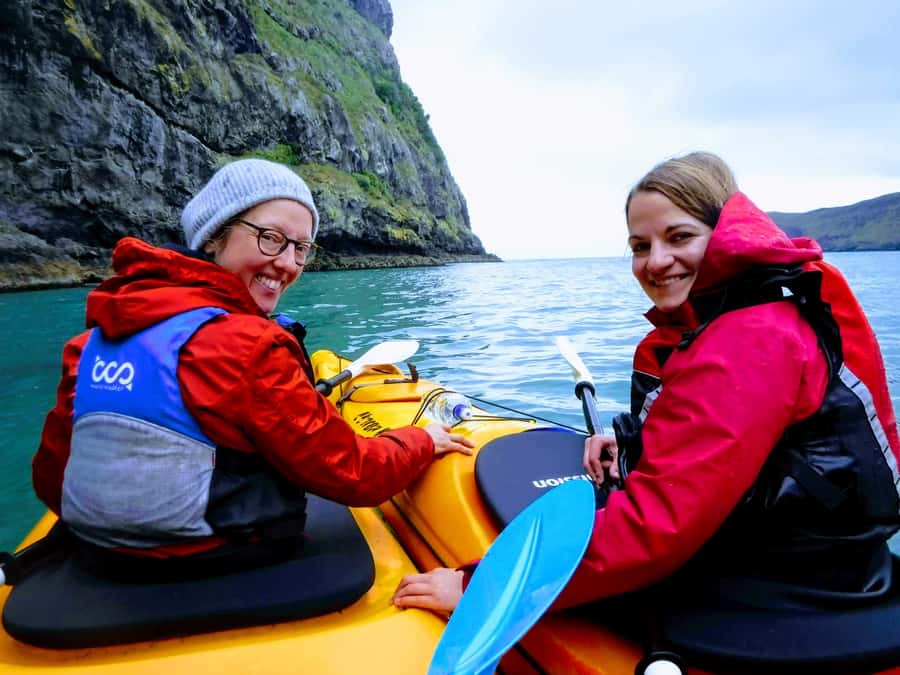
Akaroa is small, coastal, and scenic in a way that’s hard to fake. Doing it at sunrise with a sea kayak changes the whole mood. The water is often calmer, the light is flattering, and you get that rare feeling of being out on the bay before it wakes up properly.
The biggest reason this tour works is that it’s built around timing and conservation-minded guiding. You aren’t just paying for a paddle—you’re paying for the right window of the day plus a guide who knows where to look and how to keep you from crowding the wildlife.
I also like that the tour leans into “small and intimate.” You’re not herded. And because the guide runs the experience from start to finish, you can relax and focus on technique, spotting animals, and enjoying the scenery.
Meeting at Akaroa Bowling Club and the pre-paddle setup
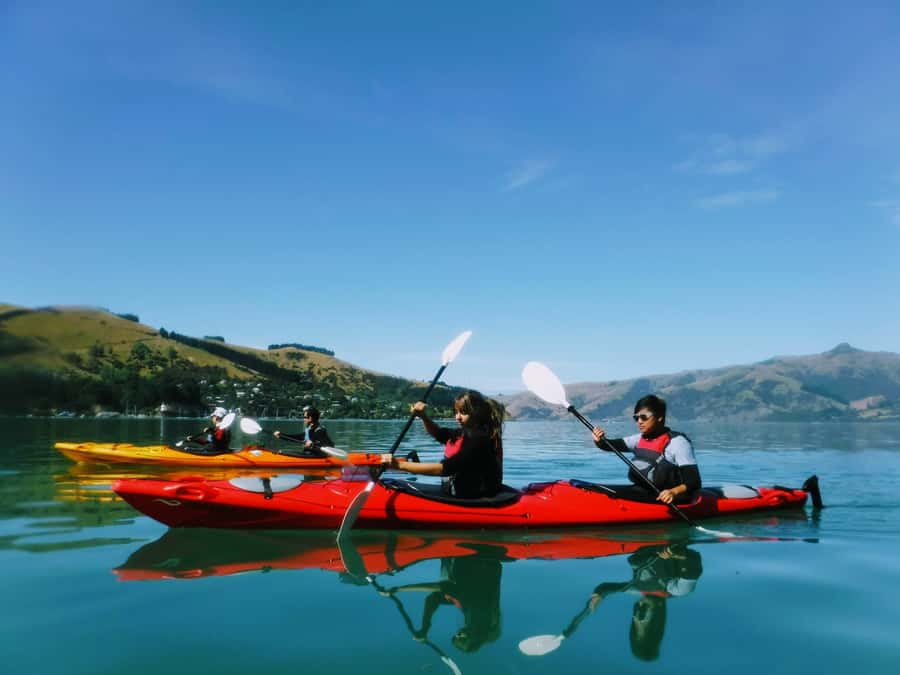
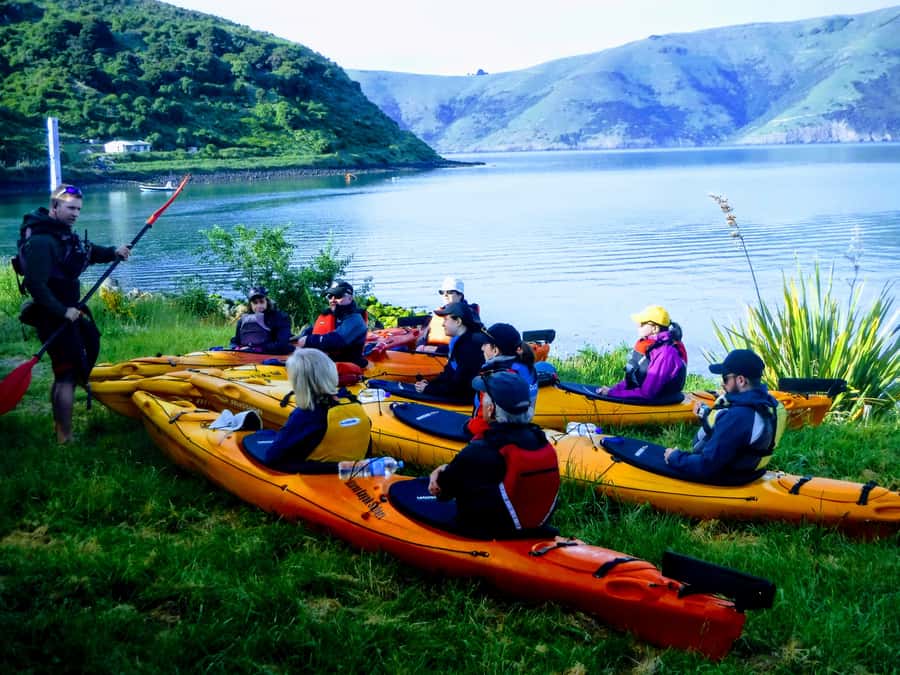
You meet outside the Akaroa Bowling club, waiting by the picnic tables. Put the Bowling club into Google maps and plan to be there a few minutes early so you’re not rushing when the group forms.
Then comes the practical part that makes the morning run smoothly: you’ll get a comprehensive safety briefing before you start paddling. That matters on a sea kayak tour because your time on the water is limited to a 3-hour window, so you want confidence quickly—where to look, how to handle your kayak, and how the guide expects you to move as a group.
One small but important note: the meeting location can change depending on wind direction. The operator tells you to check messages the day beforehand, so I’d treat that as non-negotiable. In coastal conditions, wind can shift where the best start point is.
The 3-hour route: how the morning pacing works
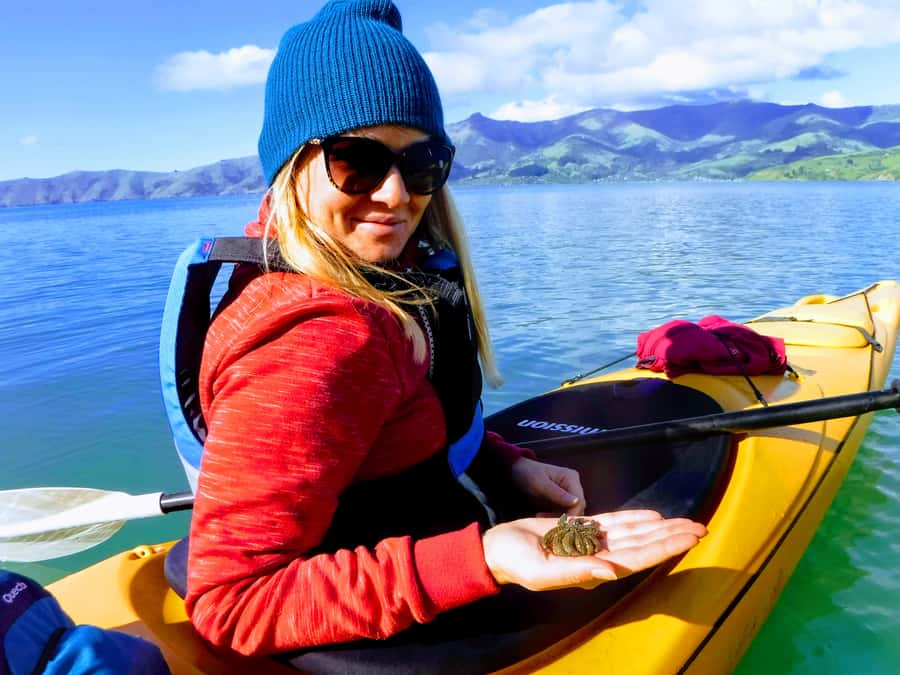
The tour is 3 hours long, with the pace designed for maximum time actually paddling. You also avoid the kind of wasted time that happens when everyone has to travel to a launch ramp.
A typical flow looks like this:
- Safety briefing on shore
- Guided paddle into the marine reserve
- Short stops on the water for wildlife and nature information
- Return to finish while other tour boats are only just getting going
That last part is a big deal. When you’re first out, you can watch without the constant churn of multiple groups arriving at once. It also makes the pauses feel more natural—you’re not juggling sound and attention while other kayaks and boats pull up around you.
Your guide isn’t just narrating. They lead you so you stay together, you don’t drift into trouble, and you get those moments where a bird, seal, or dolphin shows up right as you’re paying attention.
Being in the harbour before the crowds (and why it helps wildlife)
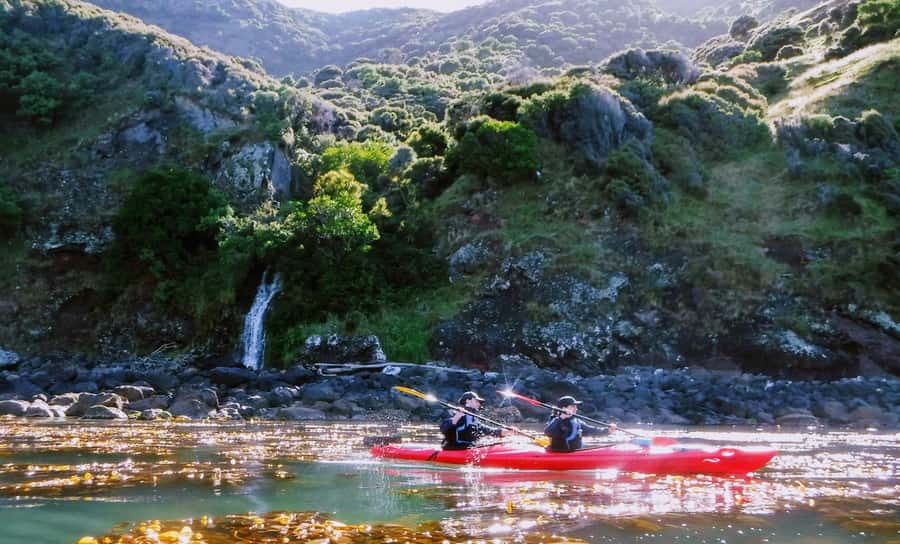
This is one of those details that sounds like a “nice-to-have” until you’re standing there at dawn. If you’re usually the first operators on the water, you reduce disturbance during a critical wildlife window. You also get better chances to see behaviour, not just movement.
In real terms, that means:
- quieter paddling before other boats start
- less interruption at the exact time animals may be feeding or resting
- fewer distractions during your guide’s explanation stops
Some wildlife mornings can be slow anyway. You can have a perfectly calm day but still not see much, especially if conditions aren’t lining up for animals to surface where you’re looking. On those mornings, I’d still expect an enjoyable trip because the guiding focuses on more than just a single species.
And when it’s not slow—when Hector dolphins appear—the difference between a calm, early start and a later arrival is huge.
Wildlife encounters you can actually plan for
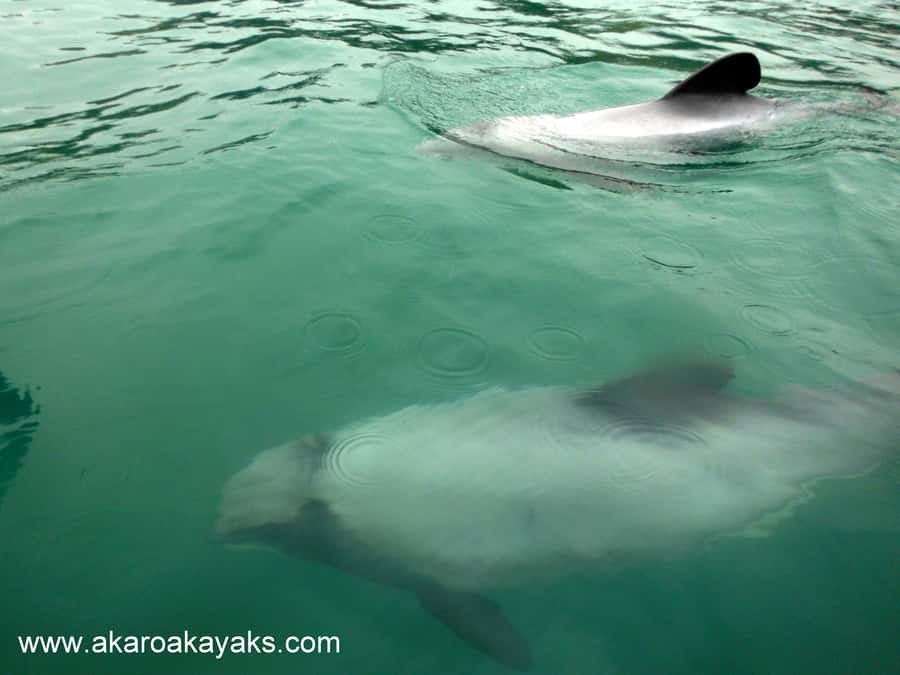
This tour’s wildlife target list is one of the reasons it’s popular. The operator highlights the chance to see Hector dolphins, penguins, and other marine birds, with common sightings including fur seals and seabirds.
Here’s what this looks like in practice, based on what your guide will likely point out during the paddling:
- Hector dolphins: The standout. The tour specifically notes regular magical encounters with this protected dolphin species, which is found only in New Zealand. Not every morning will deliver them, but your odds are being treated as a primary goal, not an afterthought.
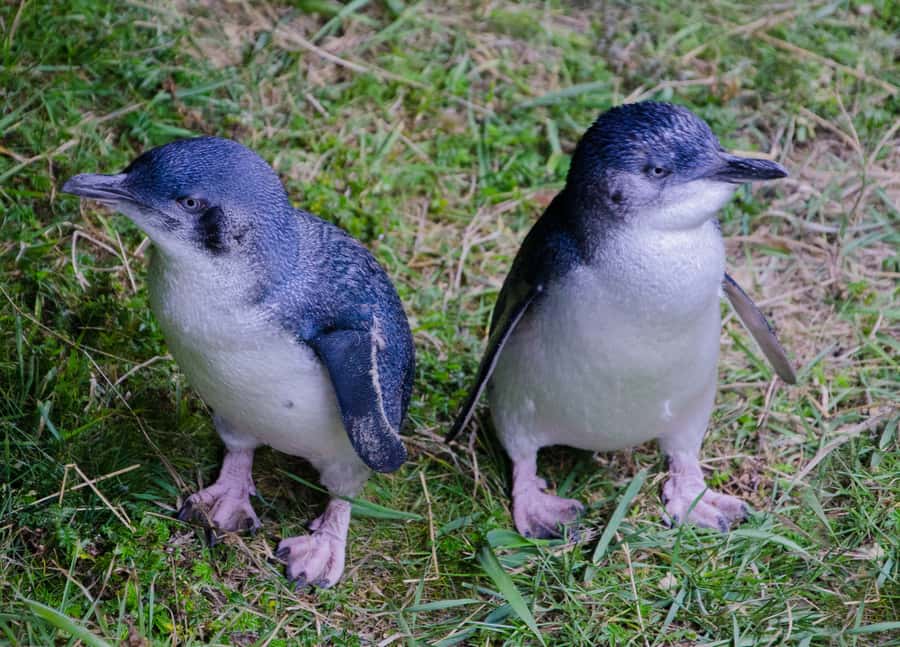
- Penguins: You may spot white-flippered penguins preening as they go about their day.
- NZ fur seals: You could see seals swimming and sunbathing on rocks.
- Seabirds: You’ll likely notice cormorants and other birds moving around the water, plus the occasional dramatic underwater moment when birds shoot beneath the surface.
Even if dolphins don’t show up, you’re not stuck with a “nothing happened” situation. I’d still expect birds, seals, and lots of interesting marine reserve activity. And your guide will use the paddle time to share facts about wildlife, flora, and fauna so the trip feels active rather than empty.
Your guide’s style: what to watch for and how to get the most out of it
The guides on this tour really shape the experience. Names you may meet include Alex, Timi, Peter, John, Shaun, Lee, Seamus, Jake, and Joy (people rotate through depending on dates and availability).
Across guides, the consistent theme is confident, safety-first leadership plus a knack for turning the bay into a living classroom. One guide, for example, gets praised for dynamic storytelling and making people feel comfortable on the water. Another earns high marks for relaxed but serious safety handling.
Here’s a practical tip: if you want to hear the explanations clearly, position yourself so the guide isn’t talking in a direction that blocks your view or your ears. One past experience notes that sometimes the guide explained things while pointed away from the group, which made it harder to hear. You can reduce that by staying near the group center when the guide stops.
Also, if the day is cold, lean into it. Warm layers matter, but once you’re moving, the cold becomes manageable and you’ll still get the same wildlife-spotting window.
What the kayak experience is like (comfort, technique, and safety)
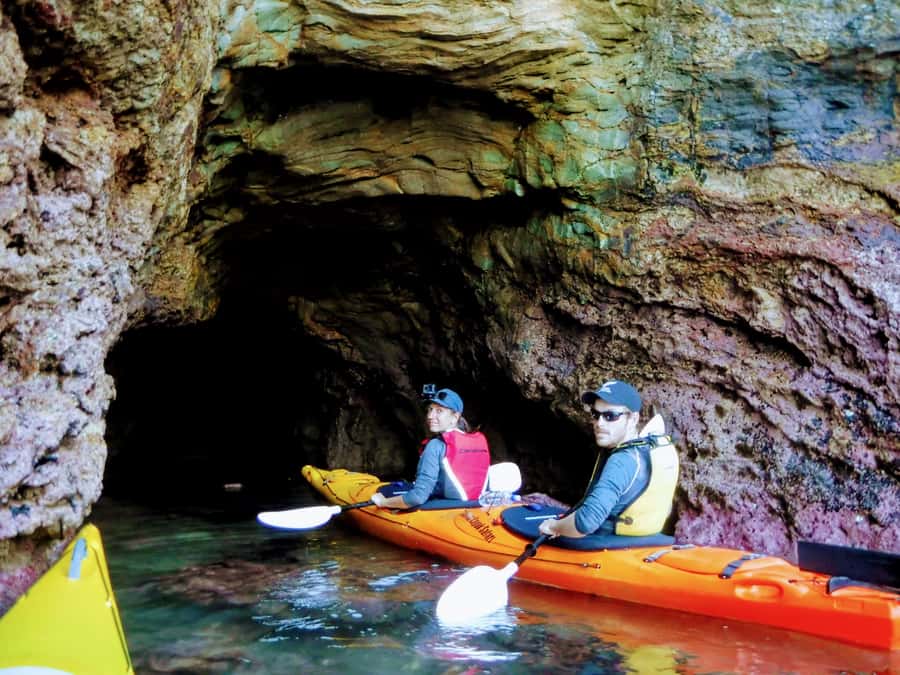
You’ll be in a sea kayak for the full 3-hour experience, and your tour includes your kayak plus the guiding and safety briefing. That means there’s less guesswork for you: you’re not paying and then trying to figure out equipment on the fly.
Comfort-wise, the tour comes with a gentle reality check: you’re out on open water. You’ll want to dress for wind, not just temperature. The operator specifically advises bringing a windbreaker, plus a sun hat if the sun pops through.
As for what not to wear, jeans are not allowed. That’s a practical rule—jeans can stay wet, get heavy, and slow you down if there’s splash or spray. You’ll also want to keep things simple because luggage or large bags aren’t allowed. Plan to bring only the essentials you’ll keep secure during paddling.
If you’re new to kayaking, the short stops with information are helpful because they reset your posture and attention. And because your group is small, your guide can correct spacing or technique without chaos.
Price and value: is $92 fair for 3 hours?
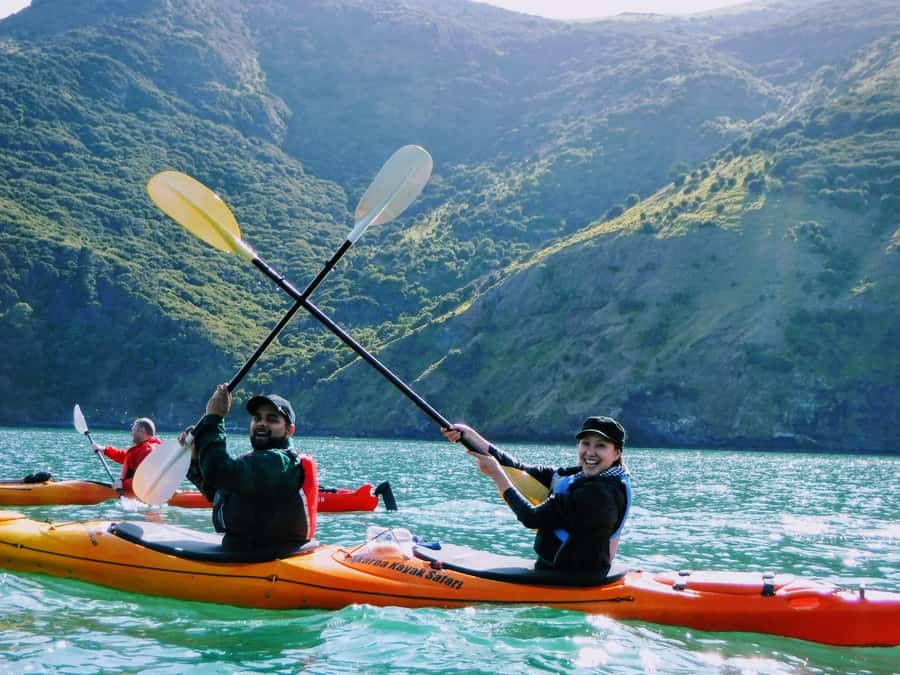
At $92 per person for a 3-hour guided sunrise sea kayak tour, you’re paying for three things at once:
- A guide and safety briefing that gets you on the water confidently
- A kayak provided (so you’re not doing extra rentals)
- The timing advantage of being first out in the marine reserve
I think it’s good value if you care about doing Akaroa in a way that’s time-efficient and wildlife-focused. The “maximum water time” detail matters because it turns the cost into actual experience. If you had to add extra travel to reach a launch point, this would feel like less kayaking and more logistics.
It’s also a tour where the “payoff” can be huge even when it’s just one great moment—like a Hector dolphin encounter. But you should go in with the right expectation: wildlife is wild. Your money buys a strong shot plus smart guiding, not a guarantee of a specific animal on a specific minute.
Who should book this Akaroa sunrise kayak safari
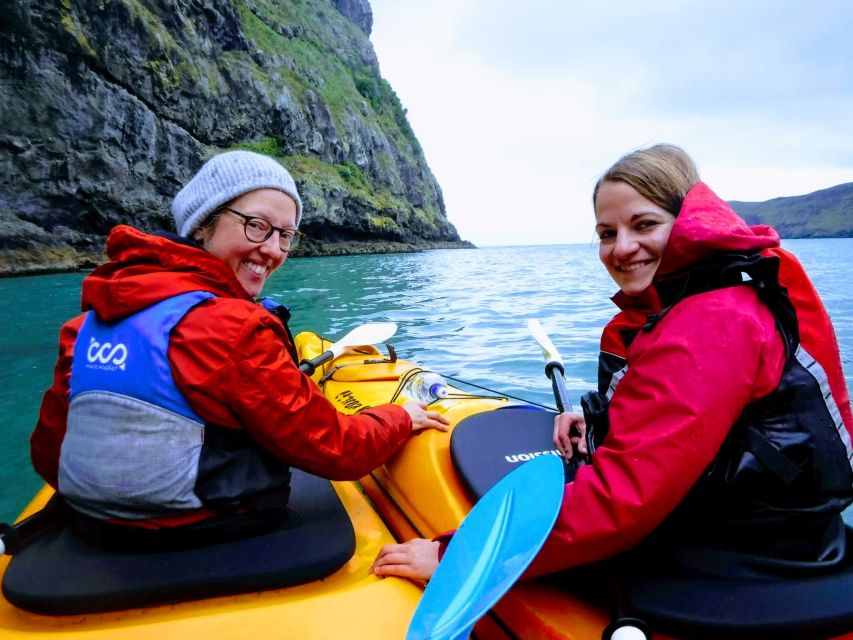
This tour fits best if you:
- want a guided experience (not just renting a kayak and figuring it out alone)
- like wildlife and the idea of being in a marine reserve early
- enjoy mornings and can handle cooler weather at the start
- prefer small-group energy over large-boat crowds
You might reconsider if you:
- hate cold mornings (you can dress for it, but the start is still an early-day reality)
- struggle with hearing when guides talk while turned away
- want guaranteed sightings of a particular species (dolphins are a goal, not a promise)
If you’re visiting Akaroa for a first taste of New Zealand’s marine life and you like active sightseeing, this is a strong choice.
Should you book Akaroa’s guided sunrise sea kayaking tour?
If you’re trying to pick just one “wow” activity in Akaroa, I’d put this high on the list. The combination of early access, small guided pacing, and a guide-led focus on wildlife makes it feel like an experience, not a checkbox.
Book it if you can show up ready for a cold-start morning and you’re excited by the idea of spotting Hector dolphins, penguins, and seals. Skip it if you want guaranteed wildlife or you can’t do mornings at all.
Either way, the key decision is your mindset. Treat this as a careful, conservation-minded nature paddle with a real chance at New Zealand’s iconic marine stars—and you’ll leave thinking it was worth the early wake-up.
FAQ
How long is the Akaroa guided sunrise sea kayaking tour?
The tour runs for 3 hours.
What is included in the price of $92 per person?
Your booking includes a guide, a safety briefing, and a kayak.
Where do I meet for the tour?
Please meet outside the Bowling club and wait by the picnic tables. You can find it using Google maps by searching Akaroa Bowling club.
What should I bring for the sunrise paddle?
Bring a windbreaker, a sun hat, and drinks.
Are jeans allowed on the tour?
No. Jeans are not allowed.
What wildlife might I see during the tour?
The tour offers the chance to see wildlife including Hector dolphins, penguins, NZ fur seals, and seabirds.
What if the weather affects the meeting point?
You should check your messages the day beforehand. The meeting location may change due to wind direction.