North Amsterdam turns quiet fast. This small-group ride-and-paddle combo gets you out of the city and into North Holland’s canals and wetlands, with a simple flow from bicycles to kayaks and back again.
Two things I really like: you get all bike equipment sorted for you, and the route keeps breaking up the day with stops like a 230-year-old windmill and a church break in Watergang. The group size cap also matters here, because you’re not just herded along.
One consideration: you should be ready for real effort. The biking is flat but not tiny (think around 13+ miles), and kayaking takes time on open water and canals—plus you must be able to ride a bike.
In This Review
- Quick hits before you go
- Why this bike-and-kayak plan works so well
- Meeting at Overhoeksplein and finishing at the A’DAM tower
- Krijtmolen d’Admiraal windmill: a 230-year-old stop with character
- Kanaaldijk and the cableferry crossing: the kind of Dutch detail you feel
- Watergang break in a church, then kayaking through wetlands
- Zunderdorp on the way back: old trading village vibes
- Pace and physical effort: what moderate fitness means on this route
- The guide factor: how Tristan keeps groups together
- Stops that make the day feel like a real outing, not just transport
- Kayak comfort and getting in and out (yes, this matters)
- Bike comfort: straps and the little things that prevent hassle
- Weather reality: when good conditions really help
- Value for $83.48: what you’re really paying for
- Who should book, and who should think twice
- Should you book this Amsterdam countryside bike and kayak tour?
- FAQ
- How long is the Amsterdam Countryside Bike and Kayak Tour?
- What time does the tour start?
- Where do I meet, and where does the tour end?
- Is the tour in English?
- What’s included in the tour?
- How many people are in the group?
- Do I need to be able to ride a bicycle?
- Will I get wet during the kayaking?
- If the weather is bad, what happens?
Quick hits before you go
- Small group (max 13): more hands-on attention and easier regrouping.
- Bike + kayak in one loop: you don’t waste a day hopping between activities.
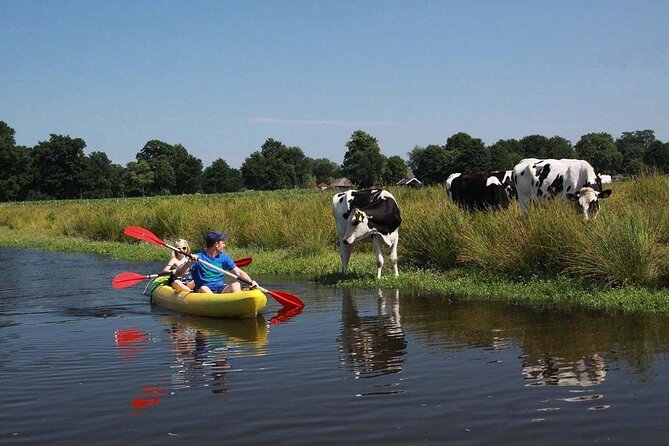
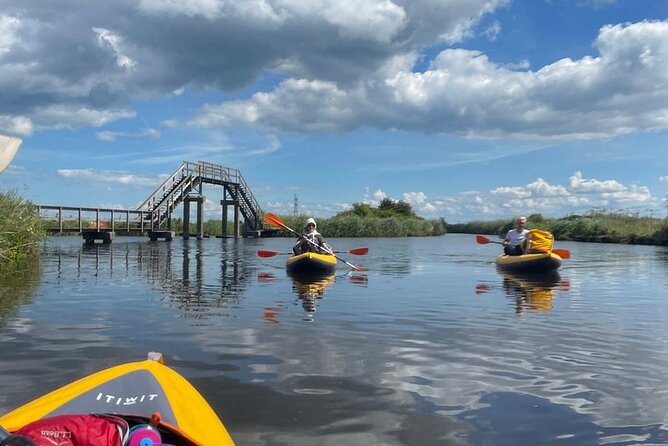
- Watergang wetland kayaking: peaceful canals around a village that feels like Giethoorn.
- Windmill stop at Krijtmolen d’Admiraal: a 230-year-old monument with a chance to see inside.
- Return via canal crossings: includes a cableferry segment on the way back.
- Tristan’s guiding style: fast setups, lots of route care, and frequent info stops.
Why this bike-and-kayak plan works so well
Amsterdam is great, but after a day of canals and crowds, you start craving open space. This tour is built for that mood shift: you bike out first, then you paddle through wetlands and waterways that feel far from the city.
I also like the pacing logic. You warm up on the bike, then do kayaking when you’re already out in the countryside, so the experience feels like one continuous day—not a “travel there, then wait, then do it” routine.
And because the group is limited, it’s easier to keep everyone together, including people who need more time at crossings or during transitions.
You can also read our reviews of more tours and experiences in Amsterdam.
Meeting at Overhoeksplein and finishing at the A’DAM tower
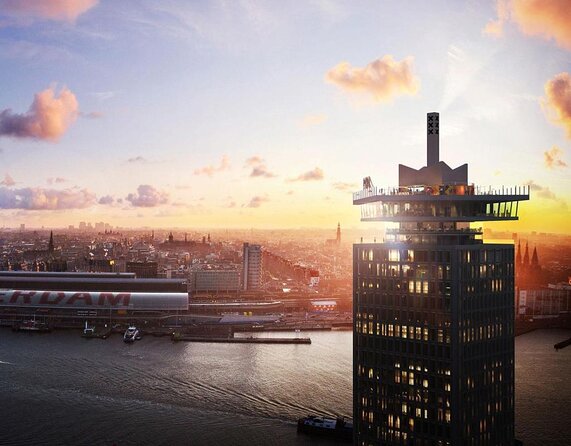
You start at Overhoeksplein 23 at 10:00 am. The location is near public transportation, and the tour ends back at the meeting point area—so you’re not left solving a final miles problem.
What I’d expect from a smooth day here is simple: you gather, you get fitted, you roll out. Many tours fail at that first stage, but this one is designed to get bikes and gear ready before you head out on the countryside path.
You’ll also see the tour loop brought back by the end at the A’DAM tower area. It’s an easy mental marker: you’re leaving Amsterdam proper and coming back to a known spot.
Krijtmolen d’Admiraal windmill: a 230-year-old stop with character
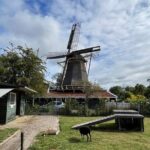
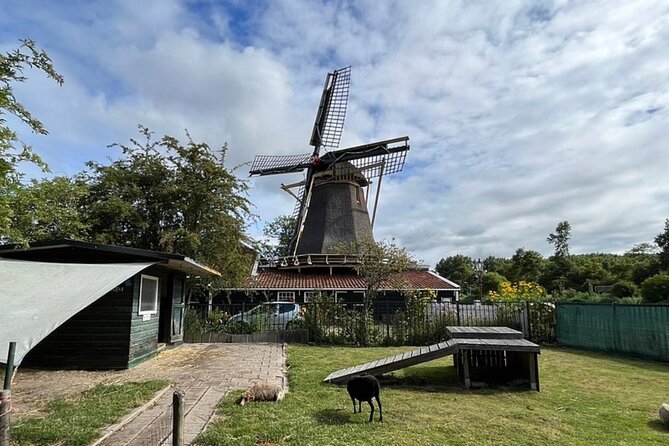
The first major highlight is Krijtmolen d’Admiraal. It’s a 230-year-old windmill and an official monument, and it used to mill trass and chalk—today it’s more about events, with a chance to take a look inside if you’re lucky.
Even if the interior isn’t open, this stop is still worth it because it breaks up the countryside ride with something distinctly Dutch. And it gives your guide a moment to set expectations for the day—how regrouping works, where the next break will be, and what to watch for on the route.
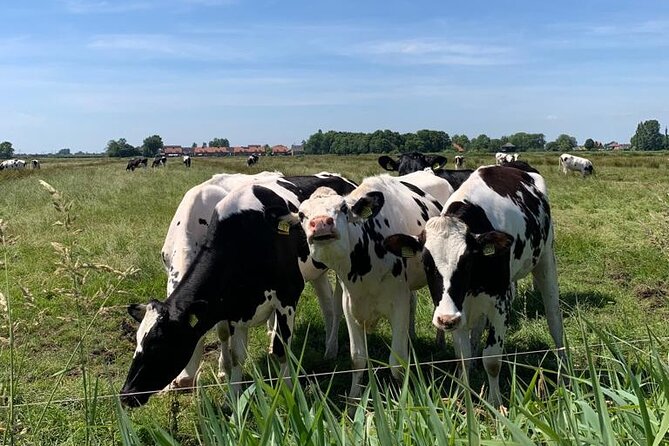
A few departures also include an animal/petting stop near the windmill area, so if you’re traveling with kids, keep your eyes open as you arrive here.
Kanaaldijk and the cableferry crossing: the kind of Dutch detail you feel
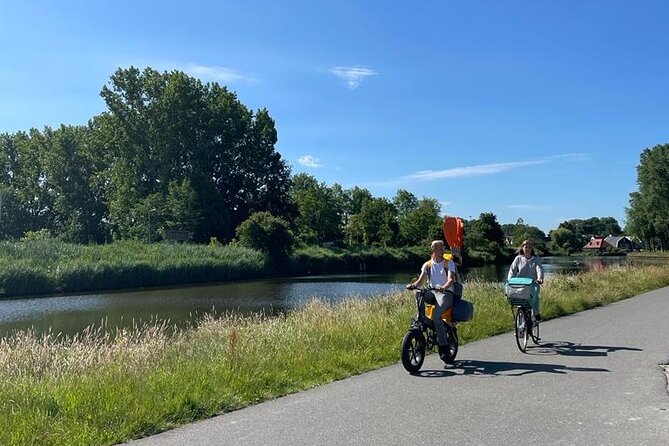
On the way back, you cross at Kanaaldijk using a cableferry. It’s quick (about 10 minutes) and doesn’t require any special skills, but it adds something travel photos can’t capture: the sensation of moving across a waterway as part of the ride.
This is also a good moment to reset. If you’re biking steadily, you’ll appreciate the short pause, especially because the day continues afterward through more village roads.
And because it’s a structured stop, you don’t have to figure out timing. Your guide keeps the day moving, but you still get a real “breather” built into the loop.
Watergang break in a church, then kayaking through wetlands
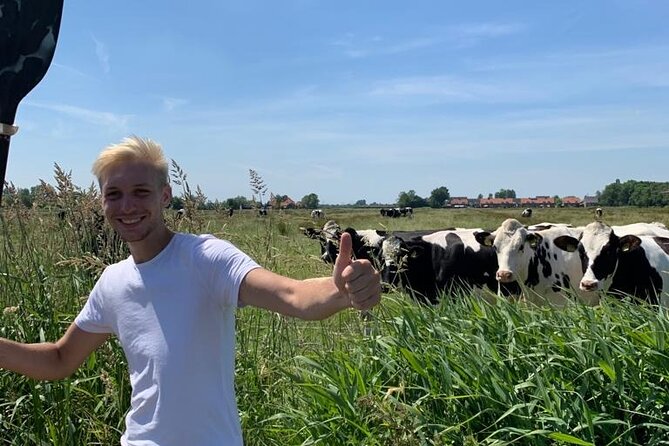
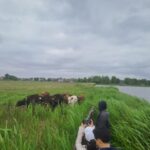
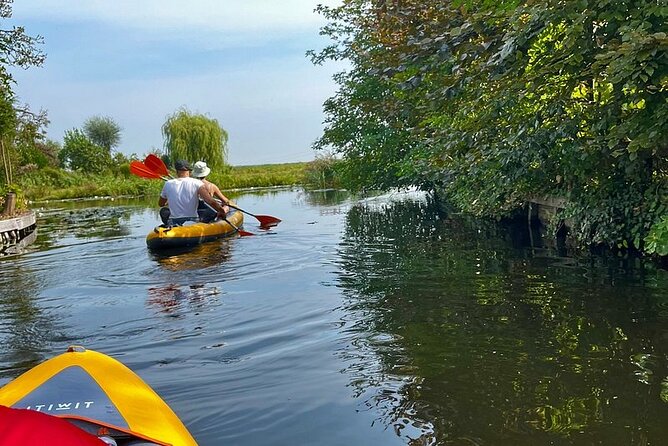
The heart of the day is Watergang, a small village known for its canals and countryside vibe. It has the kind of setting that makes people think of Giethoorn, with water, quiet paths, and a slower rhythm.
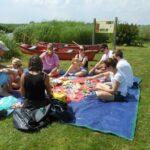
You get about 2 hours here, and it’s not just a sit-and-stare break. It’s where the tour flips from biking to kayaking through the wetlands, and where you get a church stop that serves as both rest and scenery.
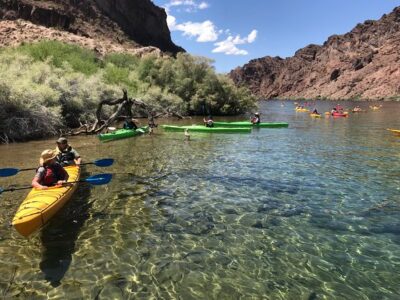
During this part, you’ll likely spend time walking around the area, then you head out on the water. The kayaking itself is framed as a countryside experience: you’re moving through channels and wetlands around the village, not a high-traffic canal route.
Lunch is simple and flexible. Food is available at the church café, and you can usually grab things like sandwiches and drinks at that stop rather than committing to a long search for a meal on your own.
If you’re someone who likes “one place, multiple moments,” Watergang delivers. It’s both the break and the main event.
Zunderdorp on the way back: old trading village vibes
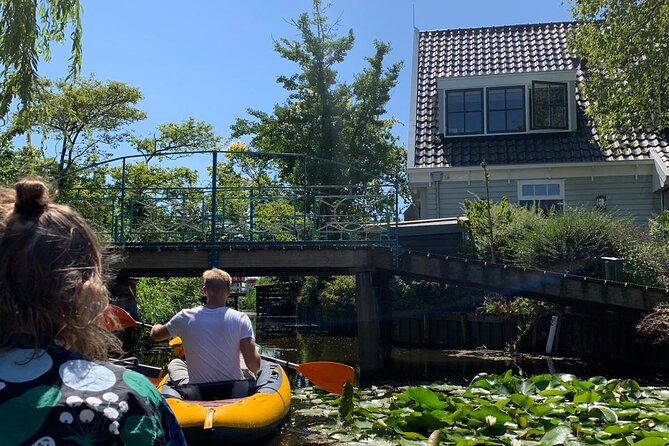
While cycling back, you pass Zunderdorp, an older trading village. The time here is brief (around 10 minutes), but it matters because it shows you another slice of local life beyond the big Amsterdam draw.
This stop works best if you treat the day like a story arc. You leave the city, you hit a landmark (windmill), you slow down in a village (Watergang), and then you finish with smaller, quieter places like Zunderdorp before returning to Amsterdam proper.
Even as a short photo break, it keeps the ride from feeling repetitive.
Pace and physical effort: what moderate fitness means on this route
This is billed for moderate physical fitness, and that’s accurate—if you understand what “moderate” includes. You’re expected to ride a bicycle for a meaningful distance, and the path is designed for cycling, so it’s less about traffic nerves and more about stamina.
From the experience details, plan for roughly 13+ miles of biking and about 1.5+ hours of kayaking. Most of the ride is on well-suited bike routes, and you’ll get breaks, but you should still treat it like an active half-day plus.
Kayaking also isn’t just sitting. You’ll paddle through canals and waterways, and double kayaks mean you’ll share the work with your partner or setup, depending on how your group is arranged.
Also, Dutch wind can show up. A headwind on the return was a challenge for some people, even when the route itself stays flat and manageable.
Bottom line: if you can ride a bike comfortably for an hour and you don’t mind getting a bit wet, you’re in the right zone.
The guide factor: how Tristan keeps groups together
A lot of the quality here comes down to the guide, and the name you’ll hear most is Tristan (spelled a couple of ways in different notes). Across the experiences, his approach is consistent: he organizes quickly, checks that everyone has what they need, and keeps safety and pacing in mind.
One standout detail: he helps with bike fit and setup. Some riders run into height or comfort issues with bikes, and he has been described as going above and beyond to make sure people can ride comfortably.
He also adjusts for conditions. For example, there are mentions of him checking weather and changing the day if needed, so you’re not just stuck with whatever nature does.
If you’re traveling with family or a mixed group, that “everyone stays comfortable” energy is huge. It reduces stress, speeds up transitions, and keeps the day from turning into individual trouble-shooting.
Stops that make the day feel like a real outing, not just transport
What I like about this tour is how the breaks feel built-in rather than optional. You’re scheduled for multiple stops, and the day includes chances for food, snacks, and rest.
At the church in Watergang, there’s a café where you can purchase a meal. People have described sandwiches as delicious, and the setting is part of the charm.
Other smaller refresh moments pop up on the route too. There are mentions of ice cream and drinks earlier in the day, plus Dutch-style treats like stroopwafels offered during the paddling time. On the way back, some groups get fresh cold milk, which is such a specific Dutch touch that it sticks in memory.
Toilets aren’t a constant problem here. Reviews mention bathrooms at almost all stops, which is honestly a big quality-of-life factor on a day with two activity modes.
Kayak comfort and getting in and out (yes, this matters)
Kayaking sounds easy until you’re actually handling getting into and out of a double kayak. This tour is set up to help with that, including assistance for people who may have knee issues or trouble getting seated.
You should also expect that kayaking involves wet seating. If you don’t like damp gear, plan to bring what you need to stay comfortable.
Another practical point: double kayaks require cooperation. If you’re paired with someone who isn’t paddling much, it can make the kayak harder for the other person and change the effort level. The better you coordinate, the more relaxed the paddle feels.
Bike comfort: straps and the little things that prevent hassle
The bikes and equipment are included, which is what you want for a day trip. You don’t want to spend your vacation time negotiating helmet straps or carrying a bag you can’t secure.
One detail that shows up in the experiences: you may get straps for your back so you can keep a water bottle, bag, or small item secure during the ride.
That means you can focus on the route instead of the gear. And that matters because the day is about scenery and pacing, not improvising a DIY tour.
Weather reality: when good conditions really help
This experience requires good weather. That’s not just fine print—kayaking is safer and more comfortable when conditions cooperate, and it also affects enjoyment because you’ll get wet on the water.
If weather is questionable, pay attention to how your guide communicates changes. The day is designed to run as a loop, but wind and rain can change how it feels—especially on the bike return.
Pack for wind and water. Even when it’s sunny, Dutch conditions can be brisk, and the difference between a pleasant paddle and a tiring one can be the headwind and seat wetness.
Value for $83.48: what you’re really paying for
At $83.48 per person for about 5 hours, this isn’t trying to be the cheapest option in Amsterdam. It’s priced like an active, guided experience with real equipment coverage.
Here’s why the value works: you’re getting a guided route in a limited group (max 13), plus bike equipment included, plus the kayak time itself. You also get multiple stops with built-in pauses, which saves you time and decision fatigue.
If you’ve been thinking about piecing together a bike rental plus kayaking on your own, this tour often beats that plan. You’re paying for organization: the route, timing, safety, and the flow between water and land.
Also, the tour gives you the Amsterdam contrast. After days of the canals and the tourist circuit, biking and paddling in the North Amsterdam countryside feels like you changed your destination—without the logistics headache of relocating.
Who should book, and who should think twice
This is a strong match for:
- You want a break from Amsterdam’s busiest sights and want to see how people live outside the center.
- You can comfortably ride a bike and don’t mind a workout pace.
- You enjoy active days with built-in stops and photo moments.
- You like small-group guiding and want help with gear and transitions.
It’s less ideal if:
- You can’t ride a bicycle confidently for an extended stretch.
- You hate getting even a little wet.
- You want a very fast, sporty pace the whole time. Some experiences describe a leisurely speed that works for mixed groups, including families.
Should you book this Amsterdam countryside bike and kayak tour?
If your ideal Amsterdam day includes active cycling, peaceful water, and a true escape into North Holland, this tour is worth your time. The combination of bike routes plus wetland kayaking around Watergang is exactly the kind of outing that feels different from the usual canal cruises.
I’d book it if you’re traveling with a group that appreciates local details and doesn’t want to manage equipment and timing alone. I’d skip it only if your fitness comfort level is low or biking isn’t your thing.
FAQ
How long is the Amsterdam Countryside Bike and Kayak Tour?
It runs for about 5 hours.
What time does the tour start?
The start time is 10:00 am.
Where do I meet, and where does the tour end?
You meet at Overhoeksplein 23, 1031 KS Amsterdam, and the tour ends back at the meeting point near the A’DAM tower.
Is the tour in English?
Yes, it’s offered in English.
What’s included in the tour?
Bike equipment is included, and you also kayak as part of the experience.
How many people are in the group?
The maximum group size is 13 travelers.
Do I need to be able to ride a bicycle?
Yes. All participants must be able to ride a bicycle, and you should have a moderate physical fitness level.
Will I get wet during the kayaking?
You should expect to get a little wet on the kayak seats.
If the weather is bad, what happens?
The experience requires good weather. If it’s canceled due to poor weather, you’ll be offered a different date or a full refund.