REVIEW · BANFF
Banff National Park- Double Kayak Experience
Book on Viator →Operated by The Banff Canoe Club · Bookable on Viator
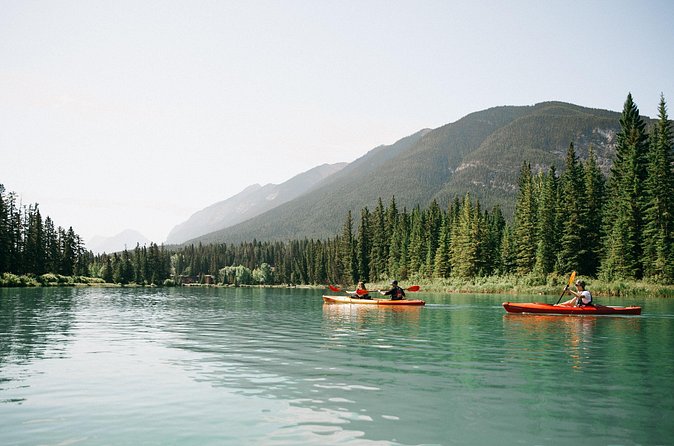
Two paddles, two Banff views. On this Banff National Park double kayak experience, you start on the Bow River and finish on the peaceful Vermilion Lakes in about two hours. I like that it switches scenery fast: one stop feels like wide, scenic river cruising, and the next feels calmer and more reflective.
A big reason this works is the human factor. Guides like Maddie, Darby, Ben, Amelia, and Abby show you the route, keep things safe, and help when conditions get tricky, including a beaver-dam crossing. If you’re into photos, guides may snap group action shots and share them afterward, and they’ll often guide your timing so you can grab pictures without making the paddle weird.
One consideration: this isn’t really for brand-new kayakers. The tour asks for moderate physical fitness and notes it’s not recommended if you don’t have previous kayak experience, so plan to feel comfortable paddling before you go.
In This Review
- Key highlights to notice
- Why this Bow River–Vermilion Lakes double kayak tour feels efficient in Banff
- Meeting at Banff Canoe Club: getting set up without wasting time
- Bow River time: turquoise water, gentle motion, and wildlife chances
- Vermilion Lakes: calm paddling, reflective views, and photo moments
- The beaver dam moment: why the guide matters more than you think
- Fitness level: what you should be ready for (and what to double-check)
- Gear and comfort tips based on what people actually ran into
- Price and value: how $127.38 per group makes sense
- Timing and weather: why early mornings pay off
- Who should book this double kayak experience (and who should skip it)
- Should you book it?
- FAQ
- FAQ
- How long is the Banff National Park double kayak experience?
- Where do I meet and where does it end?
- What’s included in the price?
- Do I need previous kayaking experience?
- What’s the maximum group size?
- What happens if the weather is bad?
Key highlights to notice
- Bow River turquoise water with mountain-and-forest views on a guided route
- Vermilion Lakes stillness for calmer paddling and wildlife-watching vibes
- Small group size with a maximum of 12 travelers
- Safety help on the water, including crossing a beaver dam
- Early start advantage for lighter crowds and July mornings that feel pleasant
Why this Bow River–Vermilion Lakes double kayak tour feels efficient in Banff
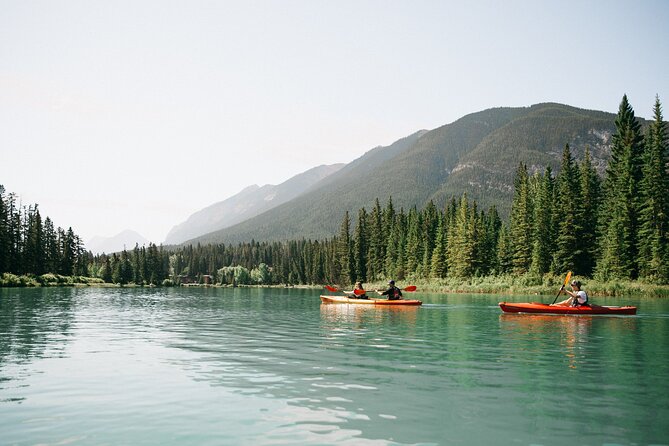
Banff is packed. Most days, you’re hiking, biking, or doing some kind of road-trip shuffle between viewpoints. This kayaking format is different because it gives you variety in a short window. In roughly two hours, you get moving water on the Bow River and then a quieter, mirror-like feel on Vermilion Lakes. That change of pace is the whole point.
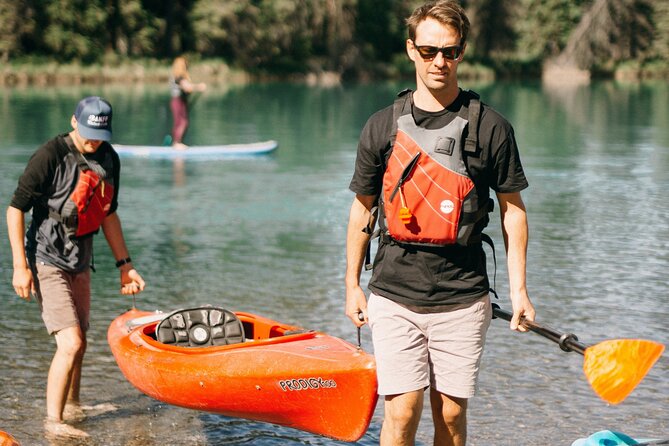
The other smart part is the “guided learning” aspect. You’re not dropped in a kayak with a vague map. You have a trip leader, plus the equipment you need (kayak, paddles, and life jackets). So if your goal is to enjoy the views without turning your vacation into a paddling class, this structure fits well.
And you’ll likely appreciate the perspective shift. From a kayak, you’re lower to the water, closer to the shoreline, and you notice details like wildlife activity and the shape of the shoreline much faster than you would from land.
You can also read our reviews of more tours and experiences in Banff.


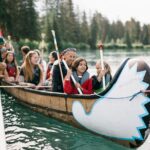
Meeting at Banff Canoe Club: getting set up without wasting time
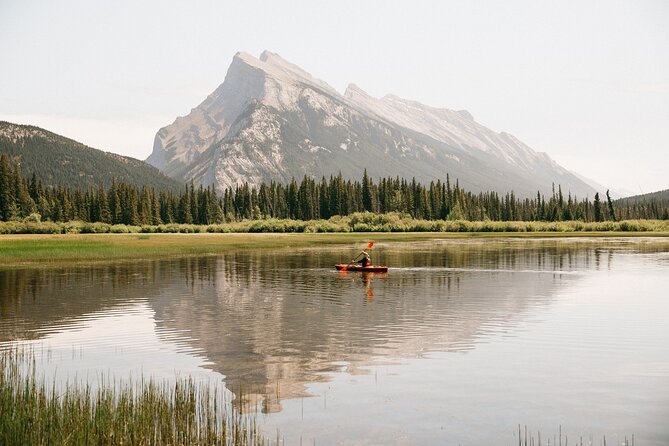
The tour meets at Banff Canoe Club, at the corner of Bow Ave and Wolf St, Banff (AB T1L 1A8). Your activity ends back at the same meeting point, so you don’t need to plan any extra transport afterward.
This is a small-group outing with a maximum of 12 travelers, which matters more than it sounds. Smaller groups usually mean you spend less time waiting around and more time actually paddling. Also, with only a handful of people, your guide can spot who’s struggling and offer help early instead of after the fact.
You’ll use a mobile ticket, and the tour is offered in English. Expect the trip leader to handle the basics: where to go, how to paddle, and what to do when the route gets narrow or when you hit a surprise obstacle.
Bow River time: turquoise water, gentle motion, and wildlife chances
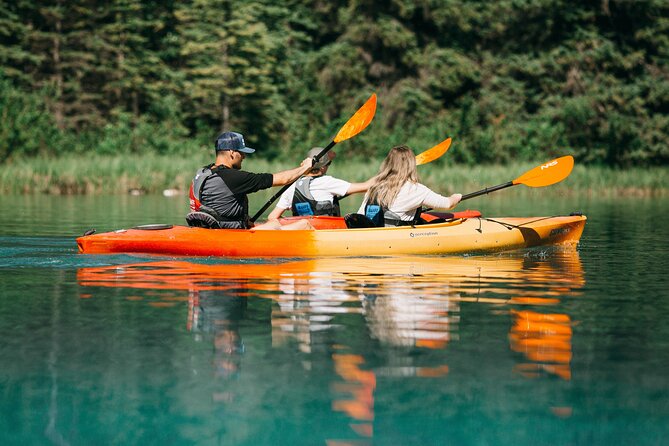
The Bow River stop is all about that scenic “Canadian postcard” feeling. You get turquoise water flowing through mountain and forest scenery, with the river sound doing half the relaxing for you. It’s a natural setting where you can focus on your strokes, look for wildlife near the banks, and still feel like you’re part of the scenery rather than watching it from a distance.
In practice, you’ll likely move through sections that feel simple and wide first, then tighten up as you go. Some participants mentioned navigating narrow routes, and you’ll want to stay switched on during those moments. That’s also when having a guide helps: they can keep you oriented so you’re not spending energy wondering where to aim.
Wildlife is part of the appeal. The Bow River area and the surrounding banks support plenty of wildlife activity, and being on the water gives you a better chance to notice movement close-up instead of just catching it from a trail.
Vermilion Lakes: calm paddling, reflective views, and photo moments
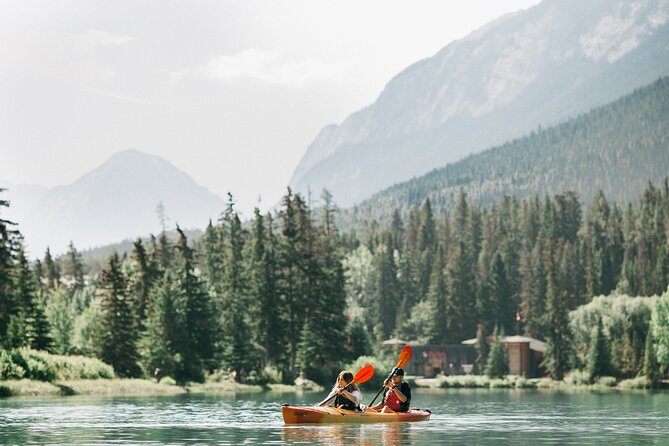
Then you shift to Vermilion Lakes, which is where the trip changes mood. Instead of flowing river energy, you get still, quiet water with reflections of surrounding peaks and the wide Alberta sky. This stop is great for unwinding a bit, letting your pace slow, and taking in what the lakes do visually when the wind cooperates.
Vermilion Lakes are also linked to wetlands, which is where you may spot wildlife activity around the shoreline. Even if you don’t see something dramatic, the overall feel is peaceful, and it’s the kind of environment that makes it easy to enjoy kayaking instead of treating it like a workout.
Photo time can be a highlight here, but don’t treat it like a stationary viewpoint. One caution from a past participant: a friend lost a phone in the lake, and it was impossible to retrieve. If you bring a phone, plan how you’ll carry it safely—use a secure method or keep it away until you’re stopped.
The beaver dam moment: why the guide matters more than you think
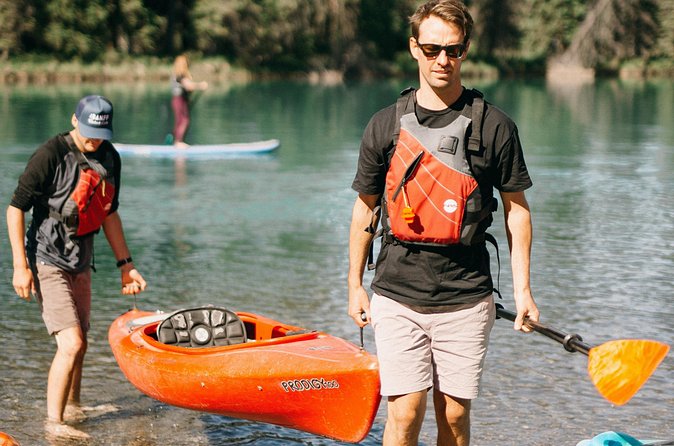
Kayaking in Banff can include little curveballs, and this experience has one that people remember: a beaver-dam crossing. Reviews highlighted that the guide helped people cross it safely, and they kept the group calm and organized.
That matters for two reasons. First, it’s physical: you need to coordinate your body and kayak movement while staying steady. Second, it’s mental: if you’re unsure what to do, your paddle rhythm goes out the window. A patient guide can turn that from stressful to straightforward.
You’ll also notice the difference between “knowing” kayaking and “doing it” under conditions like narrow stretches and obstacles. The trip leader’s role is to coach you through those transitions so you don’t waste the fun parts of the outing.
Fitness level: what you should be ready for (and what to double-check)
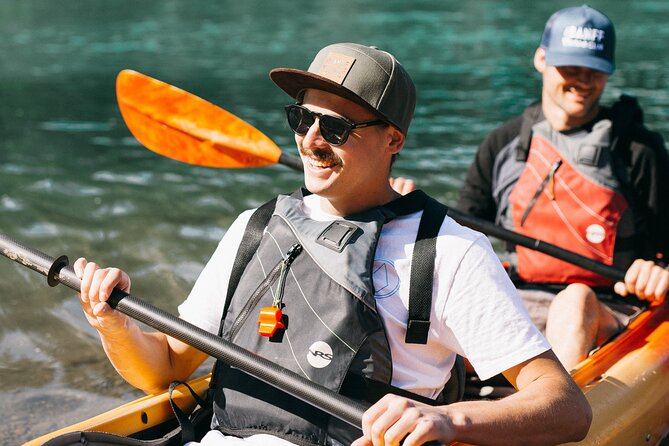
This tour asks for a moderate physical fitness level. It also explicitly notes it’s not recommended for travelers without previous kayak experience. That combination is your signal: you don’t need to be an athlete, but you do need basic comfort with paddling and staying balanced.
If you’ve kayaked before—on a calm lake, at least once—you’ll probably find the learning curve manageable because the guide supports the route and makes expectations clear. If you haven’t, you might spend more effort trying to figure out technique than enjoying the views.
Think about your “reaction” moments, too. Narrow routes, obstacle areas, and photo attempts all add small challenges. This is why the “moderate fitness” note matters: you’ll want enough stamina to stay focused for about two hours.
Gear and comfort tips based on what people actually ran into
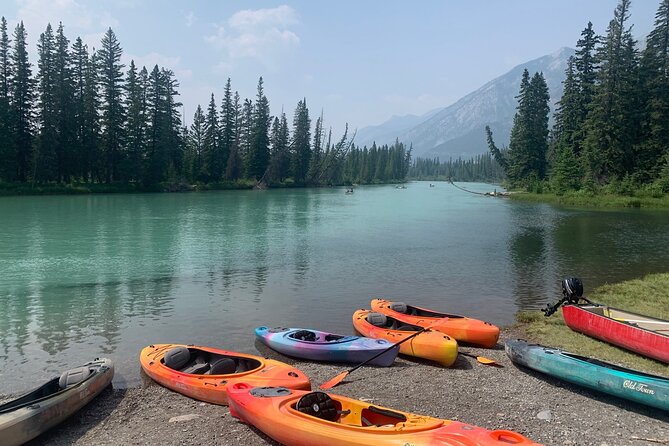
The tour includes the kayak, life jackets, and paddles, so you’re not showing up empty-handed. That said, your comfort on the water depends on how you handle small real-life issues.
Two practical lessons from the experience:
- Bring bug spray. One review called out lots of mosquitoes, especially in the early morning season window.
- Handle your phone like it’s breakable and floatable. Because if it falls in, you may not get it back. If you want photos, set up a safe plan before you start.
For everything else, keep it simple. This is a short guided paddle, so you want to show up ready to move, not to troubleshoot your own gear problems.
Price and value: how $127.38 per group makes sense
The price is $127.38 per group (up to 2) for about two hours. That may sound steep if you compare it to doing nothing, but kayaking isn’t just a rental—it’s guided time plus safety support plus the gear you need.
Here’s the value math that helps you decide: if you go with two people, the cost is roughly half per person. Add in that the trip leader is actively managing the route, including obstacle areas like the beaver dam, and it starts to feel like paying for an experience, not just a boat.
Small group size (max 12) is another quiet value driver. It usually means better attention and less downtime. And since the route includes two distinct water environments in one go—river plus lakes—you’re saving time compared with piecing together separate activities.
One more planning detail: the experience is often booked about 36 days in advance on average. If your dates are fixed, I’d treat it like a real activity, not a last-minute gamble.
Timing and weather: why early mornings pay off
This activity is weather-dependent and needs good conditions. If it gets canceled due to poor weather, you’ll be offered a different date or a full refund. That’s important in the Rockies, where the plan can change quickly.
Why timing matters: some reviews specifically praised the 8am slot in July because it’s not too hot yet, and you get out early before crowds build. On a water route, early timing can also mean calmer conditions. Even if you don’t think about it ahead of time, that can make paddling feel smoother.
Punctuality showed up in reviews too, with people noting safe and organized starts. For you, that means your morning likely won’t get dragged. In a place where you’re juggling multiple activities, that’s a real win.
Who should book this double kayak experience (and who should skip it)
This is a great fit if you want:
- A guided way to see Banff from the water without spending your whole day on logistics
- A short activity that’s a change of pace from hiking and biking
- Wildlife and scenery, with a guide helping with navigation and safety
It’s also a solid choice for couples or small groups because it’s priced per group up to 2 and capped at 12 total.
You might want to skip or choose another option if:
- You have no previous kayak experience. This tour explicitly says it’s not recommended in that case.
- You’re not comfortable with a moderate fitness requirement or with the idea of paddling during route changes.
If you do have experience and you’re ready for a guided morning, this tour can be one of those “quick, memorable, and different” Banff moments.
Should you book it?
If you’re looking for an efficient Banff experience that covers Bow River scenery and Vermilion Lakes calm in about two hours, I think you should book it—especially if you already know how to paddle. The small group size, the included life jackets and paddles, and the guide help with the tricky parts (including the beaver dam) are the reasons this feels worth your time.
If you’re brand new to kayaking, be honest with yourself. This tour is built for people who can already handle the basics. In that case, I’d either brush up first or choose an option aimed at true beginners.
FAQ
FAQ
How long is the Banff National Park double kayak experience?
It lasts about 2 hours.
Where do I meet and where does it end?
You meet at Banff Canoe Club, corner of Bow Ave and Wolf St, Banff, AB T1L 1A8, Canada. The tour ends back at the same meeting point.
What’s included in the price?
The tour includes a kayak, trip leader, life jackets, and paddles.
Do I need previous kayaking experience?
Yes. The tour notes it is not recommended for travelers without previous kayak experience.
What’s the maximum group size?
The tour has a maximum of 12 travelers.
What happens if the weather is bad?
The experience requires good weather. If it’s canceled due to poor weather, you’ll be offered a different date or a full refund.