REVIEW · FIGUERES
Costa Brava – Kayaking and Snorkeling “Sea Caves” Tour
Book on Viator →Operated by Escola de Vela & Kayak Sant Pol - Costa Brava · Bookable on Viator
Costa Brava sea caves in 2 hours is a good idea. This kayak-and-snorkel outing gets you up close to rugged cliffs and cave pockets along the coast, then swaps your paddle for a snorkel at a calmer cove. You’ll follow a guide’s route along the shoreline near S’Agaró and the Sant Pol area, with English instruction and a small group.
What I like most: the tour is built around hands-on time on the water, not a long lecture—especially during the cave kayaking. I also love the practical safety culture, with a clear briefing and instructors who stay on top of beginners; guides like Carlos and Naia specifically came up in great feedback for being patient and fun.
One consideration: snorkeling can be hit-or-miss for fish, depending on where the guide takes you and the conditions that day. Some people loved seeing octopus and starfish, while others found fewer fish in their spot—so go for the experience and the caves, not a guarantee of a fish parade.
In This Review
- Key highlights you’ll actually care about
- Kayak sea caves first: the real vibe of this 2-hour route
- From Sant Pol to the water: what happens before you paddle
- Paddling the Costa Brava coastline near S’Agaró
- Caves in practice: what the sea-cave kayaking is like
- Snorkeling in a protected cove: manage the fish expectations
- Cami De Ronda and shoreline details you can’t get from land
- Guides make or break it: patience, humor, and safety
- Equipment, comfort, and small practical wins
- Price and value: is $41.12 worth it?
- Who should book, and who should skip
- Quick decision: book it or pass?
- FAQ
- How long is the Costa Brava kayaking and snorkeling sea caves tour?
- Where does the tour start?
- What’s included in the price?
- Is bottled water included?
- Do I need to know how to swim?
- Is the wetsuit mandatory?
- Is the tour suitable for children?
- How big are the groups?
- What language is the tour offered in?
- What happens if the weather is bad?
Key highlights you’ll actually care about
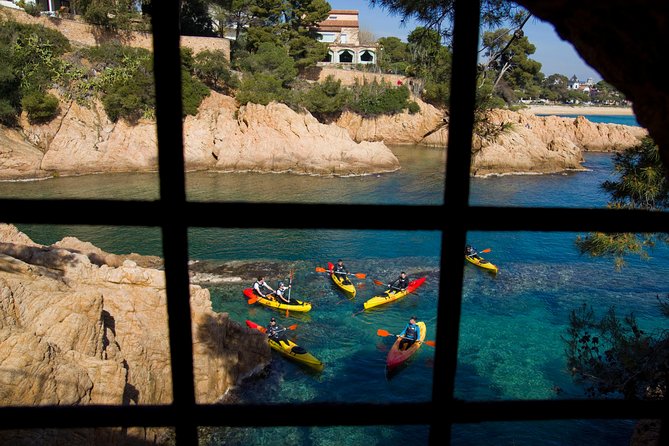
- Small group (max 14): easier pacing, more attention, less chaos in and out of the water.
- Gear included: sit-on-top kayak, paddle, life jacket, snorkel set, and a wetsuit for coldest days (optional).
- Snorkel guidance, not guesswork: your instructor helps you choose where to look for the best color and marine life.
- Caves from a kayak: you’ll get close enough to feel how the coastline folds into sea-cave pockets.
- Safety-first operation: rescue motor boat is available if needed, plus civil liability and accident insurance.
- Route depends on conditions: water crowding and marine activity can vary, so expect a day that’s guided, not templated.
Kayak sea caves first: the real vibe of this 2-hour route
This is a short tour, so it has momentum. You’re not signing up for a half-day marathon or waiting around for time to pass. Instead, you’ll spend your energy doing the main attraction: paddling along Costa Brava’s cliffy shoreline, with cave views that feel close enough to be a postcard you’re standing inside.
The “sea caves” part matters because kayak travel changes how you see this coast. From land, the caves read as dark shapes in rock. From a sit-on-top kayak, you’re gliding alongside them, and you can judge the scale—small cave openings, larger cut-ins, and those narrow stretches where the coastline looks sculpted for boats.
You can also read our reviews of more tours and experiences in Figueres.
From Sant Pol to the water: what happens before you paddle
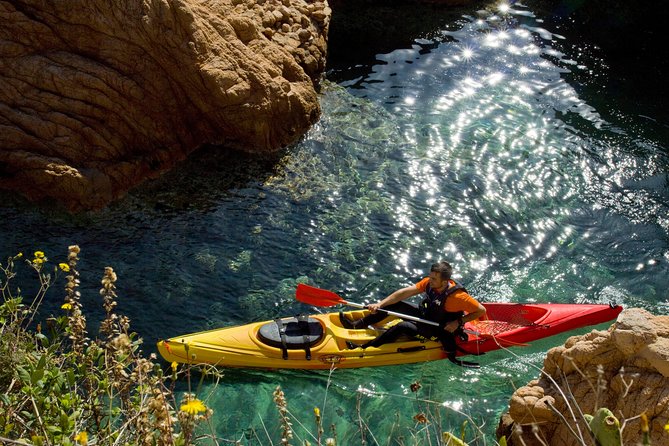
The tour meets at Escola de vela i caiac Sant Pol – Costa Brava near Passeig de Sant Pol, s/n, 17220 SAgaró – Sant Feliu de Guíxols, Girona, Spain. The end point is back at the same place, so you’re not juggling logistics after you’re tired and salty.
Expect a setup that’s designed for smooth switching between land and water:
- You get a life jacket and a paddle with the kayak (sit-on-top, single or double).
- Snorkel equipment is included, so you don’t need to bring your own mask or snorkel tube.
- Wetsuits are provided for coldest days (optional), which is a big deal on the coast where wind can make “pleasant” water feel chilly fast.
In the feedback, safety briefings showed up again and again. People called out guides who explained what to do and what not to do, and who kept close care of beginners. That matters because sea-cave kayaking has one rule that changes everything: you need to feel comfortable with your boat and with your own calm.
Also note the one requirement that’s not negotiable: you must know how to swim. The tour explicitly says participation won’t be allowed without that skill, with no reimbursement if that’s an issue. So if you’re on the edge, be honest before you book.
Paddling the Costa Brava coastline near S’Agaró
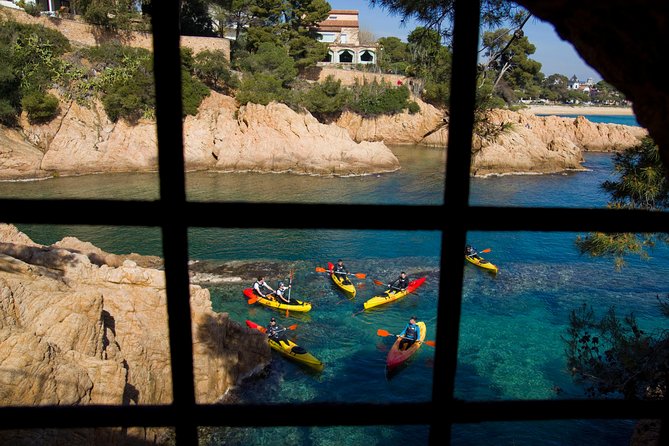
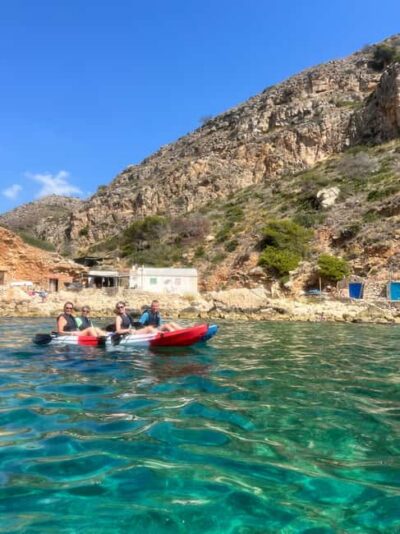
The heart of the experience is the kayak time along the Costa Brava coast. You’ll be close to:
- Rugged cliffs and cave structures
- Hidden coves and smaller shoreline pockets
- Open views that show how the Mediterranean shapes this coast
- Pine-covered areas from the perspective of water
You’ll also be looking for wildlife. Even without making a big nature show out of it, you’re in an environment with seabirds and marine life, and the guide will call out what’s worth paying attention to.
One detail worth planning around: this region can be crowded with kayaks, swimmers, paddle boards, and motor boats. That doesn’t automatically ruin the tour, but it changes the experience in the water—so you’ll want to follow your guide’s pacing and keep your focus on your boat and the route. When you do that, the caves still feel like the main event.
Guide personality also plays a real role here. Several names came up with consistent praise—Xevi, Didac, Marc, Ayoub, Nail, and Nail again in different notes. The common thread: they’re not just steering; they’re making the trip feel easy enough for families and first-timers.
Caves in practice: what the sea-cave kayaking is like
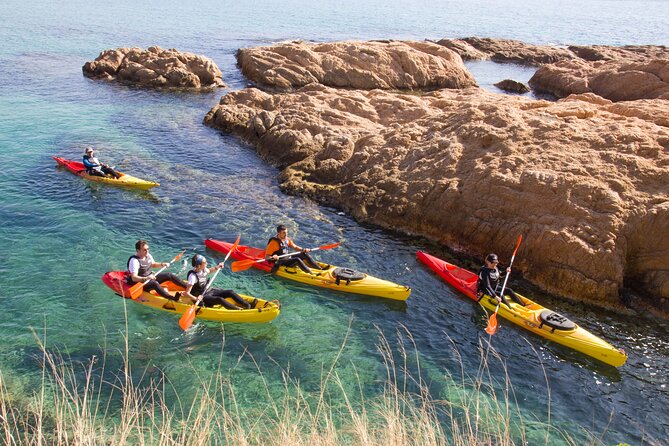
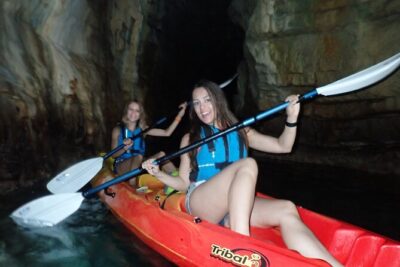
You’ll paddle into the cave sights, but it’s not the same thing as rock climbing or a cave tour on foot. The kayak approach is more fluid and more social: you’ll be close enough that everyone sees the same shapes and openings, yet you still control your distance.
Some of the best moments people described were the sensation of:
- managing the route through cave areas
- seeing cave pockets from very near
- gliding in clear water where the coast looks sharp and detailed
One person mentioned that having some kayaking experience helps, but that the guide was patient. That’s a fair expectation: even if you’ve never paddled before, a sit-on-top kayak is generally friendly, but you still need a minute to get your rhythm.
If your group includes kids, the guide’s handling becomes extra important. In the feedback, parents highlighted that the guides stayed professional while still keeping it fun for children. That’s usually what makes the difference between a “we survived” outing and one where kids actually want to go again.
Snorkeling in a protected cove: manage the fish expectations
After the kayak section, you’ll reach a secluded cove designed for snorkeling. This is the part where many people say the guide’s guidance matters: your instructor will point out where they expect the best color and marine life.
What you’re likely to see (when conditions cooperate) includes:
- Schools of fish
- Sea urchins
- Sometimes octopus (described as rare)
- Occasionally starfish (also called out)
Now the practical truth: snorkeling results vary. Some people had clear, good views and lots to spot. Others said they saw fewer fish than they hoped, or that snorkeling felt short compared with the kayaking.
So here’s how to set yourself up:
- Treat snorkeling as a bonus view of the coast’s underwater life, not a guarantee of an aquarium.
- Listen carefully to the guide about where to look, because your best viewing spot isn’t always obvious from the surface.
- If the water is clear, go slow. Fast fin kicks scare small creatures before you notice them.
The tour includes snorkel gear and has an optional wetsuit for colder days, which helps you stay comfortable enough to actually enjoy the water time.
Also, bring a cap and sunscreen. In feedback, someone specifically reminded people about sun protection—Costa Brava light can be no-joke even when you think you’re just out for a quick morning.
Cami De Ronda and shoreline details you can’t get from land
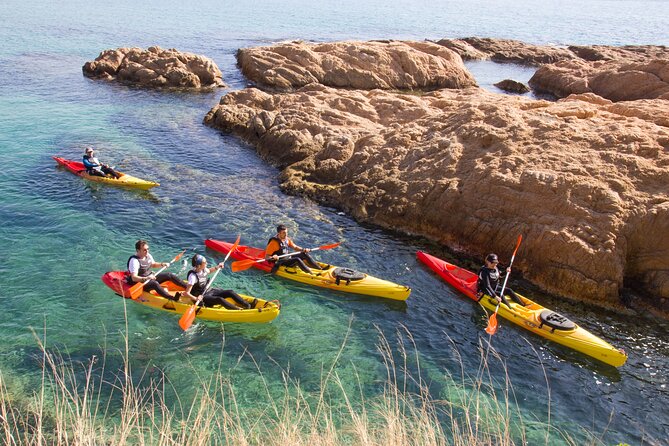
Along the way, you’ll be moving through a coastal zone that includes Cami De Ronda-type scenery—classic path country overlooking coves and cliff edges. You’re not hiking it here, but kayaking gives you a different angle on why that footpath is famous: the shoreline is full of tight pockets and long sight lines, and the coast is built for constant small stops.
From the water, you’ll notice:
- where cliffs create natural barriers
- where coves open into clearer swimming areas
- how the coastline channels waves and changes how calm the surface feels
It’s one of those experiences where, even if you don’t know the geography, you start to recognize the shape logic: water moves differently between cave mouths, open bays, and sheltered inlets.
Guides make or break it: patience, humor, and safety
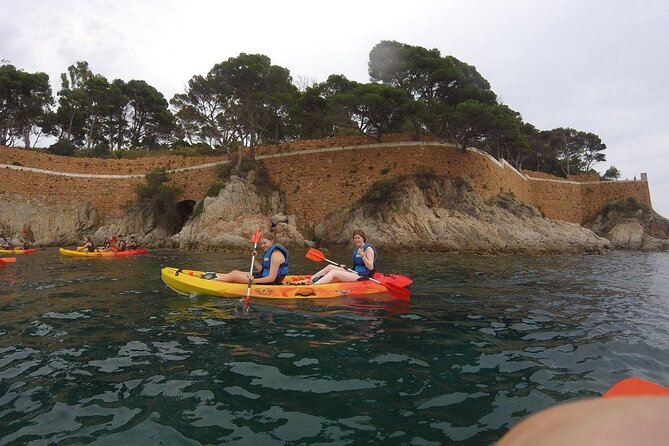
This is a guided activity, and the guide energy matters more than you might expect for something that’s “just” kayaking and snorkeling. In the feedback, people repeatedly praised instructors for being:
- patient with beginners
- helpful with timing and gear
- safety-oriented without turning the experience stiff
Some names that stood out:
- Carlos for being entertaining and knowledgeable while helping people who were less confident.
- Naia for friendly, informative guidance during both paddling and snorkeling.
- Maria for excellent English and a well-managed family outing.
- Paul for a strong kayak experience, with mixed snorkeling results depending on the day.
- Xevi for courtesy and strong explanations.
- Agnès and Ayoub for teaching clearly and making it fun.
If you’re traveling with kids, this is where it pays off. A professional instructor can turn “we’re scared in the water” into “okay, I get it.” That’s not theoretical—parents called out the professionalism and the guide’s time with inexperienced paddlers.
Equipment, comfort, and small practical wins
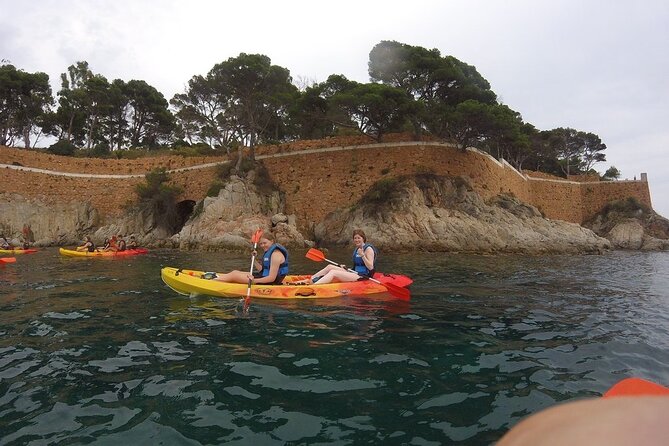
You’re not paying extra for key gear. The tour includes:
- sit-on-top kayak(s) with paddle and life jacket
- snorkeling gear
- wetsuit for coldest days (optional)
- changing room and a safe space to leave belongings
Two comfort points from the experience details and feedback:
- Optional wetsuits are a smart upgrade if the day is windy. Even if the water is warm for some visitors, coastal breezes can chill you fast once you’re wet and at the mercy of movement.
- Water time feels longer when you’re comfortable. If you’re deciding whether to wear the wetsuit, err on the side of comfort—your hands and torso will thank you.
One review also mentioned buying a wet bag on site if you forget one. So if you want a backup plan, it’s nice to know that the base had something available.
And yes: bottled water is not included. This is normal for short tours, but don’t assume you’ll get a bottle. Bring a small drink or plan to pick it up before you head to the meeting point.
Price and value: is $41.12 worth it?
At about $41.12 per person for roughly 2 hours, this is priced like a budget-friendly active tour—but the value comes from what’s included.
What you’re getting for that price:
- Guided kayak route with cave views (the core activity)
- Snorkel equipment and guided snorkeling
- Optional wetsuit
- Rescue motor boat availability if necessary
- Insurance coverage (civil liability and accident insurance)
- A place to change and store your items safely
What you’re paying extra for:
- Bottled water (not included)
- Anything personal like sun protection or a wet bag if you forget yours
In other words, you’re not just renting a kayak. You’re buying instructor time, safety structure, and the real convenience of getting to a snorkeling cove without having to figure out the route.
If snorkeling is your main goal, be aware of variability. If you want the sea-cave kayak plus a chance to see marine life, this price often feels fair.
Who should book, and who should skip
This tour is a strong fit if:
- you can swim and want a short adventure
- you’re a first-timer or a family group who benefits from a patient guide
- you want sea caves plus a snorkeling stop without spending most of the day on logistics
- you like learning a bit about marine life while you’re actually doing the activity
It’s less ideal if:
- you’re expecting guaranteed lots of fish in every situation
- you hate crowds in the water and are sensitive to shared spaces (this coast area can be busy)
- your priority is long snorkeling time rather than guided cave kayaking
Age note: minors 7 to 13 can participate if accompanied by an adult. That’s useful for families planning a kid-friendly morning without overcomplicating the day.
Quick decision: book it or pass?
Book this tour if you want a high-output, short morning on Costa Brava water: cave kayaking, clear guide instructions, and snorkeling as a fun add-on. The small group size and safety-first approach make it a smart choice when you’re mixing experience levels.
Consider another option if your main goal is an underwater show with nonstop fish. Snorkeling looks amazing when conditions line up, and people did spot sea urchins, octopus, and starfish—but the underwater viewing can vary with the day and the chosen cove.
If you’re comfortable swimming, pack sun protection, and show up ready to follow the guide’s plan, this is the kind of outing you’ll likely remember because you were actually on the coast, inside the caves, not just looking at them.
FAQ
How long is the Costa Brava kayaking and snorkeling sea caves tour?
The experience runs for about 2 hours.
Where does the tour start?
The meeting point is Escola de vela i caiac Sant Pol – Costa Brava, Passeig de Sant Pol, s/n, 17220 SAgaró – Sant Feliu de Guíxols, Girona, Spain. The tour ends back at the same meeting point.
What’s included in the price?
Included are a sit-on-top kayak with paddle and life jacket, snorkeling gear, a professional instructor, and a wetsuit for coldest days (optional). A rescue motor boat is included if necessary, along with changing room access and insurance coverage.
Is bottled water included?
No. Bottled water is not included.
Do I need to know how to swim?
Yes. Knowing how to swim is essential. People who do not know how to swim will not be allowed to participate.
Is the wetsuit mandatory?
No. The wetsuit is provided for the coldest days, but it’s listed as optional.
Is the tour suitable for children?
Minors aged 7 to 13 can participate, but they must always be accompanied by an adult.
How big are the groups?
The tour has a maximum of 14 travelers.
What language is the tour offered in?
The tour is offered in English.
What happens if the weather is bad?
The experience requires good weather. If it’s canceled due to poor weather, you’ll be offered a different date or a full refund.