REVIEW · BUSHMILLS
Giants Causeway Coast Sea Kayaking
Book on Viator →Operated by Far and Wild · Bookable on Viator
Kayaking the Causeway changes everything. I love the crowd-free way the coastline shows up from the water, and I love how the guides make the geology feel personal as you paddle. The catch: you need a moderate fitness level, and you’ll go only as the sea allows.
This works well because it’s set up as a private group outing with routes matched to your skills and the forecast. In the water, guides like Lorcan and Darren focus hard on safety first, then they steer you toward the fun spots; you may even share the water with seals, and the approach follows WISE distance rules.
In This Review
- Key things to know before you paddle
- Why this Giants Causeway Coast sea kayaking setup feels different
- Choosing the right route: beginner scenery vs the Causeway pass
- Meeting in Bushmills and what the 4 hours actually feel like
- What you do on the water: stable kayaks, guided focus, and fun rock moments
- Giant’s Causeway from sea level: caves, coves, and geology you can point to
- Dunluce Castle and Whiterocks: impressive views with a calmer rhythm
- Ballintoy to Carrick-a-Rede Rope Bridge: the route that stitches famous places together
- Safety is the real selling point here, not just the scenery
- Price and value: what $446.77 buys you (and what you should budget for)
- Who this trip fits best on the Causeway Coast
- When to go and how weather affects the day
- Should you book Giants Causeway Coast Sea Kayaking?
- FAQ
- How long is the Giants Causeway Coast sea kayaking tour?
- Where does the tour start in Bushmills?
- Is this tour private?
- What level of fitness do I need?
- Do I need any prior kayaking experience?
- What kind of kayak do you use?
- What’s included in the price?
- Is admission to Giants Causeway included?
- Is personal injury insurance included?
- What happens if the weather is poor?
Key things to know before you paddle
- Stable double sea kayaks: you’re seated in a wider, steadier setup than some sea-kayak newcomers expect.
- Routes for different abilities: from beginner-to-intermediate scenery to a more demanding line passing the Causeway.
- Real safety coaching: the guide’s job is keeping you comfortable as conditions change.
- Caves and sea-cut features: you’ll see places land routes don’t reach.
- Private-group focus: less waiting, more instruction that fits your group’s pace.
Why this Giants Causeway Coast sea kayaking setup feels different
Giants Causeway is one of those places people rush through. There’s a reason it’s so famous, but land-side sightseeing can turn into a slow shuffle with a lot of heads turned in the same direction. Sea kayaking flips that. You get moving. You get time. And you get a view that doesn’t show up on postcards.
What I like about this experience is the pairing of adventure with structure. You’re not just handed a paddle and pointed offshore. You go out with qualified instructors, in a stable double sea kayak, and you follow a route that makes sense for your group and for the sea that day. That matters, because the Causeway Coast can be dramatic even when the sky looks calm.
The other big plus is that the trip is designed around the coastline, not around a checklist. You’re exploring sea caves, smugglers’ coves, and the rock formations along the short stretch both sides of the Causeway—areas that feel like a different world once you’re floating at sea level.
Choosing the right route: beginner scenery vs the Causeway pass
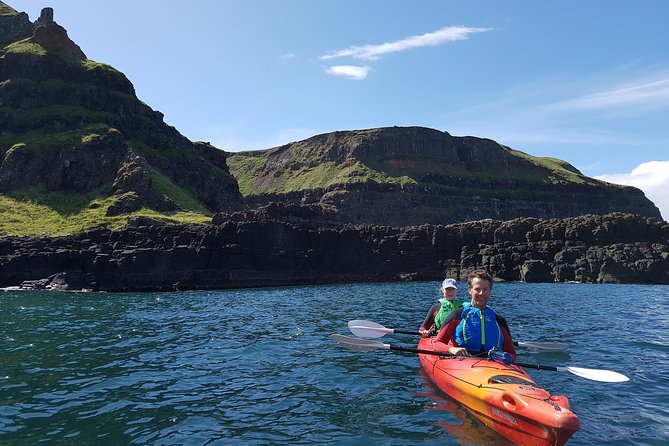
This is where the trip earns its keep. Instead of one generic paddle for everyone, you’re matched to one of several routes along the Giants Causeway coast. The route options change depending on ability and the weather and sea forecast.
Here are the route styles you should expect:
- The more advanced option passes the Causeway itself. This one requires competent kayaking skills. Think of it as the big-ticket experience for experienced paddlers who can handle exposure and changing conditions.
- Beginner to intermediate routes trade intensity for comfort and access to impressive scenery. Common options include paddling via Dunluce Castle, seeing the cliffs at Whiterocks, or doing a stretch from Ballintoy to Carrick-a-Rede Rope Bridge.
If you’re newer to kayaking, don’t see that as a compromise. You’ll still get the best part of sea kayaking here: you’re close enough to the rock features to understand how the coast was shaped, and you’re moving through spots that walking routes just can’t reach.
Meeting in Bushmills and what the 4 hours actually feel like
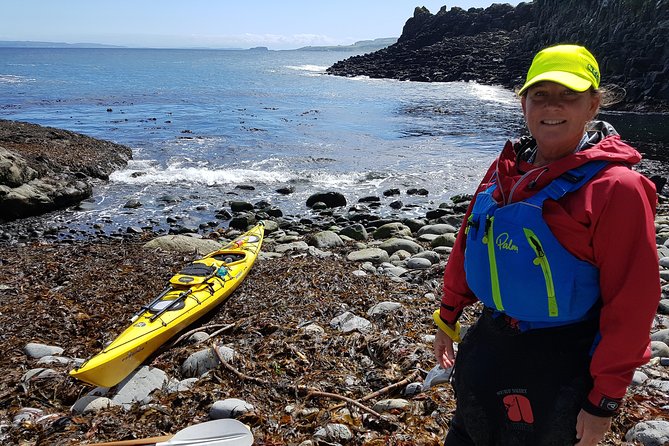
You start at 56 Main St, Bushmills BT57 8QA, and the activity ends back at the meeting point. The total time on the water is listed as about 4 hours, which is a sweet spot for a half-day adventure. Long enough to feel like you escaped the crowds. Short enough that you’re not exhausted before dinner.
Because this is a private tour/activity and only your group participates, you’re less likely to lose time to a giant meet-and-depart shuffle. You also tend to get better pacing. In sea kayaking, pacing is everything: it affects your comfort, your confidence, and how much you enjoy the scenery instead of focusing on staying steady.
A practical tip: if you’re prone to getting cold, plan like it’s a windier day than you expect. You might not feel cold at the start on the shore, but sea wind has a way of finding you once you’re on the water.
What you do on the water: stable kayaks, guided focus, and fun rock moments
You’ll use the provided gear and equipment, and you’ll have a guide with you the whole time. The kayaks are described as stable double sea kayaks. That’s a meaningful detail. Sea kayaks can be tippy if you’re in the wrong setup for your experience level, and this trip is built to reduce that stress.
The guides also manage the route so you spend less time worrying about your boat and more time watching the coast. In reviews, the fun part isn’t just the big scenery. It’s the small moments the guide leads you to—rock-hopping style stops on the way back, and “fun spots” tucked between and behind smaller islands.
You should expect coaching on paddling and positioning, plus guidance for when conditions change. That’s the difference between feeling safe and feeling stuck. In choppy water, you want clear instruction on what to do with your body and your paddle strokes, not guessing on your own.
Giant’s Causeway from sea level: caves, coves, and geology you can point to
When people visit Giants Causeway, they look down. From a kayak, you look at the rock from a completely different angle—close, horizontal, and tactile.
The trip is built around the Causeway Coast’s geology. You’ll hear information from the guide as you paddle, and in at least one experience, Lorcan stood out for being safe, informative, and knowledgeable about geology and history. That kind of talk changes what you see. Instead of just thinking, cool rocks, you start noticing how the sea shapes the edges, how caves form, and why certain features appear where they do.
You also get time to move around the coast rather than treating the Causeway like a one-photo stop. The coastline includes sea caves and smugglers’ coves along the stretch to either side of the Causeway. Land views can’t replicate that feeling of being near secret-looking inlets cut into the cliffs.
One note for your expectations: you’re out on the water, not walking on a prepared trail. You’ll be active, but the pace of sightseeing is tied to your paddling and the sea state. That’s not a downside. It’s the point. You’re seeing the coast while you travel through it.
Dunluce Castle and Whiterocks: impressive views with a calmer rhythm
Not every route is built for high-intensity paddling. The options via Dunluce Castle and the cliffs at Whiterocks are aimed at routes that suit beginner to intermediate skill levels.
If your group includes newer paddlers, I’d steer you toward one of these scenic lines. You still get the benefit of sea-level perspectives, but you can focus on technique and comfort instead of fighting rougher conditions.
Dunluce Castle is the kind of sight that instantly makes you understand why people keep building on dramatic ground. From the water, you see the scale differently—less like a postcard and more like a fortress built right where the land drops off.
Whiterocks’ cliffs add another layer. The coast there feels carved and jagged, and the kayak perspective helps you follow the lines of rock like they’re drawn with a blade. Even when you’re not in the more demanding route that passes the Causeway itself, these areas still deliver that wow-factor that’s hard to get any other way.
Ballintoy to Carrick-a-Rede Rope Bridge: the route that stitches famous places together
If you’re the type who likes your day to feel efficient without feeling rushed, this route style makes sense. It connects the look of the coast near Ballintoy with the famous view corridor of Carrick-a-Rede Rope Bridge.
The bridge itself is a land attraction, but kayaking changes your understanding of it. You don’t just see the bridge as an overhead photo. You see how the coastline funnels you toward it, how the cliffs drop, and how the sea wraps around the edges of the headlands.
This is also a good option if your group wants variety. You’re not just staying in one “view pocket.” You’re paddling along a changing stretch, and your guide helps you move through it in a way that keeps the day enjoyable for mixed skill levels.
Safety is the real selling point here, not just the scenery
Sea kayaking sounds romantic until you’re on water that’s moving more than you expected. That’s why safety matters more than any pretty description.
From the experiences shared in reviews, guides like Lorcan and Darren take safety seriously and communicate clearly. You can feel the difference in how the guide manages conditions and how they set expectations early. One guide’s focus on safety didn’t kill the fun—it made the fun possible.
There’s also a marine-life part worth highlighting. If you encounter seals, you’ll be guided on maintaining distance. One review called out that the crew operates under WISE principles for marine mammals. In practice, that means you don’t chase wildlife for a closer view. You watch from where you’re supposed to be. And when you do that, you often end up with calmer, better wildlife moments.
Practical takeaway: do what your guide says quickly. In the ocean, small adjustments become big fast. The more you trust the plan, the more you’ll enjoy the ride.
Price and value: what $446.77 buys you (and what you should budget for)
At $446.77 per person for a roughly 4-hour private group sea kayaking outing, the price isn’t low. But I look at sea kayaking value in a different way than I do for a bus tour.
You’re paying for:
- trained instruction and a guide with you the whole time
- provided gear and equipment
- public liability insurance
- time on a specialized craft (stable double sea kayaks) in a high-impact environment
- route planning matched to your ability and the sea forecast
The cost can feel easier to swallow if your group is small and you’d otherwise pay for multiple things: a guiding service, equipment rental, and then still deal with crowded viewpoints. Here, you’re combining all of that into one guided block.
Two budget notes so there are no surprises:
- Admission tickets are not included. Plan for any entry fees you might want onshore.
- Personal injury insurance isn’t included, so if you need it for your peace of mind, you’ll want to arrange that separately.
Who this trip fits best on the Causeway Coast
This works best for active nature lovers who want to get outside and move, not just look. You should also be comfortable with moderate physical fitness, since sea conditions can mean more effort than you expect.
It’s a strong match if:
- your group includes mixed abilities and you want a route that accommodates that
- you prefer guided structure over doing it on your own
- you want to avoid heavy crowd pressure by choosing sea-level sightseeing
- you like geology and want the story behind the rocks as you paddle
It might be less ideal if:
- you’re not comfortable with being out in wind and choppy water if conditions require it
- your group isn’t ready for moderate effort during a full half-day block
When to go and how weather affects the day
This experience requires good weather. That’s not a small fine-print issue. On the coast, wind and sea conditions change quickly, and the operator runs different routes depending on the weather and sea forecast.
The good news is that route selection happens in a way that tries to keep the experience matched to your group. You’re not stuck in one plan no matter what the sea does.
If poor weather cancels the trip, you’ll be offered a different date or a full refund. That’s the kind of safety-first approach you want when the activity depends on the ocean doing the right thing.
Should you book Giants Causeway Coast Sea Kayaking?
Book it if you want the Causeway Coast to feel like an adventure, not an errand. You get crowd-free views from the water, active time outdoors, and guidance that focuses on safety and rock-level details. The private-group format helps too, especially if you have a mixed skill level.
I’d hold back only if your group can’t handle moderate fitness, or if you’re very sensitive to wind and open water conditions. For most people who can paddle confidently and follow instructions, this is one of the more memorable ways to experience Giants Causeway territory.
FAQ
How long is the Giants Causeway Coast sea kayaking tour?
It runs for about 4 hours.
Where does the tour start in Bushmills?
You meet at 56 Main St, Bushmills BT57 8QA, UK, and the tour ends back at the meeting point.
Is this tour private?
Yes. It’s a private tour/activity, and only your group will participate.
What level of fitness do I need?
You should have a moderate physical fitness level.
Do I need any prior kayaking experience?
The operator runs routes for different abilities, including beginner to intermediate options. The route that passes the Causeway itself requires competent kayaking skills.
What kind of kayak do you use?
You use stable double sea kayaks with qualified instructors.
What’s included in the price?
Gear and equipment, public liability insurance, and a guide are included.
Is admission to Giants Causeway included?
Admission ticket is not included.
Is personal injury insurance included?
No. Personal injury insurance is not included.
What happens if the weather is poor?
The experience requires good weather. If it’s canceled due to poor weather, you’ll be offered a different date or a full refund.