REVIEW · KAIKOURA
Kaikoura: Half-Day Wildlife Kayaking Tour
Book on GetYourGuide →Operated by Kaikoura Kayaks · Bookable on GetYourGuide
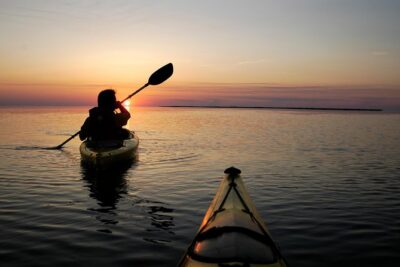
Kayaking off Kaikoura is one of those wildlife plans that feels instantly real. This half-day tour turns the rugged coastline into your route, with guaranteed seal viewing and the chance to spot dolphins and blue penguins from the water.
What I like most is how much guidance you get before you even push off, plus how the guides actively manage the paddle so the group stays together and you get time to watch. The one drawback is that wildlife is still wildlife, so some days you’ll see more seals than dolphins or penguins, even when conditions are good.
In This Review
- Key moments you’ll care about
- First steps in Kaikoura: gear, safety, and your quick kayak lesson
- Kayaking the Kaikoura Peninsula: cliffs, rocks, and where wildlife shows up
- Fur seals right by your kayak: what guaranteed viewing really means
- Dolphins and blue penguins: how to set expectations without feeling disappointed
- How the 3 hours works on the clock: safety, paddling time, and pacing
- What you should bring (and not bring): sandals, water, and no jeans
- Price and value at $95: what you’re actually paying for
- Who this tour is best for in Kaikoura
- Should you book Kaikoura: Half-Day Wildlife Kayaking?
- FAQ
- How long is the Kaikoura half-day wildlife kayaking tour?
- How much does it cost?
- Is seal viewing guaranteed?
- Do I need kayaking experience?
- What wildlife might I see besides seals?
- What’s included in the price?
- What should I bring and what should I avoid?
- Is food or hotel pickup included?
Key moments you’ll care about
- Seal viewing is the main event, with fur seals often right by the kayak as they hunt
- A real paddling lesson first, so first-timers aren’t thrown in cold
- Dolphins and blue penguins are a chance, not a promise
- Dramatic coastline close-up, with cliffs, craggy rocks, and mountain views from sea level
- Small-group feel, with regrouping and a pace that doesn’t rush your wildlife time
First steps in Kaikoura: gear, safety, and your quick kayak lesson
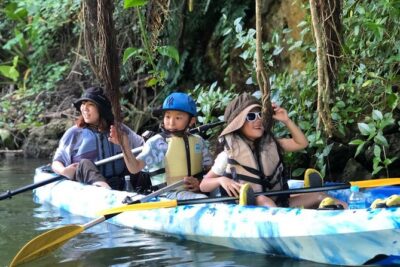
The tour starts in town, where you meet your guides and get a short safety briefing plus a paddling lesson. This matters more than it sounds. Kayaking in coastal swell is different from smooth-lake paddling, so you’re being taught what to do with your body, your paddle, and your spacing from the start.
You’ll be allocated all the equipment you need, including a life jacket. There’s also a dry bag for cameras, which is a nice touch because you’re very likely to get splashed at some point. One review notes smooth entrance and exit from the water, and that’s usually a big deal when you’re trying to keep your balance while the coast does its thing.
The guides’ style shows up again and again in the feedback: they keep people together, give clear instructions, and explain what you’re looking at. People specifically thanked guides by name for being great with first-timers and for staying organized—whether the day is calm or a bit pushy.
You can also read our reviews of more tours and experiences in Kaikoura.
Kayaking the Kaikoura Peninsula: cliffs, rocks, and where wildlife shows up
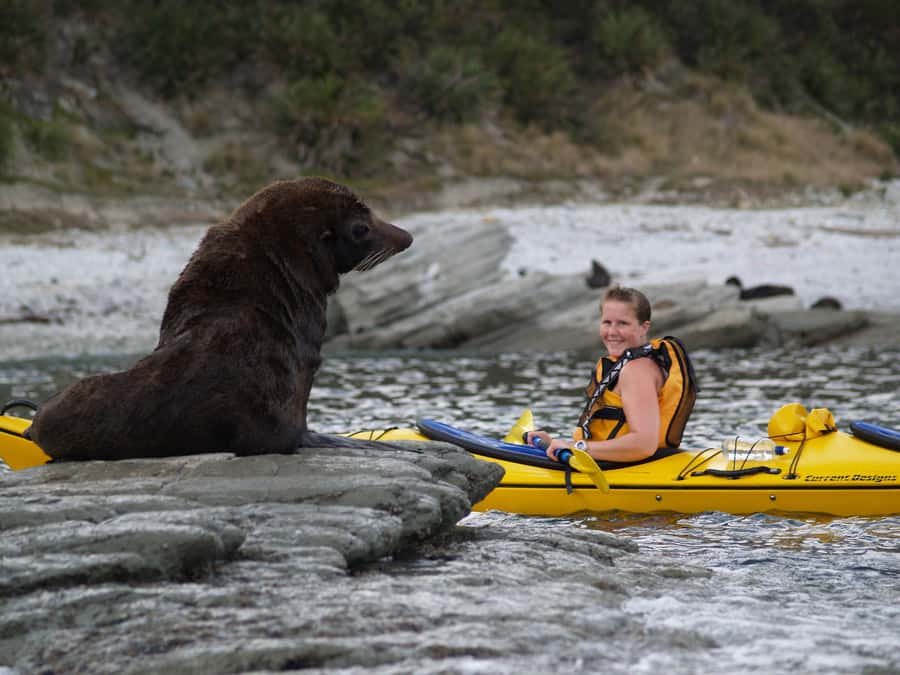
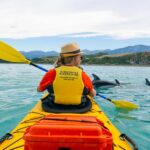
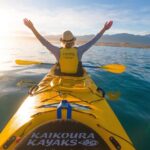
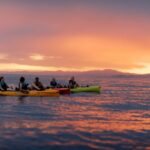
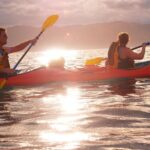
Once you’re on the water, you kayak along the Kaikoura coastline with a guide’s commentary. This is where you get the “you’re actually here” feeling: sheer cliff faces, craggy rocks, and mountain ranges framing the sea. Even when the animals are quiet, that close-up scenery is the reason many people choose this kind of trip rather than just watching from land.
The paddle time is about 1.5 to 2 hours (with the overall tour running around 3 hours). Expect a route that’s paced for real viewing. A few reviews mention not being rushed and having time to soak in what’s happening rather than hopping from spot to spot.
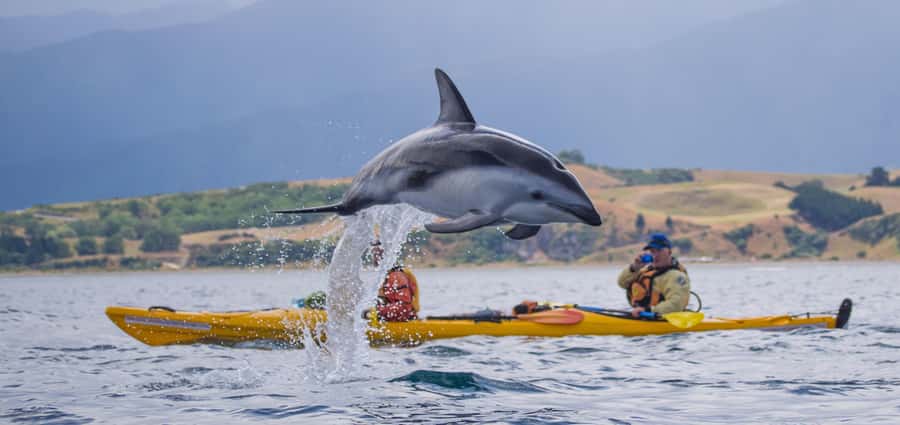
Now for the wildlife part: the guide will search for dusky dolphins and blue penguins as conditions allow. Sometimes wildlife pops up near your route. Other times it’s a bit distant or simply not in the mood to perform. Either way, you’ll be moving slowly enough to actually notice what’s around you—birds, seal activity, and the way the coastline shapes currents and visibility.
Fur seals right by your kayak: what guaranteed viewing really means
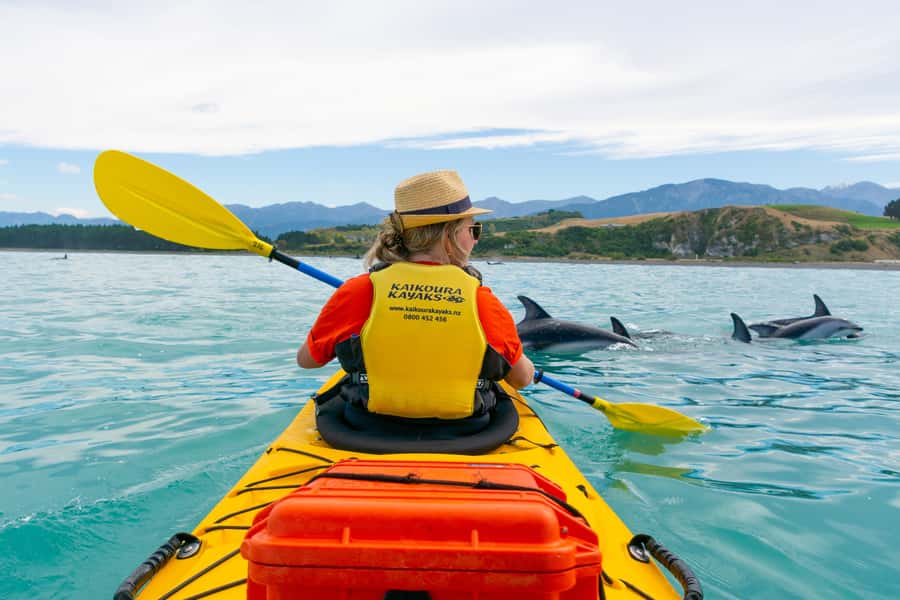
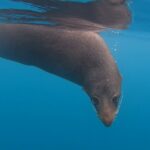
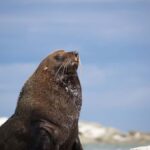
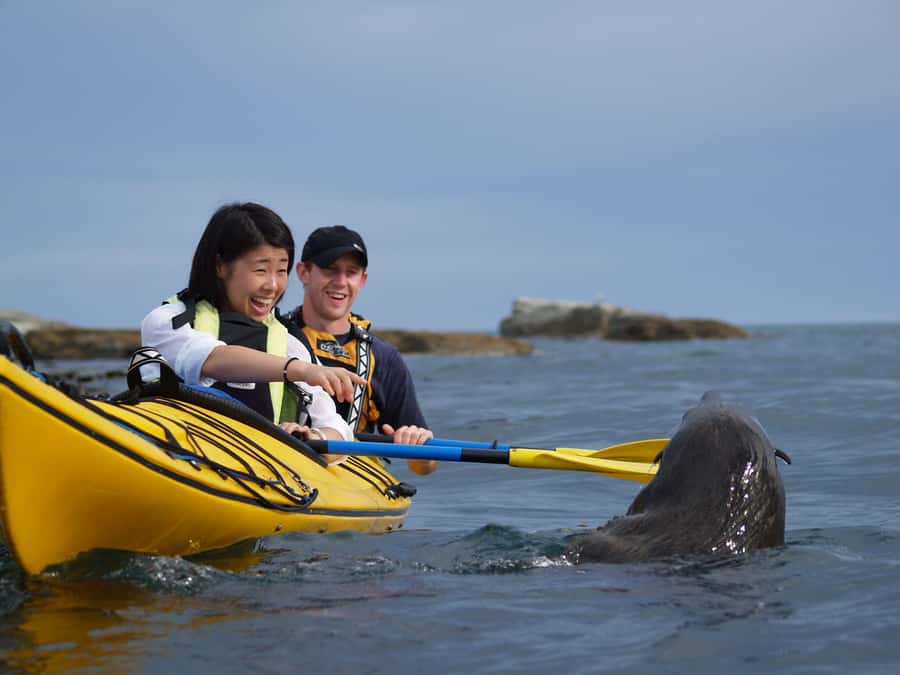
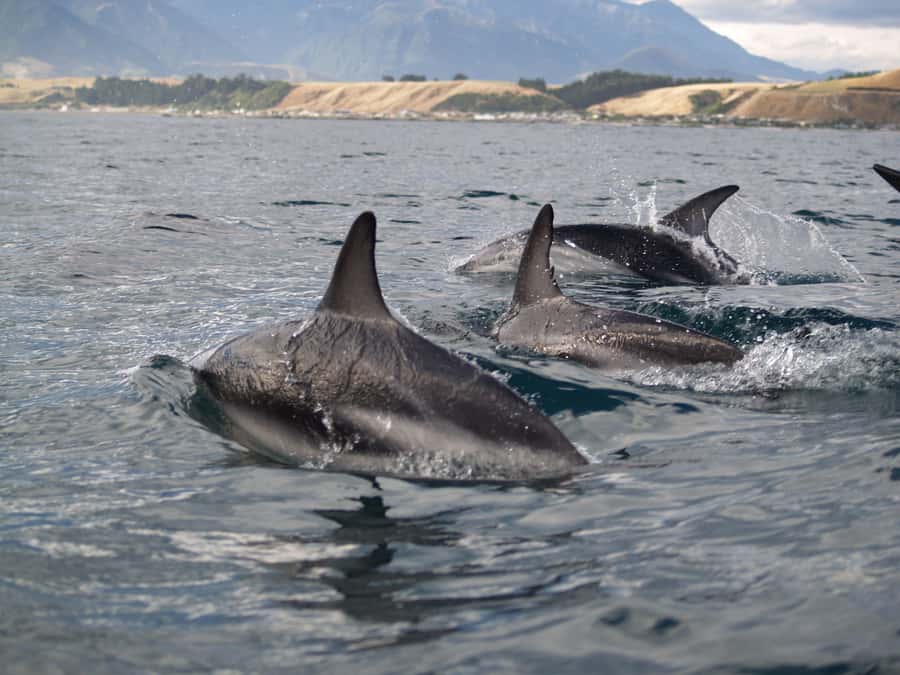
The centerpiece is fur seals, and the tour is built around getting you into the action. In the water, you can watch seals duck, weave, and go underwater around the kayak as they hunt. The description says they’re searching for their dinner (octopus is specifically mentioned), and that matches the overall vibe: you’re not just looking at wildlife from far away, you’re sharing the water with animals behaving naturally.
This is also the reason the tour feels worth it even on days when dolphins are limited. Multiple reviews describe seal sightings as frequent and sometimes intense—seals everywhere, seals that join the journey, and even moments where people felt like they were playing or moving alongside them.
A practical note: the guides help you stay safe and positioned. You’re not supposed to chase or mess with animals. Instead, you’re there to observe while your paddle keeps you close enough for good viewing. If you’ve ever wanted wildlife “up close” without turning it into something chaotic, this is the model.
Dolphins and blue penguins: how to set expectations without feeling disappointed
Dolphins and blue penguins are included as possible sightings, but the tour also makes the reality clear: wildlife can’t be guaranteed beyond the seals. That’s the right approach. Ocean conditions, animal behavior, and time of day all matter.
What you can do is treat dolphins and penguins as the bonus. Reviews give you a realistic picture of this. Many people scored with dolphins and some even saw penguins, while others reported seals but no dolphins on their day. That doesn’t mean the trip failed—it means the tour did exactly what it promised: good kayaking plus the kind of seal encounter Kaikoura is known for, with other wildlife as a wildcard.
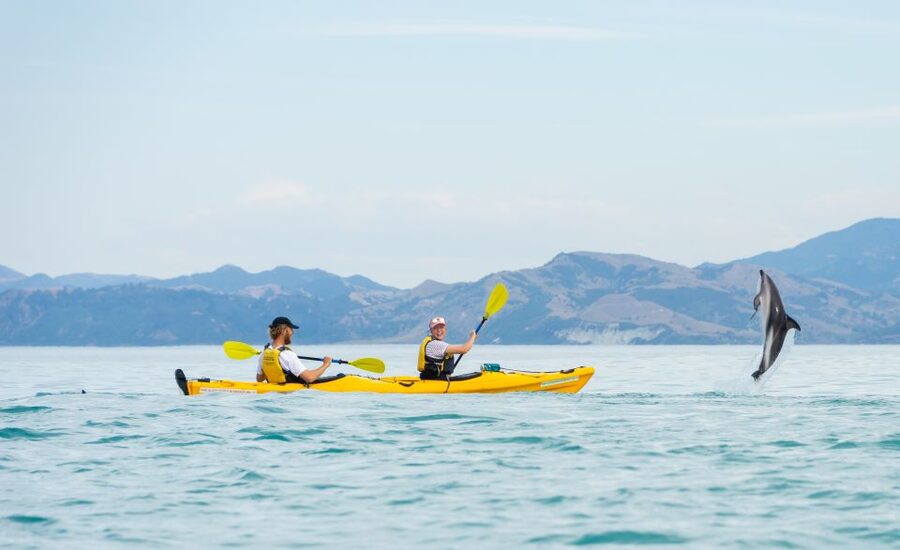
If you’re booking in hopes of dolphins specifically, I’d still go. The way the day is structured—guided scouting plus time on the water—gives you more chances than a quick roadside viewing. And if dolphins do show up, it’s often described as a show: dolphins joining kayaks and spending time in the area long enough to enjoy.
How the 3 hours works on the clock: safety, paddling time, and pacing
The overall duration is listed at 3 hours, and you’ll get about 1.5 to 2 hours kayaking. The rest of the time is doing the things that make the trip smooth: meeting the crew, fitting gear, safety instructions, and then getting everyone launched and back without stress.
The pacing comes up a lot in the feedback. People mention that guides kept groups together and that you regroup at intervals. That’s important because it reduces the risk of stragglers (especially for beginners) and it also helps the group share wildlife moments instead of missing them while someone is paddling hard to catch up.
There’s also good evidence that the guides are ready for real-life situations. One review describes a situation where a child felt seasick mid-trip, and the guide handled it by prioritizing safety and getting the person back to shore. That kind of response doesn’t turn a trip into a medical drama; it just shows the operation is used to keeping things under control.
In short: you’re out long enough for a meaningful paddle and wildlife time, but not so long that you feel cooked by the coast.
What you should bring (and not bring): sandals, water, and no jeans
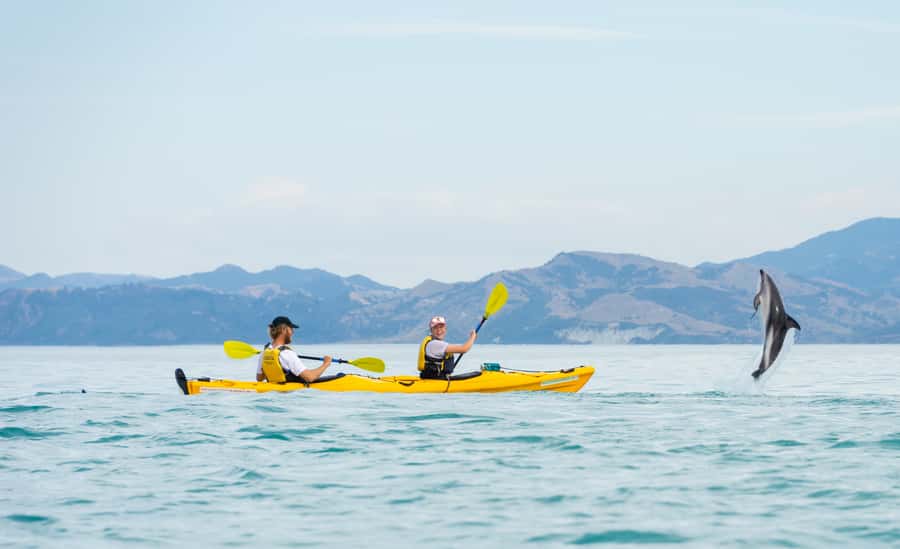
This tour is practical about what matters most: comfort, safety, and not ruining your clothes. Here’s what to bring:
- Sandals
- A camera
- Water (a bottle)
- Weather-appropriate clothing
- Quick-dry clothing
You’ll likely get wet, so quick-dry matters. You’ll also want something you can move in without friction or bulk. One more “don’t”: no jeans. The tour explicitly calls that out, and it makes sense. Jeans hold water and slow you down, and nothing about this kayak outing rewards extra weight.
If you want clear photos, keep the camera accessible but protected. The dry bag for cameras is included, so plan to use it when you’re not actively shooting. And if you hate squinting, bring sunglasses. The guidance also suggests a cap or hat to help with sun.
Price and value at $95: what you’re actually paying for
At $95 per person for around 3 hours, it can look pricey until you break down what’s included. You’re paying for:
- Full kayaking equipment
- Life jackets
- A safety briefing and paddling instruction
- Guide commentary throughout
- A dry bag for cameras
- About 1.5 to 2 hours on the water during prime viewing time
The hidden value is the “doing it right” factor. Coastal kayaking isn’t just sitting in a boat—it’s reading conditions, keeping your footing, and staying spaced. A good guide improves your safety and boosts your odds of actually seeing what you came for (especially seals).
Also, you’re not paying for meals or transport. Food and drinks aren’t included, and there’s no hotel pickup/drop-off. That means you should plan to eat before or after and budget a short walk or drive to the meeting point. If you’re traveling light and can handle the basics on your own, the price lines up well with the amount of water time and professional guidance you get.
Who this tour is best for in Kaikoura
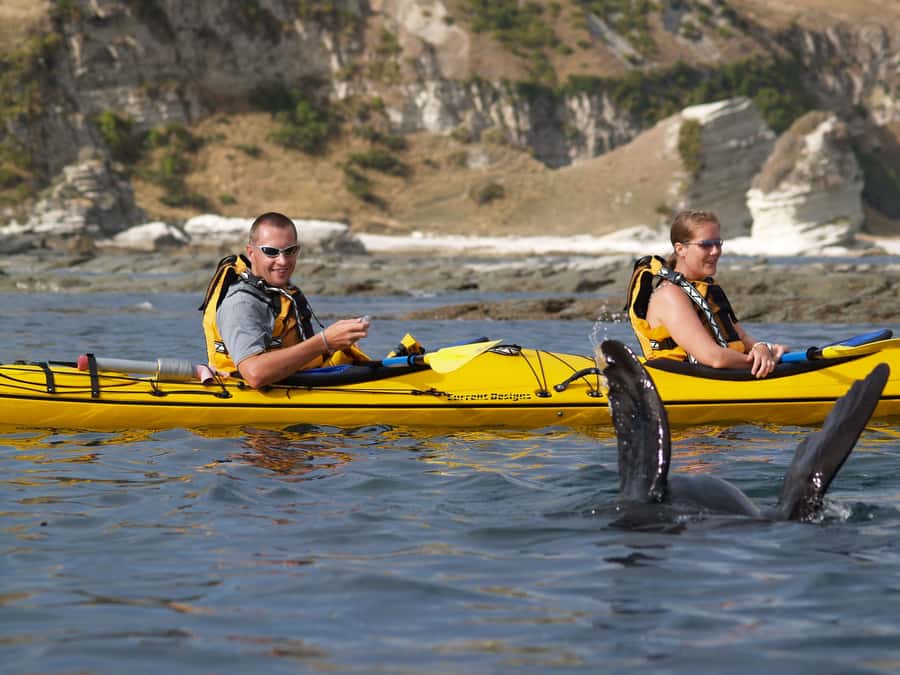
This activity is described as suitable for all levels and for people who haven’t kayaked before. That’s a strong point if you’re worried you’ll feel clumsy. The paddling lesson is there to reduce the learning curve fast.
There’s one age constraint to keep in mind: it’s not suitable for children under 13. So it’s a better fit for teens, adults, and families with older kids.
You’ll also love this tour if:
- You want wildlife without crowds and distance
- You like active sightseeing (moving through the view, not just standing in it)
- You care about learning from guides, not just checking a box
- You’re okay with the natural variation of wildlife sightings
From the reviews, the crowd includes solo bookers who get paired up, couples, and groups of different skill levels. People also note that kayaks are in good condition and that instructions are clear enough for novices to feel safe.
Should you book Kaikoura: Half-Day Wildlife Kayaking?
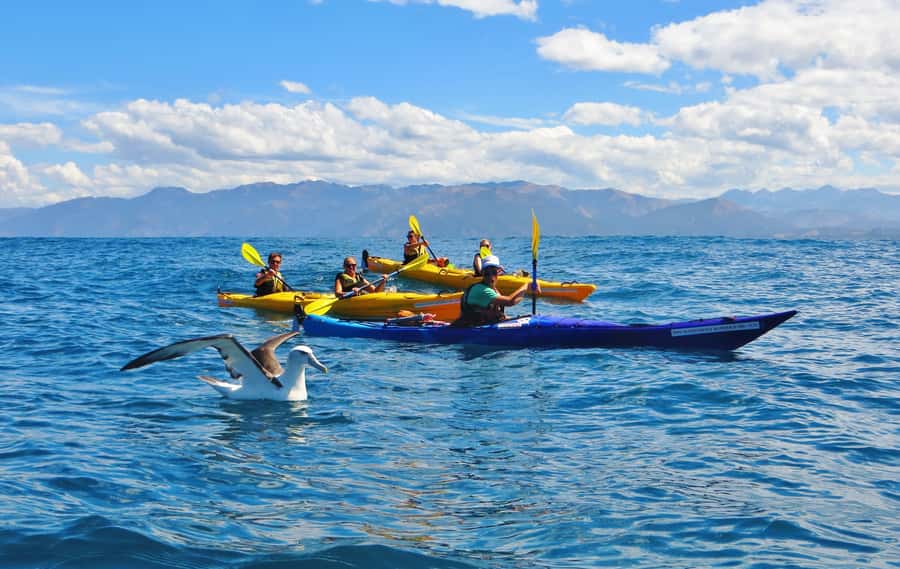
If your top priority is fur seals up close in the water, I’d book this. The tour’s design is built around getting you that core encounter, and the guides focus on safety and group management so your time on the water isn’t chaotic.
I’d also book if you’re excited by the idea of adding dolphins or blue penguins as a bonus. Just go in with the right mindset: seals are the dependable anchor, and other wildlife is weather and animal behavior dependent.
Only skip it if you’re not comfortable with getting a bit wet, you dislike being out on open coastal water, or your schedule can’t handle a fixed 3-hour block. Otherwise, it’s one of the most direct ways to experience Kaikoura’s wildlife where it actually lives.
FAQ
How long is the Kaikoura half-day wildlife kayaking tour?
The tour runs for about 3 hours total, and you get around 1.5 to 2 hours of kayaking time on the water.
How much does it cost?
It’s listed at $95 per person.
Is seal viewing guaranteed?
Yes. The tour summary states you have guaranteed seal viewing, though you can’t expect every listed animal every day.
Do I need kayaking experience?
No. The tour says it’s suitable for all levels and that qualified guides teach you what you need to use the kayak.
What wildlife might I see besides seals?
The tour highlights chance encounters with dusky dolphins and blue penguins, but wildlife sightings can’t be guaranteed beyond the seals.
What’s included in the price?
Included items are all kayaking equipment, life jackets, a safety briefing, guide commentary, a dry bag for cameras, and the kayaking time (1.5 to 2 hours).
What should I bring and what should I avoid?
Bring sandals, water, weather-appropriate clothing, quick-dry clothing, a camera, and sunglasses (plus a cap or hat). Jeans are not allowed.
Is food or hotel pickup included?
Food and drinks are not included, and hotel pickup and drop-off are not included either.