REVIEW · SINGAPORE
Kayak Sailing in Singapore, Mangrove, Kelong & Pulau Ubin, Seafood Meal Included
Book on Viator →Operated by Kayak Fishing Fever · Bookable on Viator
Sailing kayaks turn Singapore water into a playground. This 6-hour outing pairs Hobie sail kayaks with a guided ride through mangroves and Pulau Ubin, plus a kelong seafood lunch that’s served right on a floating fish farm. I especially like how beginner-friendly it is—no sailing background needed, just learn how to open and close the sail. One thing to weigh: it’s weather-dependent, and the trip uses a set schedule.
You’ll also get a small-group feel (max 12), with a guide on hand for instruction, safety, and photo taking. On top of that, you get proper gear like life jackets and even a VHF radio setup, which helps you relax and focus on the water.
If you prefer super-light activity with zero time in a kayak, adjust your expectations. You will be actively pedaling and steering, and the day includes a nature and Kampong walk once you’re on Pulau Ubin.
In This Review
- Key things I’d focus on
- Hobie sail kayaks: why this setup works for first-timers
- The 7:00 am start at Pasir Ris, and how the day stays paced
- Pulau Ubin first: nature time and a Kampong walk
- Mangoes’ worth of scenery: mangrove maze kayaking and wildlife spotting
- Lunch on a kelong: fresh-caught seafood with a floating-farm feel
- Safety and support: life jackets, VHF radio, and the photo focus
- Price and value: what you really get for about $120
- Who should book this kayak sailing day (and who might pass)
- Should you book this tour?
- FAQ
- FAQ
- Do I need sailing experience to join?
- How long is the tour?
- What time does the tour start?
- Where does the tour begin?
- What’s included in the price?
- Is lunch included, and what kind of food is it?
- How big is the group?
- What happens if the weather is bad?
- Is tipping included?
Key things I’d focus on
- Beginner sailing basics only: you learn the simple sail motions, no jargon lesson required
- Pedal + sail every conditions: wind helps, but you still move even when the breeze drops
- Mangrove wildlife moments: keep your eyes open for otters, monitor lizards, and even wild boar
- A real floating setting for lunch: seafood on a kelong, with seabass and mussels highlighted
- Small group (12 max): more personal help and easier photo/video moments
Hobie sail kayaks: why this setup works for first-timers
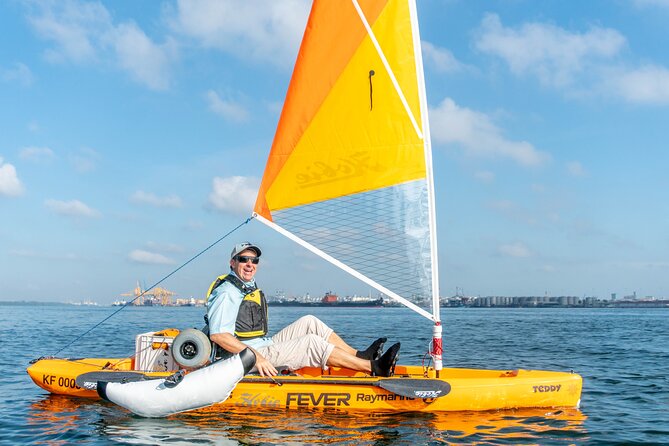
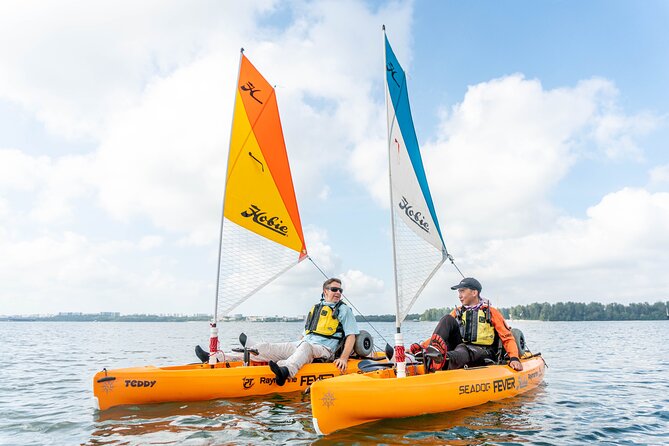
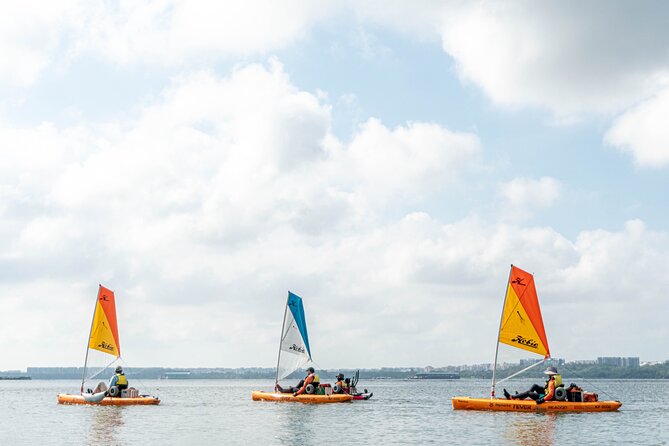
This experience is built around pedal-powered sailing kayaks with a small sail that’s meant for beginners. The guide teaches the core moves without drowning you in complicated terminology. In practical terms, you don’t need confidence with rigging or racing lines—you just learn how to open and close the sail and how to steer using the kayak’s normal controls.
What makes the day feel easier is the mix of power sources. When it’s windy, the sail gives you a boost and the route feels faster. When the wind is weak, you’re not stuck waiting for weather to cooperate—you can still propel forward using the pedals, so you’re always “sailing,” just at the pace the day allows.
And yes, you’ll get plenty of Captain Jack Sparrow energy. Not because you’re out there soloing across open water, but because the sail-and-kayak combo makes you feel like you’re doing something out of the ordinary on purpose.
You can also read our reviews of more tours and experiences in Singapore.
The 7:00 am start at Pasir Ris, and how the day stays paced
The tour runs about 6 hours and kicks off at Pasir Ris Park Carpark at 7:00 am, then returns you to the same meeting point. Starting early matters more than it sounds. Morning light is kinder on photos, and you’re less likely to feel rushed as you learn your kayak rhythm.
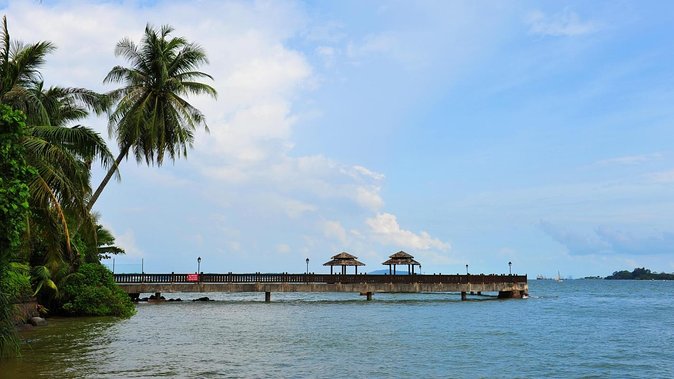
The route is planned as a flow: you head toward Pulau Ubin, spend time there exploring, then work your way into the mangroves by kayak, with lunch at a kelong (floating fish farm) afterward. It’s not a “one-and-done” sightseeing loop. You get multiple environments—island foot time, then long water time through mangroves.
One small consideration: the day is active, not just scenic. You’ll pedal and steer for sustained stretches, and you’ll also do a short walk once you reach Pulau Ubin.
Pulau Ubin first: nature time and a Kampong walk
Pulau Ubin is where the day finds its slower, more local pace. After you reach the island, you’ll have time for a Nature and Kampong walk. This is a nice reset from being on the water, because your body gets a break and your eyes get a chance to adjust to island textures—paths, shoreline views, and the quieter feel compared with mainland Singapore.
The Kampong component also helps you understand what you’re floating above. Mangroves and kelongs are part of Singapore’s water-based life, and the walk gives context for why the area looks the way it does. You’re not just looking at scenery; you’re learning what the environment supports.
A drawback to flag: if you’re expecting only kayaking time and zero walking, the schedule might feel a bit more physical than you want. But the walk is short and part of the overall rhythm.
Mangoes’ worth of scenery: mangrove maze kayaking and wildlife spotting
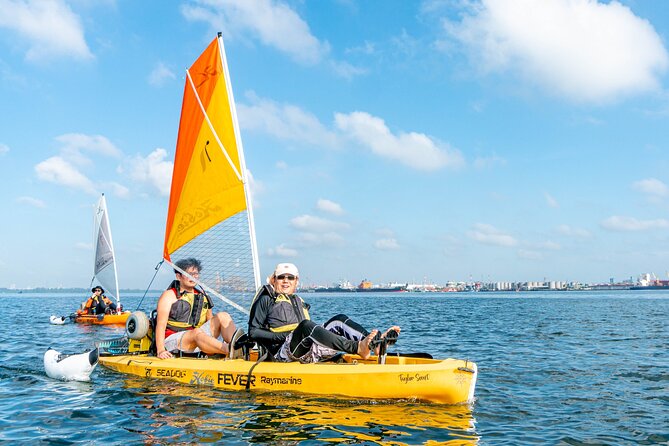
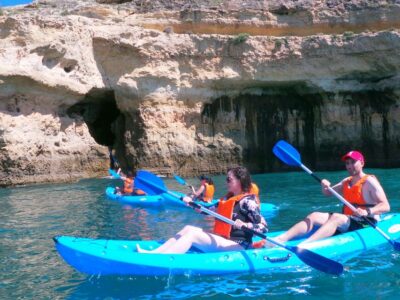
The real highlight is the mangrove section—part water trail, part living ecosystem. Once you’re in, you navigate through a mangrove forest that can feel like a maze from the kayak. Your job isn’t to “conquer” it; it’s to move slowly, watch carefully, and let the guide help you keep things on track.
This is also where wildlife sightings become a real possibility. The route description points you toward chances to spot an otter, monitor lizard, or even wild boar swimming near your kayak. I can’t promise you’ll see everything every day, but the layout and slow pace are clearly chosen to give you that kind of opportunity.
One practical note: mangrove kayaking is peaceful, but it’s not silent. You’ll hear water movement, gear sounds, and the guide’s prompts. That’s normal—and it helps, because it makes it easier to stay aware and enjoy the moment without feeling lost.
Also keep in mind you’re on a kayak, not a tour boat. If you want close-up viewing, this is the format that delivers. You’re low to the water, close to the edges, and you can watch details that you’d normally miss from a higher deck.
Lunch on a kelong: fresh-caught seafood with a floating-farm feel
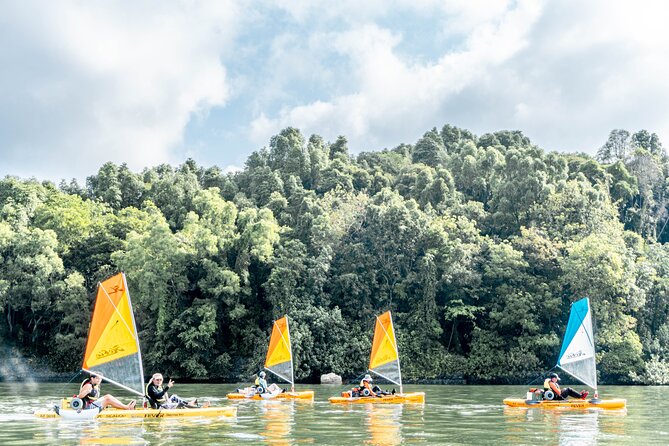
At some point in the day, the kayaking rewards you with lunch on a kelong, a floating fish farm. This is one of those Singapore experiences that feels intentionally different from standard “sit-down restaurant” sightseeing. Your meal comes with the setting built in—water around you, the structure of the farm, and that sense that the food’s part of a working system.
The seafood menu is described as a 2-course lunch, featuring locally farmed seafood like seabass and mussels. The food is caught/harvested right in front of you, which changes the tone of the meal from casual to “wow, this is real.”
The value angle is solid: many half-day tours might offer a snack or a basic meal. Here, you’re getting a full lunch experience that ties directly into what you’ve been doing the whole morning.
One mild consideration: the seafood is fresh and likely satisfying, but there’s feedback that the meal could offer more variety. If you’re the type who gets bored with a narrow menu, it’s worth keeping that in mind.
Safety and support: life jackets, VHF radio, and the photo focus
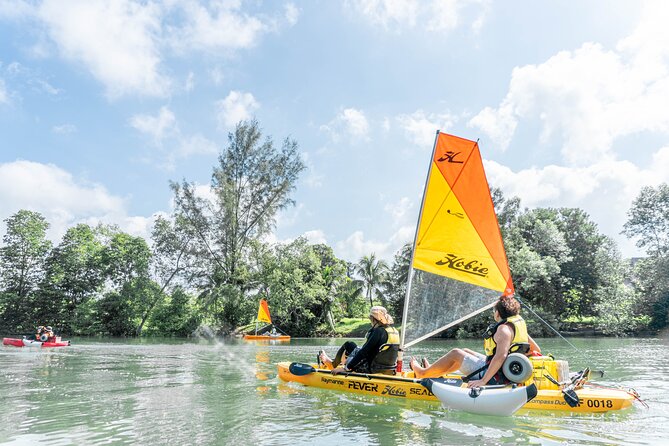
You don’t have to guess what your day’s safety plan is. You’ll get life jackets (PFD) and VHF radio included, plus the Hobie sail and the Hobie sailing kayak equipment itself. Having a radio setup matters in a mangrove environment where distances and signals aren’t the same as open, wide waterways.
The guide is also central to making it work. The experience is designed so you can learn basics fast, with assistance available if something goes wrong. In the feedback you can see why this matters: people praise the guide for safety attention and for pointing out wildlife and local context as the day unfolds.
And then there are the photos. The tour includes wonderful photos taken during the session, which solves a common problem with kayaking. If you’ve ever tried to take good pictures while you’re wearing a life jacket, you know it gets awkward fast. Here, the guide handles it for you, so you can stay focused on steering.
Tip: tips aren’t included, so if you want to thank your guide, plan for that extra cost.
Price and value: what you really get for about $120
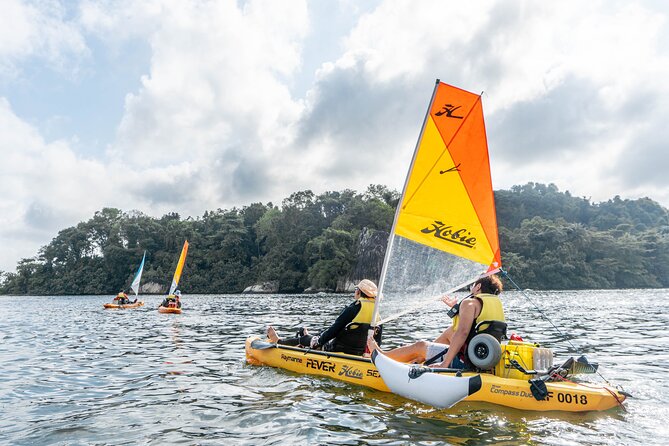
At $120.31 per person, this isn’t a budget activity—but it also isn’t overpriced for what’s included. You’re paying for more than “rental kayak time.” The price covers sailing kayaks, the sail, safety gear like PFDs and a VHF radio, guide support, bottled water, and your 2-course seafood lunch on a kelong. You also get the photo package.
For me, the value comes from the combination:
- You get instruction for a skill you’ve never done before (sail basics).
- You get access to specific ecosystems (mangroves and Pulau Ubin) that are hard to replicate on your own.
- You get lunch with a setting that’s part of the experience, not just an afterthought.
The one “cost” isn’t money—it’s planning. The tour requires good weather, and the day’s schedule is fixed. If the weather doesn’t cooperate, you’ll get offered another date or a full refund, depending on how cancellation happens.
Also note the day can’t be “safely rescheduled” late in the game without risk. The provider lists free cancellation up to 10 days before, but also states it’s non-refundable and cannot be changed once closer to departure. If you’re juggling a tight itinerary, aim to book with enough flexibility.
Who should book this kayak sailing day (and who might pass)
This is a great fit if you want a hands-on Singapore experience that isn’t just walking and photo stops. It’s especially good for people who:
- want an easy intro to sailing concepts without prior experience
- like wildlife spotting and watching ecosystems up close
- enjoy guided days with photos taken for you
- want a fun bonding activity with friends or family (small group helps)
It’s less ideal if you:
- want a mostly comfortable, seated tour with minimal physical effort
- get nervous about being on the water for a sustained part of the morning
- don’t want any weather-dependent uncertainty at all
If you’re traveling with mixed energy levels—someone who loves nature and someone who just wants something fun—this format usually works well. You’re all doing the same core activity, and then everyone gets a shared lunch experience on the kelong.
Should you book this tour?
I’d book it if you’re excited by the idea of kayak-sailing through mangroves plus a floating fish farm seafood lunch. The beginner-friendly sail teaching and the strong safety setup make it feel approachable, and the small group size means you get more real attention than you would on a larger cruise style outing.
Hold off or double-check your plans if you can’t deal with the weather factor, or if you’re sensitive to a schedule that includes both kayaking and a walk on Pulau Ubin.
If you want Singapore from the water—slow, close, and a little bit adventurous—this is a smart way to spend your morning.
FAQ
FAQ
Do I need sailing experience to join?
No. You don’t need any sailing knowledge. The guide teaches you the basic sailing actions without complicated jargon, and you mainly need to learn how to open and close the sail.
How long is the tour?
The experience runs for about 6 hours.
What time does the tour start?
The tour starts at 7:00 am.
Where does the tour begin?
It starts at Pasir Ris Park Carpark, Singapore, and it ends back at the same meeting point.
What’s included in the price?
Included are Hobie sailing kayaks and the Hobie sail, life jacket (PFD), bottled water, VHF radio, photos, and the seafood meal during the tour.
Is lunch included, and what kind of food is it?
Yes. You’ll have a 2-course seafood lunch on a kelong, with options highlighted such as locally farmed seabass and mussels.
How big is the group?
The maximum group size is 12 travelers.
What happens if the weather is bad?
The experience requires good weather. If it’s canceled due to poor weather, you’ll be offered a different date or a full refund.
Is tipping included?
Tipping is not included. The guidance is to tip if you feel the crew earned it.