REVIEW · CAMBODIA
Kayaking & Floating Village in Siem Reap
Book on GetYourGuide →Operated by Cambodia Adventure Tour · Bookable on GetYourGuide
Floating houses on Tonle Sap feel calm and real. I love the Tonle Sap morning views and the chance to do mangrove kayaking at a slow pace, not a race. One watch-out: kayak time can feel short, and the quality of instruction can vary with the guide.
This is the kind of tour where the day runs smoothly from your hotel pick-up to boats, snacks, and a return ride, with an English-speaking guide along for context. You’ll get transferred to the floating area, meet the rhythm of villagers living on the lake, then paddle through canals and (when conditions allow) mangroves, where quiet strokes help you notice birds. The strongest experiences often come when your guide explains local life clearly, like Daral’s enthusiastic style or Sovandy’s storytelling and small extras.
Timing and water levels matter here. In the low-water season (March to June), you may kayak in open lake waters and focus more on water birds than mangroves, so don’t expect the same scenery year-round. Pack sunscreen and plan for sun and brief vehicle waits, because this is an outdoor morning-to-late-morning style outing.
In This Review
- Key things to know before you go
- From Siem Reap to Tonle Sap: how the day starts
- Floating houses and daily life around rice paddies
- Powered boat through canal growth, then kayaking in the Mechrey village
- Snacks, drinks, and a floating-house pause you’ll actually enjoy
- Mangrove forest kayaking and bird watching: the main highlight
- Tonle Sap morning views and photo opportunities (and what can affect sunset plans)
- Pacing and group time: why the trip can feel both satisfying and short
- Price and value: is $88 fair for what you get?
- What to bring (and what helps with comfort)
- Guide spotlight: how explanations change the experience
- Should you book this Siem Reap kayaking and floating village tour?
- FAQ
- FAQ
- How long is the Kayaking & Floating Village tour in Siem Reap?
- How much does the tour cost?
- What’s included in the price?
- What should I bring?
- Are pets allowed?
- When might the tour not kayak the mangroves?
- Is pickup from my hotel included?
Key things to know before you go
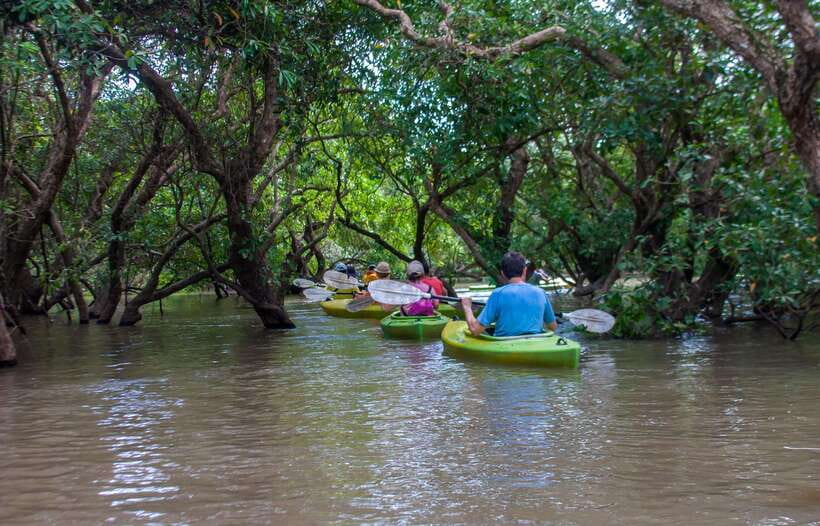
- Mechrey floating village + a floating kayak station: You can pause for snacks and even use the bathroom on a houseboat-style stop.
- Powered boats first, then quiet fiberglass kayaks: The motor gets you through heavy canal growth; your paddle does the slow sightseeing.
- Bird watching can be the main event: Mangroves may shift to open water in March to June.
- Photo stops are mostly reachable by kayak: Some viewpoints are only practical when you’re actually on the water.
- Guide quality makes a difference: Strong English explanation can turn paddling into a living-history lesson.
From Siem Reap to Tonle Sap: how the day starts
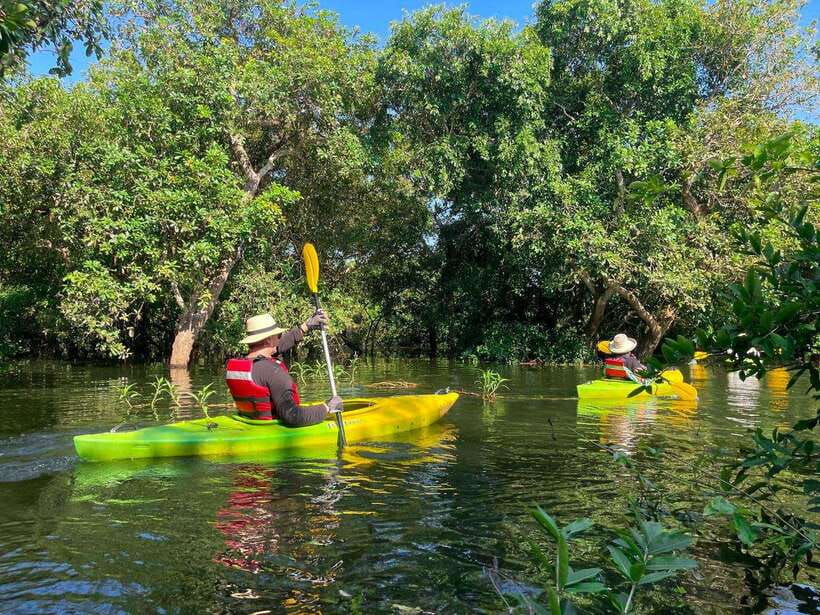
Your day begins in Krong Siem Reap with pickup in an AC vehicle, leaving you with a comfortable start before you hit the heat and lake air. You’ll head to the water area and then transfer by boat. Even if you’re only on boats for short stretches, those rides matter: they place you where the kayaking actually works and reduce the amount of time you spend sitting around on shore.
A big part of what makes this tour feel worth it is the flow. You aren’t just handed a kayak and sent off. The schedule includes time to see rice paddies and daily routines around the lake before you reach the dock and transition into the floating village area.
You also get a safety setup early on: safety gear and a safety guard are included, which helps you feel more comfortable when the canals get narrow or overgrown.
Floating houses and daily life around rice paddies
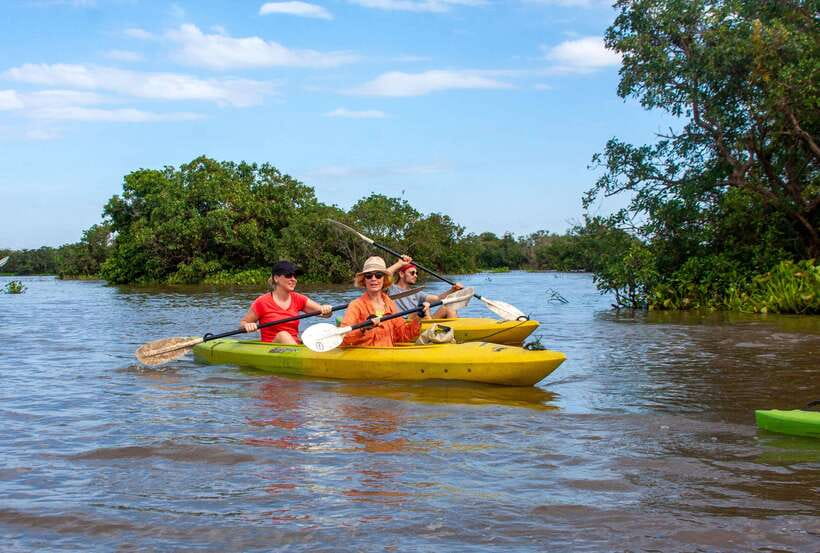
Before you ever touch a paddle, you’ll get a look at how local life connects to the water. You’ll observe rice paddies and everyday rhythms of people living near (and with) Tonle Sap’s changing seasons. That context is useful because floating villages can look like a tourist set at first glance. Seeing the land-water connection early helps everything later feel less staged.
When your guide explains how people live, work, and trade, it turns the scenery into a real system: lake access isn’t just about living on water, it’s about moving goods, fishing, farming cycles, and community life. In guides like Daral’s case, this kind of explanation can add a lot, especially if you’re the type who likes understanding what you’re looking at rather than only taking photos.
Powered boat through canal growth, then kayaking in the Mechrey village
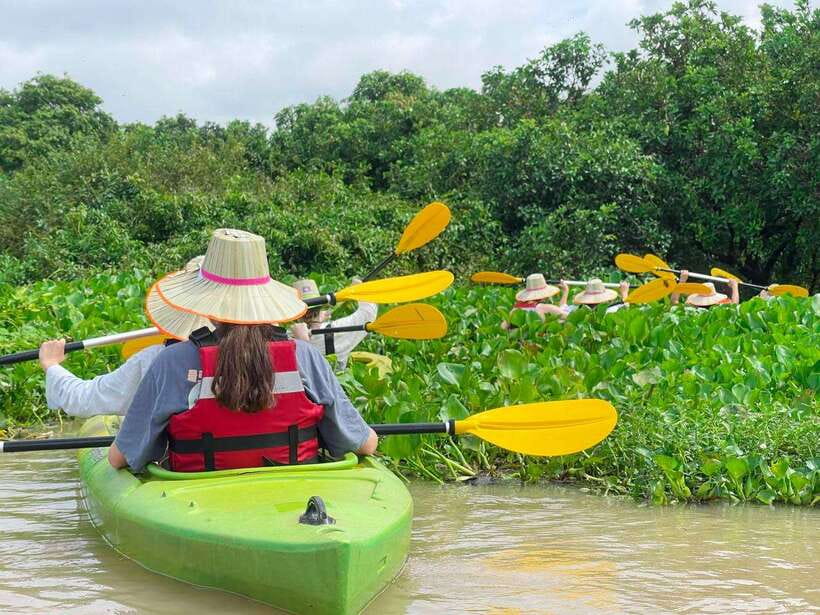
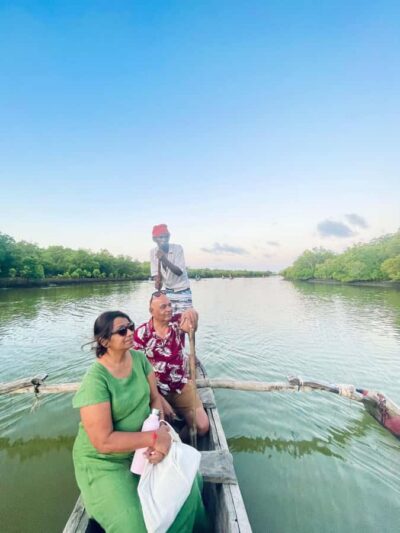
Once you reach the floating village area, you’ll board a powered boat to reach Mechrey floating village. This part is practical: the canal paths can be choked with heavy overgrowth, and the motor gets you through without making you fight weeds for hours.
Then it’s your turn. You’ll don safety equipment and switch to fiberglass kayaks, paddling slowly through floating-house lanes. This is one of those rare tours where the pacing matches the place. You’re not being bounced along at speed; you’re gliding.
What you’ll notice on the water:
- The close-up view of floating homes and daily activities
- The way the community responds to visitors, often with warm smiles and straightforward friendliness
- How your quiet paddling makes it easier to notice small details—ripples, bird movement, and the lake’s changing light
If you get a guide who gives clear pointers, you’ll also paddle more confidently. Some groups have reported that instructions were minimal when the guide’s English wasn’t strong, so do yourself a favor: arrive ready to listen carefully, and don’t be shy about asking quick questions during the safety talk.
Snacks, drinks, and a floating-house pause you’ll actually enjoy
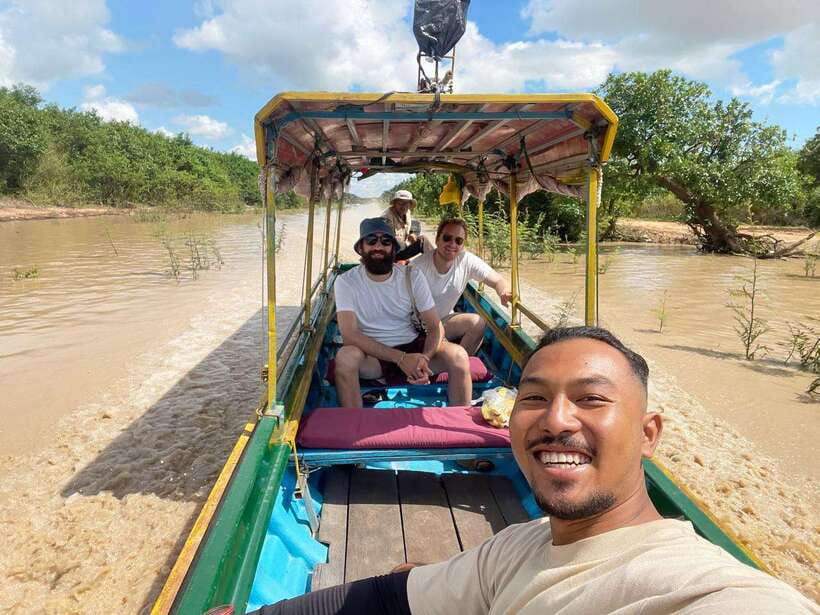
There’s a mid-tour break that feels smarter than a typical roadside stop. You return to the kayak station, which is described as a floating house in Mechrey floating village, and you can enjoy snacks and drinks. You’ll also be able to use the bathroom here.
This matters more than it sounds. If your water time is split into shorter segments, the land-time replacement needs to be comfortable. Here, the pause stays connected to the lake setting rather than yanking you back to a generic convenience stop.
In one case, guide Sovandy added extra warmth with a fresh drink and a viennoiserie during the return flow, which is the kind of small kindness that makes the whole outing feel cared for.
Practical tip: this is a good moment to hydrate and take sunscreen laps before the next boat transfer and the mangrove/open-water kayaking.
Mangrove forest kayaking and bird watching: the main highlight
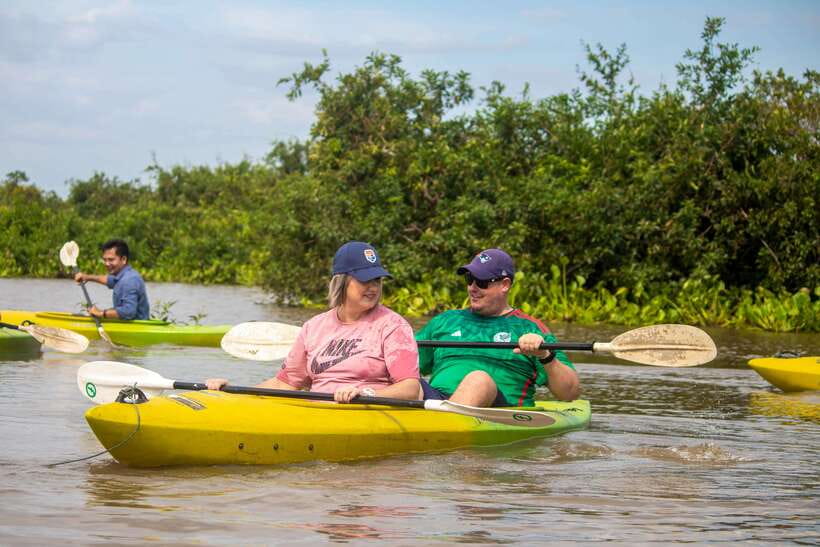
This is the part most people come for: kayaking through the mangrove forest and watching birds. After a short powered boat transfer, you’ll paddle quietly through mangrove channels where sightlines open in bursts—branches above, water below, and birds shifting when your movement stays gentle.
The tour description also gives a key seasonal detail: during low water season, between March and June, kayaking may shift to open lake waters, focusing on water bird viewing instead of mangrove channels. That means the experience can still be great, just different. You might trade dense branch shadows for wider horizons and bird activity you spot from more open paddling routes.
Why quiet paddling helps here:
- Motorized traffic can startle birds and change their behavior
- Paddling reduces noise and lets your guide spot movement sooner
- You’re more likely to reach photo angles that look impossible from shore
Bring your camera ready. The tour highlights mention photo spots only viewable by kayak, and the logic checks out: if the viewpoint is on the water’s edge or behind narrow channels, you only get there by being on the water.
Tonle Sap morning views and photo opportunities (and what can affect sunset plans)
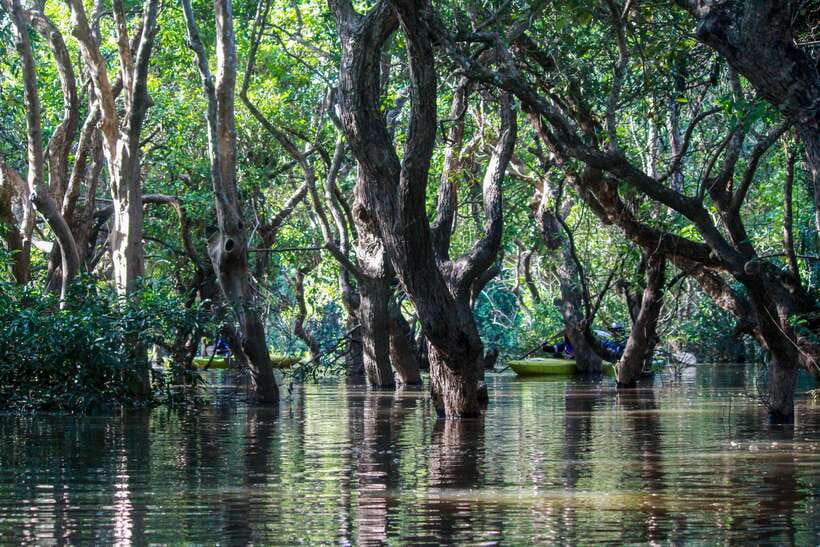
Tonle Sap scenery is the star of the show, especially around morning light. You’ll have time at a strong viewpoint for peaceful lake views and excellent photo opportunities. Even if you love temples and city life, this part hits a different nerve: wide water, pale sky, soft bird motion, and a sense that the lake is doing its own thing.
One note from real-world timing: some departures may not fully match a sunset expectation. For example, one participant felt the schedule was too focused on commute and that paddling time was shorter than ideal, so sunset wasn’t reached. The safe takeaway for your planning is simple: think of this as a morning-to-late-morning style nature paddle where light for photos is the goal, not a guaranteed late-afternoon sunset.
If sunset is a must for your Cambodia trip, you can still enjoy the lake, but you should pair it with flexibility in how you define the best photos of the day.
Pacing and group time: why the trip can feel both satisfying and short
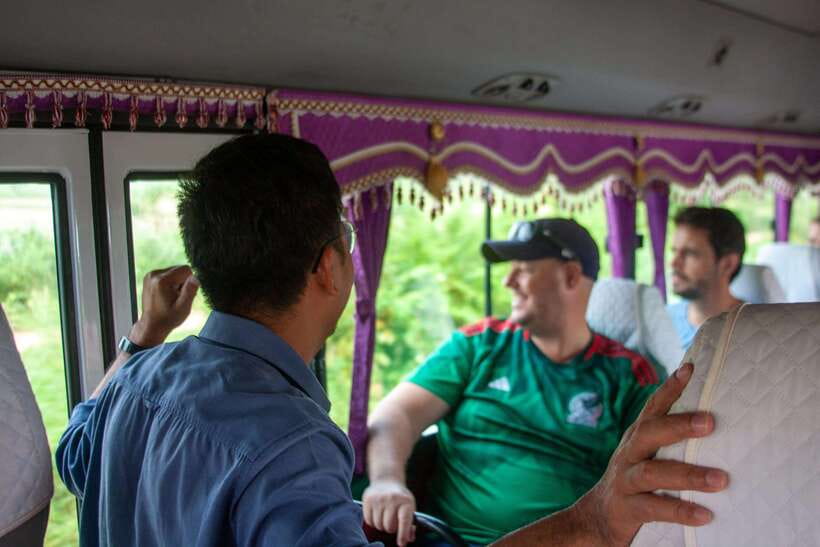
A 6-hour day sounds like plenty until you watch it unfold. Boats, transfers, safety gear, and changing water conditions all consume minutes. In at least one experience, kayaking time was around 45 minutes, which can feel short if you’re expecting hours of uninterrupted paddling.
Here’s how to handle it:
- If you love the idea of kayaking more than long physical time, this format works well.
- If you want a marathon paddle, you may end up wishing for more water time.
The good news: even shorter paddling sessions can be worth it when they’re placed in the right zones—floating village canals and mangrove/open lake bird routes. The tour design is built around access to places you can’t reach easily any other way.
Price and value: is $88 fair for what you get?
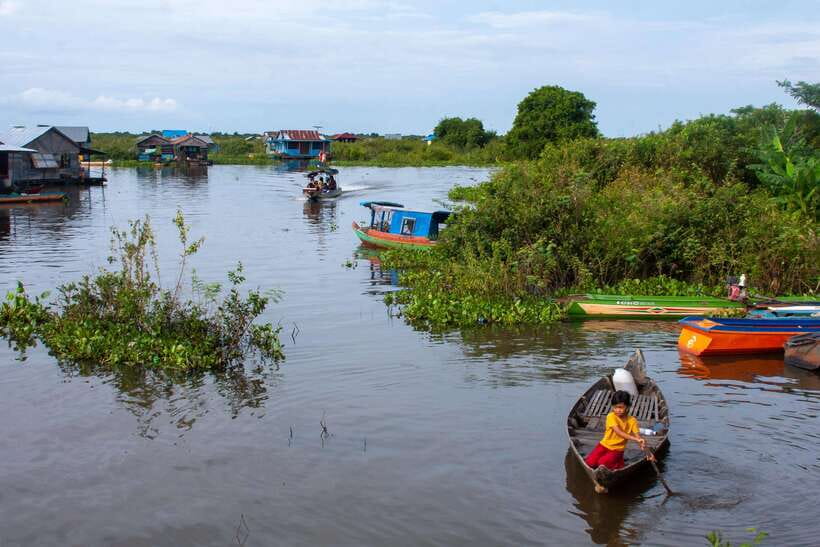
At $88 per person for 6 hours, this sits in the mid-range for Siem Reap excursions. The value comes from what’s included, not just the paddle.
You get:
- English-speaking guide
- AC transfers
- Entrance fees
- Boat rides (including the powered boat segments)
- Kayaking (gear included)
- Drinks and snacks
- Safety gear and a safety guard
What you’re not paying extra for is a big part of the deal. If you try to DIY kayaking around the floating village area, you’d likely lose time coordinating transport, safety equipment, and access. Here, the tour handles the sequence: vehicle → water transfer → village arrival → paddling stations → mangrove/open-water zone → return.
So for me, the question isn’t only whether $88 is cheap. It’s whether you want a guided, structured day that mixes lake life context with practical kayaking access. If yes, the price feels reasonable.
What to bring (and what helps with comfort)
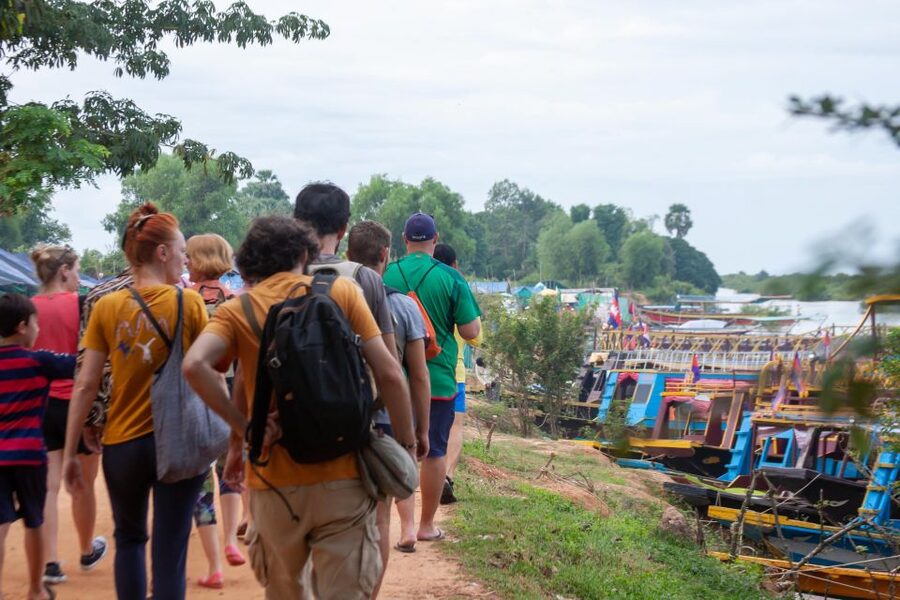
You’ll be on the water and in the sun. The tour lists simple essentials: sunglasses, a camera, and sunscreen.
I’d add a couple of comfort-minded suggestions based on what’s actually worked:
- Wear footwear that’s easy to remove or adjust. One guide-specific tip noted sandals that come off easily over bulky shoes.
- Bring a camera strap or secure way to carry gear. You’ll be paddling and shifting positions in the kayak.
Also keep in mind this tour isn’t for everyone. It’s listed as not suitable for pregnant women and babies under 1 year, and pets aren’t allowed.
Guide spotlight: how explanations change the experience
This kind of tour lives or dies on the guide’s storytelling and clarity. The activities are visual, but understanding village customs and daily lake life is what turns the paddling into something you’ll remember.
You’ll see different styles. Examples from the experience notes include:
- Mr Chong, praised for being a good guide
- Daral, praised for generous explanations and enthusiasm about floating villages, the area, and even temples
- Sovandy, noted for friendly attention and small added comforts like a drink and viennoiserie
If your guide’s English is strong, you’ll likely spend more time connecting the dots: why the floating houses look the way they do, how trading works on the water, and what local customs are polite to respect.
Either way, do what works best: listen during the safety and cultural moments, ask one question if anything feels unclear, then let the water do the rest.
Should you book this Siem Reap kayaking and floating village tour?
You should book if you want:
- A hands-on view of floating life around Tonle Sap
- A calm, slow kayaking pace rather than a rushed sightseeing sprint
- Bird watching and lake photos with a guide who can explain what you’re seeing
- Included gear, snacks, and AC transfers that reduce stress
You might skip (or rethink) if you strongly want:
- Long hours of continuous kayaking time
- A strict sunset timeline every time
- An experience where detailed instruction is guaranteed regardless of guide language
For most people visiting Siem Reap, this works well as a break from temples. It’s different: water-level life, quiet paddling, and morning light over Tonle Sap—exactly the kind of authentic day that adds variety to your trip.
FAQ
FAQ
How long is the Kayaking & Floating Village tour in Siem Reap?
The duration is 6 hours.
How much does the tour cost?
The price is $88 per person.
What’s included in the price?
It includes an English-speaking guide, AC vehicle transfers, entrance fees, boat ride(s), kayaking, drinks, snacks, safety gear, and a safety guard.
What should I bring?
Bring sunglasses, a camera, and sunscreen.
Are pets allowed?
No, pets aren’t allowed.
When might the tour not kayak the mangroves?
In low water season between March and June, the kayaking may be in open lake waters with a focus on water bird viewing instead of mangroves.
Is pickup from my hotel included?
Yes. Pickup is included, and you should provide your hotel name, address, and room number. The guide and driver pick you up 30 minutes before departure time.