REVIEW · KEJIMKUJIK NATIONAL PARK
Southern Lakes Canoe Trip – 4 Day
Book on Viator →Operated by Whynot Adventure Outfitters · Bookable on Viator
Three days of paddling changes your schedule fast. This Southern Lakes canoe trip is a practical way to reach Kejimkujik backcountry without doing all the planning yourself, and it’s built around French-press coffee and real isolation in the southern lakes. I also like how the route links small and medium lakes with portages so you get the full canoe-and-camp rhythm, not just a quick paddle.
Another big plus is that you’re issued the core stuff: camping, canoeing, and safety equipment, plus private outhouses. The trade-off? You need moderate physical fitness, because you’ll pack up camp, re-pack canoes, and do portages in all weather. Park entry isn’t included, so budget an extra CA$6.50 per person.
If you want a guided backcountry experience in Nova Scotia that feels wild but still feels supported, this one is hard to beat.
In This Review
- Key points to know before you go
- Kejimkujik by canoe: why this trip feels genuinely remote
- The operator setup: meet at Whynot Adventure and get in rhythm
- Day 1: from Keji Lake paddling to portage-heavy camp life
- Day 2: campfire breakfast, medium-lake paddling, and a swim stop
- Day 3: more of what you came for, plus time to settle in
- Day 4: back toward Keji Lake, shore lunch, and a return by early afternoon
- Price and value: what you’re really paying for
- The canoe and camping gear: where comfort shows up
- Fitness, weather, and real-world paddling expectations
- Who this trip suits best (and who should think twice)
- Should you book the Southern Lakes Canoe Trip?
- FAQ
- What’s included in the Southern Lakes Canoe Trip?
- What’s not included?
- How much is park admission?
- Where do we meet and when does it start?
- How big is the group?
- What fitness level do I need?
- Does the trip run in bad weather?
- Are service animals allowed?
- What’s the cancellation window for a full refund?
Key points to know before you go
- Ultra-remote southern lakes focus: you often get stretches of water with no sign of other people.
- Camp coffee is part of the plan: French-press coffee starts the day.
- All major gear is provided: camping gear, canoe gear, and safety gear remove a lot of guesswork.
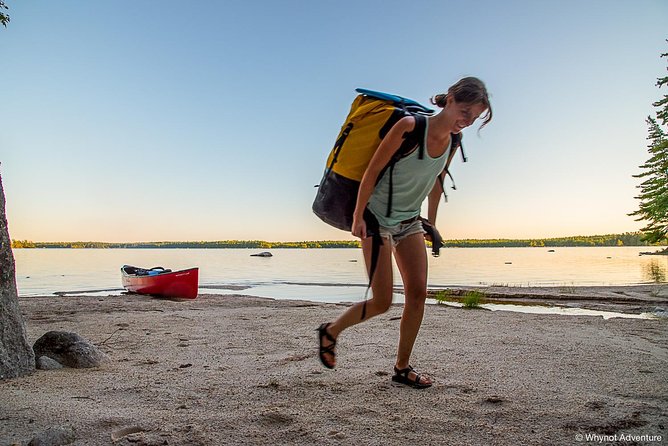
- Portages are the main event: expect lots of short overland carries linking small and medium lakes.
- Small group size: maximum group size is 5 people, so you’re not competing for attention.
- Park admission is extra: CA$6.50 per person isn’t included in the trip price.
Kejimkujik by canoe: why this trip feels genuinely remote
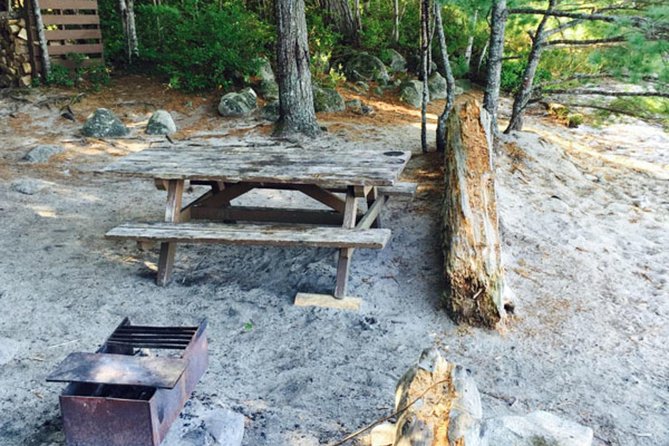
Kejimkujik National Park is known for backcountry travel that actually feels backcountry. On this trip, you’re not staying near a road or a busy campground. You’re heading to the southern lakes, where parts of the route can be completely uninhabited—until you notice you’re sharing a lake with only wind, birds, and your own paddling strokes.
What makes this experience appealing is how it mixes effort with comfort. You’re canoeing for days, doing portages, and sleeping in a real camp setup. At the same time, you’re not left to fend for yourself with scavenged gear or uncertain meals. The plan includes daily camp cooking, and the French-press coffee detail matters more than it sounds. It keeps mornings from feeling like punishment and helps you get moving with a clear head.
One more practical point: the trip is guided with a small group, so route decisions and safety checks happen before you’re out there guessing. That matters on a trip where the “map” is partly your portage work and partly the water conditions you meet that day.
The operator setup: meet at Whynot Adventure and get in rhythm
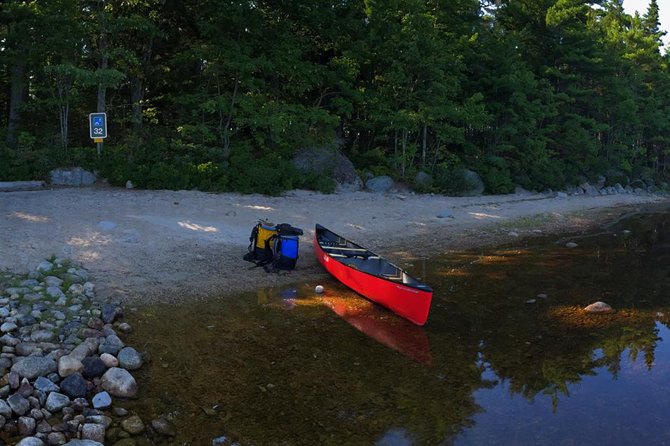
You start at Whynot Adventure Outfitters at Jake’s Landing, 1507 Kejimkujik Main Parkway, Maitland Bridge, NS B0T 1B0. The listed start time is 10:30am, and the day’s schedule includes arriving roughly 11:30am to 12:30pm to meet your guide and group, eat lunch, and get on the water.
That timing gap is normal for trips like this. You’re likely spending that window on check-in, briefings, and getting organized so the first paddle day doesn’t start chaotic.
Whynot’s role is basically: make sure your canoe trip is doable. You’re provided the camping, canoeing, and safety equipment, and you use it right away. You’re also traveling with a service setup that works even if you’re not bringing your own system—this is a big part of the value at this price point.
Also helpful: this experience uses a mobile ticket, and confirmation is received within 48 hours of booking (subject to availability). If you have dietary requirements, you should share them at booking.
Day 1: from Keji Lake paddling to portage-heavy camp life
Day 1 begins inside Kejimkujik National Park and National Historic Site, with lunch at the start before you head out. You’ll paddle across Kejimkujik Lake, then shift into a series of portages linking small and medium lakes.
This is where most people get their first feel for the trip. Portages aren’t just “a transfer.” They’re the training session for how your body will handle the work. You’ll learn quickly that good canoe travel is as much about how you pack and lift as it is about how you paddle. With equipment provided, the learning curve is mostly about getting your personal kit organized so you don’t end up hunting for essentials every time you stop.
Once you’ve worked through the initial lake chain, you set up camp. Day 1 ends with a campfire dinner and an evening meal at your campsite. That pattern—paddle, portage, set up camp—defines the whole adventure.
What to watch for on Day 1: you’ll likely spend more energy than you expect in the first half-day, even if the distance doesn’t sound huge on paper. If you’re hoping for an easy warm-up, understand Day 1 is really about getting your rhythm and your gear routine.
Day 2: campfire breakfast, medium-lake paddling, and a swim stop
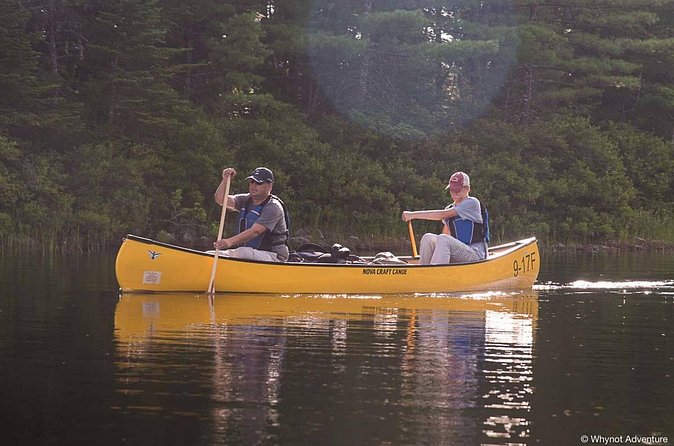
Day 2 starts with French-press coffee and a hot campfire breakfast. Then you break down camp, pack up, and re-pack canoes. After that, it’s back to navigating medium lakes and portages.
There’s a built-in lunch stop and a swim opportunity. That’s a nice balance to the work of the day. If you pace yourself—especially during portage stretches—this is the day where paddlers often start to feel comfortable in the flow.
Evening brings another campfinding moment, followed by dinner and sleep.
Why Day 2 matters: by now you’ve done enough portaging that the trip feels like it belongs to you. The second night is usually when the backcountry effect hits hardest, because the novelty has worn off and you’re fully living the schedule: paddle, stop, lift, cook, sleep.
Day 3: more of what you came for, plus time to settle in
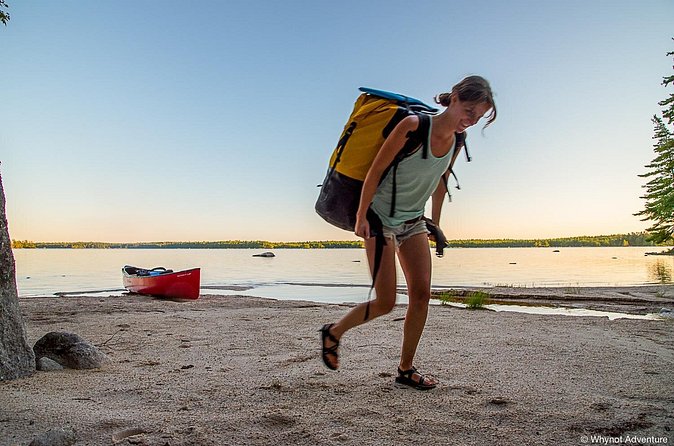
Day 3 repeats the core rhythm: French-press coffee, hot campfire breakfast, camp breakdown, canoe re-packing, and more navigation across medium lakes with portages. Lunch and swimming are still part of the middle of the day, and you’ll end with dinner and camp again.
This day is often the emotional payoff. If Day 1 is learning your system and Day 2 is building confidence, Day 3 is when you can start noticing the quiet details. The water changes. Your shoulders understand what they’re doing. You start spotting how the portage route connects lakes and how that changes the kind of paddling you do.
Possible drawback to plan for: portage days don’t get easier because you’re tired; they get easier because you’ve adapted. If your fitness level is lower than “moderate,” or if you’re carrying extra weight in your personal pack, Day 3 will feel like the day you remember to simplify.
Day 4: back toward Keji Lake, shore lunch, and a return by early afternoon
Day 4 is the payoff day with a lighter mood. You work back toward Keji Lake, enjoy lunch on the shore, then paddle back to Whynot Adventure around 2pm.
This final paddle often feels different because you’re not just moving forward—you’re closing the loop. You’ll be packing less work into each stop and focusing on an orderly finish.
What to expect: you’ll likely feel a mix of relief and regret. Relief because the daily camping setup ends, and regret because you’ll be leaving a place that feels very remote after three full days of it.
Price and value: what you’re really paying for
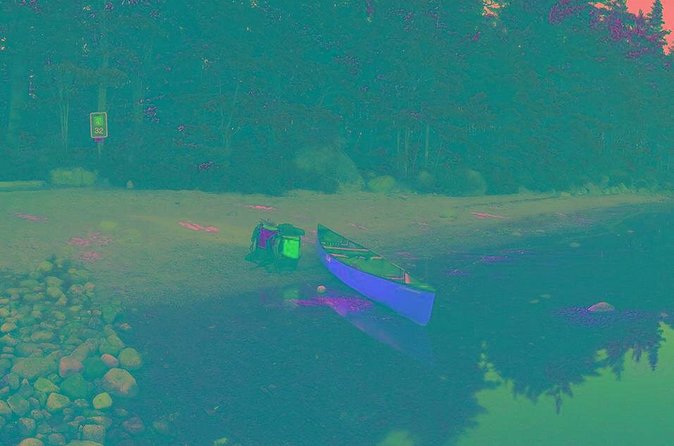
The price is $1,108.28 per person for roughly 4 days. That sounds steep until you break down what’s covered.
You’re not just paying for a canoe rental. You’re getting:
- safety equipment
- camping equipment
- canoeing equipment
- daily meals (the trip info lists 4 lunches, 3 dinners, and 3 breakfasts)
- French-press coffee as part of the morning routine
- private outhouses
When those items are priced separately, the per-person number starts to look more reasonable, especially because the group is small and the backcountry logistics are handled for you.
Two costs to remember:
- Kejimkujik National Park & National Historic Site admission is not included, at CA$6.50 per person.
- Personal items aren’t included, such as a pillow plus your personal clothing and toiletries.
If you’re coming from out of town, this pricing structure can be a win. You’re spending money to avoid carrying the mental load of planning gear, meals, and safety systems.
The canoe and camping gear: where comfort shows up
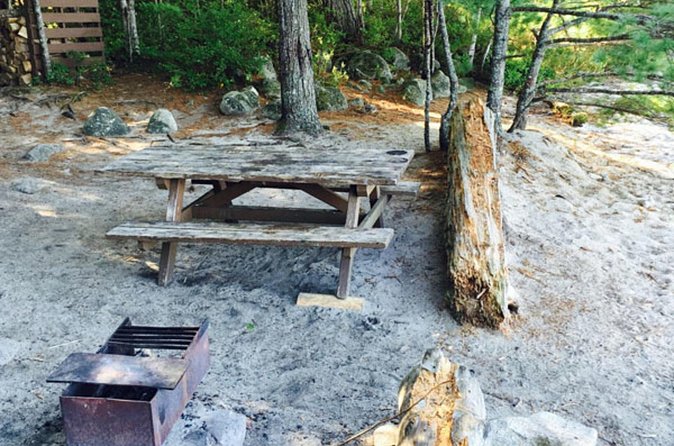
You’ll be issued the key equipment you need to make the trip work: canoe gear, camping gear, and safety gear. Private outhouses are also included, which is one of those details you don’t fully appreciate until you’re actually in camp.
A practical comfort note: a stable canoe makes a huge difference when you’re dealing with wind gusts and waves. This matters because high-energy conditions don’t have to become fear conditions. Stability lets you focus on paddling technique and not on bracing constantly.
Portage weight is the other comfort factor. Some paddlers have suggested that ultra-light canoes would make the carry easier. That doesn’t mean the current boats are unsuitable—just that if you’re extra sensitive to heavy portages, you might feel every lift. If you’re used to carrying your own gear and can handle it, you’ll probably be fine.
Fitness, weather, and real-world paddling expectations
This trip is rated for travelers with moderate physical fitness, and it operates in all weather conditions. That combination is important: you’re not just paying for canoe time in perfect conditions. You’re paying for an organized plan that runs when the weather cooperates and when it doesn’t.
What that means for you:
- Portages will happen regardless of how you feel in the moment.
- You’ll be paddling enough days that you should be comfortable with daily exertion.
- You’ll need to dress for wet, wind, and temperature changes.
Because the tour is in all weather, you should pack with layers and rain protection in mind. If you show up dressed for one sunny scenario only, you’ll end up adjusting your mood more than your route.
Also, maximum group size is 5 people. That keeps the pace manageable and makes it easier for the guide to spot who needs extra coaching on carrying technique, canoe packing, or camp setup.
Who this trip suits best (and who should think twice)
This canoe trip is a strong fit if you want:
- a guided route through Kejimkujik without doing the entire logistics plan yourself
- lots of time on the water plus repeated portages
- camp-based meals, including French-press coffee
- a small group experience that feels personal
It’s also a good choice if you don’t want to buy or transport your own canoe-camping gear.
Think twice if:
- you’re looking for an ultra-light, minimal-effort carry experience
- your fitness level isn’t comfortable with daily camp breakdown and portaging
- you prefer activities that only run in “ideal weather” (this one runs in all conditions)
Should you book the Southern Lakes Canoe Trip?
Yes, if your idea of a great vacation is getting away from crowds and spending full days moving between quiet waters, carrying canoes, and living on camp rhythm with real support.
Book it especially if the cost-to-effort ratio looks good to you. Here, you’re paying for equipment, safety, meals, and a route that takes you deep into the Kejimkujik experience. The few extras to budget for—like park admission—are straightforward.
Skip it or reconsider if you’re hoping for a low-activity trip, or if you know you struggle with repeated portages. This is a canoe trip with real work baked in. If you’re ready for that, it’s one of the more satisfying ways to spend 4 days in Nova Scotia.
FAQ
What’s included in the Southern Lakes Canoe Trip?
You get camping equipment, canoeing equipment, safety equipment, private outhouses, and meals listed as 4 lunches, 3 dinners, and 3 breakfasts.
What’s not included?
Pillow, personal clothing, and toiletries are not included. Kejimkujik National Park & National Historic Site admission is also not included.
How much is park admission?
Park admission is CA$6.50 per person and is not included in the trip price.
Where do we meet and when does it start?
You meet at Whynot Adventure Outfitters at Jake’s Landing, 1507 Kejimkujik Main Parkway, Maitland Bridge, NS B0T 1B0. The start time is listed as 10:30am.
How big is the group?
The maximum group size is 5 people.
What fitness level do I need?
You should have a moderate physical fitness level, since the trip includes portages and daily camp setup and breakdown.
Does the trip run in bad weather?
The trip operates in all weather conditions, and you should dress appropriately.
Are service animals allowed?
Yes, service animals are allowed.
What’s the cancellation window for a full refund?
You can cancel up to 6 days in advance for a full refund (based on local experience time). If it’s canceled due to poor weather, you’ll be offered a different date or a full refund.