REVIEW · EIDKJOSEN
Tromsø: Easy-going Guided Winter Sea Kayaking Tour
Book on GetYourGuide →Operated by Norwegian Travel · Bookable on GetYourGuide
Cold water, calm pace, real Arctic wildlife.
This Tromsø winter sea kayaking trip pairs a local guide with a warm Gamme basecamp and full drysuit gear, so you can stay focused on paddling, scenery, and the animals that keep showing up in winter. You’ll usually start with clear coaching, then head out onto calm Arctic water near places like Kaldfjorden and Eidkjosen.
What I really like: the tour handles the hard parts for you—dressing safely, using the gear, and learning a simple paddling rhythm—so beginners can join without guesswork. I also appreciate the small group size (up to 8), with guides who pause for photos and rest instead of rushing you through the experience.
One thing to keep in mind is that conditions drive the route. It’s weather-dependent, so expect some days to be better than others (and occasionally you’ll need to reschedule or get a refund if safety requires it).
In This Review
- Key highlights worth planning around
- Entering the heated Gamme: why the setup matters
- Drysuit gear, warm boots, and how you avoid the rookie mistakes
- The 4 hours on the clock: what the day feels like
- Where you paddle: Kaldfjorden and Eidkjosen, plus weather-smart routing
- Wildlife watching on calm Arctic water
- Guide energy: from paddling technique to wildlife stories
- Hot drinks by the fire: the best part you don’t have to think about
- Price and value: what $204 buys in Tromsø winter
- What to bring: you can pack lighter, but you still need basics
- Who this tour suits best (and who should skip it)
- Meeting point and getting started without stress
- Should you book Tromsø easy-going guided winter sea kayaking?
- FAQ
- How long is the Tromsø winter sea kayaking tour?
- Do I need prior kayaking experience?
- What gear is included?
- What should I bring to stay warm?
- What wildlife might I see during the tour?
- How many people are in the group?
- Is the tour affected by weather?
- Where do I meet, and what language is the tour in?
Key highlights worth planning around
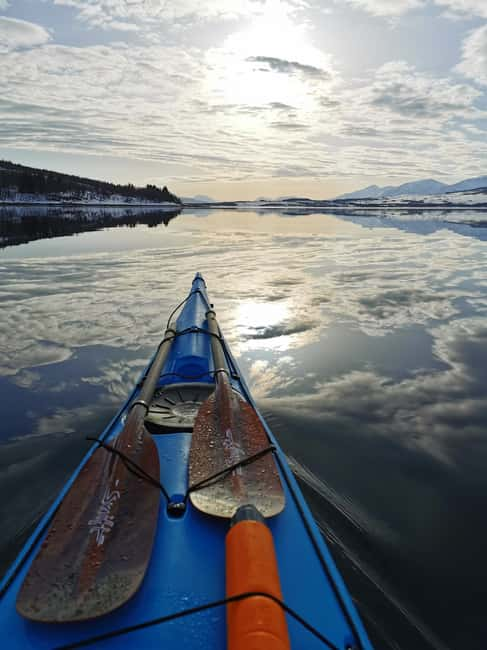
- Heated Sámi-style Gamme basecamp to get geared up before you touch the water
- Full drysuit and cold-water gear included (so you can pack smarter)
- Stable double kayaks in winter, with single kayaks available on request for more experienced paddlers
- Wildlife watching as you paddle, with chances for sea eagles, otters, seals, and seabirds
- Hot drinks and biscuits by the fire after the session, with time to swap highlights
- Small group up to 8, plus guided photo breaks and frequent check-ins
Entering the heated Gamme: why the setup matters
Before you paddle, you’ll take a short bus ride from Tromsø to the basecamp area. Then you’ll meet your guide and get your gear organized inside a heated Gamme—a dome-shaped tent with roots in Sámi tradition. In winter, that warm first step is not a small detail. It changes everything. You can concentrate on getting dressed correctly instead of fighting the cold while your fingers are already numb.
You’ll receive the kayaking equipment you need, and the guide gives clear instructions for how to dress properly for cold Arctic conditions. You’ll also get a practical safety mindset right at the start, because cold-water kayaking is as much about preparation as it is about the paddle stroke.
A bonus detail I like: guides build in short but meaningful context about the place—what you’re likely to see and why the area matters—so the experience feels more grounded than just a quick adventure ride.
Drysuit gear, warm boots, and how you avoid the rookie mistakes
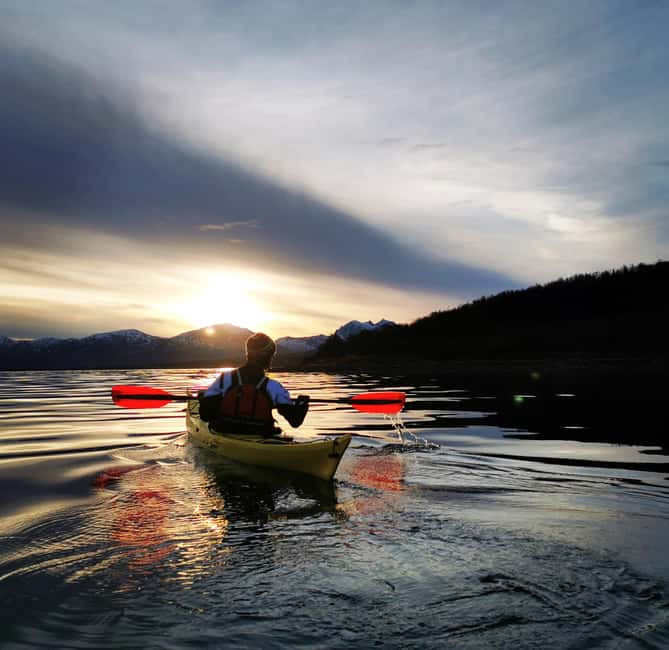
The tour is set up for comfort and safety, and that shows in what’s included. You get a full kayak and paddle, a paddle vest, warm gloves and boots, and the big one: a drysuit. That package is huge value in Norway winter, because buying or renting this kind of gear just for one outing adds up fast.
You’ll also be coached on what to do before you step into the water—how to move in your equipment, how to sit safely in the kayak, and how to follow the guide’s pace. The tour notes that no prior kayaking experience is needed, and you’ll usually paddle stable double kayaks during winter. If you have enough experience and request it, you can have a single kayak option.
I love that the guide doesn’t just hand over gear and send you off. In the experience, guides have been praised for being friendly, attentive, and organized—names that come up include Lauti, Frida, and Frieda. That matters because in cold conditions, a calm briefing prevents panic. It also makes learning feel normal instead of stressful.
The 4 hours on the clock: what the day feels like
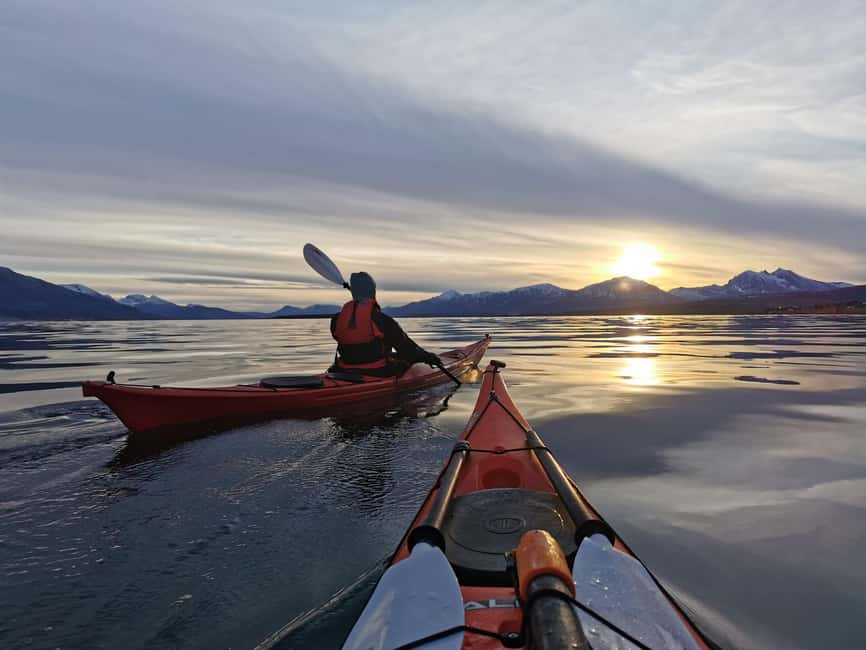
This is a 4-hour tour end to end, and it’s paced for real winter conditions—not summer-speed tourism. Expect an early structure: bus in, basecamp setup, then time on the water, then back to warm up.
Here’s how the flow typically goes:
- Ride from Tromsø to the basecamp and meet your guide
- Gamme warm-up and gear fitting, with instructions for staying safe and warm
- Walk down to the shoreline, get settled into your kayak
- Paddling coaching + safety briefing from the guide
- Kayaking session in calm Arctic water (route depends on conditions)
- Return to basecamp for hot drinks and biscuits by the fire
- Bus back to Tromsø city center
One reason this format works: it gives you a clear “mission” window on the water, followed by recovery time. You’re not stuck in cold waiting mode for long stretches. Even better, guides have been described as doing short photo and rest breaks, which is a practical way to enjoy the view without turning it into a sprint.
Where you paddle: Kaldfjorden and Eidkjosen, plus weather-smart routing
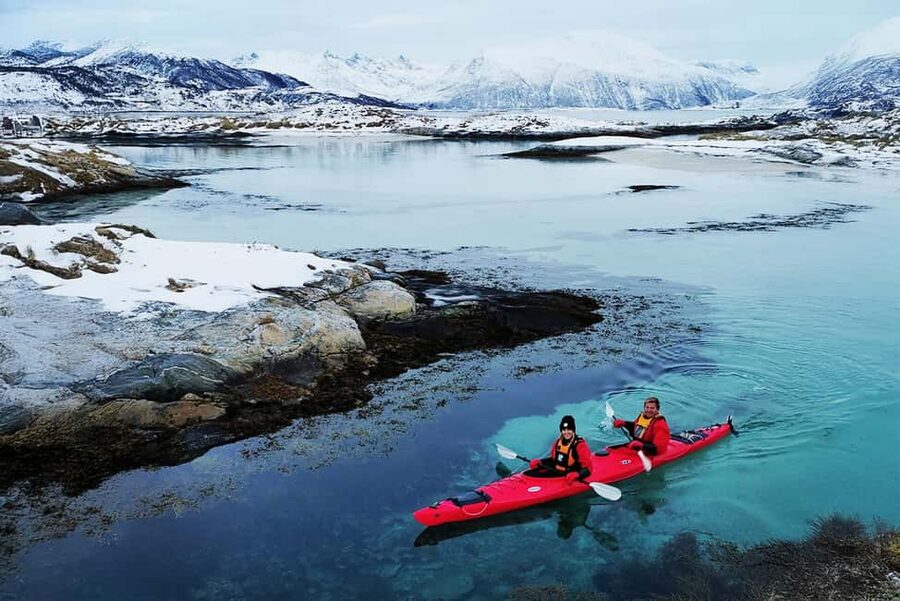
In winter, your exact route depends on weather and sea conditions, but you’ll paddle in scenic areas like Kaldfjorden and Eidkjosen. The guide aims for water you can enjoy safely—often using sheltered channels, moving between small islands, and gliding across peaceful archipelagos.
This is one of those “you’ll be glad they control it” parts of the experience. Sea kayaking in winter isn’t just about scenery. Wind direction, visibility, and current can change fast. Routing you through calmer sections means you can focus on the rhythm of paddling and the wildlife scanning instead of white-knuckle problem solving.
Even on days with snow, the experience stays about calm motion. One guide-led outing described starting in snowfall and then seeing conditions improve. That’s a good reminder: the Arctic can shift quickly, so your best plan is to stay flexible and let the guide’s judgment set the tempo.
Wildlife watching on calm Arctic water
Wildlife is a big reason people come to Tromsø, and this tour gives you a direct viewing angle. Because you’re moving quietly over calm water, you can spot animals that you’d miss from shore.
Keep an eye out for:
- Sea eagles (a highlight when spotted close)
- Otters
- Seals
- Flocks of seabirds
You’re also likely to notice other water life when the guide points it out. In one experience, participants focused on watching ducks and seals during pauses. That kind of targeted lookout is exactly what you want on a winter day, when everything is cold and visibility can vary.
Two practical tips if wildlife matters most to you:
- Let the guide steer the search pattern. The guide knows where animals tend to show up.
- Pay attention during the quiet moments. Some sightings happen not during active paddling, but while you’re resting, listening, or waiting for the next calm stretch.
Guide energy: from paddling technique to wildlife stories
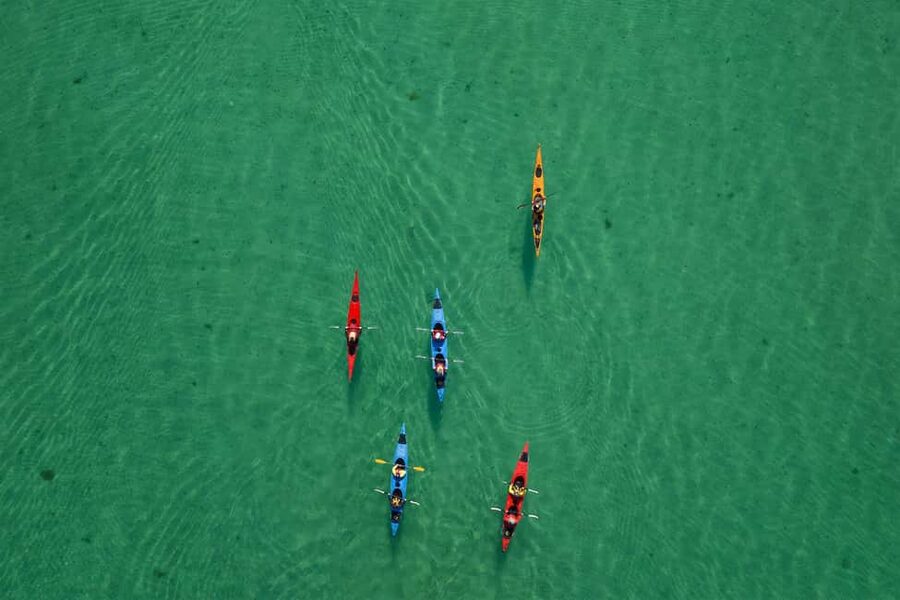
The guides are repeatedly praised for being friendly and organized. Names that show up in real experiences include Lauti, Frida, and Frieda, and the common thread is guide attention to the group.
In practice, that means:
- Short, clear paddling instructions you can follow without stress
- Safety briefings that make you feel prepared before you launch
- Check-ins that keep an eye on how each participant is doing
- Photo and rest breaks built into the outing
One participant described chatting with Frida about sea kayaking and life in Scandinavia—those little human moments help the time pass quickly. Another described Frieda using humor to include everyone, which matters when you’re sitting in a cold kayak for hours. When the tone is relaxed, the whole tour feels easier.
Also, guides have been praised for sharing short background on the area’s history and wildlife—kept meaningful rather than heavy. That’s the right approach outdoors. You want context that connects to what you’re seeing, not a lecture while you’re trying to keep your attention on the water.
Hot drinks by the fire: the best part you don’t have to think about
After you paddle, you’ll return to basecamp to warm up. There’s a fire vibe here: hot beverages and biscuits, plus time to share stories and highlights from the day.
This is more than a perk. It closes the loop. In cold-water activities, the moment you stop moving is when you feel it most. Having a warm stop ready for you reduces the “what now?” feeling and helps you finish the tour comfortable instead of drained.
Guides have also helped with photos—participants reported having guides take photos in snowy or active conditions, and still being able to use their own phones. That’s a smart setup: you’ll leave with memories, even if you’re focusing on staying steady in the kayak.
Price and value: what $204 buys in Tromsø winter
At $204 per person for a 4-hour guided outing, this isn’t a budget impulse buy. But it’s also not just “a guide and a kayak.” You’re paying for a full cold-weather setup and a low-hassle experience.
What’s included:
- Transfer by bus from and back to Tromsø city center
- A certified local guide with Arctic kayaking experience
- Hot beverages and biscuits
- Kayak and paddle
- Paddle vest
- Warm gloves and boots
- Drysuit
Add up the real-world cost of that gear + transport if you were trying to DIY it. Then factor in that the guide handles safety, route choices, and pacing. For many people, that’s what makes $204 feel fair: you’re buying a guided winter infrastructure, not just an activity.
You also get a small group (limited to 8). In winter, fewer people means more attention and smoother gear handling at the shoreline and during briefings.
What to bring: you can pack lighter, but you still need basics
Even with the gear provided, you still need to come dressed for Arctic conditions. The tour asks you to bring warm clothing, thermal clothing, several baselayers, and water. You should also bring a packed lunch.
A simple packing approach:
- Baselayers that you can layer (not just one thick piece)
- Warm outer layers you can move in
- Water (you’ll want it even in cold weather)
- Packed lunch, since the outing is long enough to warrant it
Also note the tour’s clear safety request: if you have any medical issues, tell the guides so they can pass it along and take it into account.
One more rule: pets are not allowed.
Who this tour suits best (and who should skip it)
This is a no-prior-kayaking-experience tour, and that’s a great fit if you want the Arctic experience without a training program first. Since you’ll usually be on stable double kayaks in winter, the setup supports beginners who follow instructions.
It’s also a good match if you like:
- Wildlife watching in a quiet setting
- Guided coaching and structured pacing
- A small-group atmosphere (up to 8 participants)
But it’s not for everyone. The tour is not suitable for:
- Children under 14
- People with mobility impairments
- Wheelchair users
- People over 80
If any of those categories apply to you, it’s worth looking for a different style of Tromsø winter activity that better matches access and mobility needs.
Meeting point and getting started without stress
You’ll meet at Tromsø Havn Terminal Prostneset, Samuel Arnesenesgate 5, Tromsø. The instruction is to go to the second floor at the Norwegian Travel office/booking point.
If you’re arriving by foot or using taxis/public transport, give yourself a little buffer. In winter, getting geared up calmly matters more than being exact to the minute.
Should you book Tromsø easy-going guided winter sea kayaking?
Book this tour if you want an Arctic kayaking experience that’s beginner-friendly, gear-forward, and guided from start to finish. The best sign is what you get bundled in: transfers, drysuit gear, safety briefings, and a small-group experience that leaves room for photos and wildlife scanning.
Skip it (or consider another option) if winter water conditions make you uneasy, you need wheelchair access, or you fall outside the tour’s age and mobility suitability limits.
If you’re the kind of traveler who loves learning how to do an activity the right way—then heading out to enjoy the quiet Arctic—this is a smart pick in Tromsø winter. And when you’re back by the fire with hot drinks and biscuits, you’ll likely feel the same thing most people do: you got your adrenaline, but you also got calm.
FAQ
How long is the Tromsø winter sea kayaking tour?
It lasts about 4 hours, including time for getting to the basecamp, getting geared up, kayaking, and returning to Tromsø.
Do I need prior kayaking experience?
No prior kayaking experience is needed. Winter paddling usually happens in stable double kayaks, and single kayaks may be available on request if you show sufficient experience.
What gear is included?
The tour includes a kayak and paddle, a paddle vest, warm gloves and boots, and a drysuit.
What should I bring to stay warm?
Bring warm clothing, thermal clothing (several baselayers are recommended), water, and a packed lunch.
What wildlife might I see during the tour?
You’ll keep an eye out for sea eagles, otters, seals, and flocks of seabirds. The wildlife activity is described as year-round.
How many people are in the group?
The group is small, limited to 8 participants.
Is the tour affected by weather?
Yes. The tour is weather-dependent and may be rescheduled or canceled for safety reasons. A full refund is offered if the tour is canceled.
Where do I meet, and what language is the tour in?
Meet at Tromsø Havn Terminal Prostneset, Samuel Arnesenesgate 5, Tromsø, on the second floor at the Norwegian Travel office/booking point. The live guide speaks English.