REVIEW · AUCKLAND
Bioluminescence Kayak Tour – Est. 1994
Book on Viator →Operated by Canoe & Kayak Adventures · Bookable on Viator
Night on the water feels unreal.
This Auckland bioluminescence kayak tour swaps streetlights for the dark glow of ocean plankton, with a calm paddle in protected waters. I really like the small 1–6 guide-to-guest ratio and the patient teaching style I’ve seen credited to guides such as Josh and Elena. I also like that all the kayaking and safety gear is included. The one catch: the bioluminescence can be subtle some nights, and phone photos may not match what you expect from pictures.
You’ll meet at 2/20 Ascension Place in Rosedale and head out for roughly two hours, keeping close to the North Shore. The goal is simple: you paddle out, the sky does its star thing, and the water lights up when the conditions are right—often with that eerie, magical feeling that you’re kayaking through underwater sparks.
In This Review
- Key things that make this tour worth it
- From Rosedale to the Night Paddle: logistics that don’t fight you
- Beginner-proof kayaking in sheltered water
- Bioluminescent plankton on the North Shore: what to expect (and what not to)
- The paddle loop: a night out in the Long Bay–Okura area
- Stars, birds, and the sound of the Hauraki Gulf
- What to bring: the wet, the warm, and the practical
- Price and value: what $73.85 includes (and why it matters)
- Who this kayak tour suits best
- Should you book Bioluminescence Kayak Tour with Canoe & Kayak Adventures?
- FAQ
- How long is the bioluminescence kayak tour?
- Do I need kayaking experience?
- What’s included with the tour?
- Where does the tour take place?
- What if the weather is poor?
- Is there a cancellation deadline?
Key things that make this tour worth it
- Beginner-friendly instruction with hands-on coaching so you’re not guessing on day one
- Small groups (max 24) and a tight 1–6 guide ratio for real attention
- Protected-water paddling around the Long Bay–Okura Marine Reserve area
- All gear included, including stable sea kayaks or sit-on-tops plus safety equipment
- Bioluminescence depends on conditions, so you should expect variation, not a guaranteed “movie scene”
From Rosedale to the Night Paddle: logistics that don’t fight you
The meeting point is clear: 2/20 Ascension Place, Rosedale, Auckland 0632, and you’ll return there after the tour. That matters because night tours can feel chaotic—this one is set up so you’re not wandering around Auckland in the dark trying to find someone who may or may not be holding a flashlight.
Getting there is also meant to be manageable. The start point is described as near public transportation, which helps if you’re avoiding parking in busy areas. If you’re coming from central Auckland, a bus to the closest point and then a short ride (like an Uber) is a very workable approach.
One more practical point: your tour uses a mobile ticket, which keeps the day simple. Just have your phone ready, and don’t plan to rely on cellular service at the last minute.
You can also read our reviews of more tours and experiences in Auckland.
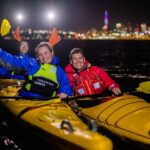
Beginner-proof kayaking in sheltered water
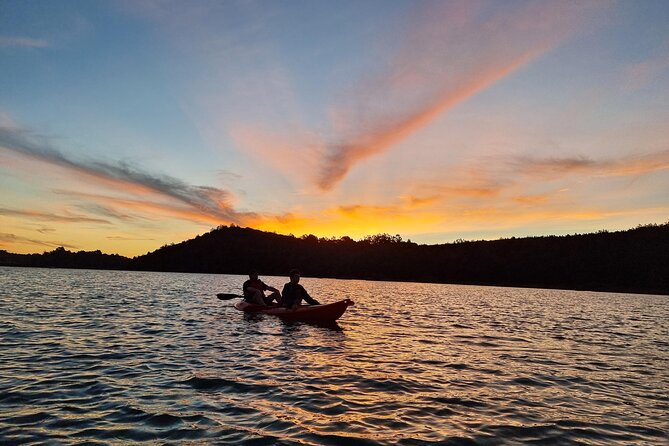
This is one of those activities that makes the big promise—no experience needed—then follows through on how it teaches. The tour is built around learning how to kayak from qualified kayak guides, with safety gear and tuition included. Even if you’ve never sat in a kayak before, you should feel coached rather than thrown onto the water.
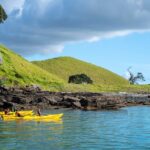
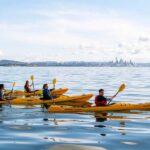
The kayaking takes place in protected waters in the Long Bay–Okura Marine Reserve area. That’s a big deal for a first-time paddle at night. Calm water reduces stress, helps you focus on learning basic strokes and balance, and makes it easier to feel steady when the light fades.
You’ll also be on stable sea kayaks or sit-on-tops (the type is provided by the operator). Stable craft matters for confidence. If you’re worried about safety, this is the kind of setup that lets you concentrate on technique instead of panic.
The guide-to-guest ratio is where you really feel the benefit. A 1–6 ratio means you’re not one of many faces drifting through a briefing. Guides can correct your posture and paddling basics fast, which is what helps first-timers actually enjoy the paddle.
Bioluminescent plankton on the North Shore: what to expect (and what not to)
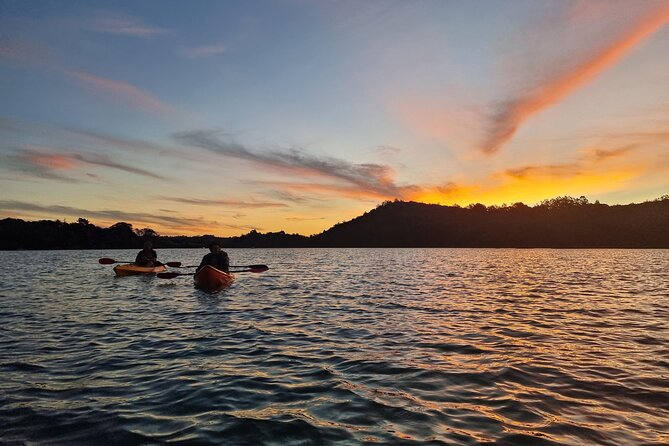
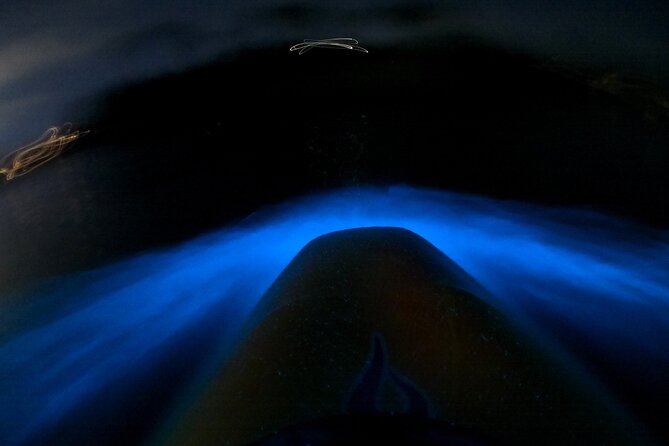
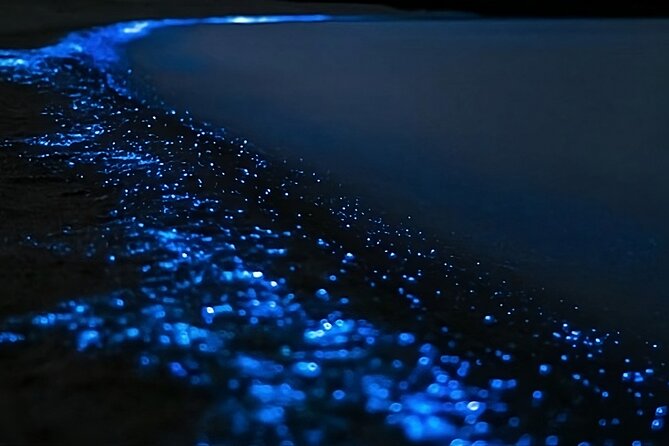
Here’s the honest emotional hook of the whole tour: you’re paddling at night, and you’re watching the ocean do its light show. The bioluminescence comes from bioluminescent plankton living in the ocean, and it can cause the water to glow around your movement.
Now for your expectations, because this is where people get disappointed if they only look at photos. The reviews and tour description both point to a key truth: luminosity can vary based on conditions. Some nights can look like you stirred a pocket of stars under the water. Other nights can be more subtle.
Another real-world factor: the glow is often tied to disturbance. If you’re hoping for effortless, constant glow that looks great on camera without effort, you may be surprised. One review even notes that the water doesn’t glow in the same way unless it’s touched or stirred, which aligns with how these displays work.
So what should you do? Plan to watch with your eyes first. Think of photos and video as a bonus, not the main event. Even if your phone camera is decent, phone sensors usually struggle in low light—plus, the effect may be too brief or too weak to capture beautifully.
If the glow is strong, you’ll see that “underwater sparks” look—sometimes like stars rising. Guides also explain what you’re seeing as you paddle, so you’re not just staring at darkness wondering what that moving light is supposed to be.
The paddle loop: a night out in the Long Bay–Okura area
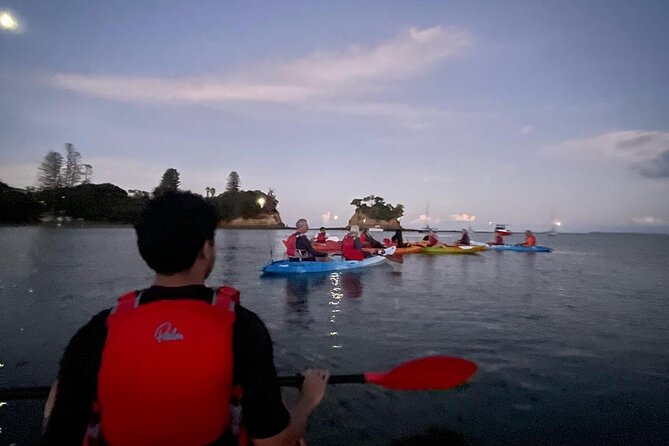
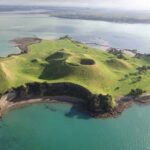
The tour runs about two hours, so you’re getting a compact adventure rather than a half-day project. The main action happens during the night paddle through the Long Bay–Okura Marine Reserve area, in and around the coastline.
In practice, the flow usually goes like this: you arrive, get fitted and briefed, learn the basics of paddling, then head out for your night segment where the bioluminescence is the point. Because it’s a guided experience with safety gear, you don’t need to “figure out” your route or feel responsible for keeping everyone together.
The tour also has a planning rule that matters: the exact location is confirmed to you before 3:30pm on the day of your tour, and it takes place within a 6-mile (10-kilometer) radius of the North Shore Canoe & Kayak Store in Mairangi Bay. That helps the operator choose the best nearby spot as conditions shift.
A downside of this style of adventure is that you’re depending on the night environment. If the water or sky conditions aren’t ideal, the glow can be less dramatic, and visibility for stargazing can shift. The good news is that the company treats this as a weather-dependent experience, not a “no matter what” promise.
Stars, birds, and the sound of the Hauraki Gulf
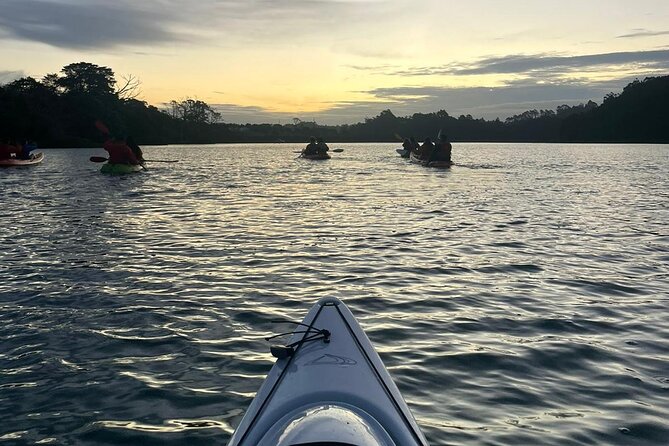
The light show is the headline, but it’s not the only thing you’ll remember. The tour description frames it as getting out of the harsh neon lights and experiencing a natural light party, with the Hauraki Gulf as your backdrop and native birds as part of the soundscape.
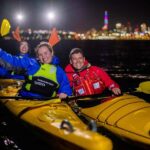
Several guide moments pop up in the reviews in a way that tells you what to expect. Guides like Eloise and Paul are described as friendly and informative, with good safety emphasis and a clear excitement for the phenomenon. That matters because when you’re out in darkness, you want a guide who can point out what to notice, not just say “look, it’s glowing” and move on.
You may also catch extra nighttime nature surprises. One review mentions glow worms, and others mention stargazing elements like planets visible on clear nights. These are “nice if it happens” moments, but the overall experience still works even if the sky is just plain starry and the water glow is the main show.
What to bring: the wet, the warm, and the practical
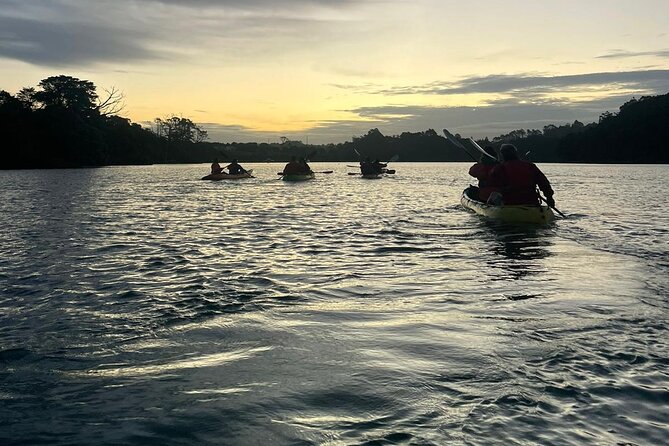
This is a kayaking tour at night. That means you should think like a paddler, not like a museum visitor.
Plan to get wet. One review explicitly says be prepared to get wet, even when conditions shift. If you don’t want your clothes and shoes soaked for the ride back, bring layers that you can tolerate being damp.
A change of clothes is a smart move. Reviews mention bringing spare clothing for convenience, and at least one person notes that changing areas may not stay open afterward. So if you’re counting on a quick rinse or dry-out, don’t assume it’ll be available the way you’d hope.
Here are the essentials you can usually count on for comfort (based on what people say you should do):
- A change of clothes for after the paddle
- Warm layers you can wear while wet
- A plan for getting back in something that isn’t dripping
- A phone you can keep protected, since you’ll likely want at least one quick photo attempt
Also, back comfort can matter. One review recommends choosing a kayak with a back rest if you have back troubles, which is a reminder to mention your needs to the guides at check-in.
Price and value: what $73.85 includes (and why it matters)
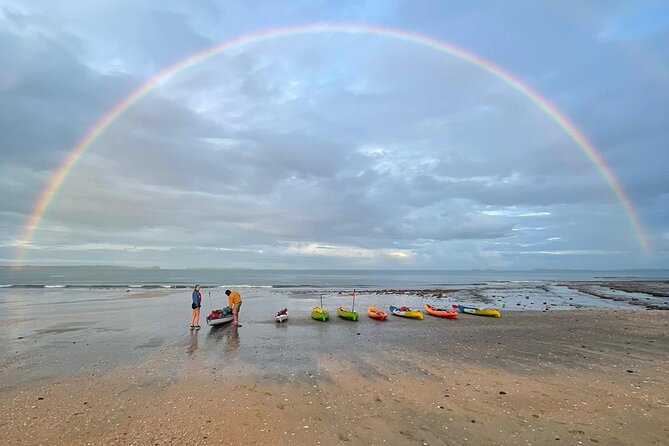
At $73.85 per person, this sits in the “worth it if you care about the experience” category. The value is not just the kayaking—it’s what you’re not paying for separately.
You get:
- All kayaking and safety equipment
- Instruction and tuition from experienced kayak guides
- Stable sea kayaks or sit-on-tops
- A small group format with a 1–6 guide-to-guest ratio
For most people, paying for gear rental plus lessons elsewhere would add up fast. Here, the price wraps learning, equipment, and the science/story element together, which is exactly what makes a night activity feel low-stress.
The other value factor is time. Two hours is long enough to learn and see the light show, but short enough that you’re not stuck on the water for half a day. If the glow is strong, you get the payoff without losing your whole night.
And yes—bioluminescence varies. That variability is the main “risk” you’re buying into. But the operator builds the experience around protected waters, guided pacing, and clear explanation, which helps you still come away feeling you had a real, guided nature encounter.
Who this kayak tour suits best
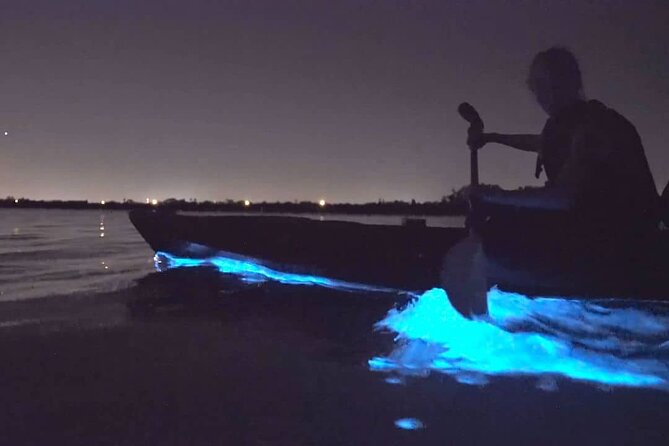
This is a great fit if:
- You’re new to kayaking and want instruction, not intimidation
- You want a night activity near Auckland without the long trip
- You care about a guided nature experience with a science explanation
- You prefer small groups and personal coaching
It may be less satisfying if you’re expecting the glow to look identical every time like the strongest viral photos. Conditions can change. One review notes the glow was underwhelming compared to expectations, and another points out that some nights show only brief glimpses. If you’re that type of person, adjust your mindset: you’re here for a nighttime nature phenomenon, not a controlled studio effect.
If you want the same vibe but more daylight scenery, the operator also offers daytime tours with clear-bottom kayaks (mentioned as an alternative). That’s useful if your priority is consistent visibility over nighttime light drama.
Should you book Bioluminescence Kayak Tour with Canoe & Kayak Adventures?
Book it if you want a beginner-friendly night paddle with strong safety focus, included gear, and a high chance of seeing the ocean sparkle when you move. The protected-water setting and tight guide ratio make it feel manageable, even if you’re nervous on day one.
Skip it (or at least rethink) if your main goal is capturing perfect photos and video that look exactly like promo images. The glow can be subtle, and cameras often struggle in low light. In that case, you’ll still probably have fun, but it’s better to come for the moment, not the screen.
FAQ
How long is the bioluminescence kayak tour?
The tour runs for about 2 hours.
Do I need kayaking experience?
No. The guides teach you how to kayak, and the tour is designed for beginners.
What’s included with the tour?
All kayaking and safety equipment is included, along with tuition from the kayak guides.
Where does the tour take place?
It paddles within a 6-mile (10-kilometer) radius of the North Shore Canoe & Kayak Store in Mairangi Bay, and the exact location is confirmed before 3:30pm on the day of the tour.
What if the weather is poor?
This experience requires good weather. If it’s canceled due to poor weather, you’ll be offered a different date or a full refund.
Is there a cancellation deadline?
Yes. You can cancel up to 24 hours in advance for a full refund, based on local time.