REVIEW · AUCKLAND
Auckland: Night Kayak Tour in Glowing Bioluminescent Waters
Book on GetYourGuide →Operated by Social Nature Movement · Bookable on GetYourGuide
At night, Auckland turns into a sci-fi dream. You’ll paddle in darkness where bioluminescent plankton light up with each stroke, creating electric-blue trails beneath your kayak. I also like that the tour keeps things calm and focused on the water, not a long checklist of stops.
What makes this worth your time is the attention to the glow. You get guided help to find the right spots, plus the chance to see Marine Aurora flicker around you, while the sky above stays bright with stars.
One thing to think about: this is a night paddle, so you’ll want warm layers and footwear that can get wet or muddy, even if the kayak time is relatively short.
In This Review
- Key things that make this Auckland kayak tour special
- Sea Sparkle in Auckland’s water: what you’re actually seeing
- How the timing works: sunset briefing, then real darkness
- Choosing your launch spot: Okura Boat Ramp vs Waiake Beach
- What the guides do that really improves the glow
- Equipment and safety: the “night kayak” essentials
- The paddle experience: blue trails, starry sky, and short bursts of wonder
- Why moon phase and low light pollution matter so much
- Who this tour is best for (and who should think twice)
- Price and value: what $56 buys you
- Practical tips to make your night go smoothly
- Should you book the Auckland glowing bioluminescent kayak tour?
- FAQ
- How long is the Auckland night kayak tour?
- Where does the tour start and end?
- What should I bring for the tour?
- Do I need kayaking experience?
- Is alcohol allowed?
- What’s included in the price?
- What language are the guides?
Key things that make this Auckland kayak tour special
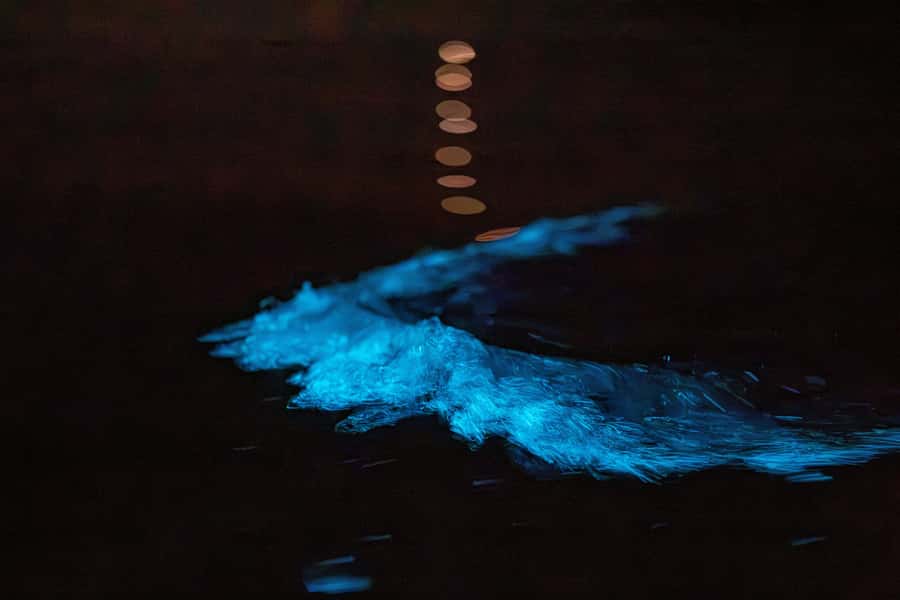
- Sea Sparkle glow on demand: your paddle strokes stir up glowing trails in the water.
- Small-group feel: calmer water time and more chance to watch the lights closely.
- Night-sky contrast: starlight above pairs with blue sparkles below for a rare effect.
- Science in plain English: guides explain how tiny organisms produce light and why it matters.
- Professional gear included: kayak, paddle, PFD, and a safety light beacon so you’re not scrambling.
Sea Sparkle in Auckland’s water: what you’re actually seeing
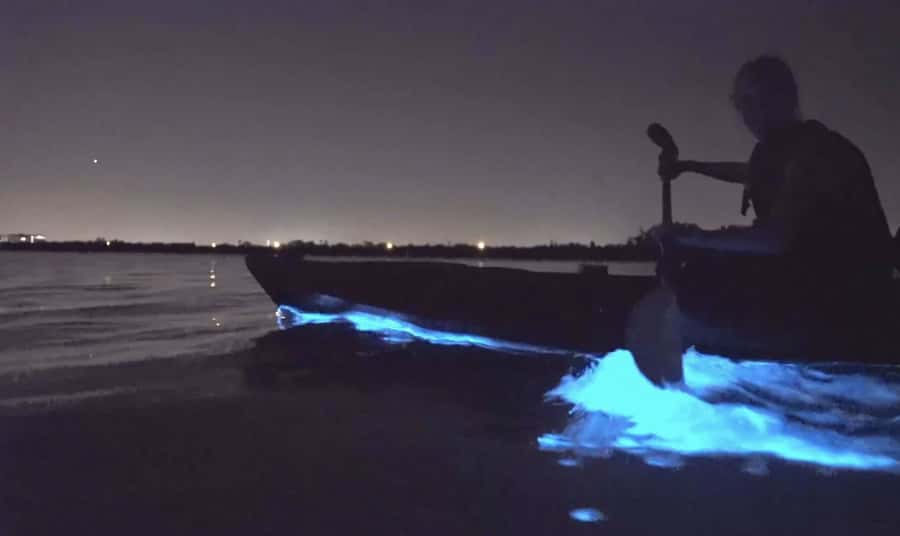
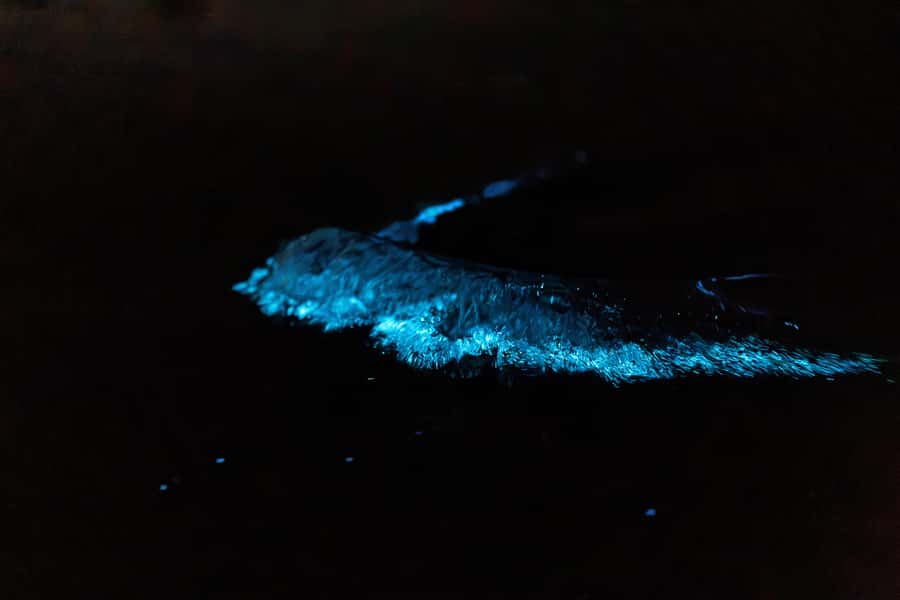
This isn’t a “sit on the dock and watch” experience. The whole point is motion. When you paddle at night, you disturb bioluminescent plankton, and the water answers back with a bright, moving glow. It looks like the ocean is reacting to you in real time, because it is.
You’ll likely hear it called Sea Sparkle or Marine Aurora. Either way, you’re looking at light produced by tiny marine organisms. The tour is set up to help you see that effect clearly, in locations where the organisms thrive. The night setting matters because any extra light makes the glow harder to notice, so the experience is built around getting you away from bright city reflections and into darker water.
There’s also a fun layer of wildlife potential. As the water lights up, you may spot fish darting through, leaving brief trails of sparkle like shooting stars. You can’t count on wildlife on cue, but the chances are part of what makes the paddle feel alive.
You can also read our reviews of more tours and experiences in Auckland.
How the timing works: sunset briefing, then real darkness
The tour starts at sunset. That matters because you’re not thrown into full darkness without context. You get a welcome briefing and safety setup first (about 30 minutes). This is where the guides help you get comfortable with paddling, explain what to watch for, and make sure everyone knows the basic rules for moving on the water at night.
Once it’s dark enough, you launch and spend the main block of time kayaking (about 75 minutes). Then there’s a short break period (around 15 minutes) before the experience ends. In plain terms, this schedule is designed to give you enough paddle time to create glow, without turning the night into a long, exhausting slog.
One extra detail I appreciate: the tour length stays in the 90-minute to two-hour range, but afterward, later tours run about 1.5 hours. That helps you plan dinner and the rest of your evening without guessing.
Choosing your launch spot: Okura Boat Ramp vs Waiake Beach
You’ll choose between two starting options: Okura Boat Ramp or Waiake Beach. Your drop-off is at the same place you start, so you’re not dealing with the “bus ride afterward” feeling that can kill momentum.
How to choose? Go with whichever is easiest for your location and arrival time. Both options are used for the same core experience: a guided evening paddle in darker water with bioluminescence. If you want the simplest logistics, pick the meeting option that minimizes driving time and makes it easy to arrive just before the briefing.
If you’re someone who likes to maximize the moment, aim for the quieter, less rushed-feeling option so you’re warmed up, dressed, and ready when it’s time to launch.
What the guides do that really improves the glow
The biggest difference between a “cool idea” and a great night is guidance. Here, guides focus on two things: safety and visibility.
On the visibility side, they lead you to better viewing spots and help you time your paddle movements so you actually see the glow bloom around the kayak. That matters because bioluminescence can vary depending on conditions. You’re not just hoping for the best. You’re being pointed toward the best chances.
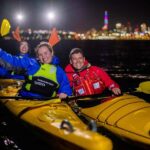
On the safety side, night kayaking is a different sport than daytime kayaking. Guides set the expectations, keep the group moving the right way, and manage the start so you’re not fumbling with gear while it’s dark. The experience includes a safety light beacon, and you’ll also use a personal flotation device (PFD). In reviews, people even mention red head lamps, which make sense: you want to see enough for safety without washing out the natural glow.
Names I’ve seen come up in recent tours include Paul, Conrad, Millie, Hailey, Maurice, Legend, and C. It’s a strong sign the guiding team blends practical instruction with genuine excitement for the phenomenon.
Equipment and safety: the “night kayak” essentials
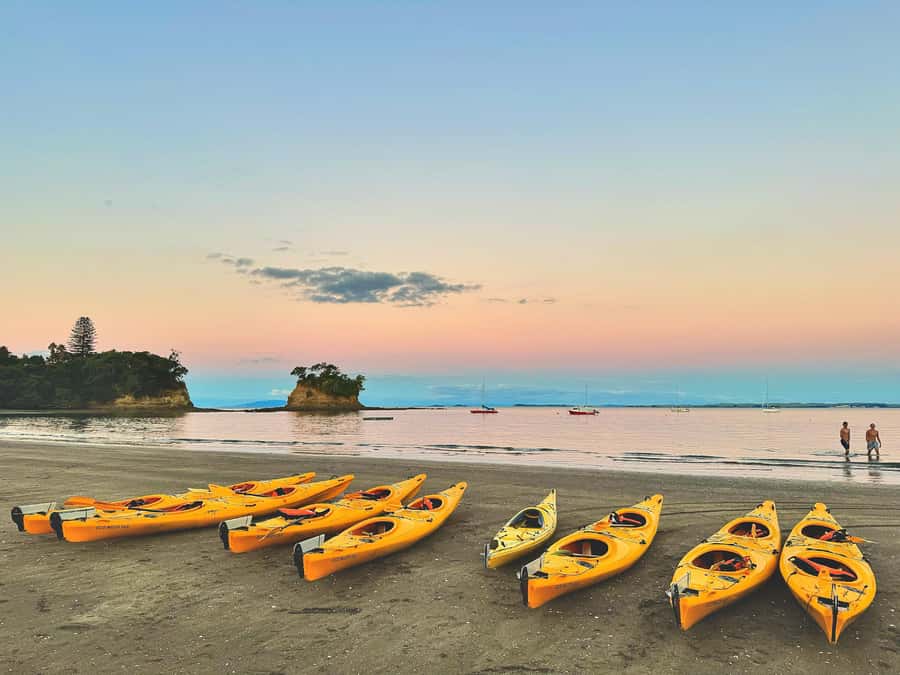
You don’t need to bring a kayak. Equipment is included: kayak and paddles, a PFD, and the safety light beacon. That’s a big value point, because renting or sourcing night-appropriate safety gear would add cost and hassle elsewhere.
For the experience itself, the kayaks are only part of the setup. At night, your comfort decides whether you can relax enough to appreciate the glow.
Here’s what you should plan for:
- You’ll be in cooler coastal air, so wear warm clothing.
- Bring something for wet conditions. A towel helps because you’ll likely get damp from mist or sea spray.
- Wear comfortable shoes that you don’t mind getting wet or muddy, or you can go barefoot if you’re comfortable with that style of footwear.
And because this is an outdoor activity with inherent risk (water, weather, and night conditions), treat the instructions seriously. The tour is guided, but your personal choices still matter. No alcohol or drugs is part of keeping the night safe and focused.
The paddle experience: blue trails, starry sky, and short bursts of wonder
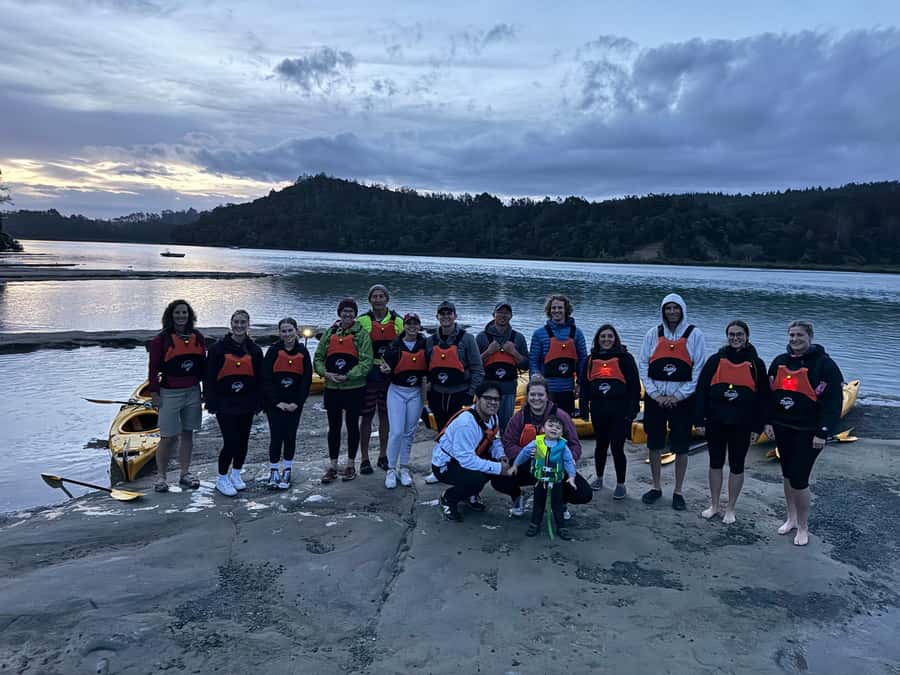
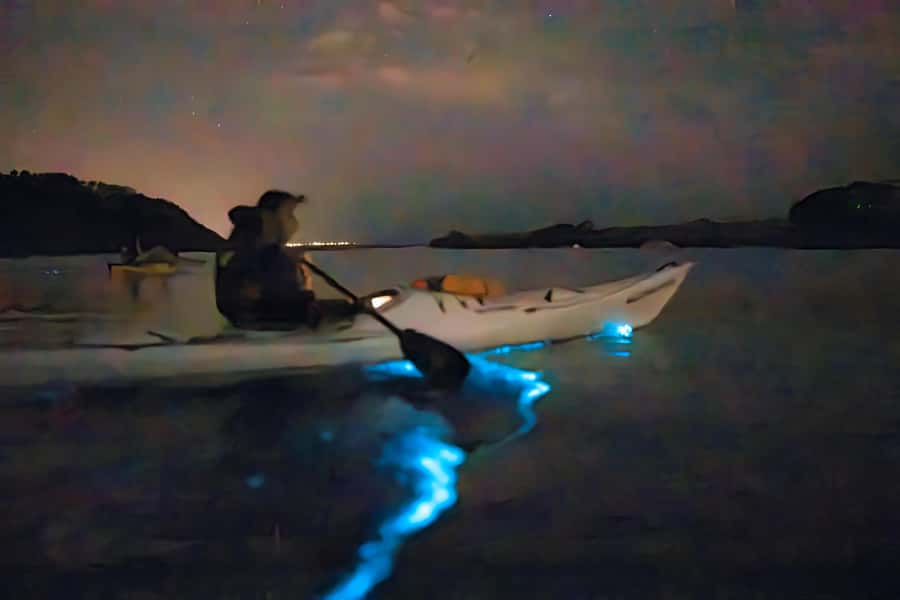
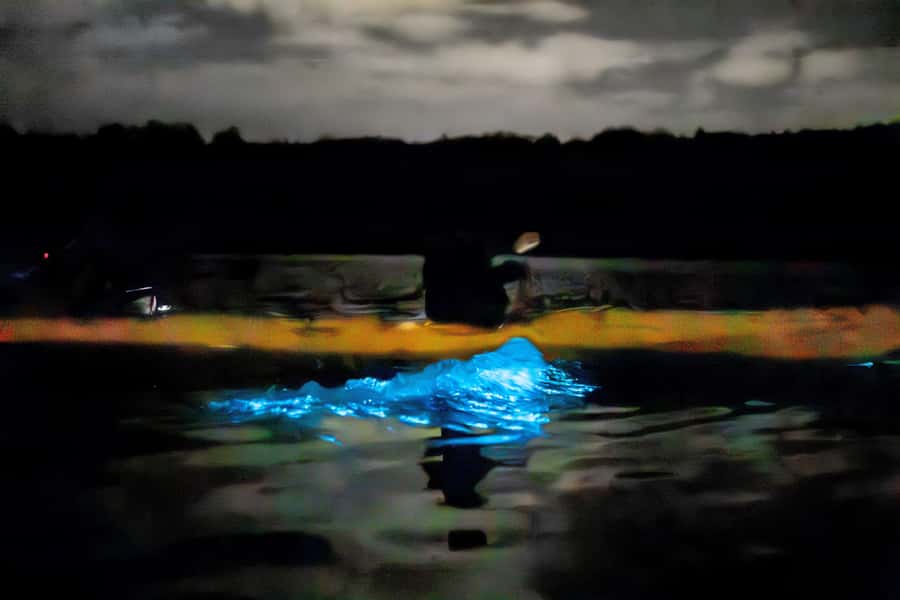
Once you’re on the water, the magic is tied to movement. Every paddle stroke can stir up a glowing trail. The effect often looks like swirls of blue light around the kayak, turning your path into a temporary light drawing.
What I think you’ll enjoy most is the pacing of attention. You don’t just stare. You look, paddle, stop, and look again. The glow changes with your motion, so your brain keeps working in a good way. It’s also easier to appreciate if you remember: you’re watching tiny organisms do something complicated, but the experience feels simple and intuitive.
You also get a chance to learn while you watch. The guides share the science behind bioluminescence and why the light appears when the water is disturbed. That turns the glowing water from a spooky trick into something you understand, which makes the effect more satisfying instead of just surprising.
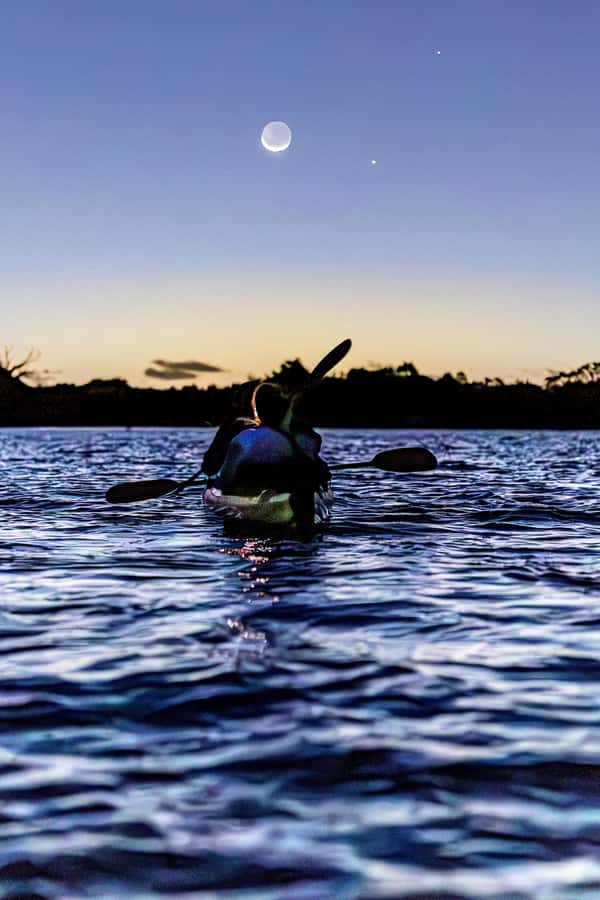
And yes, the sky matters. You’re not indoors with a dim screen. You’re outdoors under a real night sky, and the contrast helps the bioluminescence pop.
Why moon phase and low light pollution matter so much
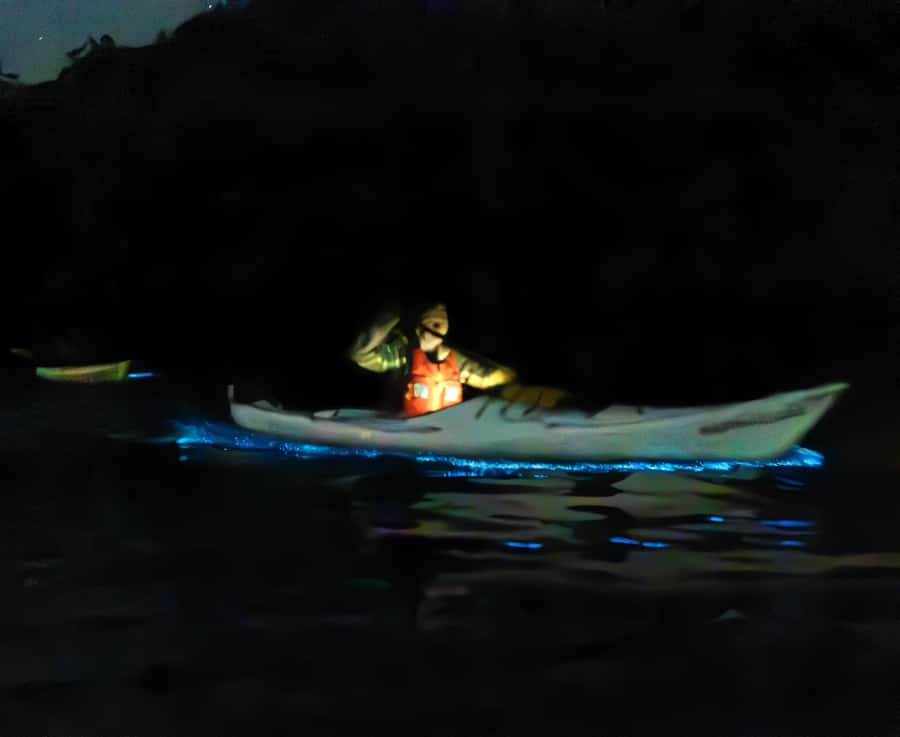
The tour is scheduled during optimal moon phases for the best viewing conditions. That’s not a marketing detail; it’s core to how the effect shows up.
A bright moon can help some people see better, but it also increases ambient light. Too much light in the water or the air makes the glow harder to distinguish. Too little moon can make it harder to navigate. The point of choosing moon phases is to hit the sweet spot where you get darkness enough for the glow, but still have safe, guided conditions.
Minimal light pollution is also part of the equation. It’s hard to appreciate an “ocean lights up” experience if streetlights, boat lights, and bright shore glare are competing with your eyes. Here, the tour is designed to keep that competition low.
Who this tour is best for (and who should think twice)
This tour is a good fit for lots of people: couples, families, groups of friends, or solo adventurers. You don’t need prior kayaking experience either, because guides provide instruction and support.
It’s especially strong for:
- People who want a nature experience that still feels approachable.
- Visitors who like learning something real, not just taking photos.
- Anyone who’s curious about the science behind glowing oceans.
Who should think twice? If you hate being cold, you may find the night conditions challenging. You don’t need extreme gear, but you do need warm clothing and a plan to stay comfortable. Also, if you have trouble with basic water safety rules or you’re uncomfortable in low-light environments, you’ll want to take that seriously and discuss it with the operator before you go.
Price and value: what $56 buys you
At about $56 per person, this sits in the “reasonable for a guided specialist experience” range. The cost is not just for a kayak ride. You’re paying for:
- A guide focused on both safety and spotting bioluminescence
- Included kayak and full equipment setup
- A PFD and safety light beacon
- Time during darker conditions when the glow is more likely to show well
- Short-cycle instruction so you’re not guessing while paddling at night
If you were trying to replicate it on your own, you’d quickly run into gear rental, safety considerations, and the biggest problem: knowing where and when the glow is worth seeing. Here, the value is that you get local know-how and the right conditions built into the schedule.
Practical tips to make your night go smoothly
These are small choices that change the whole feel of the tour.
First: dress for “wet and cold,” not just “cool.” The water spray, coastal breeze, and nighttime chill can add up fast.
Second: bring a towel and a change plan if you’re heading somewhere right after. Even a short paddle can leave you damp.
Third: if you have medication, bring it with you, since personal medication is listed as something you should have.
Fourth: avoid alcohol or anything that affects judgment. Night water + reduced reaction time is not a good combo.
Finally: listen to the guides when they tell you where to paddle and when to pause. That’s how you turn a glowing bay into a full-on light show.
Should you book the Auckland glowing bioluminescent kayak tour?
If you want an Auckland experience that feels real and special, I think this is a strong yes. The core payoff is simple: you paddle through water that glows, you see a starry sky above it, and you learn how it works while you’re watching. The tour also keeps it practical by including the equipment and focusing on safety without slowing down the experience.
Book it if:
- You’re okay dressing warmly and getting a little wet.
- You want a guided nature moment that’s short enough to fit an evening plan.
- You like science explanations paired with hands-on viewing.
Skip or reconsider if:
- Night conditions and low light make you nervous.
- You hate cold weather and don’t want to bring the right layers.
If your schedule can handle 90 minutes to two hours, this is one of the more memorable ways to see Auckland’s water at night—bright blue, quiet, and genuinely different from what most cities offer.
FAQ
How long is the Auckland night kayak tour?
It runs about 90 minutes to 2 hours, depending on the scheduled starting time.
Where does the tour start and end?
You can choose between two meeting/start options: Okura Boat Ramp or Waiake Beach. Your drop-off is at the same location you start.
What should I bring for the tour?
Bring comfortable shoes, warm clothing, a hat, a towel, water, and rain gear. Also bring any personal medication you need.
Do I need kayaking experience?
No. Previous kayaking experience is not required because the guides provide full instruction and support.
Is alcohol allowed?
No. Alcohol and drugs are not allowed.
What’s included in the price?
Your guide, kayak and equipment, a PFD (personal flotation device), and a safety light beacon are included.
What language are the guides?
The live tour guide speaks English.