REVIEW · CANCUN
Cancun: Sunset Kayak Experience in the Mangroves
Book on GetYourGuide →Operated by Go Kayak Cancun · Bookable on GetYourGuide
Kayaking Cancun’s mangroves beats another beach day. You’re out on the Nichupté Lagoon, paddling through quiet mangrove channels at sunset, and I really liked how the guides, like Andrés and Berto, turned the trip into real wildlife spotting instead of just sightseeing. One thing to consider: this is still an active paddle, and if it’s windy you may feel it in your arms.
The whole experience runs about 2 hours, keeps groups small (up to 10), and includes the essentials: a safety briefing, life jackets, kayak gear, and photos. If you show up ready to listen for birds and small movements in the water, you’ll leave feeling like you saw a different side of Cancun.
In This Review
- Key things I’d circle before you book
- Nichupté Lagoon mangroves: the Cancun side most people skip
- Before you paddle: the safety briefing and quick skills warm-up
- The first 45 minutes: easing into the mangroves at dusk light
- A 15-minute break that actually helps: photo stop and reset
- The second 45 minutes: where wildlife clues get easier to spot
- Wildlife spotting tips the guides coach you to use
- What it feels like to paddle: workout level and comfort reality check
- What’s included, and what it changes for your value
- Price check: is $47 a fair deal in Cancun?
- Where you meet and how to show up prepared
- Who should book this sunset kayak (and who should skip it)
- Should you book? My recommendation in plain terms
- FAQ
- How long is the Cancun sunset kayak experience?
- Where does the tour start?
- Do I need kayaking experience?
- What’s included in the price?
- Are single kayaks available?
- What animals can you see?
- What should I bring?
- Is the tour suitable for kids or people with mobility issues?
- What happens if weather is bad?
Key things I’d circle before you book
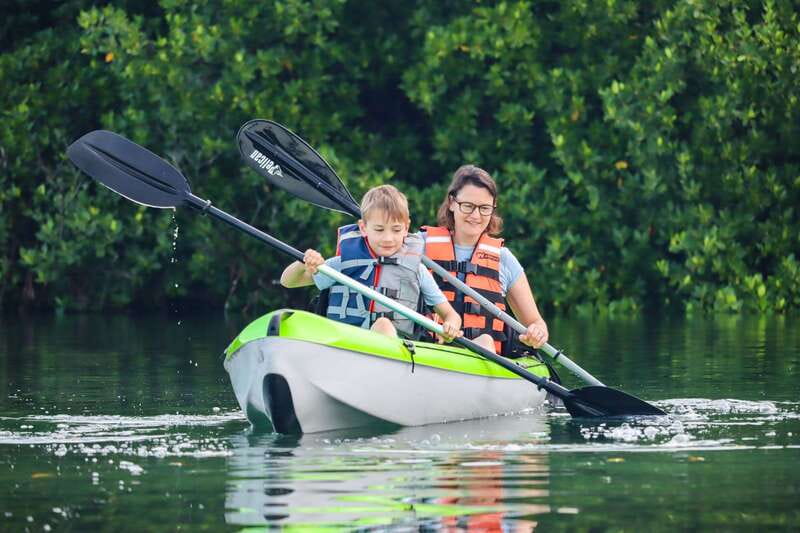
- Nichupté Lagoon mangrove channels at sunset: calm water most of the time, but the timing gives you great light for photos.
- Beginner-friendly, with a warm-up: you get a quick refresher so you’re not guessing how to steer.
- Wildlife spotting with practical guidance: the guides help you notice more than just what’s visible.
- Split paddle + photo stop: two guided paddles (with a mid-break) keeps you from getting bored or over-tired.
- Small group energy: easier to get help, and the trip stays relaxed rather than rushed.
- Courtesy photos: you don’t have to risk dropping your phone to get a good shot.
Nichupté Lagoon mangroves: the Cancun side most people skip
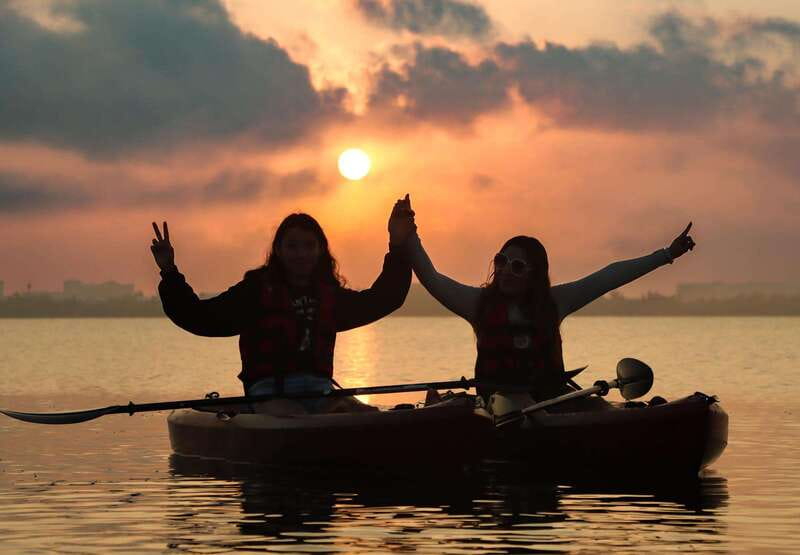
Cancun can feel like a loop: beach, hotel, repeat. This tour breaks that pattern fast. Within a short drive to the marina area in the Hotel Zone, you trade the noise for mangrove sounds—birds calling, water shifting under the kayak, and that “wait, I’m in nature” feeling.
What makes this setting special is the type of water you paddle. You’re not touring open ocean swells. You’re moving through mangrove waterways where the ecosystem is dense and active, so your chances of seeing wildlife are much better than you’d expect from a quick sunset outing.
I also like the basic vibe: you’re not chasing a checklist. You’re paddling slowly enough to watch, and the guides steer the experience toward what’s happening right there in front of you.
You can also read our reviews of more tours and experiences in Cancun.
Before you paddle: the safety briefing and quick skills warm-up
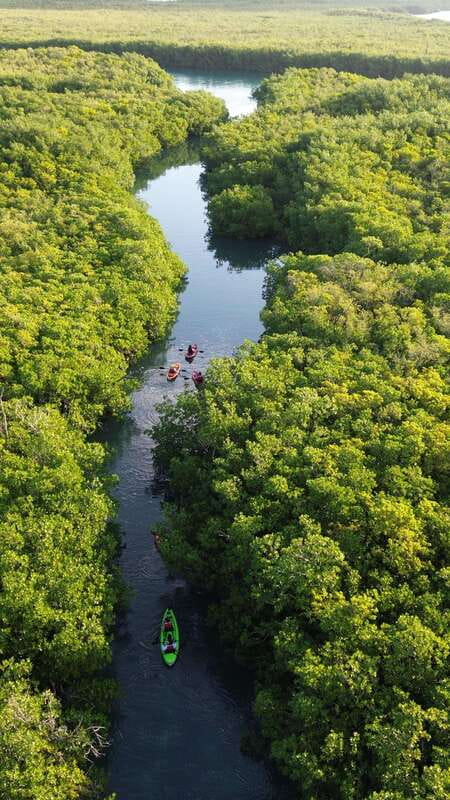
Your tour starts at Go Kayak Cancun in Marina Scuba Cancun, around Hotel Zone kilometer 5. You’ll see the kayaks by the lagoon near the pool area, with the marina positioned in front of Playa Langosta as a helpful reference point.
Once you’re gathered, you get a safety briefing (about 15 minutes). This matters because kayaking in narrow mangrove areas feels different than paddling in a wide, empty bay. Life jackets are provided, and the guides keep things orderly so you can learn without panic.
Then comes the quick warm-up and basics. If you’re new, this is the difference between a fun first paddle and a frustrating one. People mention the guides help them stay on track when they drift, and they actively manage the group so beginners aren’t left behind.
One smart tip I picked up from the overall setup: if you want the easiest time, consider a single kayak. Several people said it’s straightforward to handle and easier to pick up, especially if it’s your first time.
The first 45 minutes: easing into the mangroves at dusk light
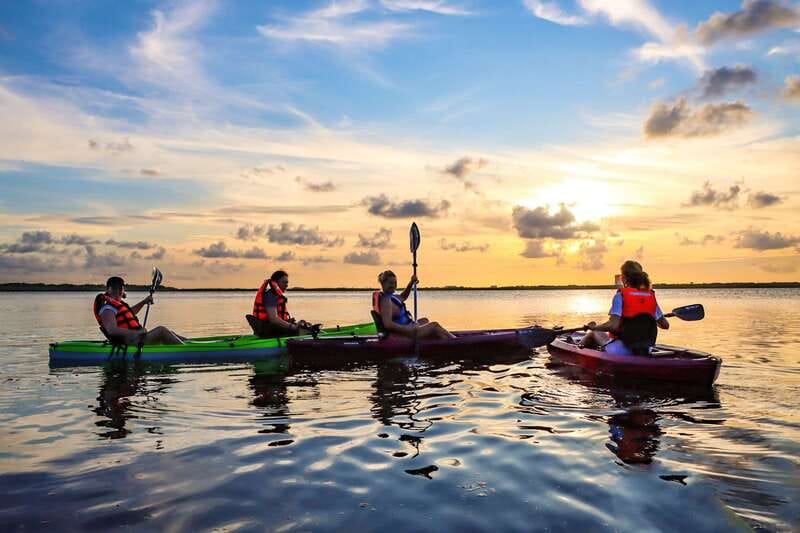
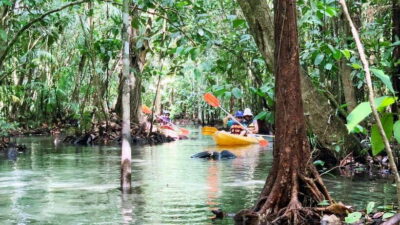
After the warm-up, you head out for the first guided stretch (around 45 minutes). This is where you feel the mangrove “maze” effect: the channels tighten, the roots and branches change what you see, and the pace shifts from sightseeing to attention.
This part tends to feel calm and controlled. In many cases, the water is gentle enough that you can focus on steering and looking around instead of fighting currents. Reviews repeatedly point out how peaceful the interior areas feel, which matches the whole point of doing this later in the day—less harsh light, fewer people, and more wildlife activity near shore edges.
Wildlife sightings in this early segment can vary, but what shows up often includes birds like herons, pelicans, and egrets. People also report seeing underwater life: stingrays and small creatures, plus crabs and other crustaceans when conditions are right.
If it’s windy, the guides handle that too. You may be offered a choice to postpone or continue depending on what you feel comfortable with. That flexibility is good because windy weather can turn an easy paddle into a workout.
A 15-minute break that actually helps: photo stop and reset
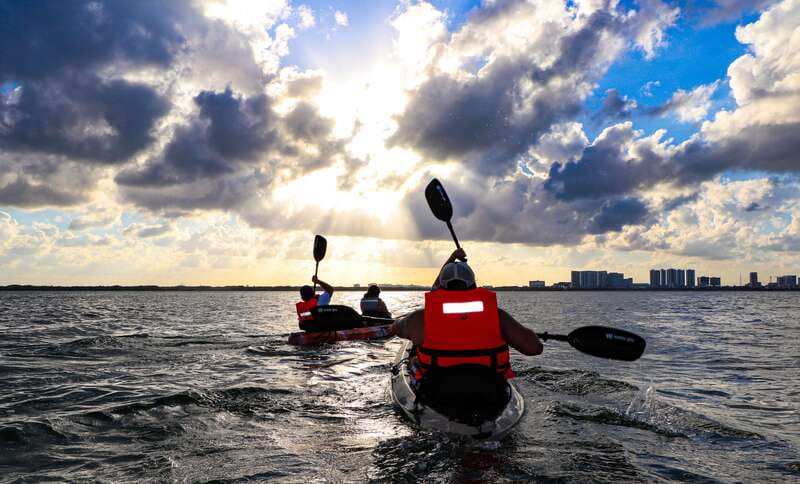
Midway through, there’s a break and a photo stop (about 15 minutes). This isn’t just downtime. It gives your body a chance to reset your shoulders and grip, and it lets the group regroup without rushing the paddle timing.
This is also when the sunset starts doing the most for your camera. Even on days without full sun, the water and mangroves still look dramatic because of the contrast between dark roots and lighter sky tones.
You’ll also benefit from the fact that photos are handled by the team. Courtesy photos are included, and many people say they received professional shots of them on the kayak. If you’re trying to do this while juggling phones, bags, and paddling, this built-in photo support removes a lot of stress.
The second 45 minutes: where wildlife clues get easier to spot
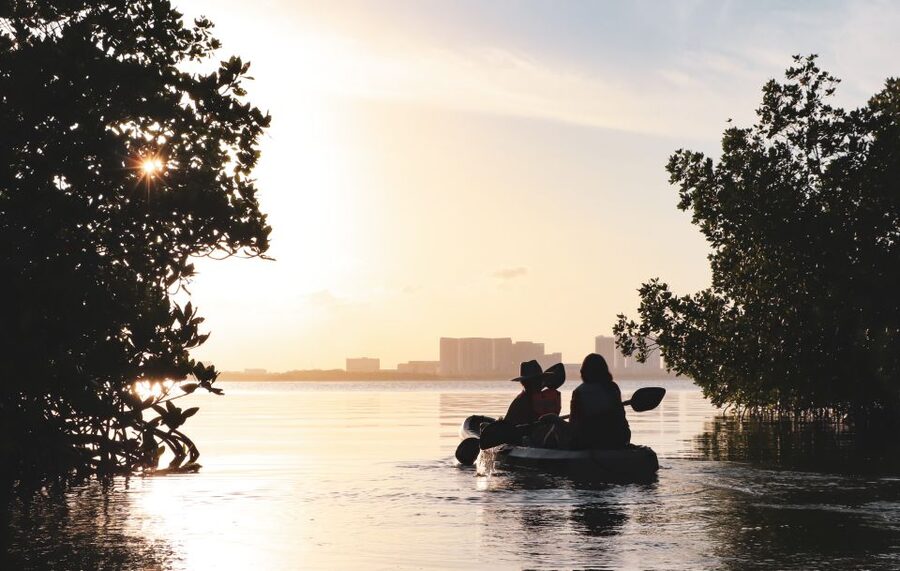
The final guided paddle is another 45 minutes. By then, most people feel more in control of their kayak. That matters because wildlife spotting is easier when you’re not constantly correcting your path.
This is often where sightings land. Reviews frequently mention baby crocodiles, stingrays, rays, and a mix of birds during the later segment. Sometimes you see a creature swim through right under you; other times you spot it as it surfaces near mangrove edges.
Even when you don’t get the “big moment,” you still get value. The ecosystem itself is the story: mangrove roots form shelter lines, small movements create ripples, and bird activity gives away where life is feeding or resting.
It can also feel like you’re drifting into a quieter rhythm. That’s the payoff for doing this in the Nichupté Lagoon instead of staying on the main beach strip.
Wildlife spotting tips the guides coach you to use
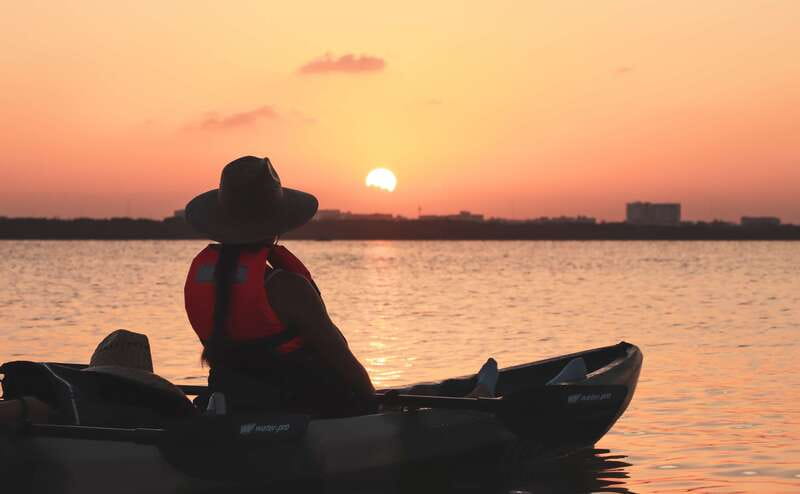
Here’s the best part for nature lovers: the guides don’t just point at animals. They train you to notice the signs you’d normally miss. I like this approach because it makes wildlife spotting feel learnable, not random.
Use more than your eyes. That means listening for cracking twigs or branches, paying attention to animal calls, and watching for the flutter of birds’ wings. If you only scan with your eyes, mangrove wildlife can slip by because it blends into shadows and root structures.
Also, keep your expectations flexible. In a mangrove system, sightings depend on time of day, water conditions, and animal behavior. People report different combinations—some see stingrays, others see multiple birds, and a few get lucky with crocodiles or other standout animals.
The good news: even in the “less dramatic” moments, your senses still get rewarded. You’ll notice patterns—where birds gather, where water movement changes near roots, and how the ecosystem sounds shift as the light fades.
What it feels like to paddle: workout level and comfort reality check
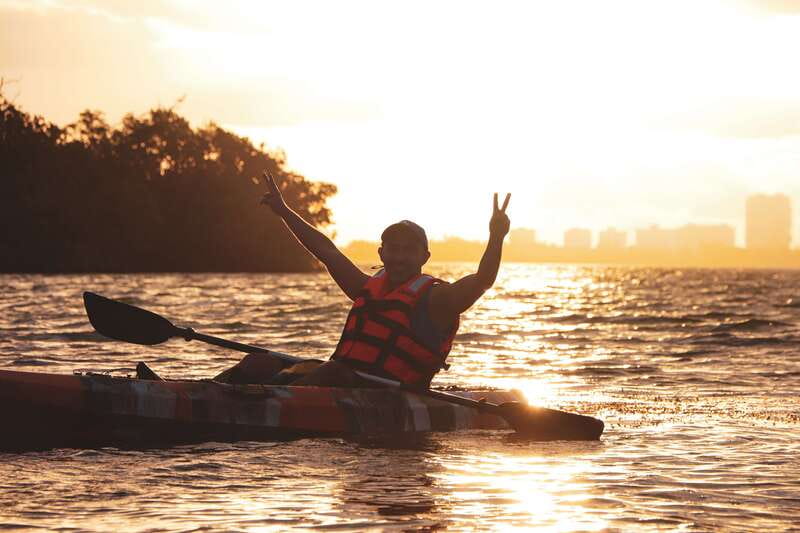
This trip is not a slow glide tour with zero effort. You’ll be paddling for about 45 minutes, twice, plus brief regrouping time. Reviews describe it as a medium paddle and point out that it’s an arm workout, even for people who start as complete beginners.
The good part is that your gear supports you: you get a kayak with rows and back support, and you wear a life jacket. That combination keeps you stable as you learn. Several people mention they felt safe even with no kayaking experience.
Still, there are clear limits. The activity isn’t suitable for children under 10, pregnant women, people with back problems, mobility impairments, recent surgeries, or low fitness. If that describes you, you’ll likely be uncomfortable and not enjoy the experience.
Weight matters too. The limit per kayak is 110kg/245lbs, so be sure you fit the standard before you plan your gear and expectations.
What’s included, and what it changes for your value
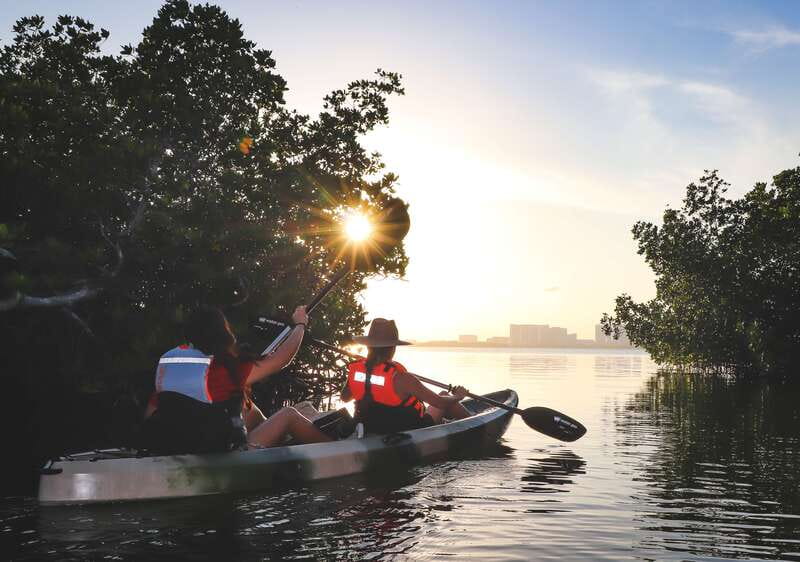
At $47 per person for a 2-hour guided kayak experience, you’re not just paying for the water time. You’re buying instruction, equipment, and a wildlife-focused guide.
Included basics:
- Water
- Kayak equipment (single or double kayaks with back support)
- Bilingual guides (English and Spanish)
- Life jackets/vests
- Courtesy photos
Value comes from the parts that remove friction. You don’t need to rent or figure out gear. You don’t need to study local wildlife ahead of time. And the photos mean you can spend your energy paddling and watching instead of trying to capture the sunset one-handed.
A few people also mention a mid-tour snack, and some talk about a waterproof bag for phone/valuables. Those details aren’t listed in every info block, so treat them as possible extras rather than guaranteed equipment—but they fit the general “we’ve thought of the little stuff” reputation in the reviews.
Price check: is $47 a fair deal in Cancun?
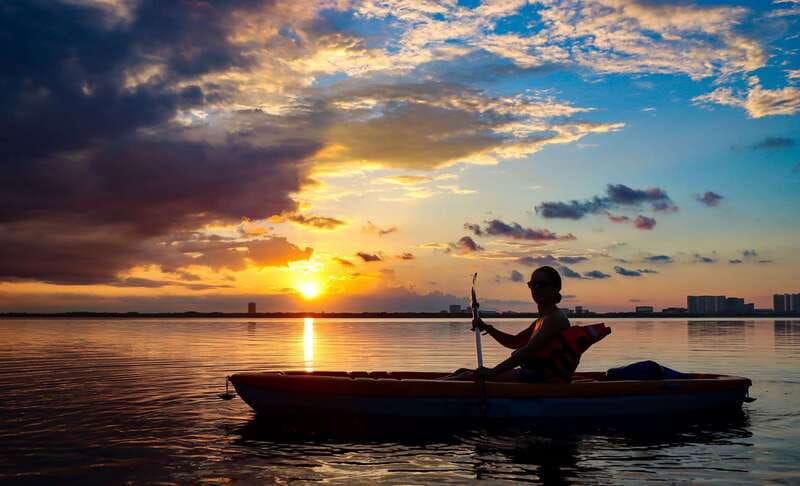
Let’s be blunt. Cancun has tons of tours that charge a lot for a short window of action and a bus ride that takes longer than the activity. This one gives you a full 2-hour block on the lagoon with a small group and active guidance.
For $47, you get:
- A guided paddle through a real ecosystem (not just a scenic drive)
- A beginner warm-up and safety briefing
- Wildlife spotting help and photo support
When I weigh it as a “time on the water + instruction + photos” deal, it feels like strong value, especially if you’re trying to avoid the pricey, high-traffic tourist circuit.
If you want a cheap thrill, skip it. If you want an evening that actually changes how you see Cancun, this price lands in a reasonable zone.
Where you meet and how to show up prepared
Meeting point is Go Kayak Cancun at Marina Scuba Cancun in the Hotel Zone, around km 5. You’ll spot the kayaks by the lagoon near the pool area, with the marina across from Playa Langosta.
What to bring:
- Hat
- Swimwear
- Biodegradable sunscreen
- Flip-flops
- Biodegradable insect repellent
- A reusable water bottle is recommended to cut down on single-use plastic
One “real life” thing: wear what you can move in. Flip-flops are fine for walking around, but you’ll want swimwear that doesn’t fight you during paddling.
Also, follow the rules: intoxication, alcohol, and drugs are not allowed. That keeps the water safer and the group calmer.
Who should book this sunset kayak (and who should skip it)
This is perfect if you:
- Want a break from Cancun’s busy hotel-zone vibe
- Want an easy entry into kayaking with real help
- Love wildlife, birds, and “quiet nature” evenings
- Prefer small-group outings over crowded tours
It may not be the right fit if you:
- Have back issues or recent surgery
- Have mobility limits that affect getting in and out of the kayak
- Feel nervous about any physical paddle workout
- Are traveling with children under 10
If you’re deciding between a morning and sunset option, I’d lean sunset for the mood and light. But if you’re mainly hunting for calmer water and fewer boats, a morning paddle is often easier. (The guides specifically mention that mornings can be quieter due to boat traffic.)
Should you book? My recommendation in plain terms
Book this if you want a genuine nature escape that fits into a short evening. The combination of small group size, beginner-friendly guidance, and a guided paddle through mangroves at sunset makes this one of the most “Cancun but not Cancun” activities in the area.
Skip it if you’re looking for a purely relaxing float. You’ll paddle, and wind can add effort. Also check your fitness and comfort needs first, since the activity isn’t meant for everyone.
If you do go, show up with breathable sun protection and insect repellent, and mentally switch from sightseeing to listening. When you use the guides’ wildlife approach—eyes plus ears—you’ll get more out of every minute on the water.
FAQ
How long is the Cancun sunset kayak experience?
The experience runs for about 2 hours total.
Where does the tour start?
You meet at Go Kayak Cancun in Marina Scuba Cancun in the Hotel Zone (kilometer 5), near the pool area and by the kayaks at the lagoon. The marina is across from Playa Langosta.
Do I need kayaking experience?
No. The tour includes a brief warm-up and basics so beginners can participate. Guides provide support during the paddle.
What’s included in the price?
It includes water, kayak equipment (single or double kayaks with back support), life jackets, bilingual guides (English/Spanish), and courtesy photos of your experience.
Are single kayaks available?
Yes. You can choose between single or double kayaks with back support, depending on what’s offered for your group.
What animals can you see?
You may see birds and sea life such as fish, crustaceans, stingrays, and possibly dolphins and rays. Some departures also include crocodile sightings.
What should I bring?
Bring a hat, swimwear, biodegradable sunscreen, flip-flops, and biodegradable insect repellent. The provider also recommends bringing a reusable bottle.
Is the tour suitable for kids or people with mobility issues?
It’s not suitable for children under 10, pregnant women, people with back problems, people with mobility impairments, people with recent surgeries, or people with low fitness.
What happens if weather is bad?
If the operator cancels due to weather or other unforeseen circumstances, you receive a full refund or credit. If you don’t show up when conditions are good for departure, you can be charged the full price.