REVIEW · AUSTIN
Congress Avenue Bat Bridge Kayak Tour in Austin
Book on Viator →Operated by Lone Star Kayak Tours · Bookable on Viator
Austin’s bat bridge is a night show.
This kayak tour turns that famous spectacle into a front-row view from the water, timed for when bats pour out of the bridge around sunset and head toward eastern downtown. I love that there’s a no-experience-needed paddle lesson plus life jacket safety gear, so you’re not stuck watching from shore. I also like that it’s a small-group vibe (max 12) with a central downtown meeting point on East Ave. One thing to weigh: if you’re easily annoyed by not hearing every word while paddling, you may want to plan to rely on big-picture guidance and body language, since guide audio can get tough with the night sounds.
You get roughly two hours on the water, and it’s built for an active evening rather than a long sightseeing bus ride. The bats are the headline, but the payoff is how the city looks afterward—gliding under downtown lights with the bridge overhead. Come prepared for it to feel like night kayaking (cool breeze, occasional spray), and you’ll be in good shape.
In This Review
- Key things to know before you paddle under Congress Avenue
- Getting on the water: Lone Star Kayak Tours at East Ave
- The bat bridge moment: millions of Mexican free-tailed bats, right above you
- Austin skyline from the kayak: lights, angles, and a calmer pace
- Kayak setup and beginner comfort: hard-frame boats, short instruction, real safety
- What to wear and bring for night paddling on the lake
- When hearing your guide gets hard: plan for the soundscape
- Weather, water conditions, and how the tour handles changes
- Price and value: what $50 buys you in Austin at night
- Who this tour is best for (and who should rethink it)
- Specific guide energy: funny, patient, and bat-nerdy in a good way
- Should you book the Congress Avenue bat kayak tour?
- FAQ
- Do I need kayaking experience?
- How long is the Congress Avenue Bat Bridge kayak tour?
- Where do I meet for the tour?
- What time do the bats leave the bridge?
- What size is the group?
- What’s included in the price?
- Is food or drinks included?
- What should I wear and bring?
- Are inflatable kayaks used?
- What language is the tour in?
- What if the weather is bad?
Key things to know before you paddle under Congress Avenue
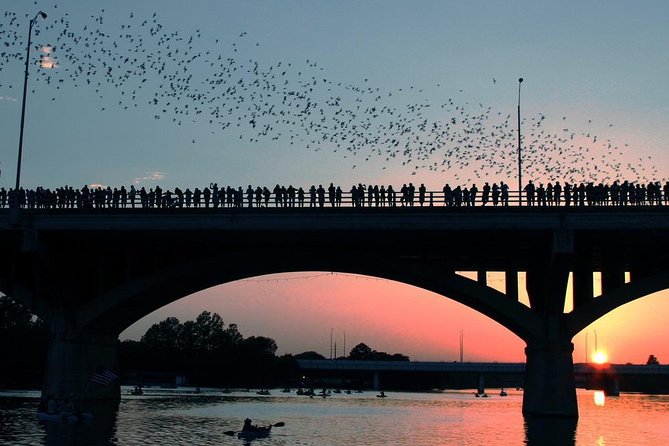
- It’s timed to bat takeoff at sunset, when the bats exit the Congress Avenue Bridge and fly toward eastern downtown.
- No prior kayaking experience is required, because you’ll get a short paddle lesson and safety instructions first.
- Hard-frame kayaks (not inflatables) are used for safety and stability, especially on a lake with some rougher areas near launch.
- Small group size (max 12) and a guide ratio around 1 guide per 8–10 means you’re not just drifting on your own.
- Bring a towel and extra clothes—you’ll likely get a bit wet while learning.
- Microphones/headsets aren’t guaranteed for everyone, so if you care about hearing every detail, be ready for a bit of overlap with water and paddling noise.
Getting on the water: Lone Star Kayak Tours at East Ave
The whole experience starts at Lone Star Kayak Tours, 23 East Ave, Austin, TX 78701—right in the downtown orbit. That matters because you avoid the “get out of town, wait around, then drive again” feeling that some tours create. If you like the idea of an evening plan that starts promptly and keeps you moving, this one fits.
You’ll be given your life jacket and a basic setup before you head out. Even if you’ve never kayaked, you’re not expected to magically know what to do with a paddle in the dark. The lesson is built for first-timers, and the guides stay engaged throughout so you can keep adjusting.
One practical note: the instruction time is limited at the start. If you show up late, you might miss the extra hands-on help that’s meant to get you comfortable before you’re out on the lake.
You can also read our reviews of more tours and experiences in Austin.
The bat bridge moment: millions of Mexican free-tailed bats, right above you
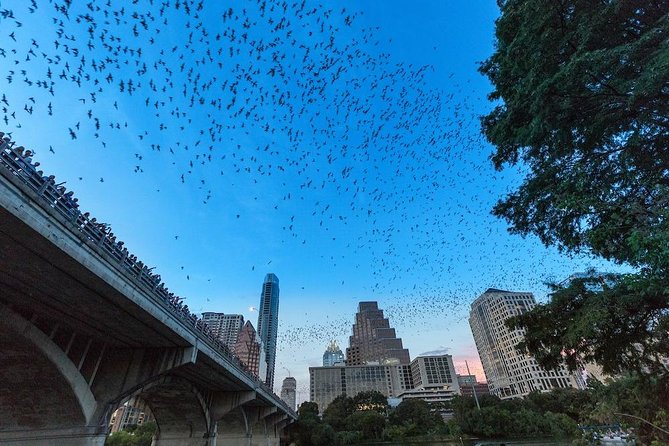
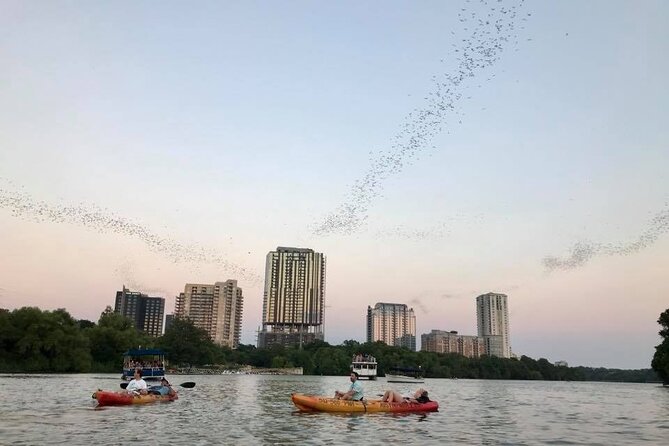
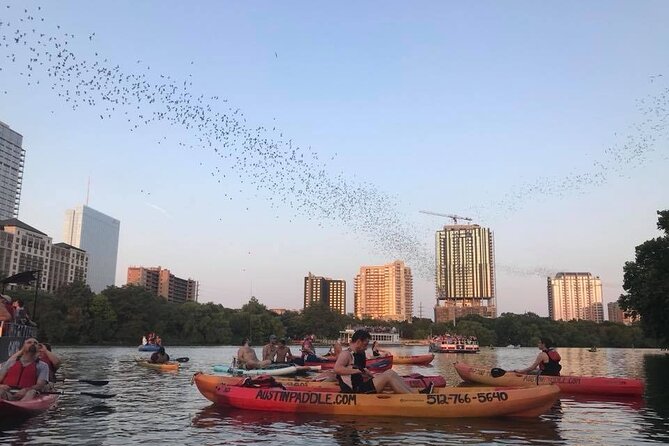
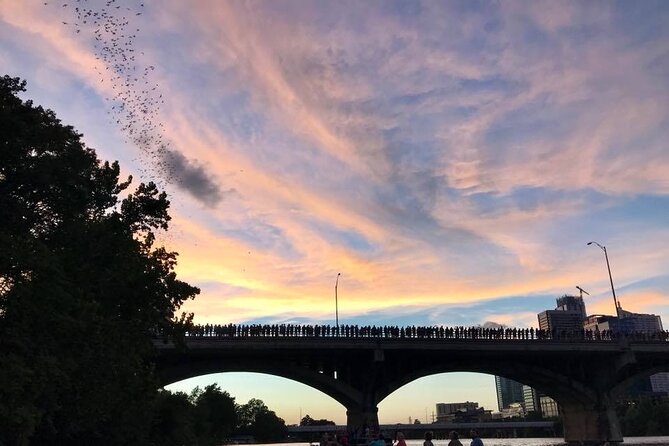
Congress Avenue Bridge is famous for a reason: it hosts a massive urban bat colony. During peak season, the count peaks around 2 million bats, and the takeoff pattern is part of the magic—bats leave around sunset and head toward the eastern part of downtown.
From the water, that rhythm feels different than it does from a bridge walkway. You don’t just watch a swarm happen; you feel like you’re floating next to it. The bats create this moving cloud effect that starts as scattered movement, then quickly turns into a steady flow. And because you’re low on the river, the scale can feel even more intense than you expect.
The best viewing comes when the group settles into position and you can look up and track the flight direction. Expect the moment to be the highlight of the whole evening. If the weather is right and timing lines up, you’re set up for the kind of night you’ll remember long after the adrenaline fades.
Austin skyline from the kayak: lights, angles, and a calmer pace
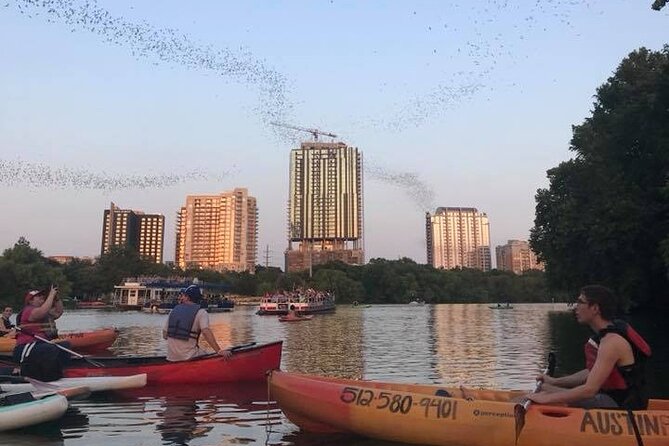
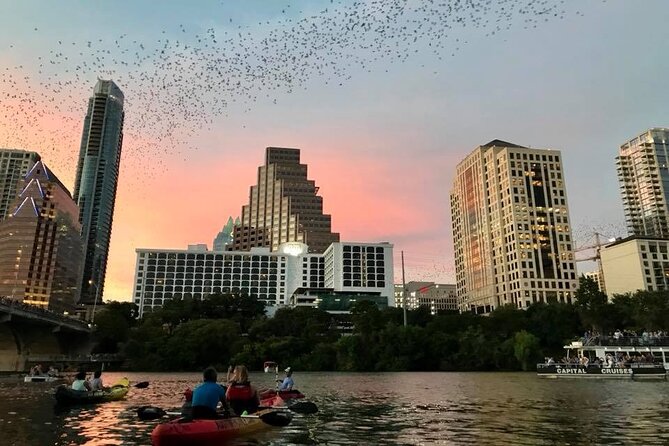
After you’re done watching the bat action, you get time to enjoy the city from the water. You’ll pass and see parts of the Austin skyline, including landmarks like the Hotel Van Zandt and The Austonian Tower, plus a mix of residential and commercial buildings.
This is where the tour earns its “worth the money” status for a lot of people. Night kayaking slows your attention down. You feel the water, you watch reflections, and you notice building lights in a way you can’t get from a standard photo spot.
It also helps that kayaking gives you options. When you’re on the water, you can paddle slightly ahead or behind your group depending on what you want—closer bat views earlier, or calmer scenery pacing later. Just don’t expect the tour to be a long, open-water ramble; it’s structured around timing for the bats.
Kayak setup and beginner comfort: hard-frame boats, short instruction, real safety
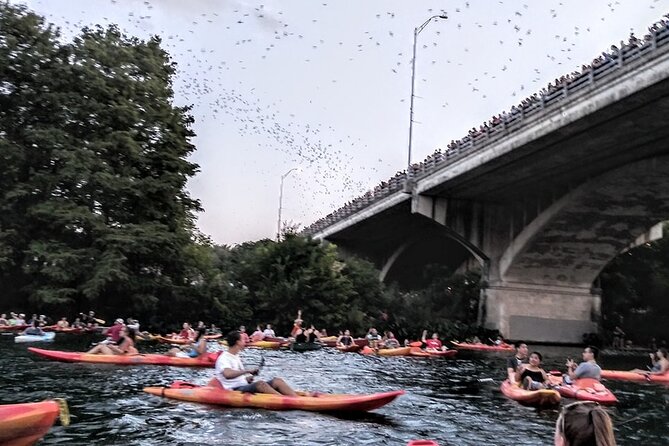
The company uses hard-frame kayaks, not inflatable kayaks. That choice comes with a clear advantage: stability. Inflatables can be risky, especially around rougher launch areas or if you’re learning balance in a moment where you’re already concentrating on steering. Using rigid kayaks also helps keep your feet and body in better control while you learn.
Your guide provides the paddle lesson and safety instructions, and the tone is generally built to keep you calm. People who went in as true first-timers often come away feeling like it was easier than they feared once they got rolling.
That said, kayaking at night still takes some coordination. You’ll want to keep your expectations realistic: you might be “learning in motion.” Also, expect a bit of water on you during the trip. The guides may talk you through technique, but physics still applies—paddle hits, water splashes, and a breeze can all add up.
If you’re worried about keeping up, it helps that some guides will adjust by matching pace and providing support. One review described a guide riding tandem with a rider who wasn’t sure they could keep up, which hints at a practical, flexible approach when possible.
What to wear and bring for night paddling on the lake
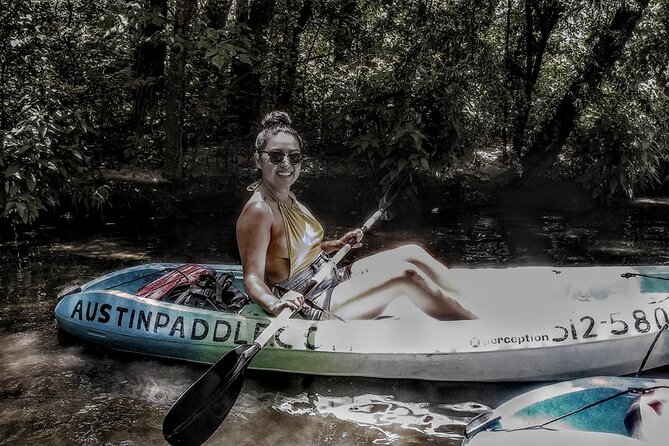
If you do only one thing to make this tour smoother, it’s dress for wind and water—not for daytime Austin. The tour recommends swimsuit-style swimwear plus a windbreaker or lightly layered synthetic clothing. Even in warm months, night air can feel cooler once you’re out on the water and moving.
Here’s a packing list that lines up with what the tour explicitly recommends, plus what your body will thank you for:
- Sunglasses and a hat (glare can surprise you)
- Sunscreen (yes, even at night you can burn while waiting and prepping)
- Waterproof camera (or at least a waterproof phone pouch)
- Bottle water (not included)
- Bug repellent (bring it)
- Towel and an extra change of clothes (you’ll likely get wet)
- Light layers you can tolerate if you’re damp
- A waterproof bag or dry bag if you have one (you may be able to purchase options on-site, but don’t count on lending)
If you’re the type who likes a clean “just-in-case” bag, this is the night to pack it. The tour doesn’t include food or drinks, so water management matters.


When hearing your guide gets hard: plan for the soundscape
Night on the lake adds noise: water movement, paddles, wind, and the general background bustle of downtown. In feedback, a few people said they struggled to hear the guide—especially when they were more than a short distance away.
The good news is that the guides do a lot of speaking while they paddle alongside. The challenge is that headsets for everyone aren’t part of the standard setup. One response explained that they tried headsets before, but equipment issues and water exposure led to problems, so they don’t rely on that solution.
So here’s the practical approach I’d use: don’t treat the tour like a podcast you must hear word-for-word. If you want to catch details, rotate your attention toward the guide during key moments (especially during bat explanations), and ask questions if you have them. Short prompts get the best results when the audio is noisy.
Weather, water conditions, and how the tour handles changes
The tour says it operates in most weather conditions, so you’re not automatically canceling the second the sky looks moody. Still, the experience requires good weather, and if conditions are poor enough, you’ll be offered a different date or a refund.
That matters because bat behavior and your comfort both depend on conditions. Even small storms in the area can affect the timing and what you see, and they can make bat activity look different than a “perfect” night. If you’re flexible, your odds improve.
Also, remember the water isn’t a perfectly smooth pool. One review noted that the launch area can have muck, and that getting past it matters for comfortable paddling. That’s another reason hard-frame kayaks help on days where conditions aren’t ideal.
Price and value: what $50 buys you in Austin at night
At $50 per person for about two hours, this tour is priced like a real activity—not a cheap “look from the shore” add-on. But what makes it feel like solid value is the bundle: you’re not just paying for access to the bat viewing, you’re paying for the guide, the life jacket, and the chance to learn enough paddle technique to enjoy the water.
The central location is a value point too. You’re not spending your time and money commuting out to a remote meeting area. And the small group size (max 12) helps ensure you get attention instead of feeling like a number.
Food and drinks are not included, so factor that into your total budget. But if you bring a bottle of water and pack the recommended layers, the rest of the experience stays focused on the two things you came for: bats and city lights.
Who this tour is best for (and who should rethink it)
This kayak tour is a great fit for:
- First-time kayakers who want a short lesson instead of a “good luck” paddle
- People who love Austin at night and want real skyline views from the water
- Anyone fascinated by the Mexico’s free-tailed bats and the way they use the bridge as a colony site
It may be less ideal if:
- You’re extremely sensitive to wet clothing and cold wind and don’t want to bring spare layers
- You need to hear every word clearly at all distances during the entire tour
- You’re expecting inflatable-style casual lounging; these are hard-frame kayaks with proper safety support
Physical demands are generally manageable, and the tour asks for a moderate physical fitness level. That usually translates to: you can handle paddling for a couple hours and you can deal with a bit of wake-up effort.
Specific guide energy: funny, patient, and bat-nerdy in a good way
One of the quiet strengths here is the guide team’s personality. Names that came through in feedback include Henry, Eli, Nico, Will, Sam, Aiden, JT, Reid, Preston, and others. People consistently describe guides as friendly, helpful, and patient with beginners.
That matters on a night tour. When you’re learning technique, being supported keeps you from feeling clumsy. When guides stay relaxed, the group relaxes too—so you end up focusing on the bats instead of worrying about your grip or direction.
Should you book the Congress Avenue bat kayak tour?
I’d book it if you want the best kind of “Austin memory”: something visual, unusual, and timed to nature’s schedule. The fact that you get out on the water with instruction (instead of just standing around) makes it more than a ticket to a photo spot.
I’d also book it if you can dress for the night and bring the basics—towel, extra clothes, and layers—because the comfort piece strongly affects how much you enjoy the rest.
And I’d pause for a moment before booking if you’re the type who needs perfect audio the whole time or you hate feeling wet. The experience is thrilling, but it’s still a real paddle trip under real nighttime conditions.
Overall, for most people, this is one of those rare tours where the “why” is obvious the moment you arrive: you’re going to watch millions of bats take off from the water, with Austin lights all around you.
FAQ
Do I need kayaking experience?
No. The tour includes a paddle lesson and safety instructions, plus life jackets, so you can learn as you go.
How long is the Congress Avenue Bat Bridge kayak tour?
The tour runs about 2 hours.
Where do I meet for the tour?
You meet at Lone Star Kayak Tours, 23 East Ave, Austin, TX 78701. The tour ends back at the same meeting point.
What time do the bats leave the bridge?
The bats take off around sunset.
What size is the group?
The maximum group size is 12 travelers.
What’s included in the price?
Included are a professional guide, a life jacket, and the paddle lesson plus safety instructions.
Is food or drinks included?
No. Food and drinks are not included.
What should I wear and bring?
Dress for wind and water. The tour recommends swimsuit, a windbreaker or lightly layered synthetic clothing, and bringing sunglasses, hat, sunscreen, a waterproof camera, bottle water, bug repellent, towel, and extra change of clothes.
Are inflatable kayaks used?
No. The guides use hard-frame kayaks.
What language is the tour in?
The tour is offered in English.
What if the weather is bad?
The tour operates in most weather conditions, but it requires good weather. If it’s canceled due to poor weather, you’ll be offered a different date or a full refund.