REVIEW · FUJIKAWAGUCHIKO MACHI
Early Morning Kayaking With Views of Mt Fuji at Lake Kawaguchiko
Book on Viator →Operated by NaturaBase · Bookable on Viator
Fuji looks different before breakfast. This early-morning Mt. Fuji kayaking on Lake Kawaguchiko beats the usual crowd rhythm and puts you on the calm water when the mountain often shows crisp lines. Two things I really like: the timing for those clear views and the way your guide, like Graham or Kato, shares facts while also taking photos for you. One drawback to plan for: the start is early, and you may feel the morning chill out on the lake.
You don’t have to show up fully prepared. NaturaBase provides the kayaking gear and the waterproof pants and boots that can make a big difference, especially in cooler seasons. Even beginners are set up to succeed with a short instruction-and-practice block before you head out.
The group stays small (maximum 10), and the pace is laid back. You’re guided the whole time, so this isn’t a do-it-yourself rental. Just go in ready to listen, paddle gently, and enjoy the quiet—because that’s where the magic lives.
In This Review
- Key highlights to know before you go
- Why 7:00 am on Lake Kawaguchiko Changes Everything
- NaturaBase4010 Funatsu Meet-Up: What Happens From 6:45–7:15
- Safety + Paddling Practice: The 7:15–7:30 Learning Block That Matters
- The Main Paddle (7:30–8:30): Clear Fuji, Mist, and Quiet Water
- Avoiding Land Crowds: Why Being on Water Wins
- Graham or Kato: The Photo Help and Stories That Make It Feel Personal
- Gear and Comfort: Waterproof Pants, Boots, and Staying Warm
- Price and Value: How $66.07 Adds Up for 1.5 Hours
- Who This Tour Fits Best (and Who Might Want a Different Plan)
- Should You Book This Early Morning Fuji Kayaking?
- FAQ
- Do I need to know how to kayak before I go?
- What time does the kayaking tour start?
- How long is the tour?
- How many people are in the group?
- What’s included in the price?
- Is this a kayak rental?
- Will Mt. Fuji be visible during the tour?
- What should I bring?
- What happens if the weather is poor?
- Can I get pick-up service?
Key highlights to know before you go
- 7:00 am start is built around clearer Fuji views and quieter water
- Small-group cap (10 people) keeps the experience relaxed and controllable
- Not a rental: you’re guided to the best spots on Lake Kawaguchiko
- Photo-taking from the water helps you capture Fuji without juggling your phone
- Waterproof pants and boots are provided, which matters early in the morning
- Beginner-friendly pacing with instruction, then short practice, then the main paddle
Why 7:00 am on Lake Kawaguchiko Changes Everything
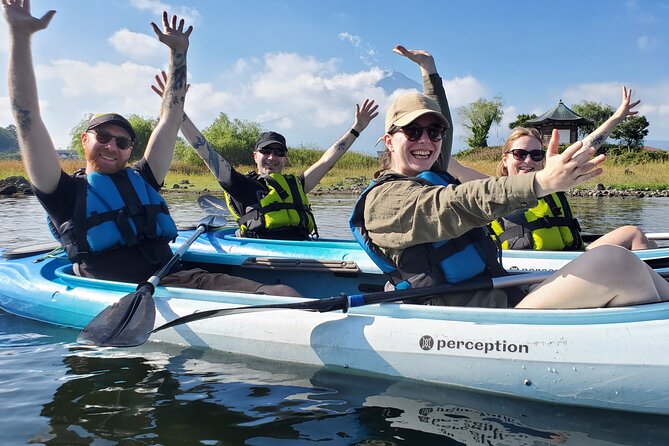
The biggest reason this kayaking tour works is the clock. You start at 7:00 am, when Lake Kawaguchiko is often glassy and Mt. Fuji can look its sharpest. Later in the day, the crowds on land pick up, and the whole area gets louder and busier. Out on the water, early morning gives you space: less noise, fewer boats, and that gentle sense that the world is still waking up.
You’ll also notice the lake’s mood. The tour is designed around calm paddling and the chance to see soft mist on the water. Add in wildlife sightings like swans and cormorants (depending on conditions), and it turns the view into a whole scene, not just a background photo.
This is also the easiest time to enjoy Fuji without rushing. The tour is about 1.5 hours total, and the schedule is paced so you aren’t thrown into deep water right away. That matters if you’re not a strong paddler yet.
One more thing: Mt. Fuji can be a little “mood-based.” Cloud, fog, and wind can shift quickly. The early slot isn’t a guarantee, but it’s a smart bet—because the lake conditions and visibility are often better before the day warms up.
NaturaBase4010 Funatsu Meet-Up: What Happens From 6:45–7:15
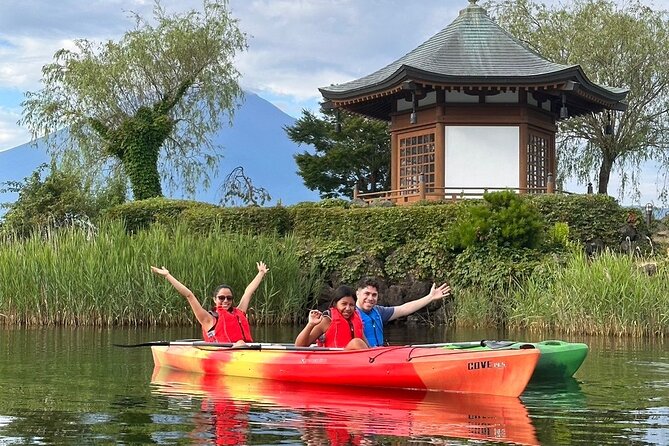
Your morning starts at NaturaBase4010 Funatsu in Fujikawaguchiko. Expect a quick check-in process between 6:45 and 7:00. During that window, you’ll fill in the agreement form and make payment. It’s a short stop, but it sets the tone: this is organized, not chaotic.
Then you shift into the tour’s “easy mode.” From 7:00 to 7:15, the guide explains how to paddle and also covers potential dangers for kayaking activity. That last part sounds intense, but it’s really about helping you understand what to watch for—how to handle the boat safely, what not to do, and how to follow the guide’s cues.
This is also the moment to ask practical questions. If you’re unsure about your grip, balance, or what to do if you get a little cold, that’s the time. I like that the schedule builds in real communication before you push off.
It also means you’re not guessing about rules once you’re out on the lake. You’ll know what “go” looks like, what “stop” means, and how the guide expects you to move with the group.
Safety + Paddling Practice: The 7:15–7:30 Learning Block That Matters
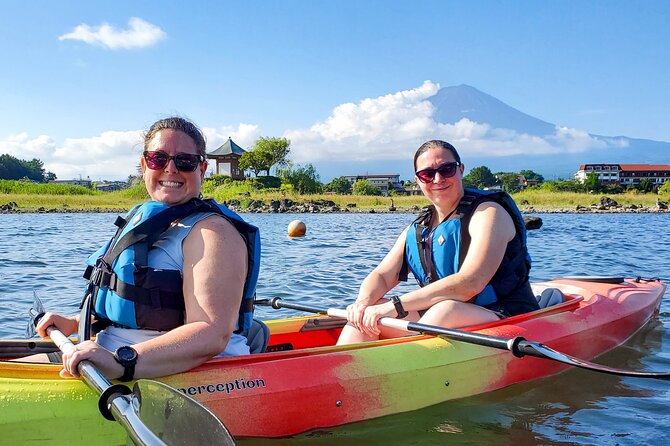
From 7:15 to 7:30, you practice paddling. This isn’t a long lesson, but it’s long enough to get your body comfortable with the motion and to understand how the kayak responds. The goal isn’t perfection. The goal is confidence.
If you’re a beginner, the guide’s approach is what makes it workable. You’re not thrown into the deep end of skill. You get instruction, then a chance to repeat the basics before the main portion starts.
This practice block also helps the guide manage the group. Since the maximum size is 10 travelers, the guide can give more individual attention than you’d find on bigger tours. That translates into a calmer experience on the water.
One small planning tip: arrive early enough to stay calm at the check-in. You’ll get more out of the practice if you’re not rushing and worrying about being late.
The Main Paddle (7:30–8:30): Clear Fuji, Mist, and Quiet Water
At 7:30, the real kayaking begins, running until about 8:30. This is the time you’ll be out enjoying Lake Kawaguchiko’s calm surface with Mt. Fuji in your line of sight.
The tour description highlights a few “on-the-water” moments:
- Clear views of Mt. Fuji in the early morning
- Soft mist drifting over the lake
- Birdlife such as swans and cormorants
In practice, that means your senses slow down. Instead of thinking about where to go, you follow the guide’s route and focus on the water in front of you.
One detail that feels extra meaningful: the guide leads you to beautiful places, rather than just letting you paddle wherever. That’s the difference between seeing Fuji from one angle and experiencing it in multiple ways—especially when the lake conditions are changing minute to minute.
Based on what I’ve gathered from how the tour runs, you typically cover a large section of the lake—often around two-thirds of the water area—so you’re not doing a tiny “out-and-back” loop. You’ll spend enough time moving to feel like you got a real outing, not just a scenic float.
Avoiding Land Crowds: Why Being on Water Wins
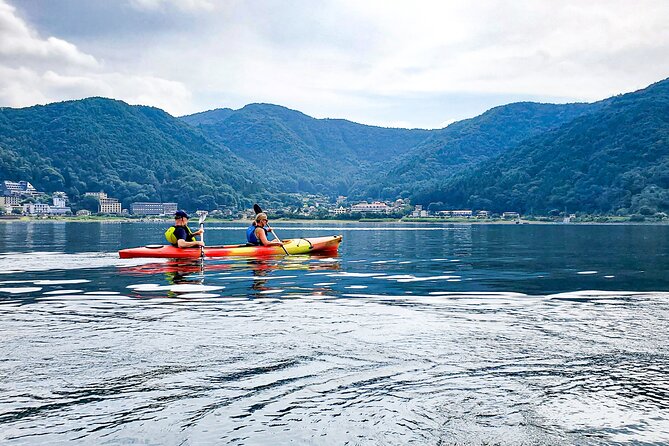
The tour’s pitch is simple: avoid the crowds on land and enjoy Mt. Fuji at its most peaceful. That’s not marketing fluff. It’s the core value.
Around Mt. Fuji, land viewpoints can fill up fast. When that happens, your experience becomes waiting, repositioning, and squeezing around other people. On the water, the crowd problem mostly fades away. You still get the view, but you get it with motion and quiet.
You’ll also experience Kawaguchiko differently. You’re paddling near the edges of the lake’s “world”—the waterline, the reflections, and the way mist changes the contrast. It feels more like watching Fuji than simply looking at it.
And the guide helps you get context while you’re moving. The tour includes stories and facts about Kawaguchiko and Mt. Fuji, which turns your “pretty photo” into something you can actually understand.
Graham or Kato: The Photo Help and Stories That Make It Feel Personal
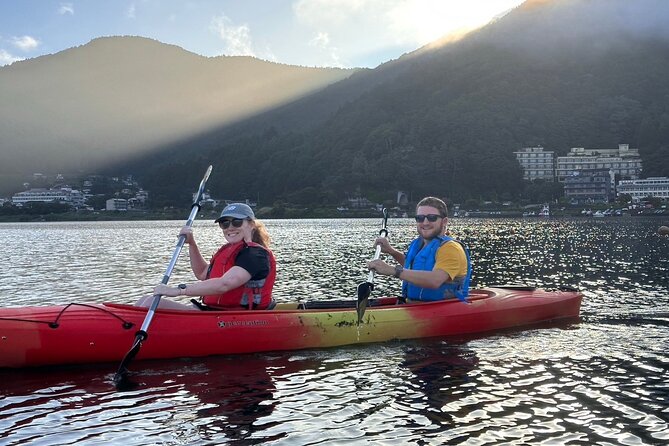
A big reason people rate this tour so highly is the guide role. You’re not left to manage your own photos and your own route. Your guide takes photos while you’re on the water, so you can actually focus on kayaking and the view.
You might spend time with different guides depending on the day. From the tour experience, names like Graham and Kato have come up, and both are described as helpful, informative, and comfortable leading English-speaking groups.
What I’d watch for (in a good way) is how the guide blends:
- Practical guidance for paddling and safety
- Local facts and history related to the area
- Humor and conversation that keeps the mood relaxed
That combination matters because early morning activities can feel awkward if you don’t have something to hold onto—like conversation, explanations, or a reason you’re heading toward one spot instead of another.
There’s also a chance you’ll see something special on the lake. One described highlight is a mysterious temple in the lake, which is exactly the kind of scene that feels better from the water than from a shoreline path.
Gear and Comfort: Waterproof Pants, Boots, and Staying Warm
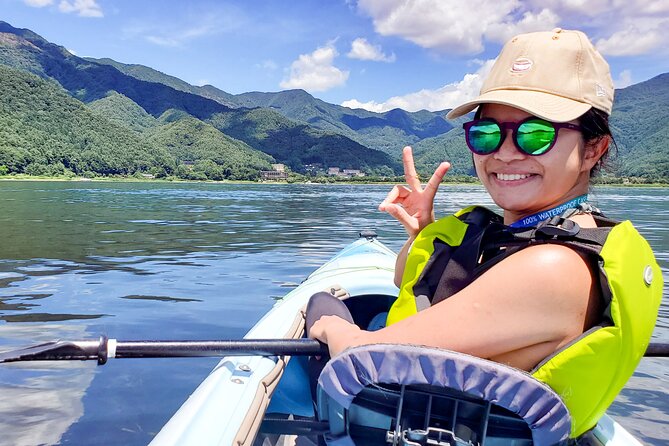
Cold mornings are real at Lake Kawaguchiko. The good news is you don’t have to gamble with your own wardrobe.
You’ll be provided with the kayaking equipment, and winter or cold-weather help can include waterproof pants and boots. That’s huge because kayaking shoes and normal sneakers don’t cut it when you’re dealing with splashes, damp surfaces, and a chilly breeze.
You should still dress in layers. Even with gear support, you can feel wind while you paddle. If you get too warm, you can peel off a layer. If you get too cold, you’ll want the option to add warmth without stopping the tour.
Also, bring a plan for your phone. Since the guide helps with photos, you can keep your hands focused on paddling. If you choose to take your own pictures, use a waterproof approach and keep it simple—no complicated camera rigs needed.
Bottled water is included, which is another small comfort that matters more than you’d think before you’re out on the lake.
Price and Value: How $66.07 Adds Up for 1.5 Hours
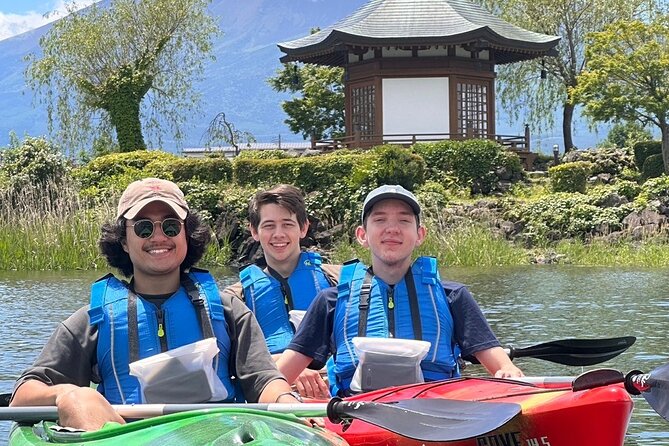
At $66.07 per person, this tour isn’t the cheapest thing in the area—but it also isn’t inflated for what you get.
Here’s what makes the value make sense:
- A small group (max 10) with guided paddling, not just gear drop-off
- Instruction, safety briefing, and supervised practice
- Equipment provided, plus waterproof pants and boots
- Bottled water included per person
- Guide-led photo-taking while you’re out on the lake
- A timed window that targets clearer Mt. Fuji conditions
You’re paying for coordination and for being in the right place at the right time with minimal hassle. If you tried to DIY this, you’d still need gear, you’d need to find safe routes, and you’d lose the guiding and photo support that helps turn the morning into a memory.
So, for most people, the money goes toward reducing stress and boosting the odds of seeing Fuji clearly.
Who This Tour Fits Best (and Who Might Want a Different Plan)
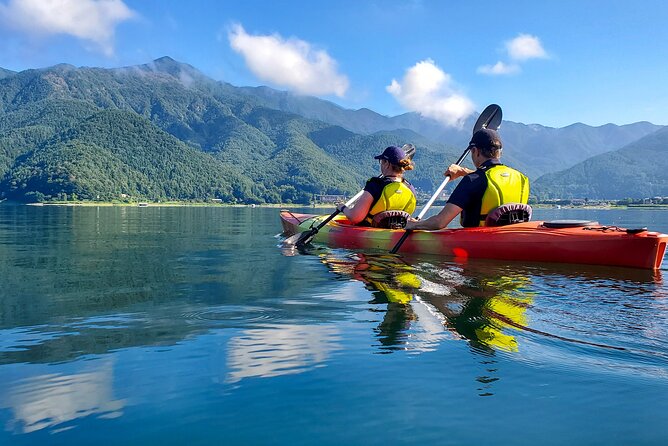
This is a great match for you if:
- You want a Mt. Fuji experience that’s quieter and less crowded than the shoreline
- You’re a beginner or intermediate paddler and want coaching before you start
- You care about photos but don’t want to spend the morning juggling your camera and your balance
- You like laid-back group settings with room to breathe
It’s less ideal if:
- You hate early mornings. The start time is firm, and you’ll be ready before sunrise crowds on land.
- You want complete freedom to paddle wherever you want. This is guided, and that’s part of the value.
Because the guide leads the route and takes you to the most beautiful lake spots, the tour is built for people who prefer structure over improvisation.
Should You Book This Early Morning Fuji Kayaking?
I’d book it if seeing Mt. Fuji clearly matters to you—and you’re okay getting up early. The 7:00 am start plus the calm-water pacing is the whole point, and the provided gear helps you show up without turning the trip into a clothing puzzle.
Skip it only if you strongly dislike cold mornings or you want fully independent kayaking with no guided route. For most visitors to the Fuji area, this strikes a smart balance: guided support, a real chunk of lake time, and photos that actually help you remember the morning.
If you’re doing this as part of a tight Japan itinerary, also notice the time efficiency. You get a full experience in about 1.5 hours, which makes it easier to plan the rest of your day around Mt. Fuji viewpoints later.
FAQ
Do I need to know how to kayak before I go?
No. The tour is suitable even for beginners. The guide explains how to paddle, you practice briefly, and then you head out with support.
What time does the kayaking tour start?
The tour begins at 7:00 am. You should plan to arrive at reception between 6:45 and 7:00 for the agreement and payment.
How long is the tour?
The total tour time is about 1 hour 30 minutes, including check-in, instruction, practice, and the kayaking portion.
How many people are in the group?
The tour has a maximum of 10 travelers.
What’s included in the price?
Equipment is provided, bottled water is included per person, and your guide will take pictures. Waterproof pants and boots are also provided as part of being equipped for the activity.
Is this a kayak rental?
No. This is not rental. The guide leads you and takes you to the most beautiful places on the lake.
Will Mt. Fuji be visible during the tour?
Early morning is the best time for clear views of Mt. Fuji and calm water, but visibility depends on weather conditions.
What should I bring?
You don’t need to bring kayaking kit, since equipment is provided. You should plan for early-morning chill and dress appropriately in layers, since it’s outdoors.
What happens if the weather is poor?
This experience requires good weather. If it’s canceled due to poor weather, you’ll be offered a different date or a full refund.
Can I get pick-up service?
There are no buses or trains operating at this time. If you need pick-up service, you can reserve a private activity tour and choose kayaking (it uses a different time slot).