REVIEW · COCOA BEACH
Cocoa Beach: Dolphin and Manatee Kayak or Paddle Tour
Book on GetYourGuide →Operated by Three Brothers Boards · Bookable on GetYourGuide
Kayaking with manatees beats the usual beach walk. This Cocoa Beach tour takes you off the sand and into calmer waterways where wildlife feels close, not staged, and the mangroves do the talking. I like how the guide keeps the paddle moving while you watch for dolphins and manatees and learn what you’re seeing in the moment.
My second favorite part is the route: you pass by the Banana River Manatee Refuge and the Thousand Islands Conservation Area, so the scenery keeps shifting instead of feeling like one long straight line. One drawback to plan for: wildlife sightings are never guaranteed on any open-water day, so if you come expecting constant dolphins on demand, you may be surprised by quieter stretches.
In This Review
- Key highlights to know before you go
- Cocoa Beach waterways: why this paddle feels more real than a boat cruise
- Meeting at 4800 Tom Warriner Blvd: simple logistics that can make or break your timing
- The 2-hour paddle format: what happens before you even see dolphins
- Island stop and local history: the human side of the Banana River area
- Banana River Manatee Refuge: the real reason this tour is worth considering
- Thousand Islands Conservation Area pass: a quiet geography lesson you’ll actually feel
- Wildlife watch list: what to look for and how to spot it calmly
- What the guide does (and why names like Jack and Spencer come up)
- Price and value: does $65 for two hours make sense?
- Who should book this kayak and manatee tour
- Final call: should you book this Cocoa Beach dolphin and manatee paddle?
- FAQ
- FAQ
- How long is the Cocoa Beach dolphin and manatee kayak or paddle tour?
- Where do I meet for the tour?
- What kind of kayak or paddle gear is included?
- Is there a guide, and what language do they speak?
- What animals and nature can I expect to see?
- Can I reserve and pay later?
- What is the cancellation policy for a full refund?
Key highlights to know before you go
- Up-close wildlife focus: dolphins, manatees, sea turtles, pelicans, pink spoonbills, and more.
- Banana River Manatee Refuge exposure: a rare chance to see West Indian manatees.
- Thousand Islands Conservation Area pass: 338 acres and over 1,000 small islands that most visitors can’t reach.
- Mangrove atmosphere: guided time in the type of habitat Florida does best.
- Guides who add local context: history of the town plus animal-by-animal explanations while you paddle.
Cocoa Beach waterways: why this paddle feels more real than a boat cruise
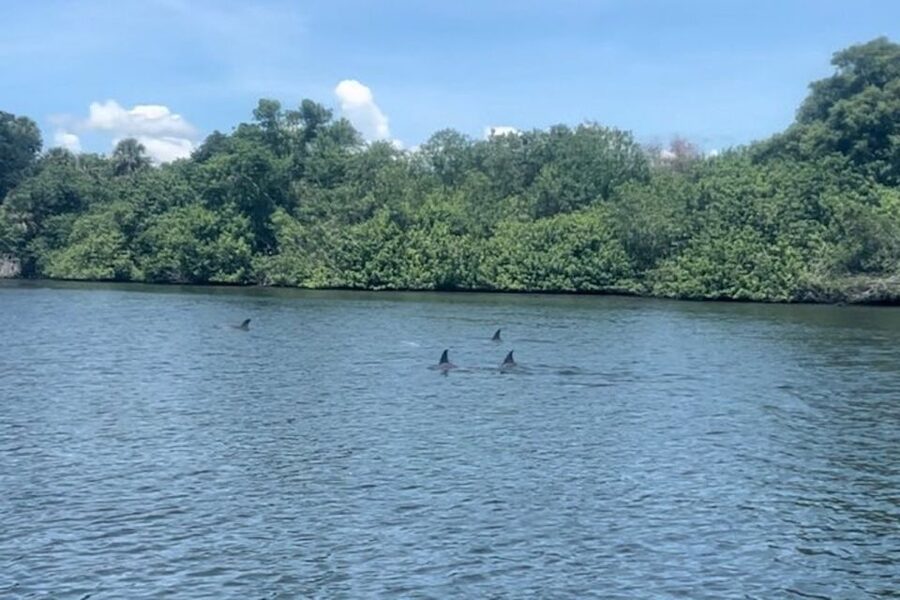
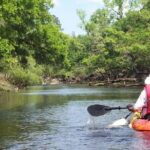
Cocoa Beach can look like just another stretch of coastline from the highway, but this kayak-and-paddle route trades ocean views for sheltered channels. That matters. In narrow waterways, you move slower, you sit lower in the environment, and wildlife has less reason to treat you like a big loud thing.
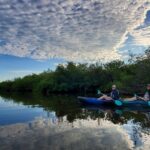
You’re not only looking for animals, either. Mangroves change the whole feel of the trip: roots and shaded edges create natural “watching lanes” for birds and marine life. When the guide points out what to scan for, you start noticing patterns instead of just hoping.
I also like the emphasis on learning as you go. The tour builds in small moments—safety briefing, then sightseeing, then wildlife watching—so you’re not stuck waiting for the one promised highlight. It’s a two-hour window, but it’s organized like a living nature walk with paddles.
You can also read our reviews of more tours and experiences in Cocoa Beach.
Meeting at 4800 Tom Warriner Blvd: simple logistics that can make or break your timing
The meeting point is 4800 Tom Warriner Blvd. Here’s the practical tip that saves time: the tour advises you not to drive into the Cocoa Beach Aquatic Center. Instead, park in the parking lot to the left of the pool and watch for the guide set up at the waters edge right next to that lot.
This matters because a late start can squeeze the best part of your paddle—when you’re fresh, paying attention, and ready to spot animals that may only show up for a few minutes. If you’re arriving by car, I’d plan a little buffer time so you’re not rushing around the waterfront trying to figure out where the group is forming.
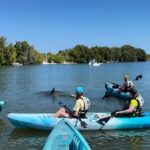
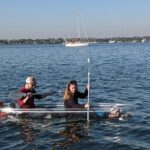
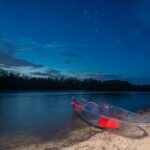
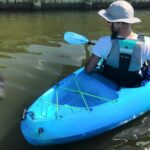
Once you’re at the right spot, you’ll get into the water with provided gear: one- or two-person kayaks, paddles, and lifejackets. It’s a straightforward setup, but you still want to be ready for the basics of safety and spacing so you can enjoy the quiet parts of the mangroves without worrying about what’s next.
The 2-hour paddle format: what happens before you even see dolphins
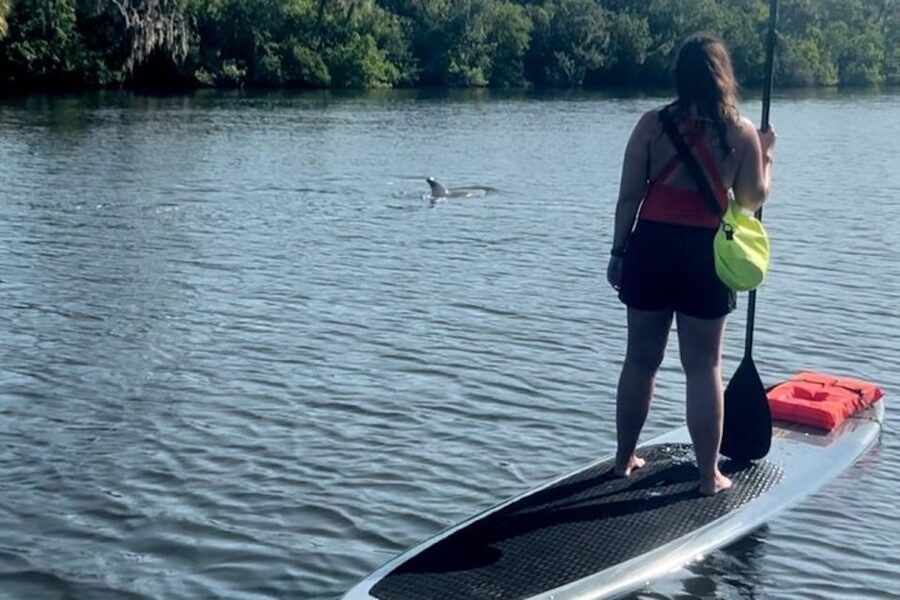
Even before wildlife shows up, the tour starts with the stuff that makes wildlife viewing actually work: a safety briefing and guidance on how to paddle together. That short prep is not filler. In tight channels, good technique helps you glide instead of churn, and calmer water gets you closer to the real action.
From there, the flow is simple: guided paddling down the waterways of Cocoa Beach, frequent sightseeing, and marine life viewing as you go. You’ll also get scenic views on the way, which is great because not every “win” is a dolphin surface blast. Sometimes the best moment is a bird landing in a mangrove branch or the texture of the shoreline changing as islands come into view.
There’s also a built-in stop at one of the islands. The guide goes over interesting history of the town there, which turns the paddle into something more than wildlife scouting. It gives you a sense of place—how this area developed alongside the water, and why these waterways were worth protecting in the first place.
Island stop and local history: the human side of the Banana River area
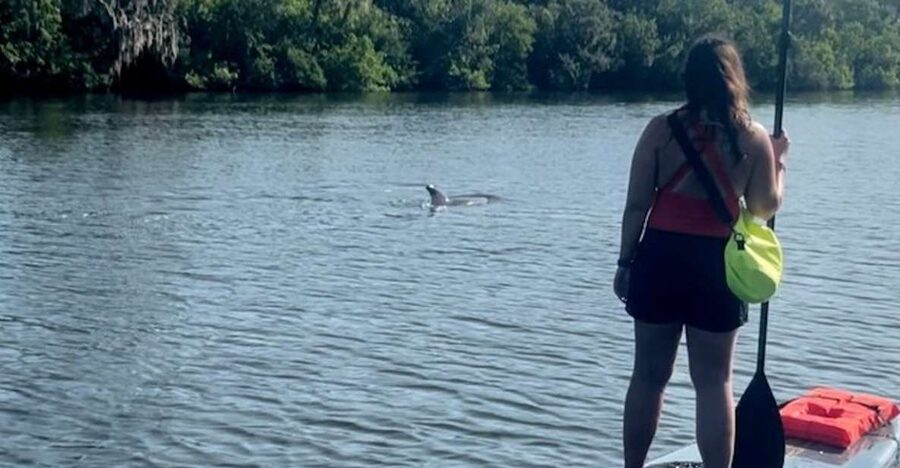
One of the smartest touches is that the tour doesn’t treat this like a pure wildlife safari. During the island stop, your guide explains history of Cocoa Beach as you rest, regroup, and look around.
Why I like that: wildlife spotting can feel random if you don’t know what habitat you’re in. When you learn a little about how the waterways and islands have been shaped over time, you start connecting the dots. The mangroves stop being scenery and start being part of a system—coastline, wildlife, and people all sharing the same space.
That little dose of context also helps on the emotional side. If you’re lucky enough to see a manatee or a dolphin, you’ll remember it more when you understand why that area is attractive to them, and what kind of environment they use to feed, rest, or move through.
Banana River Manatee Refuge: the real reason this tour is worth considering
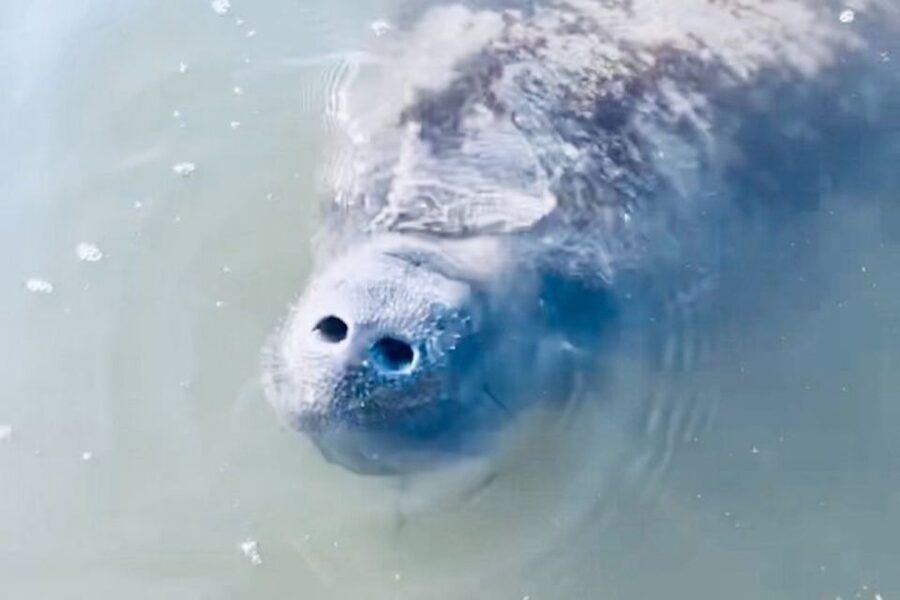
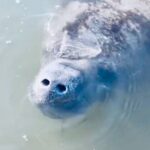
The big animal draw here is the Banana River Manatee Refuge. The tour highlights it as one of the few places in the world where you can see West Indian manatees, and it’s one of the reasons this paddle earns its reputation.
In practical terms, you’re aiming for an area known to attract manatees and, often, dolphins as well. The tour even notes that you might find large groups in this region. That’s why people choose this over a generic kayak rental. You’re not just “kayaking near the beach.” You’re going where the refuge makes manatees likely.
Here’s how to make your time count when you get near the refuge:
- Stay alert, but don’t panic-scan. Move your eyes slowly along the edges where water depth and vegetation change.
- Keep your group paddling coordinated. Sudden movement can churn the surface and spook wildlife.
- Trust the guide’s rhythm. When they point out what to watch for, it’s usually because the habitat cues look right.
Even if manatees are farther away than you want, the setting itself is part of the value. Manatees don’t just show up in numbers randomly. They show up where conditions support them, and that’s what you’re learning as you paddle.


Thousand Islands Conservation Area pass: a quiet geography lesson you’ll actually feel
After the manatee-focused part, the tour passes by the Thousand Islands Conservation Area. This is a 338-acre site on the Banana River adjacent to Cocoa Beach, made up of a series of islands in the Indian River Lagoon.
The most impressive detail is scale: over 1,000 small islands, and most are only accessible by boat or kayak. That means you’re traveling through a space that most people only see from a distance. You’re close enough to sense how the islands break up the water and create sheltered pockets.
And you’re not just there for photos. The area supports a wide range of wildlife—storks, dolphins, manatees, roseate spoonbills—and the tour also mentions rare and endangered tropical plants. Even if you don’t identify every species, you’ll feel the habitat logic. Birds move where food and shelter line up. Marine life favors quiet water and the right shoreline structure.
The time here is noted as an exciting 30-minute pass. Short and focused is good. It keeps you from burning energy on parts of the route that don’t change much, and it leaves you time to enjoy the wildlife moments that happen when the water and wind cooperate.
Wildlife watch list: what to look for and how to spot it calmly
This tour’s wildlife list is specific, and it helps you know what you’re hunting:
- Dolphins
- Manatees
- Sea turtles
- Live conch
- Pelicans
- Mangroves
- Pink spoonbills
You’ll also be watching for other birds and marine life as the guide scans the shoreline and channels. That’s the key: the guide helps you aim your attention. Otherwise, in Florida waterways, it’s easy to waste energy staring at open water while the action happens at the edges.
A quick reality check though: some days you’ll see more than others. The best way to stay happy is to treat every encounter as a bonus, not a guarantee. Birds show up more reliably than big mammals, for example, and even if mammals are quiet, the habitat still has plenty to teach you.
If your goal is close wildlife viewing, your best move is to be patient with the water. Don’t over-paddle trying to chase a distant splash. If you maintain your course and let the habitat bring the animals to you, you’ll often end up with better sightings.
What the guide does (and why names like Jack and Spencer come up)
The tour includes a live English-speaking guide, and the guides are clearly part of the package. Multiple guides listed with praise—people like Jack, Jake, and Spencer—are described as friendly and as the type who explain history and nature as you paddle.
That storytelling matters. When someone points out why you’re seeing a particular bird in that mangrove pocket, it turns the trip from a checklist into a connected experience. Instead of paddling through random scenery, you’re learning how the system works.
If you’re the type who likes asking questions, this is a good match. The format gives you chances to pause, look, and listen without feeling like you’re just along for the ride.
Price and value: does $65 for two hours make sense?
At $65 per person for a two-hour guided paddle, the price lands in a midrange slot for a specialty nature outing. The question isn’t the number alone—it’s what you’re buying.
You’re paying for:
- Guided navigation to specific wildlife areas like the Banana River Manatee Refuge.
- Provided gear: one- or two-person kayaks, paddles, and lifejackets.
- A planned route that includes both habitat variety (mangroves, islands, conservation areas) and a history stop.
- A guide who helps you actually spot wildlife instead of guessing.
So it can feel like a good value when you get solid sightings and the guide’s explanations click with how you like to travel. It can feel overpriced if you end up with fewer wildlife moments than you expected or if you were hoping for constant action. Nature doesn’t promise perfect.
My advice: treat this as a guided nature experience with high potential for dolphins and manatees, not as a guarantee of specific animals on cue. If you’re okay with that frame, the $65 is easier to justify.
Who should book this kayak and manatee tour
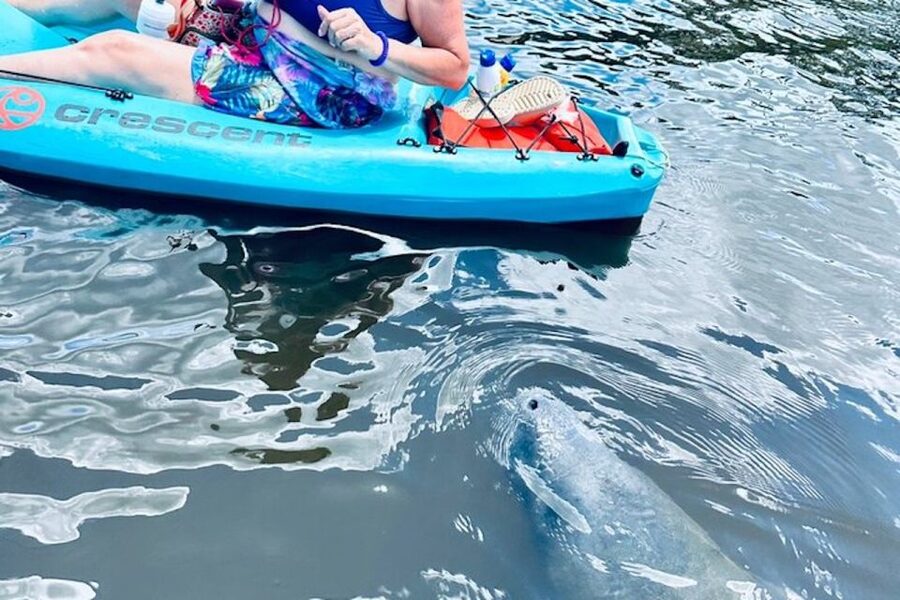
This tour is a strong fit for you if:
- You want wildlife viewing from a calm, close-up kayak platform.
- You like guided nature explanations, not just transportation from A to B.
- You’re interested in Florida habitats like mangroves, not only ocean views.
It’s also a good option if you’re traveling along the East Coast and want a “real place” activity that feels different from beach-only plans. The combination of manatee-focused refuge time plus the Thousand Islands pass gives you variety in a short outing.
Where it may not fit as well:
- If you strongly dislike paddling outdoors or you’re hoping for guaranteed high-speed dolphin encounters every minute.
- If you want a long excursion. Two hours goes fast, and this tour is built to be focused, not marathon-length.
Final call: should you book this Cocoa Beach dolphin and manatee paddle?
If your ideal Florida day includes the chance to see West Indian manatees in the Banana River Manatee Refuge and you’re excited about paddling through mangrove channels and island chains, then yes—this is worth booking. The guided format gives you structure, the route is designed for wildlife habitat, and the island history adds depth.
Just go in with the right mindset: wildlife is the star, but nature controls the timing. If you show up on time, stay attentive, and let the guide’s spotting cues lead you, you’ll likely leave with that rare mix of scenery and animal moments that makes kayaking in Florida feel special.
FAQ
FAQ
How long is the Cocoa Beach dolphin and manatee kayak or paddle tour?
The tour lasts about 2 hours.
Where do I meet for the tour?
You meet at 4800 Tom Warriner Blvd. You should park in the parking lot to the left of the pool and look for the guide set up at the waters edge right next to the parking lot. The activity advises you do not go into the Cocoa Beach Aquatic Center.
What kind of kayak or paddle gear is included?
The tour includes one or two person kayaks, paddle board paddles and kayak paddles, and lifejackets.
Is there a guide, and what language do they speak?
Yes. There is a live tour guide who speaks English.
What animals and nature can I expect to see?
The tour highlights possible sightings of dolphins, manatees, sea turtles, live conch, pelicans, mangroves, pink spoonbills, and more.
Can I reserve and pay later?
Yes. You can reserve your spot and pay nothing today.
What is the cancellation policy for a full refund?
You can cancel up to 24 hours in advance for a full refund.