REVIEW · ORLANDO
Florida Bioluminescent Kayak & Paddle Board Adventure
Book on Viator →Operated by A Paddle in Paradise (Paddle Board / Kayak Tours) · Bookable on Viator
Glow-in-the-dark water is real here. This small-group paddle on Florida’s Indian River Lagoon lets you see seasonal bioluminescence up close, with a guide to help you find the glow faster.
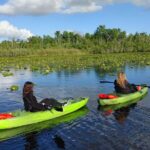
I especially like the freedom to choose your ride: you can go on a stand-up paddleboard or a more stable Kayak-Mod, which makes the whole experience easier for first-timers. Plus, bug spray is provided, so you can travel lighter.
One consideration: the wow-factor depends on timing and conditions. If conditions are rough enough for a hold, or if the bioluminescence is faint that night, you may not see the full fireworks look people hope for.
In This Review
- Key things to know before you go
- Where the Lagoon Shows Its Hidden Glow
- SUP vs Kayak-Mod: Pick the Style That Fits Your Comfort
- Stand-up paddleboard (SUP)
- Kayak-Mod (stable kayak option)
- The 1 Hour 45 Minutes: What Your Night Routine Looks Like
- Your best on-water tips (from real guiding moments)
- Seasonal Bioluminescence: Dinoflagellates vs Comb Jellies
- May through early October: dinoflagellates
- Early October/November through April: glowing comb jellies
- October is transitional
- Night Wildlife and the Role of NOQUA Lighting
- Safety, Weather Holds, and Why Lightning Changes Everything
- Bugs: What You’ll Actually Want to Do
- Photos and Finding Your Memories Later
- Price and Value: Why Small-Group Matters Here
- Who This Tour Fits Best
- Should You Book This Bioluminescent Kayak or Paddle Board Tour?
- FAQ
- How long is the bioluminescent kayak or paddle board experience?
- Where do we meet for the tour?
- What should I choose: SUP or the Kayak-Mod?
- When will I see dinoflagellates versus glowing comb jellies?
- Does the tour happen in rain?
- What if weather gets severe during the trip?
- Is this tour physically demanding?
Key things to know before you go
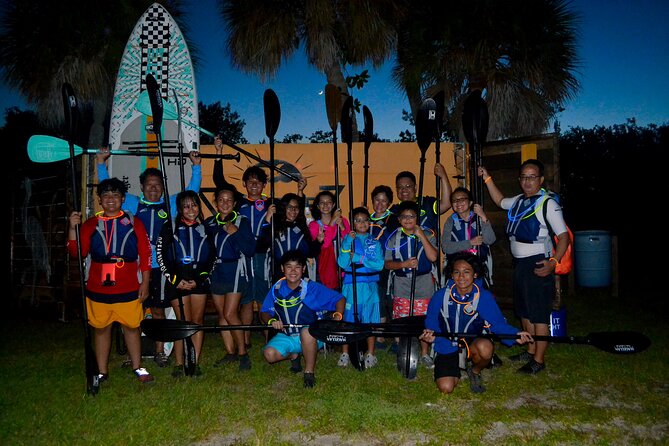
- Small group, about 12 people max: you get more attention on the water than big group tours.
- Two craft options: SUP for balance and fun, or the stable Kayak-Mod for comfort.
- Seasonal glow changes: dinoflagellates in warm months; glowing comb jellies in cooler months.
- Guides use NOQUA lighting in winter: helps you spot glowing comb jellies and other nighttime wildlife.
- Photos included: you’ll be able to grab your memories afterward.
- Bug reality is real: even with provided bug spray, you may still want extra repellent for comfort.
Where the Lagoon Shows Its Hidden Glow
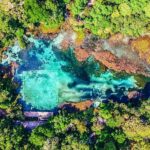
This is the kind of Florida experience that feels like a sci-fi movie until you’re standing over the water and your paddle starts making light. The action happens on the Indian River Lagoon, just a short drive from Orlando and also close to Cocoa Beach. It’s one of the rare spots where you can encounter different types of bioluminescence depending on the season.
What makes it interesting is that you’re not just watching from shore. You’re moving through it—gliding, paddling, and doing small motions that help trigger the glow. That movement matters because bioluminescence is often stronger when the water is disturbed.
The guides on this trip focus on helping you actually see what’s happening. You’re given the tools, and you’re also taught what to do with your paddle and hands to encourage the glow. One guide described it as part science, part showmanship, and it shows in the results people talk about—especially the big “fireball” moment when you dip water and then open your hand.
You can also read our reviews of more tours and experiences in Orlando.
SUP vs Kayak-Mod: Pick the Style That Fits Your Comfort
You get to choose between two craft types, and that choice affects how the night feels.
Stand-up paddleboard (SUP)
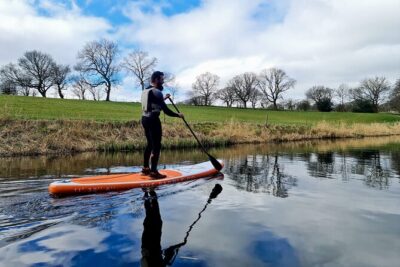
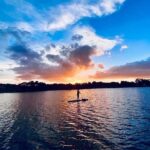
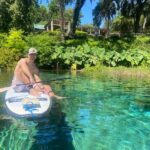
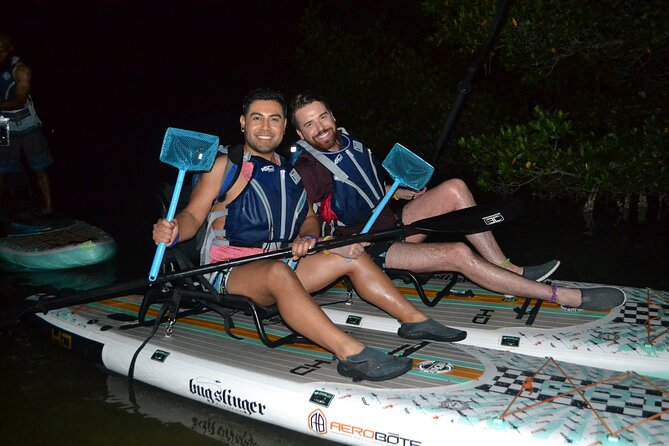
SUP is great if you want a bit more of a challenge and you like feeling steady and active. It also tends to create a different kind of viewing experience because you’re higher above the water. That can help when you’re scanning for glowing trails.
If balance is new to you, plan on taking it slow early in the paddle. The small group size helps here because you’re not getting rushed and you have room to learn the rhythm.
Kayak-Mod (stable kayak option)
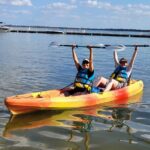
The Kayak-Mod is designed for comfort and stability. Compared with a traditional kayak, the “Mod” style tends to be easier to manage for more people, especially if you’re nervous about the water or you just want to focus on the glow. If you’re bringing kids, older adults, or anyone who doesn’t want to fight their paddle technique all night, this is usually the smarter default.
In short: SUP is more active. The Kayak-Mod is more relaxed.
The 1 Hour 45 Minutes: What Your Night Routine Looks Like
The tour runs about 1 hour and 45 minutes on the water. Most of your time is out paddling, with a clear structure that keeps you from feeling lost in the dark.
Here’s how the evening typically unfolds, in plain terms:
You start at 951 Kiwanis Island Park Rd, Merritt Island, FL 32952. Getting there is usually straightforward, and people specifically note that the departure point is easy to find.
Once you meet up, you’ll get set up and briefed so you know how to operate your watercraft and what to watch for in the dark. Then it’s out onto the lagoon, where the pace stays relaxed. The guides encourage you to paddle and explore without turning it into a sprint.
As you move through the water, you’ll start seeing glow in patterns—trails, pockets, and brighter moments when conditions line up. Guides also show you how to trigger the effect, so you’re not just hoping the water lights up.
Your best on-water tips (from real guiding moments)
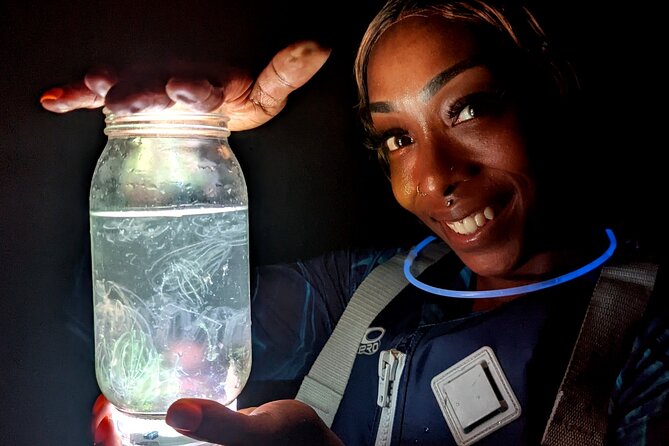
I’d listen closely for the guide’s little “try this” instructions. One of the most memorable tricks is making a fist, dipping it into the water, then opening your hand to reveal a bright, fireball-like burst. Another fun move is scooping water into your hand so you can watch the glow more directly on your skin.
These small actions are exactly why a guided paddle works better than a passive boat tour. You’re part of the mechanism.
Seasonal Bioluminescence: Dinoflagellates vs Comb Jellies
This is where the tour earns its reputation. The lagoon can light up in different ways across the year, and your month affects what you’re most likely to see.
May through early October: dinoflagellates
In May–early October, you’re looking for bioluminescence created by dinoflagellates. Think glowing blue trails, often strongest where the water gets disturbed—so your paddle strokes and slight movements matter.
Even when the glow starts faint, it often becomes more obvious once you’re in the right conditions and you learn what the guide is seeing. This is the season for the classic “paddle lights up” look.
Early October/November through April: glowing comb jellies
In early October/November through April, the focus shifts to glowing comb jellies, with other nocturnal wildlife sometimes seen too, including stingrays, puffer fish, and horseshoe crabs. During this period, guides use NOQUA lighting systems to help you spot and appreciate glowing life in the water.
NOQUA lighting is a practical tool here. It doesn’t replace nature; it helps you see what your eyes might miss in pitch-black conditions.
October is transitional
October can be a mix. The tour notes that you may see both types during the transition. If you’re traveling in October and you’re hoping for the best possible blend, that’s a fair expectation, but you’ll still want to stay flexible.
Night Wildlife and the Role of NOQUA Lighting
Bioluminescence is the headline, but the lagoon is also doing its normal nighttime thing—just with more visible chemistry.
In the comb-jelly season, the trip includes the chance to see other nighttime animals. The tour specifically mentions stingrays, puffer fish, and horseshoe crabs. Some nights may also bring unexpected sightings like dolphins, depending on conditions.
NOQUA lighting makes a big difference for visibility. When the goal is spotting delicate, glowing creatures, your eyes need help. With the lighting system, you’re more likely to actually register what you’re seeing rather than guessing from vague flickers.
Still, I’d keep expectations realistic. Wildlife spotting is never guaranteed, and you’re not on a controlled habitat tour. You’re paddling through nature, which means you might see more one night and less another.
Safety, Weather Holds, and Why Lightning Changes Everything
This is a rain-or-shine adventure, but it’s also a safety-first adventure. The tour will generally run unless conditions become unsafe, including situations involving thunder, lightning, or heavy winds.
If severe weather threatens, you may get a 30-minute weather hold. If conditions become safe within that window, you’ll go out. If not, you’ll receive a refund.
This matters because bioluminescence viewing often depends on calm conditions. If the wind and water movement are too intense, your paddle experience changes, and the glow may be harder to see clearly.
Also remember: you’re responsible for operating your own watercraft. The tour isn’t a sit-back-and-watch setup. If you can follow simple instructions and paddle steadily, you’ll be in good shape.
Bugs: What You’ll Actually Want to Do
Florida at night comes with mosquitoes. The tour provides bug spray, and that’s a big help, but several people still mention the mosquitoes can be intense when you arrive or when you’re not actively on the water.
My advice is simple: don’t treat the provided spray as your only line of defense. If you’re mosquito-prone, apply repellent before you start moving around outside. Bring a plan for reapplication if you’re sensitive.
Also, once you’re paddling, you’ll often find the situation improves a bit because you’re on the move and you’re farther from the highest-density pockets near shore.
Photos and Finding Your Memories Later
You get photos included. That’s more valuable than it sounds because night paddles are hard to photograph well unless you’re a pro with a camera setup that can handle low light.
You can access your photos online at the operator’s site. Look for the Memories tab. If there’s a mismatch between booking platforms and their photo system, you’ll want to reach out to the operator so they can locate your group.
One practical tip: if you see other guests getting their pictures taken, it’s usually worth holding still for a moment when the guide asks. Even small pauses can make your night photos much clearer.
Price and Value: Why Small-Group Matters Here
I can’t see the exact price in the info you provided, but I can still judge the value based on what you’re getting.
This tour stays small—up to about 12 travelers. That matters for three reasons:
- Better guidance in the dark: you want help when your visibility drops.
- More chances to trigger the glow correctly: guides can coach your hand and paddle technique.
- Less pressure to move fast: the experience is meant to be calm and exploratory.
Also, bug spray and included photos reduce the “extra stuff” you might otherwise pay for or carry. And because the experience is focused on a very specific natural phenomenon, the guide’s job is basically to help you see it, not just take you from point A to point B.
Who This Tour Fits Best
This one works especially well if you:
- Want an after-dark Florida activity that feels different from theme parks
- Enjoy nature and want to understand what you’re seeing, not just take pictures
- Like guided moments but still appreciate time to explore at your own pace
- Are traveling as a couple, family, or small group and want a calm night outing
It may be less ideal if you:
- Can’t paddle or don’t want to handle your own watercraft
- Have zero tolerance for bugs, even with spray
- Need a guaranteed specific bioluminescence type, because season and conditions control what you see
Should You Book This Bioluminescent Kayak or Paddle Board Tour?
If your goal is a magical night paddle with real bioluminescence and a guide who helps you see the glow on purpose, I think this is a strong choice. The combo of small-group size, craft options (SUP or stable Kayak-Mod), and included photos makes it feel like a thoughtful, focused outing—not just an ad for glowing water.
Before you book, pick your timing based on what you want to see: dinoflagellates in the warmer months, comb jellies in the cooler months, with October offering a possible mix. And go in knowing sightings depend on nature. When the water is right, the lagoon can look almost unreal.
One last nudge: apply extra bug repellent if you’re mosquito-sensitive. Even with provided spray, the night is still Florida, and the mosquitoes know exactly what they’re doing.
FAQ
How long is the bioluminescent kayak or paddle board experience?
It runs about 1 hour and 45 minutes, and the tour ends back at the meeting point.
Where do we meet for the tour?
The meeting point is 951 Kiwanis Island Park Rd, Merritt Island, FL 32952, USA.
What should I choose: SUP or the Kayak-Mod?
You can choose either a stand-up paddleboard or a stable Kayak-Mod. The Kayak-Mod is described as more comfortable and stable than a traditional kayak.
When will I see dinoflagellates versus glowing comb jellies?
May through early October is best for dinoflagellates. Early October/November through April is when glowing comb jellies are more likely. October is transitional and you may see both.
Does the tour happen in rain?
The tour is rain or shine. It may pause or not go out if there is unsafe weather, including thunder, lightning, or heavy winds.
What if weather gets severe during the trip?
If severe weather hits, there may be a 30-minute weather hold. If it’s safe to go out after that, you start the excursion. If not, a refund is provided.
Is this tour physically demanding?
Yes. It requires guests to paddle and operate their own watercraft. You’ll be using active movement for the duration of the experience.