REVIEW · HOLBOX
Holbox: Bioluminescence by Kayak and Stargazing.
Book on GetYourGuide →Operated by Eco Adventure Holbox · Bookable on GetYourGuide
Few nights on Holbox feel this otherworldly.
This kayak + stargazing experience takes you onto the calm dark water where bioluminescence can light up with every paddle, step, and splash. What I love most is the chance to see glowing life up close in a hands-on way—first on land (your footprints), then in the water. The other big plus is that the guide explains what you’re seeing, and guide Victor is specifically called out for strong, clear instruction.
One thing to keep in mind: bioluminescence is natural, so intensity can be great some nights and only OK other nights. Even when the tour is perfectly run, what’s happening in the plankton varies with season and conditions.
In This Review
- Key takeaways before you go
- Why this Holbox night kayak beats a quick photo stop
- Pickup and the ride to the dark end of town
- Punta Mosquito sandbanks: how close you get (and why)
- When bioluminescence is strongest: seasons and expectations
- The paddle-to-glow moment: what your eyes will do
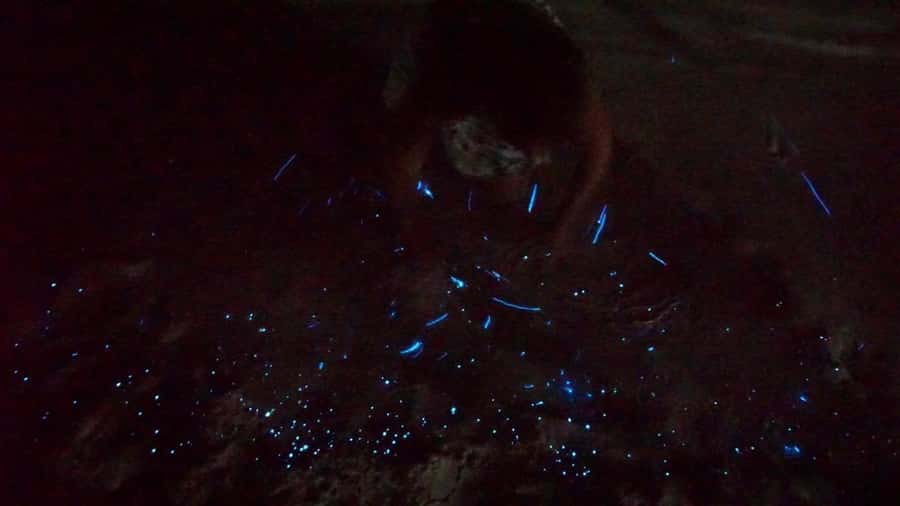
- Walking the sandbar: glowing footprints in blue-green dots
- Swimming the glow: three possible colors and why it’s never the same
- Stargazing when the sky clears
- Price check: is $49 for 2 hours good value?
- What the guide experience feels like (and why it matters)
- What to bring so you don’t regret anything
- Who should book this, and who should skip it
- Should you book the Holbox bioluminescence kayak and stargazing tour?
- FAQ
- How long is the Holbox bioluminescence kayak and stargazing tour?
- Is hotel pickup included?
- Do you reach Punta Mosquito itself?
- When is bioluminescence most likely to be intense?
- What colors might you see in the water?
- Will you be able to swim?
- What should I bring with me?
- Who isn’t this tour suitable for?
Key takeaways before you go
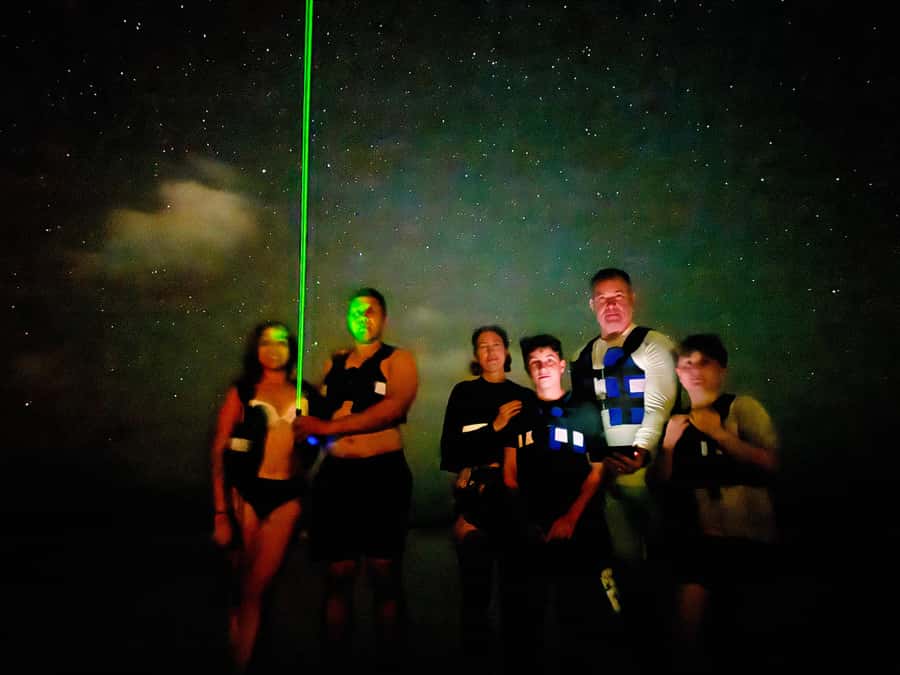
- Kayak under real night skies: you’ll paddle away from light pollution to give your eyes a chance.
- You don’t go into Punta Mosquito proper: the tour stops at nearby sandbanks instead of the protected, access-forbidden area.
- Glowing footprints on a sandbar: step onto the sand and see blue-green dots light up where you land.
- Swim at a reasonable depth: move in the water and watch millions of luminescent microorganisms respond.
- Color is unpredictable: you might see green, white, or blue.
- The guide makes it make sense: you’ll get explanations about the phenomenon and the nature reserve.
Why this Holbox night kayak beats a quick photo stop
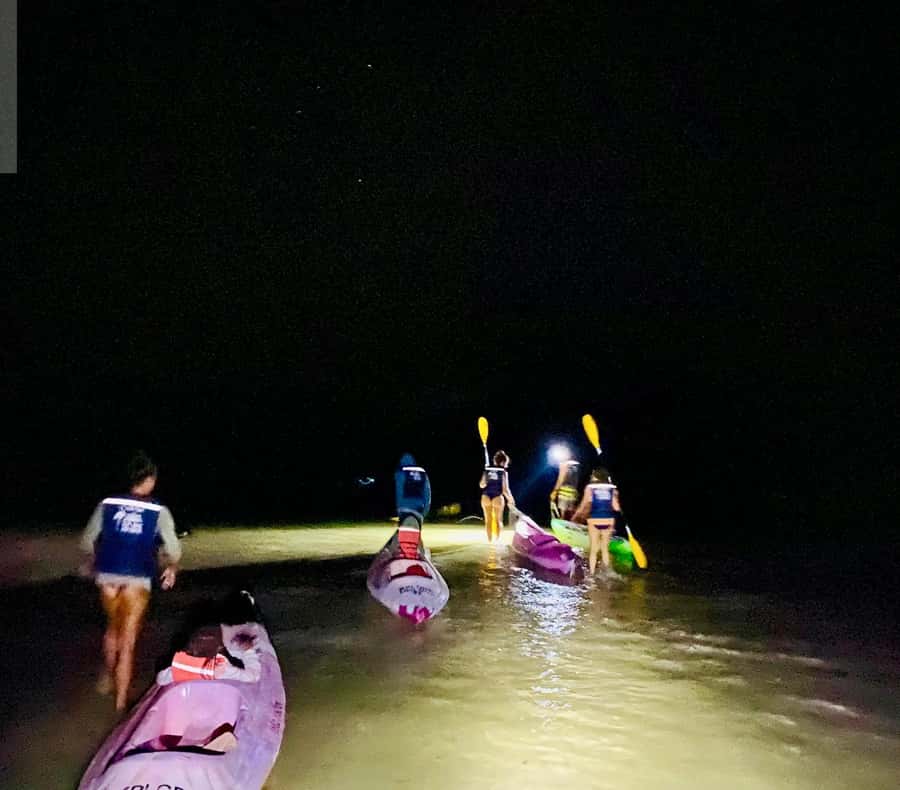
Holbox at night has a different feel. The air cools, the beach goes quiet, and instead of chasing daylight views, you’re chasing darkness—because that’s what makes the glow possible.
This tour is interesting because it’s not just “look at algae.” You paddle out, then step onto a sandbank, then wade or swim in glowing water. You’ll watch the bioluminescence respond to your movement, which turns it from something you see into something you trigger.
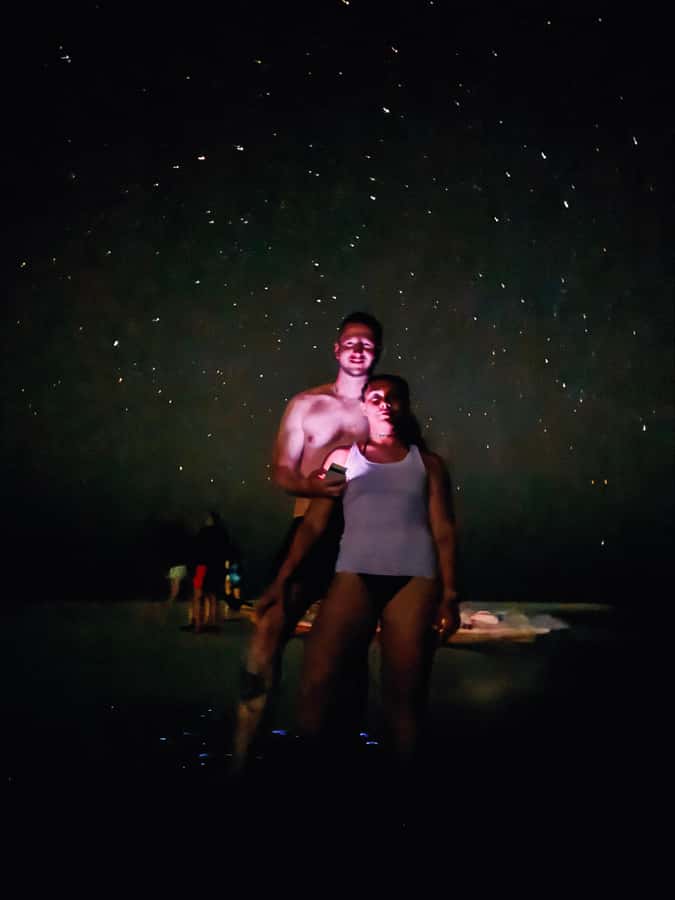
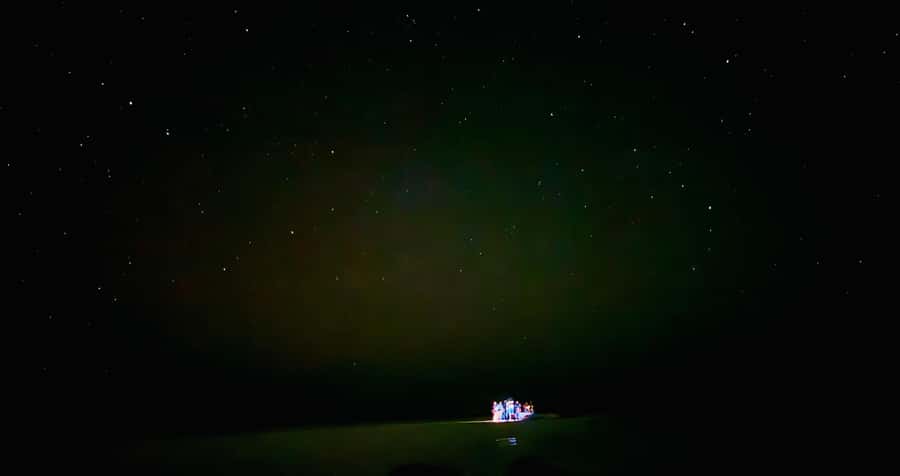
And yes, the stargazing is real in the sense that you’ll be out on dark water when the sky is clear. If the clouds cooperate, the stars can be a second show running alongside the glow in the water.
You can also read our reviews of more tours and experiences in Holbox.
Pickup and the ride to the dark end of town
Your evening starts with pickup from your hotel about 15 minutes before the scheduled time. If road conditions are favorable, they use all-terrain vehicles to get you to the last hotel area in the zone (Las Nubes). If not, the pickup can take a little longer—taxis don’t wait more than about 5 minutes once they arrive.
The practical point: plan to be ready on time. This is one of those tours where lateness can throw off the dark-water timing, especially since they’re trying to get as far as possible from light pollution.
Also, transportation can be a mix depending on where you’re staying and how many people are in the group. One review note mentioned that for a party of five, some people sat in the trailer part of a golf cart. That’s worth considering if you don’t do well with tighter or less comfortable seating setups.
Punta Mosquito sandbanks: how close you get (and why)
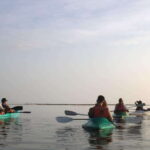
After you change into “night mode,” you’ll take the kayaks out and paddle for roughly 15–20 minutes toward the famous sandbanks called Punta Mosquito. Importantly, you do not reach Punta Mosquito itself.
That matters for two reasons. First, it keeps you on the accessible side of the area—this tour respects the fact that Punta Mosquito is protected and access is prohibited. Second, it helps explain why the experience stays predictable: you’re headed for the right environment (plankton-rich waters near the sandbar) without trying to enter restricted zones.
Once you’re away from shoreline lights, the guides also try to get you as far as possible from light pollution while respecting navigation limits. That’s a big deal for both the glow and the stars—your eyes need darkness to work.
When bioluminescence is strongest: seasons and expectations
This is a biology and timing game. The tour’s bioluminescence chances are season-linked:
- May to September: typically 70% to 100% intensity
- Other months: often 30% to 80% intensity
Those numbers are helpful because they set expectations before you’re standing in the dark wondering if it’s going to happen. Still, even in the strongest season, it depends on things like plankton amount and water conditions.
I like that the operator frames it as a nature phenomenon, not a guaranteed light show. You’re paying for the best shot—paddling to the right zone, minimizing light, and searching for higher plankton concentrations—rather than buying a promised effect regardless of conditions.
The paddle-to-glow moment: what your eyes will do
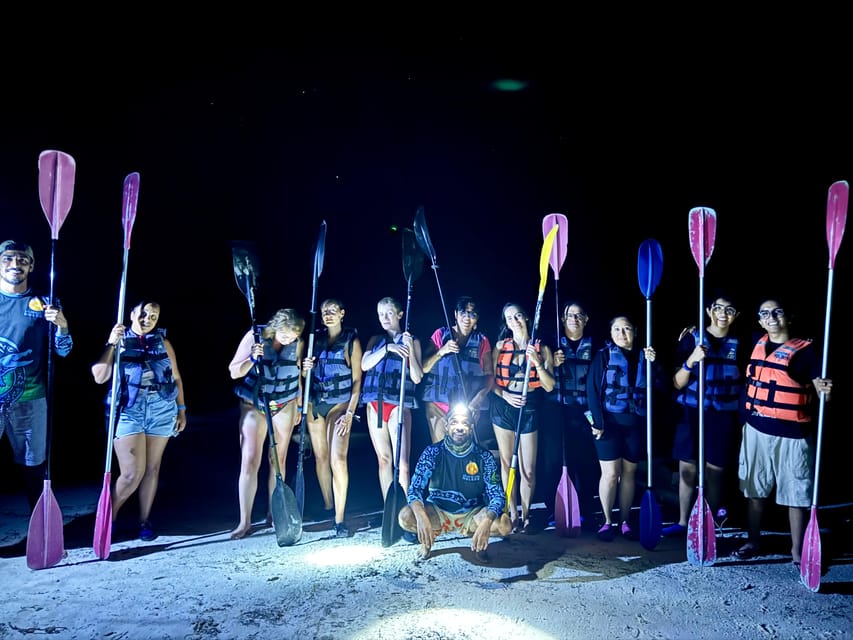
When bioluminescence is active, you can see it starting from the moment you begin paddling. The glow often shows up with every movement, because the microorganisms light up when disturbed.
You’ll be moving through the water in a way that creates tiny disturbances: the kayak’s progress, paddling strokes, and small motions of the body. That’s why this tour works so well. A lot of glow experiences fail because you sit still and wait. Here, you’re part of the mechanism.
As you go, your guide will look for a spot with the highest concentration of plankton. Once they find it, the “show” gets more intense. You’ll also hear explanations about the natural phenomenon and the reserve—so the glow doesn’t just feel magical; it makes sense.
Walking the sandbar: glowing footprints in blue-green dots
One of the coolest, simplest moments is the sandbar stop. They’ll guide you out of the kayaks and walk onto the sandbank where the bioluminescence is concentrated.
Then comes the moment you’ll remember: you see your own footprints light up with blue-green dots. It’s like the sand is responding to your weight. No camera trick is needed for this part—though you’ll want to be careful with what you photograph because flash photography isn’t allowed.
This step also gives you a break from paddling. If you’re tired from the kayak portion, it’s a natural reset: stand, observe, and slowly move forward while the water and sand do the work.
Swimming the glow: three possible colors and why it’s never the same
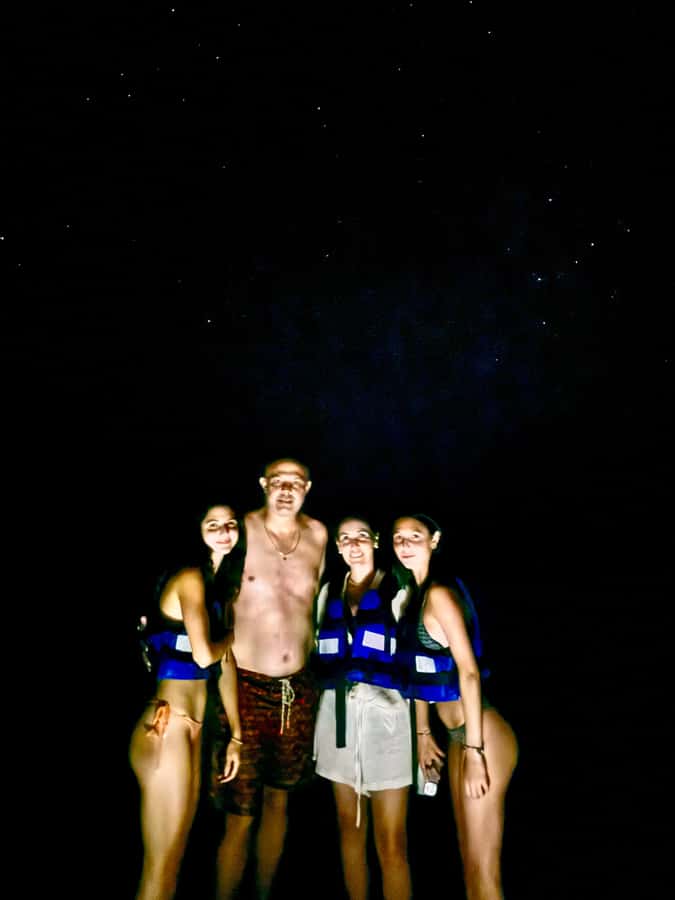
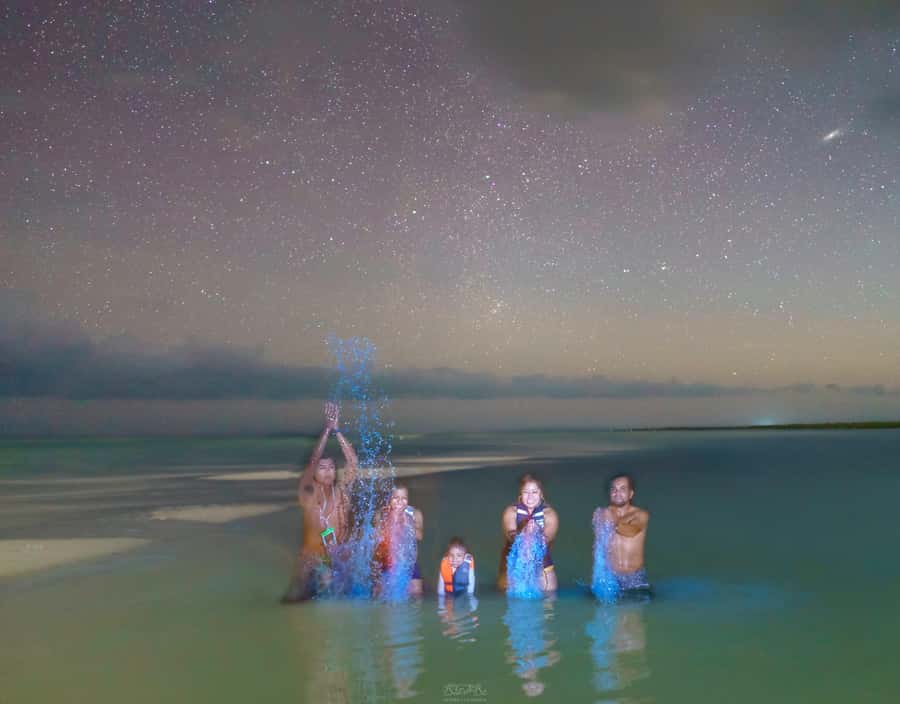
After the sandbar, you’ll walk further into the sea to a reasonable depth so you can swim and see bioluminescence up close.
Here’s what to expect: with each movement, your body lights up as millions of luminescent microorganisms glow. The tour also warns that the color can vary, and that’s exactly what makes it fun. You might see green, white, or blue—and which one you get isn’t predictable.
Also, don’t expect a neon-sign look the whole time. The glow is tied to disturbance. Move slowly and you’ll likely get a different effect than if you kick, splash, or change direction more dramatically. Your job is to try a few motions and watch how the light responds.
They don’t ask you to do anything wild. The goal is to observe and gently interact.
Stargazing when the sky clears
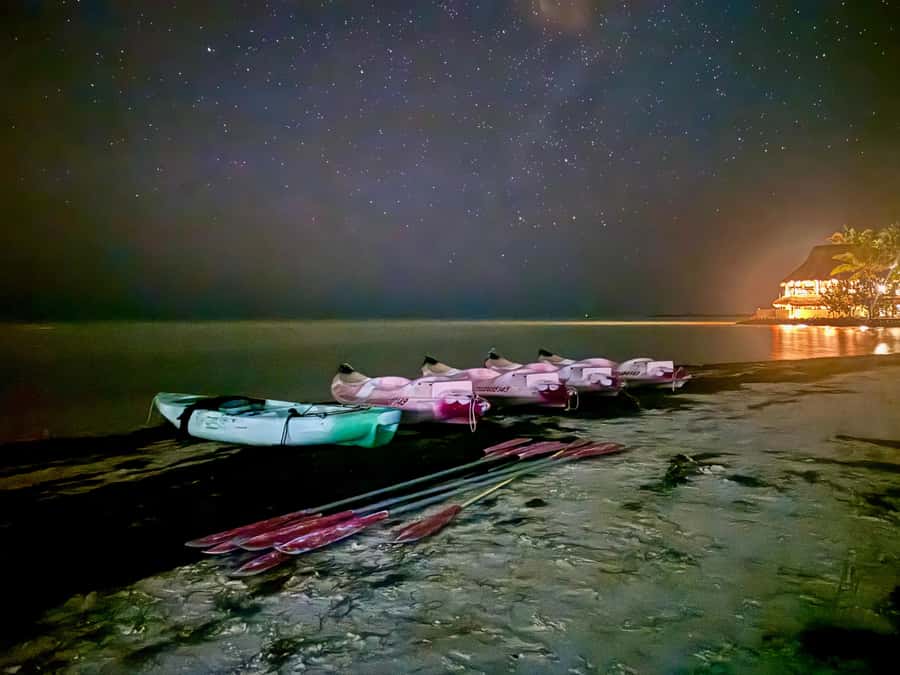
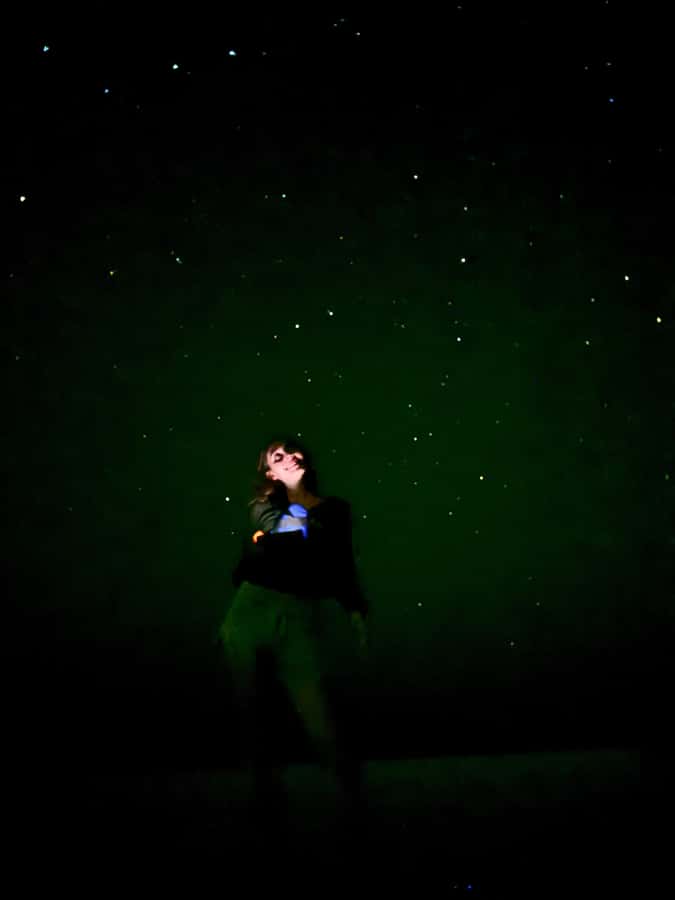
If the sky is clear, the stars add another layer to the night. You’ll be far enough from light pollution that the sky can look dramatic compared to daytime Holbox.
Still, I wouldn’t plan your evening around a guaranteed star show. Clouds, haze, and timing all matter. The glow is the main event; stargazing is the bonus when nature cooperates.
The practical move: give your eyes a couple minutes to adjust before you start scanning the sky. Your night vision improves fast once you stop thinking about photos and just look.
Price check: is $49 for 2 hours good value?
At $49 per person for a 2-hour experience, this tour sits in the “focused adventure” category. You’re not getting a long daytime-style outing, and you’re not being sold a meal plan. What you are paying for is transportation to a dark-water zone, kayak time, a guide searching for plankton concentration, and the chance to do both sandbar walking and swimming.
The included one-way transfer from your hotel is a real value add on Holbox, where getting to the right area at the right time matters.
What isn’t included:
- tips (optional)
- mosquito repellent
- taxi fare if you choose to stop for shopping/cash during pickup
My take: for the experience type—short, guided, and heavily weather/time dependent—$49 is reasonable, especially if you’re going in peak season when bioluminescence intensity is often high. If you’re traveling in a quieter month, you’re still paying for effort and positioning, but the glow may be lighter.
What the guide experience feels like (and why it matters)
Bioluminescence tours live or die on guidance. You need someone who can explain what’s happening, help you find the right spot, and keep everyone safe around water in the dark.
In the feedback you shared, the guide is repeatedly praised for being friendly and giving solid explanations. The name Victor shows up as an example of someone doing a great job teaching the phenomenon, and that kind of instruction turns a “wow” moment into a “now I get it” moment.
This tour also makes a point of managing the natural variable factor. Their job is to maximize your chances by moving through the right area and aiming for the highest concentration zone once the paddling is done.
What to bring so you don’t regret anything
You’ll enjoy this more if you show up prepared for a nighttime water session. Here’s the practical kit the tour asks for:
- Swimwear
- Change of clothes
- Towel
- Water shoes (you’ll thank yourself here)
- Insect repellent, ideally biodegradable
- Mosquito repellent is not included, so bring it unless you want to improvise
Also remember the rules:
- no flash photography
- no alcohol or drugs
- no drones
- no luggage or large bags
- pets aren’t allowed
If you forget water shoes, you might be forced to rely on whatever footing you have at the sandbar and in the shallow water. That’s the kind of small thing that can turn an amazing night into a slightly annoying one.
Who should book this, and who should skip it
This is best for people who are comfortable with water at night and don’t need a fully seated experience. It can also be a great fit if you’re the type who likes learning about nature through direct observation rather than just scenic stops.
On the skip side, the tour lists several clear limitations. It’s not suitable for:
- children under 2
- pregnant women
- people with back problems
- people with mobility impairments or wheelchair users
- people with heart problems
- people with epilepsy
- people over 75
- people over 70
- people with recent surgeries
If you fall into any of those categories, it’s worth taking the safer route and choosing a different Holbox activity.
Should you book the Holbox bioluminescence kayak and stargazing tour?
If you want a night experience that’s active and visual—not just a walk—you should book this. The combo of kayaking, sandbar footprints lighting up, and the chance to swim in glowing water is what makes it feel special, and the guide-led explanations help you get more out of the experience.
Book it with realistic expectations if you’re traveling outside May–September. Intensity can be lower in those months (30% to 80%), and visibility varies with plankton, water temperature, and currents.
My final advice: bring the right footwear, use biodegradable repellent, and let your eyes adjust to the dark. This tour rewards you for showing up ready.
FAQ
How long is the Holbox bioluminescence kayak and stargazing tour?
The tour lasts about 2 hours.
Is hotel pickup included?
Yes. Pickup is included from your hotel (about 15 minutes before the scheduled time), as long as road conditions allow.
Do you reach Punta Mosquito itself?
No. The tour paddles to the sandbanks near Punta Mosquito, but it does not reach Punta Mosquito itself because it’s protected and access is prohibited.
When is bioluminescence most likely to be intense?
It’s typically strongest from May to September, when it can be seen at about 70% to 100% intensity. Other times of year can vary from about 30% to 80%.
What colors might you see in the water?
You can see three different colors—green, white, or blue. The color is unpredictable.
Will you be able to swim?
Yes. After finding a good spot, you’ll walk into the sea to a reasonable depth so you can swim and watch the glow with your movement.
What should I bring with me?
Bring swimwear, a change of clothes, a towel, insect repellent, and water shoes. Mosquito repellent is not included, and biodegradable repellent is recommended.
Who isn’t this tour suitable for?
It’s not suitable for children under 2, pregnant women, people with back problems, mobility impairments or wheelchair users, people with heart problems, people with epilepsy, people over 75, people over 70, or those with recent surgeries.