REVIEW · JUNEAU
Juneau Shore Excursion: Mendenhall Glacier Canoe, Paddle and Hike
Book on Viator →Operated by Above and Beyond Alaska · Bookable on Viator
Glacier. Canoe. Real work for your arms. This Juneau shore excursion has you paddle cold Mendenhall Lake and then hike for close glacier-edge views in a small group (and guides like Mike and Dan can bring the story to life). I also like that you skip gear rentals because rain gear and rubber boots are included. One fair warning: the hiking portion is more short walk than a full-on glacier trek day.
If you’re doing this from a cruise ship, the pickup setup is built for shore schedules. You’ll meet at the “C” Sign near the docks, then head to the gear warehouse for fitting and orientation before the water and the glacier edge.
In This Review
- Quick hits
- Juneau Shore Excursion: why the Mendenhall Glacier canoe-and-hike combo works
- What you’re really doing: paddle effort + a short glacier-edge walk
- Picking times and getting on the water: how the schedule stays cruise-friendly
- Stop 1 at the gear warehouse: where the day gets you ready (and out of the cold fast)
- Stop 2 at Mendenhall Glacier: canoe across the meltwater and get close to the ice face
- A key expectation: you’re exploring safely from bedrock
- Stop 2 on land: the rocky terrain hike and the recession lesson
- Stop 3 at the West Glacier Trailhead: de-gear, transport, and back to Juneau
- Gear, snacks, and comfort: what’s included and what to prepare for
- What to wear and bring
- Fitness reality check: who can handle the paddle and hike?
- Price and value: why $402-ish can feel fair (or not)
- Weather and glacier conditions: what to expect when nature changes plans
- Who should book this Mendenhall Glacier canoe paddle and hike?
- Should you book this tour?
- FAQ
- What’s the meeting point for this Juneau shore excursion?
- How long is the tour?
- Are rain gear, boots, and paddling equipment included?
- What fitness level do I need?
- Do I need to know how to swim?
- Can I walk on the Mendenhall Glacier itself?
- What are the age and weight limits?
- What happens if weather is bad?
- What’s the group size?
Quick hits
- Multiple start times so you can match your cruise day flow.
- Gear is included: rain gear, rubber boots, paddling equipment, and a pro guide.
- Small group cap (max 12) with 1 to 2 guides, usually in 8- or 12-person canoes.
- Active, but doable: paddle about 5–6 miles and hike roughly 2 miles roundtrip.
- You don’t walk on the glacier; you explore safely from bedrock edges.
- Time at the glacier varies with weather and group pace since the ice is constantly changing.
Juneau Shore Excursion: why the Mendenhall Glacier canoe-and-hike combo works
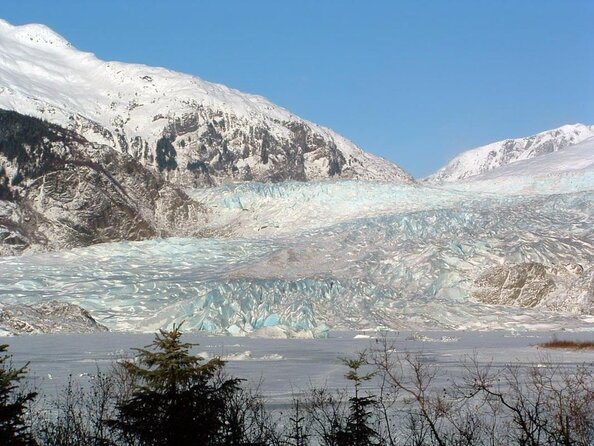
There’s a reason this beats the typical “stand there and look” glacier tours. You’re not just viewing ice from a viewpoint. You’re moving through the meltwater with a canoe paddle, then shifting to a short hike that gets you closer to the glacier edge from solid ground.
This is also a great Juneau shore excursion format for people who like getting out of the van and doing something with their own effort. Your arms will feel it, sure. But you’ll earn the views in a way that feels real.
And because it’s capped at 12 travelers in total, you’re less likely to feel like you’re floating in a crowd. In the best-case departures, guides such as Dan and Mike (or Mel and Elle) can keep the day organized and the glacier story understandable, from ice movement to what the landscape is doing as it recedes.
You can also read our reviews of more tours and experiences in Juneau.
What you’re really doing: paddle effort + a short glacier-edge walk
The name sounds like three equal parts: canoe, paddle, hike. In practice, the day is built around two main “acts.”
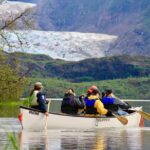
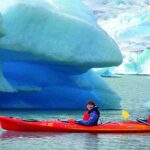
First: canoe on glacier-fed water. You’ll get outfitted, then guided across the lake toward the glacier-facing side. That’s the moment most people are chasing—seeing those tall blocks of ice and watching calving from very close by.
Second: a rocky terrain hike after you leave the canoe. It’s not a long backcountry push, and it’s not described as glacier trekking. Instead, it’s a walk that gets you better sightlines to the glacier’s edges while you learn how quickly it’s been changing.
If you’re hoping for the kind of hiking where you put on boots and disappear for hours, this may feel shorter than you imagined. But if you want meaningful movement plus glacier proximity without needing technical glacier gear, the mix is spot on.
Picking times and getting on the water: how the schedule stays cruise-friendly
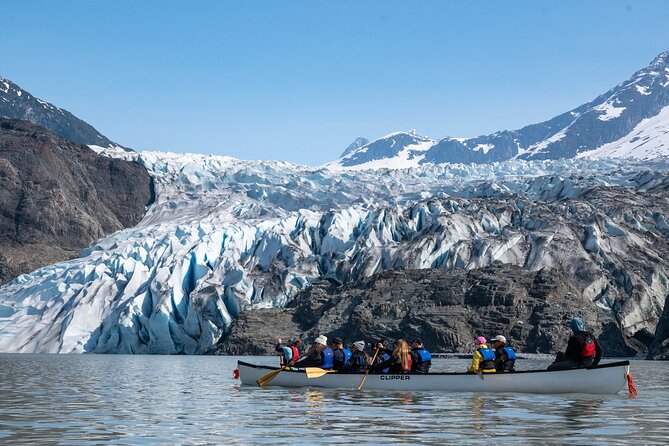
You’ll have a choice of several start times, which matters in Juneau when your cruise day is a jigsaw puzzle. The tour is about 5 hours 30 minutes total, give or take based on weather and how the group moves.
From the cruise port area, the meeting point is straightforward: the “C” Sign near the docks, directly between Mt. Roberts Tramway and the green Taku Smokeries building. That centralized location is designed so you’re not hunting for a moving target while your ship is impatient.
If you’re staying in the Mendenhall Valley and not on a cruise ship, you may be picked up directly from your hotel. If you have your own transportation, you’ll need to coordinate a meeting location with the office.
Practical note: because the tour has a weather requirement and a minimum group size, it’s smart to treat this as the kind of plan that loves flexibility—especially if you’re traveling on tight shore windows.
Stop 1 at the gear warehouse: where the day gets you ready (and out of the cold fast)
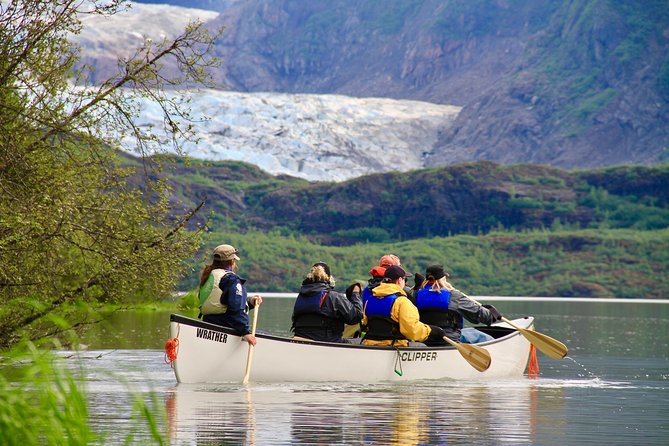
Before you see the glacier, you’ll get moved to the gear warehouse for fitting, orientation, and restroom access. This is where the “safe and comfortable” part of the day gets set up.
This step matters more than it sounds. When you’re about to paddle and hike in cold, wet conditions, having the right rain gear and boots on before you’re rushed is the difference between enjoying the day and just surviving it.
Once everyone’s outfitted, you’ll know how to handle the canoe safely and what to expect in the weather. You’re also given a chance to ask questions before you commit to the water.
One thing I like about this structure: the gear setup is handled for you. That takes decision-fatigue off your plate. You show up, get fitted, and move on.
Stop 2 at Mendenhall Glacier: canoe across the meltwater and get close to the ice face
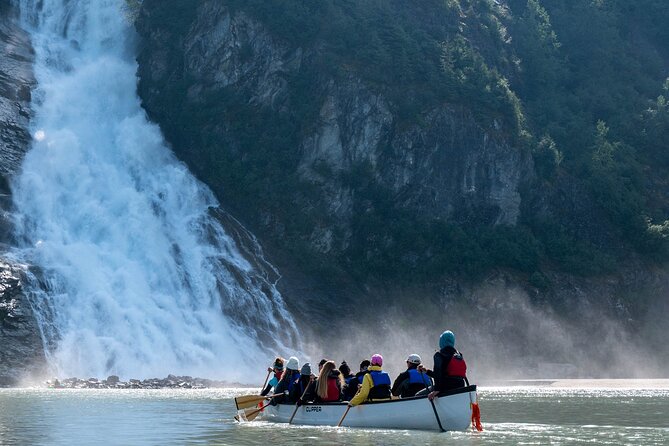
This is the main event: you’ll step into the cool water and paddle across a lake fed by glacier melt with a guide. As you round a rock peninsula, the glacier face comes into view—tall blocks of ice poised to calve.
Expect the day’s most dramatic sensations here:
- The cold of glacial water once you’re on it
- The soundless tension of ice that looks solid until it isn’t
- The way scale hits when you’re not far away, but also not walking on top of the ice
Also, paddle days come with real effort. The tour requirements specify you must be able to paddle 5–6 miles total. And paddle wind can turn the return into an arm workout. If you can handle sustained exertion and you don’t mind using your legs and core, you’ll be happier once the wind shows up.
Guides also seem to put real care into the narration—talking about what you’re seeing around the glacier, including flora and fauna details. In strong departures, you might hear stories that connect the ice to living things nearby, not just the ice as a photo backdrop.
A key expectation: you’re exploring safely from bedrock
This tour does not include trekking on the glacier. Instead, you’ll explore edges of the glacier safely from bedrock. That’s important because glacier access changes daily.
The glacier is receding, so not all features may be present or accessible in the exact way you’re picturing. That doesn’t mean you won’t have great views. It means you should go in expecting a moving target, and rely on your guide’s judgment for the safest place to stop.
Stop 2 on land: the rocky terrain hike and the recession lesson
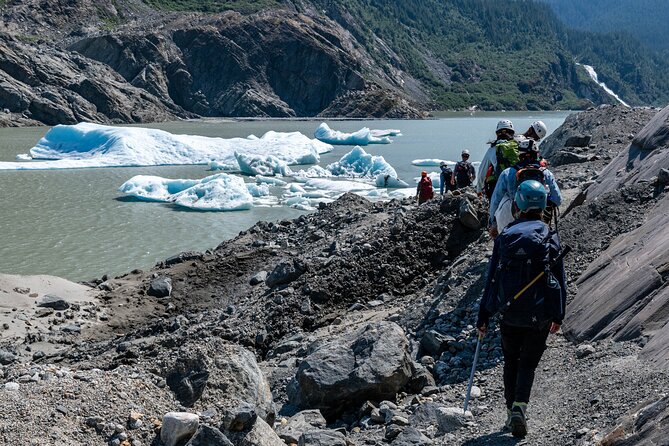
After the canoe portion, you’ll exit the canoes and hike rocky terrain for intimate views. This is where you trade paddling for short walking effort, and where the glacier story gets more specific.
The tour is designed to help you see the glacier edge up close from solid ground. You’ll also learn about the glacier’s rapid recession, which is the honest, science-based reason the edges are changing and why access can shift.
It’s also the part of the day where weather can quickly change how the hike feels. Rain makes rocks slick. Wind can make it feel colder than it looks. This is exactly why the tour includes rain gear and rubber boots.
One thing to keep your mindset calibrated: the hike is about gaining close views and learning, not about long-distance trekking. If you’ve been picturing a full day of hiking, you may find it feels more like a short hike to the best edge-access points.
Stop 3 at the West Glacier Trailhead: de-gear, transport, and back to Juneau
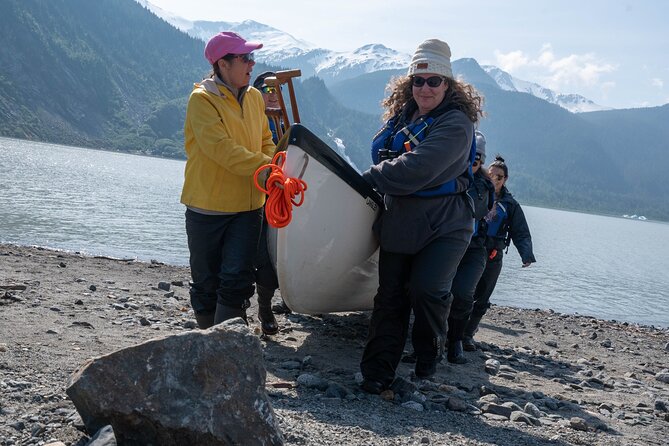
After the glacier portion, you’ll de-gear and return transport back to the main office. Then you’ll be transported back to your meeting location so you can reconnect with your cruise plans or hotel.
This matters for sanity. It’s easy to underestimate how draining cold paddling can be until you’re done and trying to get ready for the rest of your day. The de-gear and shuttle setup helps you avoid the scramble of figuring out what comes next.
You’ll end back at the meeting point, so your day doesn’t dissolve into uncertainty. It’s a clean wrap.
Gear, snacks, and comfort: what’s included and what to prepare for
This tour is built around “we’ll handle the wet part.” You get:
- All necessary paddling equipment
- Rain gear and rubber boots
- Bottled water and snacks
- A professional guide
- National Park fees
That inclusion list is a big value signal. When rain gear and boots are provided, you don’t have to guess if your personal footwear is going to work on slippery rock. You also don’t have to buy last-minute gear in Juneau, which can be pricey and annoying on a short trip.
One requirement detail that’s easy to miss: you’re asked to include your raingear and shoe sizes in the booking comments, including adult and youth sizing ranges. The smallest accommodated shoe size is Youth 2, and the largest is Adult 14.
Also, you’re required to sign a Release of Liability/Assumption of Risk form at the start of the trip. That’s standard for this kind of active, cold-water activity.
What to wear and bring
The tour provides rain gear and boots, but you still want to show up ready for layers. If you can move comfortably in wet conditions and you’re prepared for wind, you’ll feel more in control once you’re on the canoe.
If you wear contact lenses or have any cold-weather sensitivity, it’s smart to plan ahead. The itinerary itself doesn’t spell out eyewear needs, but cold wind is cold wind.
Fitness reality check: who can handle the paddle and hike?
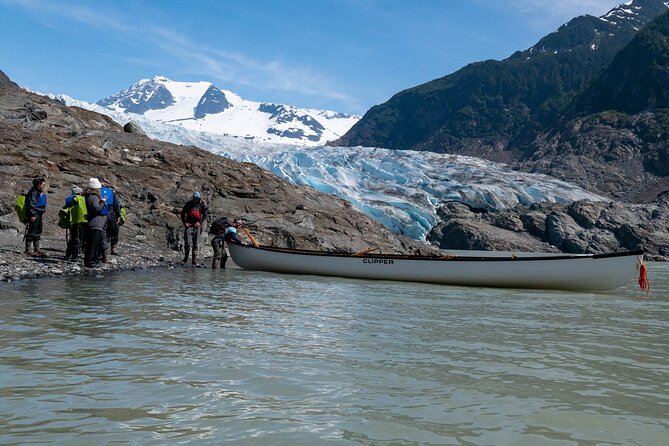
This is an active excursion. The tour requires a strong physical fitness level and the ability to:
- Paddle about 5–6 miles
- Hike about 2 miles roundtrip
- Know how to swim
There’s also a maximum weight limit of 250 pounds per person. Canoes are outfitted with 8-person or 12-person layouts, with 1 to 2 guides depending on group size.
Age minimum is 12 years and older only, and the tour does not permit pregnant guests due to the inherent risks involved.
If you’ve had knee surgery, severe back issues, or you’re recovering from an injury, you should disclose pertinent medical conditions/history and any restrictions during booking. The tour is honest about needing a physically capable group, and it asks you to self-screen for safety.
A blunt but helpful tip: if you’re nervous about arm fatigue, focus on consistent paddling rather than sprinting. Pacing is part of the job. Your arms will still know you did it, though.
Price and value: why $402-ish can feel fair (or not)
At $402.09 per person, this isn’t a budget shore excursion. But it’s not just paying for a bus ride and a view either.
For that price, you get:
- A small-group guided day (max 12)
- Professional guidance for canoe safety
- All paddling gear plus rain gear and rubber boots
- Bottled water and snacks
- National Park fees included
When you compare it to the cost of cobbling together gear rentals, buying snacks, and paying for a guide-led activity, the value equation starts to make sense. The tour is also about time well spent: around 5.5 hours of structured activity, not wasted waiting in the wrong place.
The best value is for people who want a more hands-on Alaska day than the typical cruise offering. If you want guaranteed glacier access at any cost, this tour is not that. Conditions can shift because the ice and weather do.
If you’re comfortable with that reality and you’re physically capable, you’re paying for a real experience: movement + proximity + interpretation.
Weather and glacier conditions: what to expect when nature changes plans
This tour requires good weather. If weather cancels the experience, you’ll be offered a different date or a full refund.
Glacier access and feature exploration also can’t be guaranteed. The glacier is in constant change, and your exploration will be done safely from the bedrock. The amount of time at the glacier edge depends on group pace and weather.
So, if you’re the kind of traveler who wants every moment to match a fantasy itinerary, this could feel frustrating. But if you’re the kind of traveler who likes real-world travel—where the guide has to make the best call in the moment—this is a more natural fit.
Who should book this Mendenhall Glacier canoe paddle and hike?
I think this is a strong match for:
- Active travelers who want a hands-on glacier experience
- People who don’t want to rent gear in Juneau
- Cruise passengers who want an organized shore day with clear pickup
- Travelers who know how to swim and can handle wet cold conditions
It may be a weak match if:
- You want a long, strenuous hike (this is more short hiking plus paddling)
- Your fitness level is limited or you can’t commit to the paddle and hike distances
- You’re looking for guaranteed time on a specific glacier feature (ice access shifts)
If you’re traveling with teens who are 12+ and capable, it can be a great “learning + action” day. Just be honest about how well they can handle cold water and steady paddling effort.
Also, if you like your guides energetic and explanatory, this tour tends to deliver. You could get a guide who’s especially engaging—people have specifically praised named guides like Mike and Dan, as well as Mel and Elle.
Should you book this tour?
Book it if you want a Juneau glacier day that feels active and personal, with gear handled for you and a close-up glacier experience from the water and from shore.
Skip it if you’re expecting a long glacier walk, because this is not glacier trekking. Also skip it if you’re not ready to paddle 5–6 miles and hike about 2 miles roundtrip, or if you’re not comfortable swimming.
If you want my practical “decision rule,” it’s simple: if you can handle cold, exertion, and a short hike to glacier edges, this is likely the best kind of shore excursion value—money spent on doing, not just staring.
FAQ
What’s the meeting point for this Juneau shore excursion?
You’ll meet at 490 S Franklin St, Juneau, AK 99801. For many cruise ship passengers, the downtown meeting location is the “C” Sign near the cruise ship docks, between Mt. Roberts Tramway and the green Taku Smokeries building.
How long is the tour?
The tour runs about 5 hours 30 minutes (approx.).
Are rain gear, boots, and paddling equipment included?
Yes. All necessary paddling equipment is included, along with rain gear and rubber boots. Bottled water and snacks are also included.
What fitness level do I need?
You should have a strong physical fitness level. You must be capable of paddling 5–6 miles and hiking about 2 miles roundtrip.
Do I need to know how to swim?
Yes. All clients must know how to swim.
Can I walk on the Mendenhall Glacier itself?
No. This tour does not include trekking on the glacier. You’ll explore the glacier edge safely from bedrock.
What are the age and weight limits?
The minimum age is 12 years or older only. The maximum weight limit is 250 pounds per person.
What happens if weather is bad?
The experience requires good weather. If it’s canceled due to poor weather, you’ll be offered a different date or a full refund.
What’s the group size?
This activity has a maximum of 12 travelers, and you’ll be outfitted in 8-person or 12-person canoes with 1 to 2 guides depending on group size.