REVIEW · JUNEAU
Juneau Shore Excursion: Paddle with Whales Kayak Adventure
Book on Viator →Operated by Above and Beyond Alaska · Bookable on Viator
Kayaking near humpbacks in Alaska is not like sightseeing. This Juneau whale kayak adventure pairs a boat run up the Inside Passage with time in double kayaks over humpback feeding grounds, plus solid instruction and wildlife education. I also like that the crew builds in the safety rules up front, including the required 100-yard distance from marine mammals, so you’re not rushed into risky “closer is better” behavior.
The main drawback to plan around is that this is a wild-weather, wild-wildlife activity. You’ll need moderate fitness, you must know how to swim, and kayaking time can shift with marine conditions and where wildlife is.
In This Review
- Quick hits before you go
- Why Paddling With Humpbacks Feels Different Than Watching From a Boat
- How the Day Flows: From The C Sign to Auke Bay Harbor
- Stop 1: Goldbelt Tram Check-in and Getting Outfitted Right
- The Inside Passage Boat Ride: Why It’s More Than Just Transit
- Stop 2: Kayaking the Feeding Ground (Time Depends on the Water)
- Fitness, Age, and the Real Safety Requirements
- Kayak Sizing and Who Might Have a Tougher Time
- What’s Included (So You Don’t Blow Your Budget on Gear)
- Price and Value: Why $494.32 Can Make Sense Here
- Who Should Book Paddle With Whales Kayak Adventure
- Should You Book This Juneau Whale Kayak Tour?
- FAQ
- Where is the meeting point in Juneau?
- Does the tour include pickup?
- How long is the Juneau paddle with whales tour?
- Do I have to know how to swim?
- Is a whale sighting guaranteed?
- What gear and food are included?
- What are the age and fitness requirements?
- Is it refundable if plans change?
- Can pregnant guests participate?
Quick hits before you go
- Small group (max 6): more room for coaching, less chaos on a moving shoreline
- Double kayaks with instruction: you won’t be thrown in solo if you’re new
- Inside Passage + Channel Islands State Marine Park: the route targets a humpback feeding ground area
- All-weather paddling gear included: rain gear, plus you get bottled water and snacks
- No whale guarantees: wild Alaska means wildlife timing is never on your schedule
- Safety distance is enforced: you’ll see whales while staying compliant with federal rules
Why Paddling With Humpbacks Feels Different Than Watching From a Boat
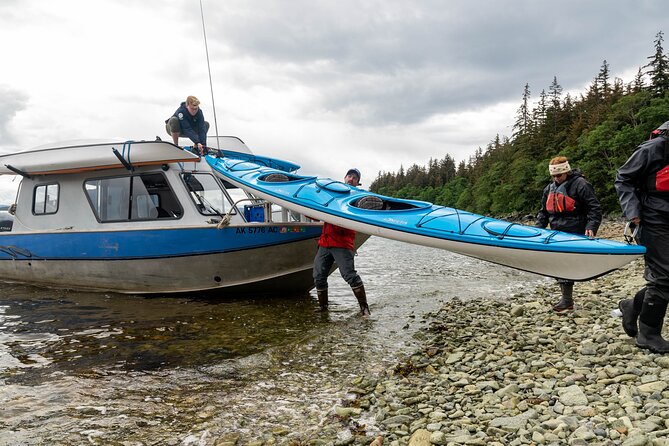
In Juneau, you can watch whales from lots of angles: big boats, smaller skiffs, and the scenic pull-offs everyone knows. What makes this experience special is that you switch viewpoints. You travel by motor boat up the Inside Passage, then disembark and paddle in double kayaks where humpbacks feed.
That perspective change matters. Kayaking is quieter, slower, and more hands-on, so when a humpback surfaces, it doesn’t feel like a show happening somewhere else. It feels like you’re in the ecosystem’s working space. You’re also close enough to notice real behavior—then far enough to stay safe and legal, thanks to the enforced 100-yard distance rule.
I also appreciate the tone of the experience: professional guidance, clear expectations, and gear that supports a long day on chilly water. One review highlight stuck with me: a first-time kayaker felt the instruction was excellent, and their kayak partner helped make the whole thing click fast. That kind of coaching is a big deal on a windy day.
The whale part is still not guaranteed. The team is upfront about it being wild Alaska, which is exactly what you want to hear before you pay a premium. If you’re the type who needs certainty, this may feel frustrating. If you’re the type who loves nature timing, this is the right fit.
You can also read our reviews of more tours and experiences in Juneau.
How the Day Flows: From The C Sign to Auke Bay Harbor
You’ll start at 490 S Franklin St, Juneau, with a centralized downtown meeting spot at the “C” Sign, near the cruise ship docks. The exact reference points are useful: it’s directly between Mt. Roberts Tramway and the green Taku Smokeries building. This is great if you’re on a cruise, because you don’t have to play “where’s the tour van” for an hour.
If you’re staying in major hotels in the Mendenhall Valley, pickup can be arranged directly from your hotel. If you’ve got your own car, you’ll need to contact the office to set a meeting location, so don’t assume you can just show up somewhere convenient.
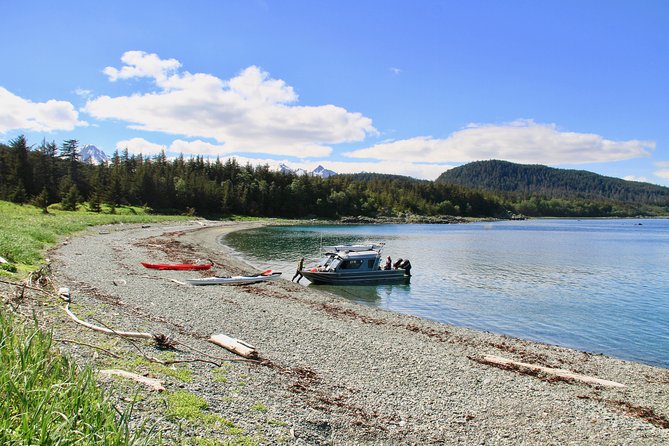
Once you’re at the start, you’re transported to Auke Bay Harbor for gear orientation and outfitting. Then you board the motor boat from there. This setup is practical: it reduces last-minute scrambling and helps everyone get on the same page before you start moving through the water.
You’re looking at roughly 6 hours total. That timing is long enough to feel like a true outing, not just a quick “tour stop,” but short enough that it still works as a single anchor activity on a port day—assuming you’re comfortable with variable sea conditions.
Stop 1: Goldbelt Tram Check-in and Getting Outfitted Right
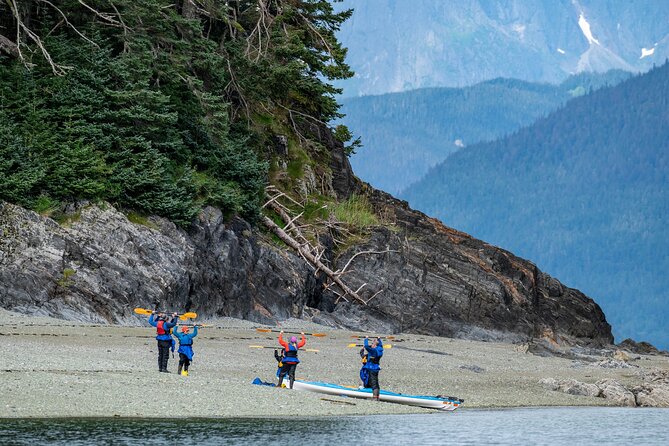
Stop 1 is all about getting you ready for cold spray, wind, and the kind of damp that seems to find your sleeves. You’ll be transported from downtown to Auke Bay Harbor for orientation and gear outfitting. Admission tickets for this portion are listed as free, so the cost is focused on the water time and guide support.
Included gear is a big deal here. You’re provided all paddling and rain gear, plus bottled water and snacks. That means you can pack lighter and spend your energy on the kayaking part. It also means you can dress for comfort instead of trying to guess what you’ll need once the wind hits.
Here’s the practical expectation to set: you’ll be signing required paperwork at the start. A Release of Liability/Assumption of Risk form must be signed, and no alterations are permitted. It’s the kind of form that may feel tedious, but it’s part of the risk-management reality for moving water and wildlife.
This is also where you should pay close attention to kayak handling instructions. Even if you’ve kayaked before, double kayaks behave a bit differently than solo setups because you’re coordinating with your partner and steering with the rudder system.
The Inside Passage Boat Ride: Why It’s More Than Just Transit
The middle of the tour is the Inside Passage leg. You ride a small boat up the waterway to the Channel Islands State Marine Park, described as the heart of the humpback whale feeding grounds in Southeast Alaska.
This matters because the boat ride is where you establish the “correct water” for what you came for. The goal is not only travel; it’s positioning. In wildlife touring, location is half the magic.
Also, the boat gives your body a brief break before you commit to paddling. If you’ve ever tried to jump straight from a dock into wind-whipped water, you know your shoulders pay for it later. This format balances momentum with recovery.
You can also expect environmental context. The experience includes learning about local ecosystems and wildlife, and that helps the whale encounter feel less like luck and more like an understanding of what’s happening around you. You’re not just chasing animals; you’re reading the habitat that supports them.
A note on reality: the route and timing depend on wildlife location and marine conditions. So the day has structure, but not rigid minutes. That’s normal for a whale tour in Southeast Alaska.
Stop 2: Kayaking the Feeding Ground (Time Depends on the Water)
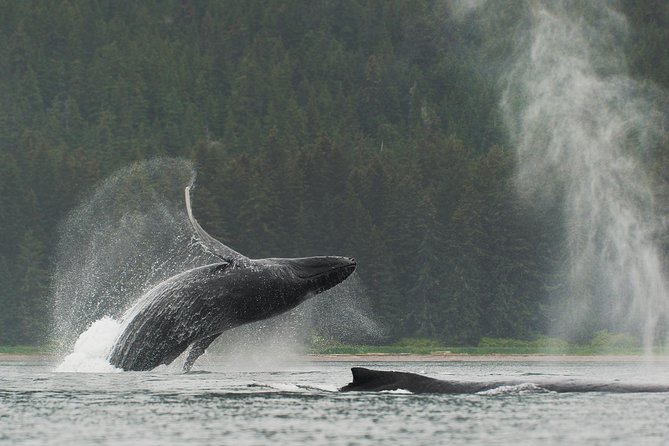
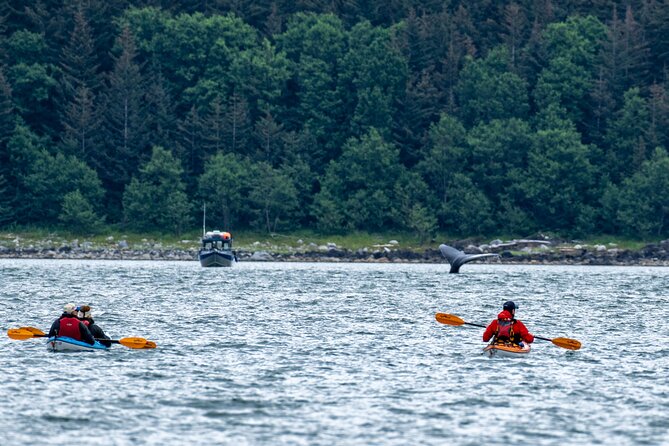
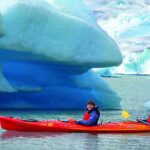
When conditions and wildlife location align, you disembark and jump into kayaks. This is where you get the new perspective: humpbacks can surface in front of your kayak, and because you’re lower and quieter than a boat, the moment can feel intense in a good way.
One review highlight described a humpback surface right in front of their kayak partner. That’s the kind of “wow” scenario the tour is designed to create. Just keep expectations flexible. This trip does not guarantee whale sightings, and it’s not operated with the idea that you’ll always be placed for the closest possible view.
Kayak time is dependent on marine conditions, wildlife location, and your ability. Practically, this means two things for you:
- If the water is calmer or the whales are active where the guides want to be, you’ll likely get more time.
- If conditions are rough, or whales move, the team will adjust for safety and compliance.
The guides and crew also enforce a federal rule: maintain 100 yards from any marine mammals. That means your goal is respectful viewing from the right distance, with the benefit of being positioned well enough to still feel the scale of the animal.
You’ll kayak in double kayaks. You also need to know how to swim. That isn’t just a checkbox. Double kayaks in colder conditions can tip or require sudden adjustments, and the team’s rules reflect the risks of open water.
Your paddling expectation is clear: you should be able to confidently paddle for up to 2 hours. “Confidently” is doing work here. You don’t need to be an athlete, but you should be ready to do steady strokes without freezing up.
Fitness, Age, and the Real Safety Requirements
This tour asks for moderate physical fitness. You’ll be doing active paddling, plus you’ll likely be getting in and out of a kayak while managing wind, spray, and uneven footing around the waterline.
Minimum age is 8 years old, so it can work for kids who can handle a full outdoor day and follow safety directions. If your group has a nervous swimmer, this tour may not be the right match because the rules require knowing how to swim.
Pregnancy is a hard no. Pregnant guests are not permitted to participate due to inherent risks. If that applies, you’ll need to choose a different Alaska activity.
You also need to disclose pertinent medical conditions/history, allergies, and restrictions. This isn’t meant to be a buzzkill—it helps the crew assess risk and match you with the right level of support. If you have a medical condition that limits your mobility or breathing, it’s worth contacting the provider before booking rather than hoping it won’t matter.
And yes, you’re required to sign a waiver at the start of the trip.
Kayak Sizing and Who Might Have a Tougher Time
This is one of those details that’s worth checking before you get excited about whale kayaking. Your kayak must fit your body, and the rudder controls have some limits.
Kayaks accommodate a maximum torso (waist-chest) diameter of 52 inches (132 cm). Maximum weight limits including gear are listed as 300 lbs (single) and 600 lbs (double). Because this trip uses double kayaks for all clients, the double limit is the one to focus on.
Height matters too. People taller than 6’2” (198 cm) may have a hard time operating the rudder because the pedals adjust only within a set range. People as tall as 6’6” have been able to paddle in these kayaks, but it may take more effort to get comfortable.
If you’re tall, you should plan to ask about fit during orientation so you don’t realize after you’re already on the water.
What’s Included (So You Don’t Blow Your Budget on Gear)
A lot of whale kayak tours sell you “adventure,” but you still end up paying for rentals and buying last-minute rain gear. Here, the included list is strong:
- All paddling gear and rain gear
- Professional guide
- Forest Service permits
- Bottled water
- Snacks
This package is part of what makes the price feel more reasonable. You’re paying for guiding, safety coverage, permits, and the real logistics of getting you onto the water and keeping you warm and dry.
Dress appropriately is still on you. The tour operates in all weather conditions barring unsafe conditions determined by the operator, so you’ll want layers you can move in. If you’ve ever seen a well-prepared sailor look dry while everyone else looks like a soggy puffball, you know why this matters.
Price and Value: Why $494.32 Can Make Sense Here
At $494.32 per person for about 6 hours, this isn’t a budget activity. So the question is value, not cost.
Here’s where the value comes from:
- Max 6 travelers: you’re not fighting for attention in a big group
- Professional guide + real instruction: one review specifically called out excellent instruction for first-timers
- Special positioning: the tour targets humpback feeding areas around Channel Islands State Marine Park
- Gear and comfort support: rain gear, plus water and snacks, reduce extra spending
- Permits and compliance: forest service permits and wildlife-distance rules are built in
If you’re comparing prices, don’t just compare “minutes on a boat.” This tour includes the work of getting you kitted up, coached, and safely staged for a paddling encounter in a remote marine environment.
If you’re the type who wants a guaranteed sighting, you’ll feel differently about the price. If you want the best odds of a close, whale-level moment and you can accept wild unpredictability, the cost feels closer to what you’re actually buying: expertise, equipment, and a serious plan.
Who Should Book Paddle With Whales Kayak Adventure
I think this tour fits best if you:
- Want a real kayak experience, not a sit-and-hope boat ride
- Are comfortable with cold water conditions and can dress for wind and rain
- Can swim and paddle steadily for up to 2 hours
- Appreciate wildlife education and safety rules over thrill-chasing
It may not be ideal if you:
- Get uneasy in moving water or have limited mobility
- Need a guaranteed whale sighting
- Are pregnant (not permitted)
- Are outside the listed kayak size/weight constraints or have trouble operating the rudder due to height
This is also a good choice for people who are new to kayaking, because the setup includes orientation and you’ll be in double kayaks with guidance. Just don’t wait until the last second to decide based on excitement alone—read the physical requirements and take them seriously.
Should You Book This Juneau Whale Kayak Tour?
Book it if you want to trade viewing distance for viewpoint level—being in the water with whales, staying within safety rules, and getting guided coaching so you can actually enjoy the paddling. The strongest argument for this tour is the combo of small group size, included rain-ready gear, and a setup that’s designed for a humpback feeding-ground encounter.
Skip it if you need certainty, you can’t meet the swim/paddle requirements, or you’re not comfortable with an all-weather operating style. With wildlife, the best plan is to show up ready, follow the crew’s instructions, and treat the day like nature’s schedule, not yours.
If you’re ready for that mindset, this is one of the more memorable ways to experience Juneau’s marine world—without losing the important parts of safety and respect.
FAQ
Where is the meeting point in Juneau?
You meet at 490 S Franklin St, Juneau. Downtown meeting for most cruise passengers is at the “C” Sign near the cruise ship docks, between Mt. Roberts Tramway and the green Taku Smokeries building.
Does the tour include pickup?
Pickup is available for clients staying at major hotels in the Mendenhall Valley. Cruise/downtown clients meet at the “C” Sign near the docks. If you’re driving yourself, you need to contact the office to arrange a meeting location.
How long is the Juneau paddle with whales tour?
It runs about 6 hours. Kayak time is dependent on marine conditions, wildlife location, and client ability.
Do I have to know how to swim?
Yes. All clients are required to know how to swim because you’ll be kayaking in open water.
Is a whale sighting guaranteed?
No. The tour does not guarantee whale or wildlife sightings. This is wild Alaska, and the team also follows federal regulations to stay 100 yards from marine mammals.
What gear and food are included?
You get all paddling and rain gear, plus bottled water and snacks. A professional guide is also included.
What are the age and fitness requirements?
Minimum age is 8 years old. You should have moderate physical fitness, and you should be able to confidently paddle for up to 2 hours.
Is it refundable if plans change?
This experience is non-refundable and cannot be changed for any reason. If the tour is canceled due to poor weather, you’ll be offered a different date or a full refund. If canceled because the minimum number of travelers isn’t met, you’ll be offered a different date/experience or a full refund.
Can pregnant guests participate?
No. Pregnant guests are not permitted to participate.