REVIEW · KEY LARGO
Kayak through Mangrove Forests in the Florida Keys
Book on Viator →Operated by Tavernier Creek Kayak Tours · Bookable on Viator
Kayaking the mangrove tunnels feels like time travel. You start at the canal in Tavernier, glide out past Kalteux Key and the Atlantic, then turn into the quiet northward lanes of Tavernier Creek. It’s a short 3-hour outing that mixes easy getting-on instruction, real wildlife spotting, and that special stillness you only get by paddling.
Two things I like a lot: you get small-group guiding (max 18), and the tour is built around actual wildlife habitat rather than a quick photo stop. Guides such as Jade, Lilly, and Atticus consistently steer the trip so you’re not just floating through mangroves—you’re learning what you’re looking at, from mangrove “architecture” to sea life like upside-down jellyfish.
One thing to consider: this is still time in a kayak. Even though it’s manageable for most people, you’ll be paddling for about 3 hours, and the return route can feel like a light workout as you work against current at times.
In This Review
- Key Highlights I’d Bet On
- Where You Paddle: Tavernier Creek and the Florida Keys Outflow
- Stop 1: From the Dock to Open Water Views and the Turn into Tavernier Creek
- Stop 2: Mangrove Tunnels to a Saltwater Lagoon (Where the Wildlife Shows Up)
- Wildlife Chances: Manatees, Jellyfish, Birds, and the Small Stuff
- Why the Guide Matters: Learning the Mangroves Instead of Just Paddling Through Them
- Kayak Setup and Comfort: Tandem Sit-on-Top for an Easier Start
- Pacing and Workout Level: Peaceful Tunnels with a Return That Works Your Arms
- Price and Value: $65 for Gear, Small-Group Guidance, and a Real Habitat Experience
- Practical Tips for Your Mangrove Kayak Day
- Who This Trip Fits Best
- Should You Book Kayak Through Mangrove Forests in the Florida Keys?
- FAQ
- How long is the kayaking tour?
- Where do you meet for the tour?
- How much does it cost?
- What’s included in the price?
- What wildlife might you see?
- What kayak type do I use?
- Do I need to worry about weather?
- Is there a limit on group size?
Key Highlights I’d Bet On
- Small group size (max 18): more eyes on wildlife, less noise, easier to follow along.
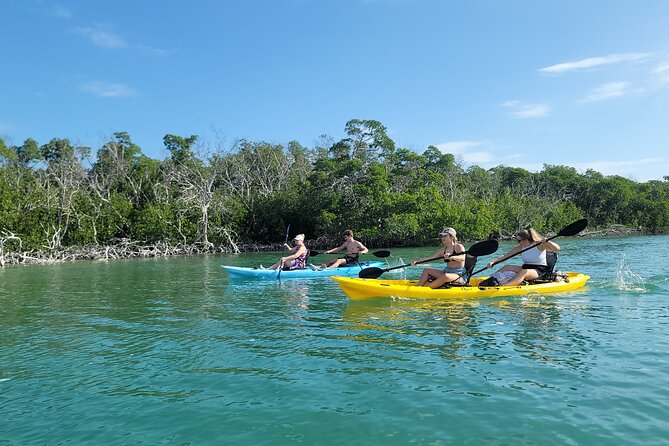
- Tandem sit-on-top kayaks: stable and straightforward, with room to share the work.
- Mangrove tunnels to a saltwater lagoon: the scenery payoff isn’t the whole story—sea life is part of it.
- Jellyfish spotting is a real focus: including upside-down jellyfish at the lagoon area.
- Guides actively teach in the moment: from sponges and birds to how mangroves matter.
- You might see manatees, dolphins, crabs, tarpon, and more: the route runs where the Keys animals hang out.
Where You Paddle: Tavernier Creek and the Florida Keys Outflow
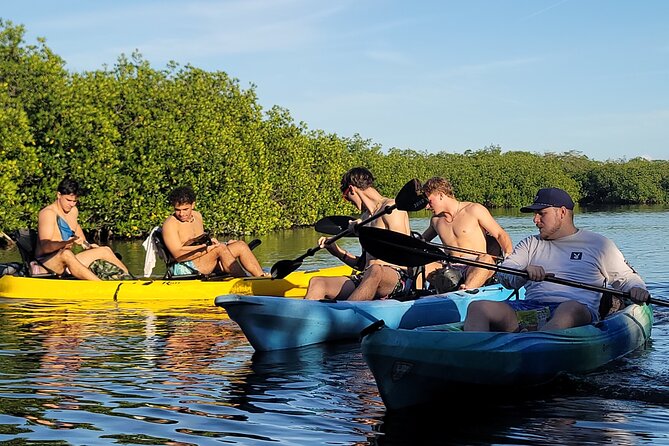
This trip runs out of 90311 Overseas Hwy in Tavernier (at Old Conch Harbor / Tavernier Creek Kayak Tours). You’ll start in a canal, then head toward open water, then angle into Tavernier Creek, where the mangrove network takes over.
That sequence matters. The first stretch gives you a sense of place—ocean to one side, keys in view—then the mangroves swallow the sound and you get that “how is it this quiet?” feeling. It’s also part of why wildlife shows up: you’re moving through channels that smaller boats can’t access easily.
You can also read our reviews of more tours and experiences in Key Largo.
Stop 1: From the Dock to Open Water Views and the Turn into Tavernier Creek
Your first stop is the departure point at the 90311 Overseas Hwy location. You’ll get safety instructions before you board, and then your guide leads you out of the canal. This early bit is about setting your paddling rhythm and learning what to watch for while you transition from marina-style water to the Keys’ coastal system.
As you leave the canal, you should spot Kalteux Key and the Atlantic Ocean to your right (south). Then you turn left to head north into Tavernier Creek—a simple navigation cue that helps you orient yourself even if you’re new to kayaking.
A practical note: this segment is only about 30 minutes, so don’t expect a long training session. If you’re nervous, tell your guide early. A good guide will adjust the pace and help you settle in right away.
Stop 2: Mangrove Tunnels to a Saltwater Lagoon (Where the Wildlife Shows Up)
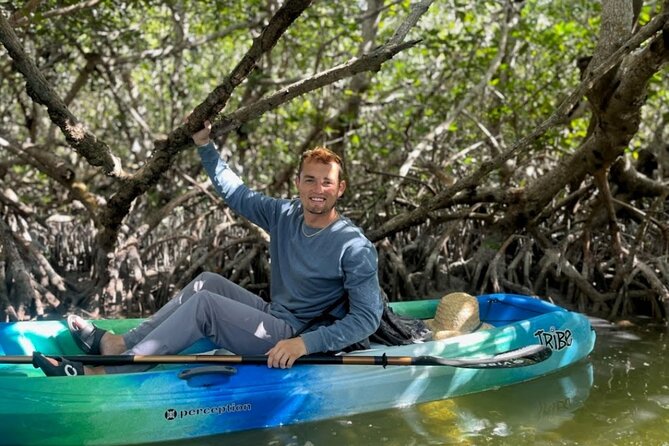
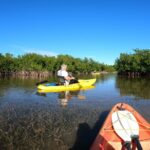
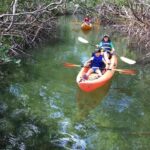
Once you’re heading north, you’ll paddle through the mangrove area. The tour includes an underpass under the Overseas Highway, and then the creek narrows into the mangrove tunnels—those tight, low-canopy waterways that motorized boats typically can’t enter.
This is the part most people remember. The creek opens into a small break in the dense mangroves, then you reach a saltwater lagoon surrounded by mangrove forests. That pause in the route is where the trip changes from scenic to seriously fun.
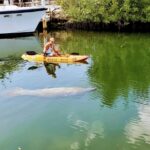
In the lagoon, you may spot wildlife right at the surface. The reviews include sightings like manatees (sometimes grazing), plus upside-down jellyfish and other fish. You also get a few minutes to slow down, take in the view, and explore the lagoon area before turning back.
One drawback here is also simple: you’re not there for long. The lagoon is a short window of payoff, so if you spot something cool, let your brain lock onto it immediately and don’t wait for a perfect photo angle.
Wildlife Chances: Manatees, Jellyfish, Birds, and the Small Stuff
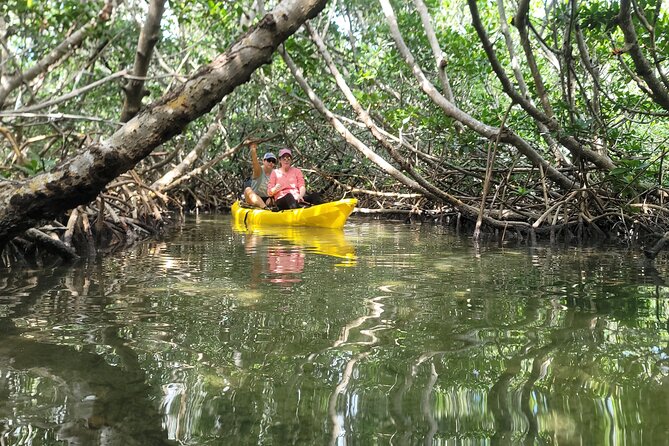
This route is built for animal-spotting, not just “pretty water.” Across guides and tours, you’ll likely see a mix of:
- Jellyfish: especially upside-down jellyfish in the lagoon area. One review also mentioned jellyfish being brought up to the surface for closer viewing.
- Manatees: at least some trips include a grazing manatee moment.
- Birds and fish: multiple reviews call out birds and fish in the creek and lagoon.
- Crabs and other sea life: crabs show up, and the guide-led teaching helps you notice more than you’d catch alone.
- Larger animals: some outings include dolphin sightings, and others mention tarpon and mullet.
Here’s the practical truth: wildlife is always a coin toss. But the tour’s value is that you’re in the right habitat and moving slowly enough to register what you’re seeing. Also, the guide’s eye matters. When someone points out sponges or identifies a bird, you start seeing the whole food chain instead of only the obvious moments.
Why the Guide Matters: Learning the Mangroves Instead of Just Paddling Through Them
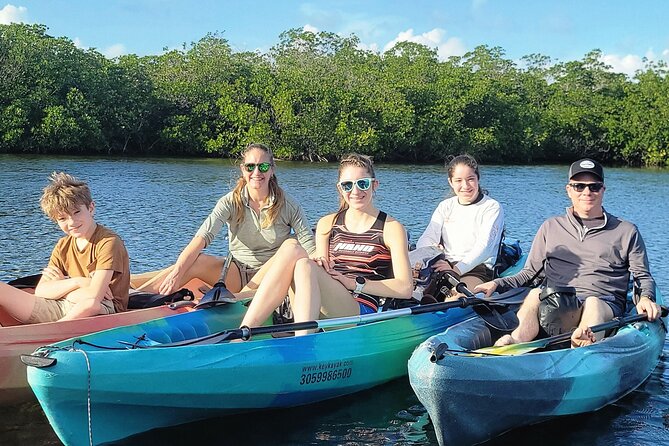
If you’ve ever kayaked on your own, you know the difference immediately. A guide doesn’t just lead the route—they explain what you’re passing, what to look for, and how the mangrove system works.
On this trip, guides such as Jade and Lilly (and others like Atticus) are repeatedly praised for on-the-water teaching. In plain terms, that means you’re not just paddling through tunnels. You’re learning why the trees do what they do, how mangroves protect the shoreline, and what kinds of marine life use the channels.
You’ll also get better navigation guidance. Mangrove waters can feel like a maze if you’re unfamiliar. One review highlights the idea of going “deeper” than other tours—meaning you’re using local knowledge to reach a bigger open area where the lagoon and jellyfish are more likely to be part of your experience.
Kayak Setup and Comfort: Tandem Sit-on-Top for an Easier Start
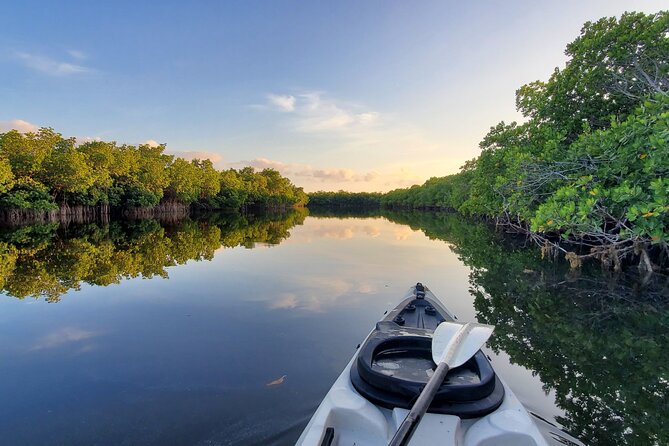
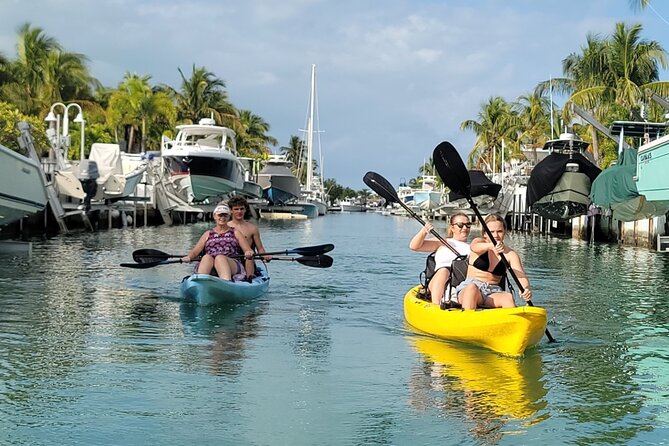
You’ll use a tandem, sit-on-top kayak. Sit-on-top is a big deal for first-timers: it’s stable, you can adjust quickly, and it’s generally simpler to get on and off than enclosed kayaks.
Tandem also changes the whole stress level. If one person is new to paddling, the other can help you keep momentum while you get your bearings. For a trip that lasts around 3 hours, that matters.
Most travelers can participate, and the company keeps group sizes small. In practice, small groups mean fewer tangles and easier spacing—so you can focus on the mangroves instead of crowd math.
Pacing and Workout Level: Peaceful Tunnels with a Return That Works Your Arms
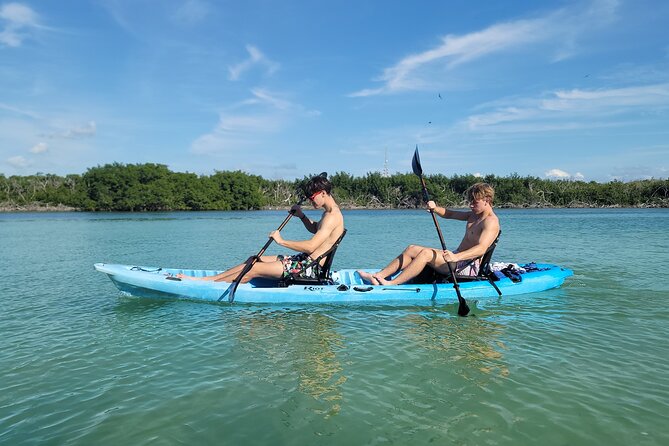
This outing is described as leisurely in the way it’s guided, but don’t mistake it for a float trip. Expect paddling for the full session, with a return leg that can include a bit of current.
Reviews mention current you may row against and a “workout” feel. The good part is that the work is spread across a few stages: canal-to-open water adjustment, mangrove tunnel cruising, then a lagoon pause, then the paddle back.
If you’re the kind of traveler who wants zero physical effort, this might feel like too much. If you’re okay with a moderate, outdoorsy 3-hour activity, you’ll likely come away feeling like you did something meaningful, not just something photographed.
Price and Value: $65 for Gear, Small-Group Guidance, and a Real Habitat Experience
At $65 per person for about 3 hours, this is priced as a mid-range excursion—but the value comes from what’s included.
You get:
- Use of tandem, sit-on-top kayaks
- A tour guide with small group sizes
Not included:
- Lunch
- Private transportation
To judge value, think of it this way: you’re paying for guided access to narrow mangrove waterways and a route designed to reach the lagoon area. If you paddled alone, you’d still need the rental kayak, and you’d lose the wildlife-spotting focus and route confidence that guides bring.
Also, the tour is popular enough that it’s commonly booked about 16 days in advance on average. If your dates are fixed, lock it in sooner rather than later.
Practical Tips for Your Mangrove Kayak Day
Here’s how to make your paddle smoother, based on what the experience is set up to do:
- Arrive ready for water: you’ll be on the water for around 3 hours, and you can expect splash and spray.
- Plan for wildlife watching moments: when the lagoon opens up, you’ll want to slow down and look—not just paddle.
- If you want the closer look at sea life: follow your guide’s cues. Reviews mention jellyfish being brought up for closer viewing, which takes coordination.
- Consider strength and comfort: tandem helps, but you’re still paddling—especially on the way back.
- If you’re tempted to swim: one review mentions an option to jump in a swimming hole. If that’s a priority for you, bring what you need to be comfortable.
Who This Trip Fits Best
This tour suits a wide range of people because it’s not only about distance or speed. It’s about getting into the mangrove network and slowing down enough to notice what’s there.
It’s especially good for:
- Families who want a structured outdoors activity and the chance to learn from the guide.
- Couples looking for a peaceful nature outing that also has wildlife moments.
- Multi-generation groups, since the route is paced and guided with a small-group feel.
- Travelers who like less crowded experiences and don’t want to spend the day managing a long lineup.
If you’re prone to motion sensitivity, you may want to consider how you feel in a kayak, but the tour doesn’t present any gear-based barriers beyond normal kayaking basics.
Should You Book Kayak Through Mangrove Forests in the Florida Keys?
Book it if you want a Keys experience that feels real: close to nature, guided through mangroves, and designed around wildlife—not just views.
Skip or rethink it if you need a purely low-effort activity. You’ll paddle for about 3 hours, and at least part of the experience includes a return where current can add resistance.
My decision rule:
- If you’re excited by jellyfish, manatees, birds, and the mangrove system, this is an easy yes.
- If you want “sit back and do nothing,” you’ll probably be happier with a more passive water activity.
FAQ
How long is the kayaking tour?
The tour runs about 3 hours in total, with the first segment about 30 minutes and the creek-and-lagoon portion about 2 hours.
Where do you meet for the tour?
You start at 90311 Overseas Hwy, Tavernier, FL 33070 (Old Conch Harbor / Tavernier Creek Kayak Tours), and the tour ends back at the meeting point.
How much does it cost?
It costs $65.00 per person.
What’s included in the price?
The price includes use of a tandem, sit-on-top kayak and a tour guide (small group sizes).
What wildlife might you see?
You may see jellyfish (including upside-down jellyfish), manatees, birds, fish, and crabs. Some tours also include larger sightings like dolphins.
What kayak type do I use?
You’ll ride in a tandem, sit-on-top kayak.
Do I need to worry about weather?
Yes. The experience requires good weather. If it’s canceled due to poor weather, you’ll be offered a different date or a full refund.
Is there a limit on group size?
Yes. The maximum group size is 18 travelers.