REVIEW · VIK
Kayaking on the Sólheimajökull Glacier Lagoon
Book on Viator →Operated by Icelandic Mountain Guides · Bookable on Viator
Glacier kayaking feels like a sci‑fi postcard. I really like how dry suits keep you warm and dry, and how the stable sit-on-top kayaks plus coaching make it doable even if you have never paddled before. The one thing to plan around is the rocky walk from the parking area to the water, which can be uncomfortable in thin booties.
This tour is all about getting that rare view of Sólheimajökull from the lagoon—icebergs drifting by, glacier walls in front of you, and the kind of quiet that makes your brain slow down. I also like that the group stays small (max 8), so guides can help with safety, positioning, and pacing without turning it into a cattle-line.
Meet at the Sólheimajökull parking lot, gear up, get your safety briefing, then paddle on calm water with your guide leading the route. If you’re lucky and you’re with a guide like Sebastian or Fernanda, you’ll get both clear instructions and real explanations about why the ice looks blue and what you’re seeing up close.
In This Review
- Key things I’d bet on before you go
- Why Sólheimajökull Lagoon is a rare kayak destination
- Entering the scene: parking lot meet-up and gear up without fuss
- The dry suit reality: warm, dry, and still flexible enough to paddle
- Paddling the glacier lagoon: calm water, blue ice, and quiet moments
- How close do you really get to the ice and glacier?
- Stop by Sólheimajökull: what makes the glacier part special
- The not-so-glam walk: rocky ground, thin booties, and how to handle it
- Wind, current, and the kind of “effort” this takes
- Price and value: what $170 buys you in the real world
- Practical tips that make your morning smoother
- Who should book this kayaking tour (and who might reconsider)
- Should you book glacier kayaking at Sólheimajökull Lagoon?
- FAQ
- How long is the kayaking tour at Sólheimajökull Glacier Lagoon?
- Where does the tour start?
- Do I need prior kayaking experience?
- What is included in the price?
- What should I bring?
- Is food or drinks provided?
- What group size should I expect?
- Is the tour offered in English?
- What happens if weather is poor?
- Can children join the tour?
- Is there a place where I should pick up a ticket?
Key things I’d bet on before you go
- Dry suit included: you do not need to bring specialized glacier clothing.
- Beginner-friendly kayaks: sit-on-top and stable, taught from basics.
- Small groups (max 8): more time with your guide and fewer issues on the water.
- Guides who mix safety + glacier facts: you’ll hear practical glaciology during the paddle.
- Icebergs up close, not reckless-close: you get the magic without the stress.
- Wind and paddling effort can vary: expect a mini workout if conditions push you.
Why Sólheimajökull Lagoon is a rare kayak destination
Sólheimajökull is famous for a reason, but the lagoon is where it really changes shape in your mind. From shore, the glacier can look distant and blocky. From the water, you see how the ice breaks off and drifts—huge slabs, rounded chunks, and that constant slow-motion movement that makes the whole place feel alive.
I like that this tour is designed for comfort and clarity first. You’re not dropped into chaos. You get instruction, a dry suit, and a kayak setup that’s meant for people who are new to kayaking. Then you glide across calm, iceberg-dotted water at a pace that lets you actually look around.
You can also read our reviews of more tours and experiences in Vik.
Entering the scene: parking lot meet-up and gear up without fuss
You start at the Sólheimajökull glacier parking lot. You’ll want to arrive 30 minutes before departure so you can check in, get sized, and get ready without rushing. This matters more than it sounds: a dry suit and boots/gear take a minute, and good tours don’t cut corners here.
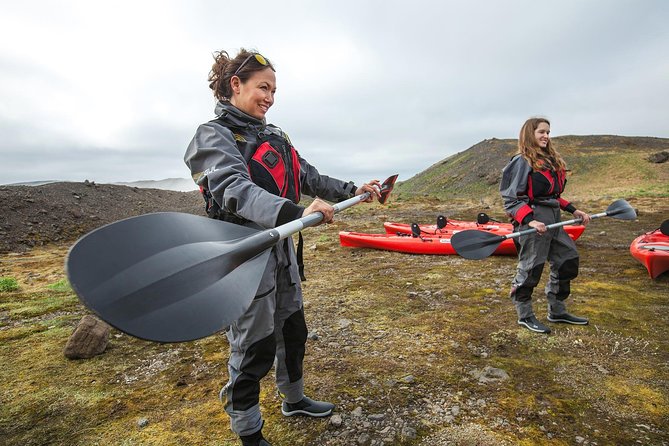
The included equipment is straightforward: a professional guide, kayak and paddle, and the dry suit (with technical gear). That’s a big deal for value because glacier tours can go either way—some nickel-and-dime you with missing layers and extras. Here, you show up with warm clothing and extra socks, and most of the cold-weather system is handled for you.
You’ll also get instruction before you paddle. Guides emphasize basics like how to hold the paddle, how to keep your kayak stable, and where to position yourself when icebergs drift nearby. I’ve heard from first-time paddlers that the safety briefing feels clear rather than scary, which is exactly what you want when you’re surrounded by moving ice.
The dry suit reality: warm, dry, and still flexible enough to paddle
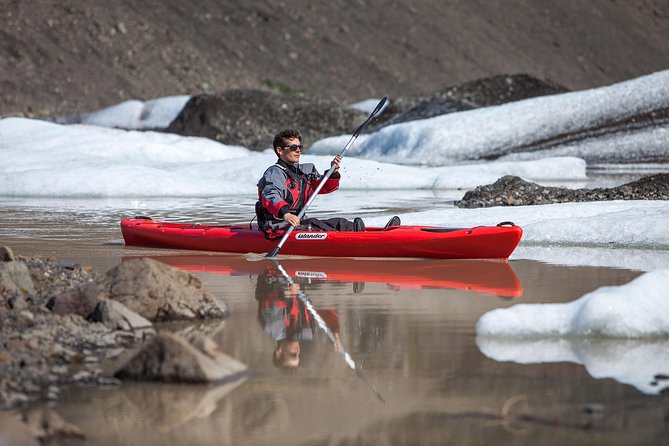
The dry suit is the star of the show. More than one guide style comes through in the reviews: guides help people get geared up, then they keep things moving so you don’t waste time shivering in the wind.
A good suit also means you spend your energy on the experience, not on surviving it. People have noted that the suit works well at blocking wind chill, and that staying dry makes the whole trip feel easier. If you’re the type who hates being cold in your hands, pay attention to fit: one traveler mentioned the provided gloves had holes and were soaking wet, and that swapping gloves would have helped. If you’re sensitive to cold, bringing your own gloves as a backup is a reasonable idea.
Also: bring an extra pair of socks. It’s one of those simple tips that turns a potentially miserable hike/walk into something you can actually enjoy.
Paddling the glacier lagoon: calm water, blue ice, and quiet moments
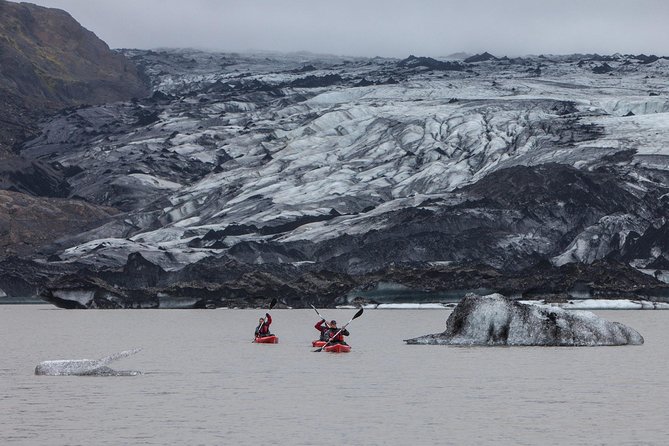
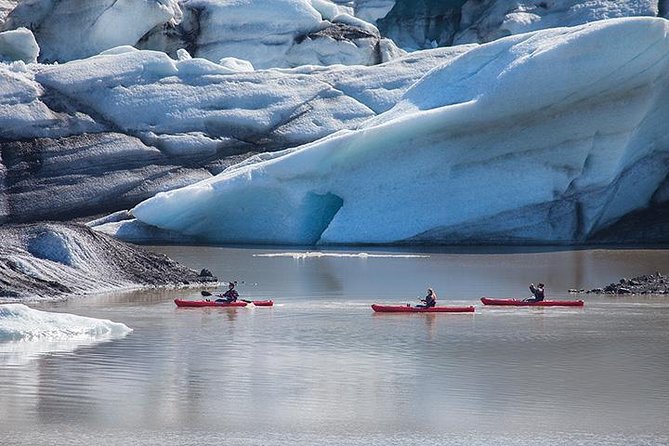
Once you’re on the water, the lagoon feels surprisingly peaceful. The kayaks used on this route are sit-on-top and stable, which makes it easier to learn without feeling like you’re about to tip over. Your guide leads the route, so you’re not trying to figure out where to go while also learning stroke mechanics.
What you’re looking at is the draw. Towering blue and white ice formations sit around you, and the color is not random. Guides like Fernanda and Sebastian are specifically praised for explaining what you’re seeing—why ice turns blue, what it means for the glacier’s behavior, and how the lagoon forms.
Paddling itself is usually manageable, but it’s not zero effort. One review described it as a mini workout when you need to paddle against stream. That’s normal, and it’s also why this tour feels active without feeling punishing. You’ll feel like you did something, not just that you were transported to a view.
And yes—icebergs can be close enough to feel real, not just scenic. People have described it as surreal and peaceful at the same time, especially when guides pause and let you take photos safely.
How close do you really get to the ice and glacier?
You get that big up-close moment, but it’s guided. Safety comes first. You’ll follow your guide through the lagoon and pass near the glacier and drift icebergs, but you won’t be roaming wherever you want.
That balance shows up clearly in how people describe the experience. Some loved having a hands-off approach where they still could paddle around and touch icebergs with caution. Others wanted a bit more freedom for exploring. The takeaway is simple: this is a guided route for a reason. The guide is protecting you from both conditions (wind, current, slippery spots) and from wandering too close where it gets unsafe.
In the summer, ice can look smaller or darker depending on light and conditions, and one traveler noted that icebergs felt a little limited in visibility then. In other seasons, the lagoon often shows more contrast. Your best bet is to go expecting beauty first, not expecting a guaranteed close-up iceberg every minute.
Stop by Sólheimajökull: what makes the glacier part special
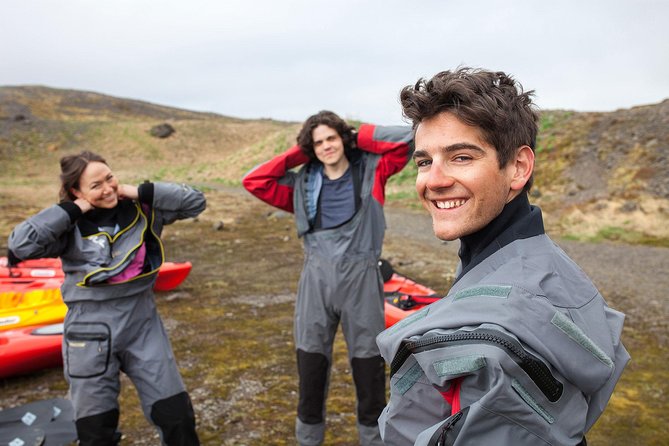
This is not just ice in the distance. The glacier is in the mix. The tour is designed so your paddling route brings you toward the glacier enough to feel its scale from the water, not just from a viewpoint.
The best guide moments are usually the ones that connect what you see to why it happens. Guides have explained glacier history and the environment around Sólheimajökull, with some focusing on present-day change and others tying in volcanic ash in the area. That kind of context turns a pretty scene into something you can name and remember later.
Even if you just like photos, this glacier stop pays off. A glacier from the water gives you angles you can’t get from land trails, and it changes the way the ice stacks and breaks.
The not-so-glam walk: rocky ground, thin booties, and how to handle it
Here’s the practical part people forget to plan for: the trip is not only on water. To get there, you walk from the parking area toward the water. One traveler described it as about a quarter mile and said there is not really a path, just lava rock and pebbles where you’re walking in thin rubber booties.
That can hurt. It can also slow you down if you’re not used to rocky terrain on short notice. The fix is not complicated:
- Wear warm clothing you can move in.
- Bring extra socks.
- Go in expecting sore feet if you’re prone to foot pain.
- If you’re worried, consider footwear strategies that still fit the tour rules (the dry suit/booties are provided, so you’ll be in their system).
Could the route be improved with an ATV or cart option for some guests? Sure. But this tour’s charm is that it brings you into the real working edge of the glacier area. Plan for feet, and you’ll enjoy the water more.
Wind, current, and the kind of “effort” this takes
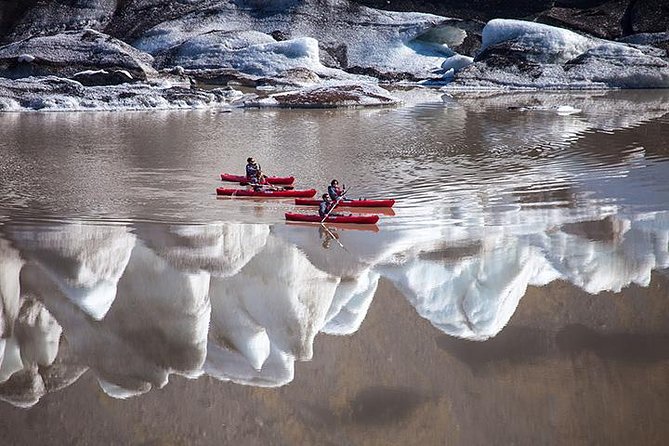
Glacier weather loves to change its mind. The tour requires good weather, and guides adjust the plan if conditions shift. Even with that, wind can happen, and one person described it as windy but still manageable with the group able to kayak around icebergs.
Expect effort in two places:
- Paddling to maintain position as water moves.
- The initial walk to get set up.
Once you’re moving, the kayaks do a lot of the heavy lifting. The rest is controlled pacing. If you can do basic cardio and you’re okay with cold conditions, you’re likely a good fit.
Price and value: what $170 buys you in the real world
At $170 per person for about 2 hours 30 minutes, this isn’t a budget activity. But it’s also not just a scenic photo stop. For that price, you’re paying for real logistics: guiding, gear, and cold-weather protection that matters.
The value equation looks good because:
- The dry suit and technical equipment are included, which can be expensive or impossible to improvise well on the spot.
- You get instruction, so you’re not wasting time learning nothing.
- Group size is small (max 8), which usually means better safety attention.
- You get a guided route that keeps you near the action without letting it turn chaotic.
One review called the tour expensive but worth it, and that matches my read. If you want the glacier-from-water experience and you don’t want to DIY it with rented gear, this is one of the cleaner paths.
Practical tips that make your morning smoother
A few small things can noticeably change how your tour feels:
Dress for layers, not fashion. You’ll need warm clothing, and gloves/socks matter. Bring your own warm layers even though the dry suit is provided.
Pack extra socks like they’re life insurance. You’re in cold gear. Socks are the one easy upgrade you control.
Arrive early, not late. The 30-minute early arrival isn’t bureaucracy. It helps you get fitted and listen to the briefing without rushing.
Bring a camera plan. Guides often help with photos, and they may stop at points so you can shoot properly. If you want steady shots, ask your guide when it’s safe to reposition your kayak for angles.
Food and drinks are on you. Food and drinks are not included. One traveler noted there’s a food van on site but it can be expensive. The guide may offer free coffee, which is a nice perk if you’re waiting around, but don’t count on a full meal there.
Who should book this kayaking tour (and who might reconsider)
This is a strong choice if:
- You’re a first-time kayaker.
- You want a guided, safety-first way to see glacier ice up close.
- You’d rather paddle quietly than hike long distances for views.
- You like learning facts while you’re doing something physical.
It might be less ideal if:
- Your feet are easily hurt by rocky terrain or short walks on uneven ground.
- You’re very sensitive to cold and you’re relying on gear fit (consider bringing a backup glove).
- You want maximum freedom to roam independently. This is a guided route, and you’ll stay within that structure.
On the flip side, people with semi experience at kayaking have said the guide helped them feel safe and paddled the group to good spots. So it’s not only for total beginners.
Should you book glacier kayaking at Sólheimajökull Lagoon?
I’d book it if you want one of Iceland’s most memorable combinations: glacier scale plus icebergs within reach plus active, guided paddling that doesn’t require expertise.
It’s also a smart add-on if you’re already planning a drive route around Vik and want something that feels different from waterfalls and viewpoints. From the water, the glacier is not background scenery—it becomes the main event.
Just go in with realistic expectations:
- It’s guided and safety-led.
- The walk to the water can be rough on feet.
- Wind and current can add effort.
- The dry suit is your best friend.
If that all sounds like your kind of adventure, this is an excellent fit.
FAQ
How long is the kayaking tour at Sólheimajökull Glacier Lagoon?
The tour lasts about 2 hours 30 minutes.
Where does the tour start?
It starts at the Sólheimajökull glacier parking lot at 221, 871, Iceland, and it ends back at the meeting point.
Do I need prior kayaking experience?
No. You can participate even if you have never kayaked before. You’ll learn basic paddling techniques and use stable kayaks.
What is included in the price?
Included are a professional guide, kayak and paddle, dry suit, and technical equipment.
What should I bring?
Bring warm clothing and an extra pair of socks. Food and drinks are not included.
Is food or drinks provided?
No. Food and drinks are not included.
What group size should I expect?
The maximum group size is 8 travelers.
Is the tour offered in English?
Yes, the tour is offered in English.
What happens if weather is poor?
This experience requires good weather. If it’s canceled due to poor weather, you’ll be offered a different date or a full refund.
Can children join the tour?
Yes, but only one child can be booked per one adult.
Is there a place where I should pick up a ticket?
You receive a mobile ticket.