REVIEW · SENTOSA ISLAND
Kayak Fishing in Singapore, Sentosa, East Coast: Day, Sunset & Night Adventures
Book on Viator →Operated by Kayak Fishing Fever · Bookable on Viator
Sea fishing by kayak beats standing still. You get to move with your legs on Hobie kayaks using the Mirage Drive pedal system, then aim for Singapore’s reefy spots with a guide. It’s active, hands-on, and a fun way to see the coastline at a slower pace than the usual city rush.
I especially like that the trip handles the hard parts for you: rods, reels, bait, vests, and step-by-step instruction. In the feedback I found a clear pattern of helpful, patient coaching, including mentions of a guide named Aaron for making the experience feel smooth.
One consideration: this is time on the water in the sun. You’ll want to plan for heat and bring a hat, because even a great day can feel intense if you’re not prepared.
In This Review
- Key Highlights You’ll Care About
- Kayak Fishing Around Sentosa and the East Coast: The Point of Doing It This Way
- Hobie Mirage Drive: Less Paddling, More Fishing Focus
- Gear, Bait, and Technique Coaching (Not Just a Cast-and-Pray Trip)
- Your Route in 4 Hours: From Tanjong Beach to Palawan Beach (With Island-Hopping Along the Way)
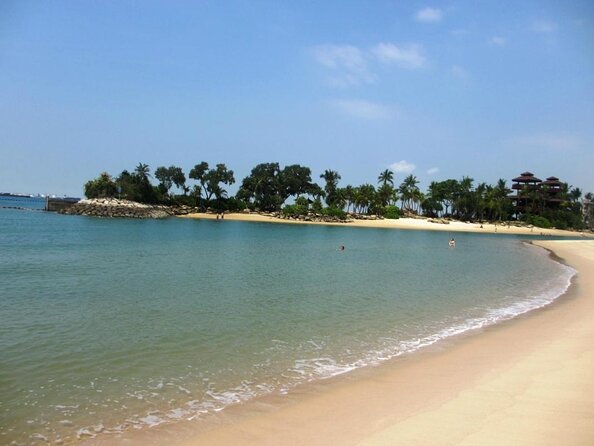
- Tanjong Beach (Start)
- Sentosa Island
- Sentosa Merlion
- Siloso Beach
- East Coast
- Lazarus Island
- Changi Beach
- Bedok Jetty
- Changi Village
- National Service Resort & Country Club
- Sentosa Island (Return Segment)
- Pulau Ubin
- Pulau Ubin Nature and Kampong Walk
- Sentosa Island (Final Return)
- Palawan Beach (End)
- Snappers and Groupers: How to Think About Your Chances
- Sun, Water, and What to Bring: Stay Comfortable and You’ll Enjoy It More
- Price and Value: Is $120.41 Worth It in Singapore?
- Who This Kayak Fishing Trip Is Best For
- Should You Book Kayak Fishing Fever in Sentosa?
- FAQ
- How long is the kayak fishing trip?
- Where does the tour start?
- How many people are in the group?
- What’s included, and do I need to bring my own gear?
- What fish can I target?
- What happens if the weather is poor?
Key Highlights You’ll Care About
- Hobie Mirage Drive pedaling: less arm work, more time focused on fishing and balance
- A route packed with variety: Sentosa, beaches and jetties, plus island hopping toward East Coast areas
- Coaching that fits beginners: you learn kayak fishing technique, not just where to cast
- Gear and safety support included: PFD life jacket and a VHF radio on hand
- Photo-friendly outing: you get photos of your trip (not just your own phone shots)
- Targets like snappers and groupers: you’re fishing real, tropical species, not just hoping
Kayak Fishing Around Sentosa and the East Coast: The Point of Doing It This Way
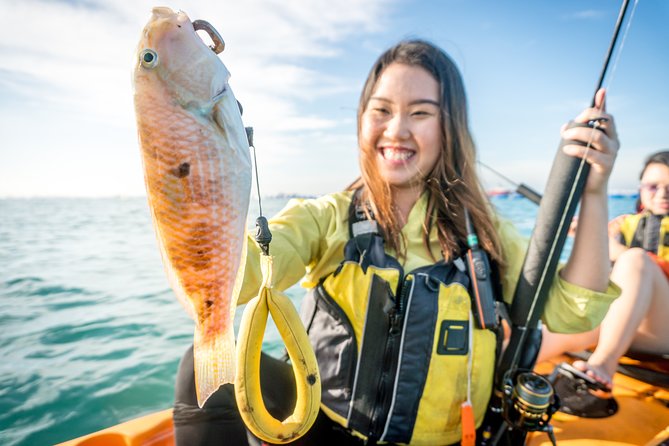
If you like the idea of fishing but don’t love the waiting part, kayak fishing in Singapore makes a lot of sense. Instead of sitting at one spot, you’re actively moving under your own power, which changes both your chances and your mindset. You’re out there long enough to feel like it’s a real outing, but short enough to fit into a half-day plan.
On this trip, you’re also not stuck with one kind of view. You start around Sentosa’s Tanjong Beach area and work your way through coastal scenes, beaches, and nearby islands that can feel quieter than central Singapore. That mix matters because it turns a single activity into a mini-adventure: fishing, scenery, and exploration in one.
And the tone is practical. Even if you’ve never fished from a kayak before, you’re not left to figure it out alone. You’ll get instruction plus the equipment so you can spend your energy learning technique rather than hunting down supplies.
Hobie Mirage Drive: Less Paddling, More Fishing Focus
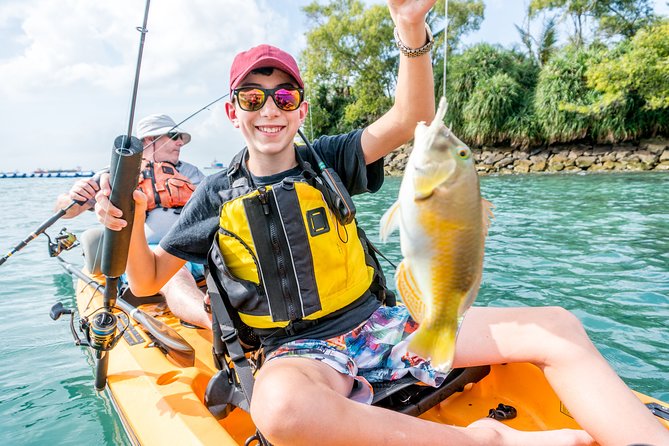
The kayak is doing a lot of the work for you. These are Hobie fishing kayaks with a leg-powered Mirage Drive system. In plain terms, you pedal instead of paddling with your arms. That’s a big deal for kayak fishing because arm fatigue can wreck your casting accuracy and your concentration.
What I like about this setup for most people is that it helps you keep a stable rhythm. You can settle into the movement, then concentrate on what you’re doing with your rod. It also tends to make the whole experience feel more like fishing and less like transport.
The trip also includes the kind of safety essentials you’d want for open-water time: a life jacket (PFD) and a VHF radio. The radio is there for communication, which adds reassurance when you’re out on the sea.
Gear, Bait, and Technique Coaching (Not Just a Cast-and-Pray Trip)
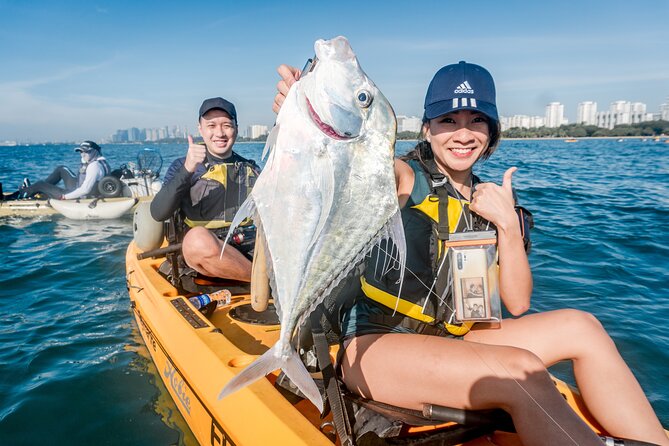
One of the best value features here is that you’re not paying for instructions only. You’re paying for the full setup: fishing rod and reel, bait, vests, and bottles of water. The tackle is specified as Penn and Shimano, which signals this isn’t mystery-gear day.
You also get a guide who teaches kayak fishing technique. That matters more than people think. When you fish from a kayak, small details—how you position yourself, how you handle the line, and how you keep control while moving—can make or break the experience. The feedback I saw repeatedly praised guides for being responsible and proactive, plus patiently walking people through the technique.
There’s also an attitude shift that happens once you understand the basics. Instead of feeling like you’re trying to catch fish, you start thinking like a kayak angler: where you’re headed, when to cast, and how to stay comfortable while the water moves around you. And that’s when the trip starts to feel both active and calming at the same time.
Your Route in 4 Hours: From Tanjong Beach to Palawan Beach (With Island-Hopping Along the Way)
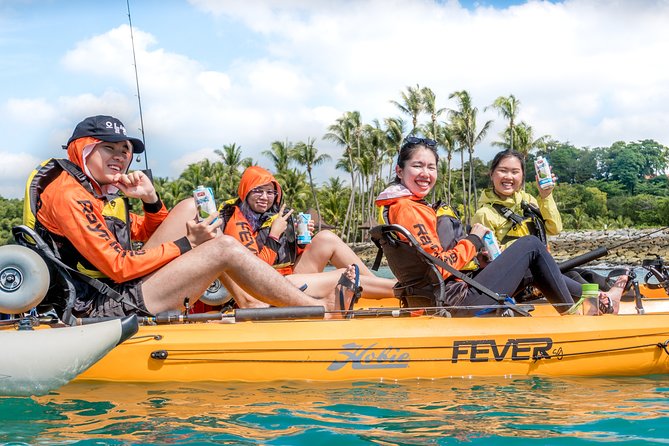
This tour is about 4 hours and returns to the meeting point. With a maximum of 12 travelers, you won’t feel like you’re being rushed through a crowd. You also get multiple scenery changes, which helps keep the outing from dragging.
Here’s how the route reads in real-life terms—what each stop is good for, and what to watch for.
Tanjong Beach (Start)
This is where the day begins at 120 Tanjong Beach Walk, Singapore 098942. Expect a briefing and getting comfortable before you head out. Starting here is helpful because you can build confidence on calm beginnings rather than jumping straight into harder conditions.
Consideration: take a moment to do your warm-up here—stretch your legs and get your balance sorted early, because once you’re moving, you want your body to already feel ready.
Sentosa Island
This segment is about getting the full Sentosa feel from the water. You’re in a different viewing angle than walking around the island, and it helps you understand what you’re seeing before you chase fishing spots.
What you’ll likely enjoy: the contrast between built-up Sentosa edges and more open water views.
Sentosa Merlion
This is a recognizable landmark stop. Even if you don’t care about sightseeing, it’s great for a quick photo moment and a mental reset.
Trade-off: if the sun is high, photos can be bright and a bit harsh. Sunglasses and sun protection help.
Siloso Beach
Siloso brings a classic Sentosa beach vibe. This stop is a useful way to break up the route and keep the outing from feeling like nonstop travel.
Watch for: this kind of coastal stop can be exposed. If you’re not used to sun on open water, keep your hat on and reapply sunscreen if you’re staying aware of your skin.
East Coast
This is where the fishing logic starts to feel real. The East Coast portion is tied to the idea of going after promising spots and giving you a stretch of water time to fish properly.
Why it matters: the longer you fish in a realistic pattern (casting, reeling, adjusting), the more you learn what works for you.
Lazarus Island
Lazarus is a named island stop, which usually means you’ll experience a shift in scenery and pace. The overview frames this area as part of Singapore’s richer reef zones and unspoilt beaches, which is exactly the reason kayak anglers love these kinds of stops.
Potential drawback: island-hopping can mean more distance covered, so you’ll want to stay hydrated and keep your focus on balance.
Changi Beach
Changi adds another coastal texture. It’s a chance to fish and reset again without it all feeling like the same shoreline.
Tip for your experience: if you’re new, treat each stop like a mini-practice session. You’ll pick up technique faster than trying to “do it right” only once.
Bedok Jetty
Jetties and structured areas can change how fish behave. A stop like Bedok Jetty fits the practical goal of finding places where lines can connect with real underwater action.
Consideration: structure can also be where tangles happen if you’re careless with line management. Go slow with your casts.
Changi Village
Changi Village is a change of pace. It breaks the purely marine feel and gives you a moment to notice the human side of the coast.
Why it’s valuable: variety keeps the whole trip enjoyable, especially for families or mixed-experience groups.
National Service Resort & Country Club
This is another named coastal area stop. It likely helps create a longer, scenic route while keeping the trip within a manageable 4-hour window.
What to expect: more “view and reset” than anything else, unless your guide times the fishing moments here.
Sentosa Island (Return Segment)
You pass back through Sentosa again, which helps keep the route connected to your home base and makes the full outing feel like one continuous loop rather than a one-way trip.
Pulau Ubin
Pulau Ubin is one of the best-known nature stops near Singapore. Having it in the mix gives the day extra meaning beyond fishing.
What you’ll likely enjoy: the chance to step away from just water and shoreline scanning, and to experience something more nature-focused.
Pulau Ubin Nature and Kampong Walk
This is an included stop that goes beyond kayaking. You’re not only in “cast mode.” You get a nature and kampong walk component, which can be great for families or for anyone who wants a break from being seated and focused on fishing technique.
Consideration: wear shoes that handle walking comfortably, since this part isn’t described as just standing around.
Sentosa Island (Final Return)
The route brings you back into Sentosa again near the end of the outing. This is usually when people are most ready for the final fishing push and the wrap-up.
Palawan Beach (End)
Palawan Beach is the closing scene. It’s a satisfying finish point because it feels like you’re back in a familiar, photogenic area while still having had a full route behind you.
Practical note: once the trip ends back at the meeting point, you’ll likely want to get cooled off and hydrated quickly—kayak days can be deceptively tiring.
Snappers and Groupers: How to Think About Your Chances
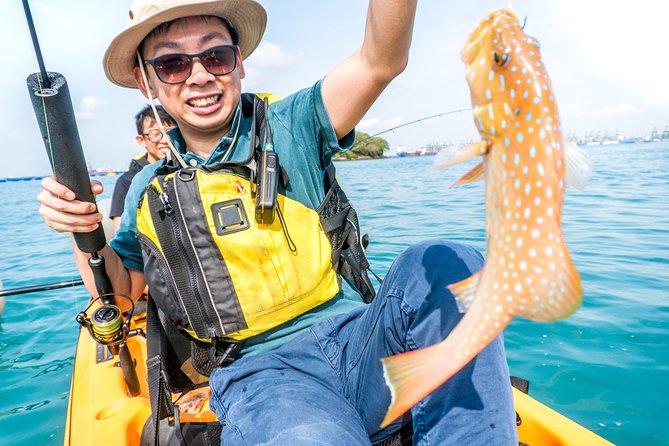
The fish you’re targeting include snappers and groupers. That’s a big part of why this trip is compelling: you’re not fishing for tiny thrills only. Even if you don’t land a trophy fish every time, you’re chasing species that make the effort feel worthwhile.
Here’s how I’d approach it to get the most out of the day:
- Treat technique as your real target. If you fish smarter (better line control, better timing), your odds improve.
- Don’t panic if the bite isn’t instant. Reefy and structured zones can take time to turn on. Your guide’s job is to help you stay in the right mindset and keep working the water.
- Use the route variety. Different coastline and island conditions mean you’re not stuck only in one style of spot.
From the experience feedback, people also left with a sense of accomplishment—caught some great fish and got strong photo results. The key is that the coaching helps you actually learn what you’re doing, not just randomly cast.
Sun, Water, and What to Bring: Stay Comfortable and You’ll Enjoy It More
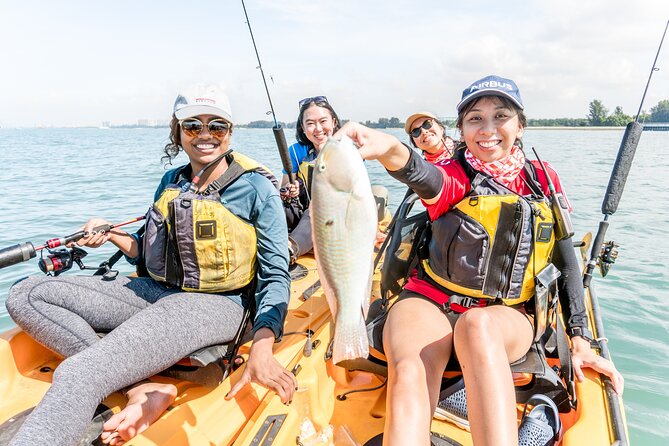
You get bottled water, but you still need to manage comfort yourself. The big one is sun. The feedback around this kind of outing often points out that it gets hot, so doing it earlier (when available) can make a noticeable difference.
You should bring:
- a hat (the trip explicitly says this)
- sunscreen and sunglasses (practical for long daylight exposure)
- a change of clothes if you want to feel civilized afterward
What you can count on: you’re wearing a life jacket (PFD), so don’t plan on needing your own buoyancy gear. And because the tour provides vests and tackle, your packing list is refreshingly short compared to many active tours.
Also remember: you’re in saltwater conditions. Even if you’re careful, you’ll feel wet air and sea spray, and you’ll want to be ready for that mentally and physically.
Price and Value: Is $120.41 Worth It in Singapore?
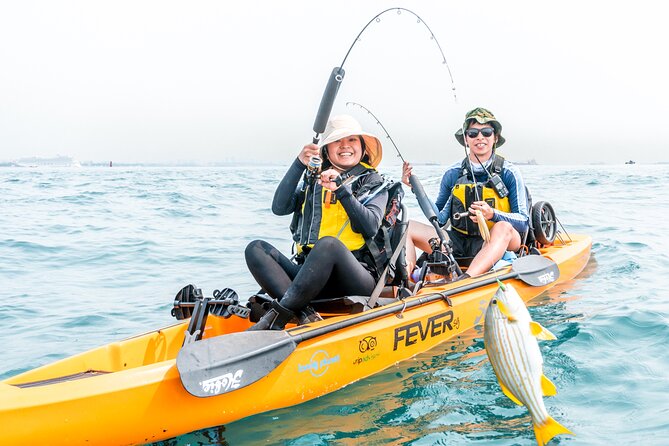
Let’s talk value. At $120.41 per person for about 4 hours, you’re paying for three things at once: a guided route on the sea, a high-quality kayak setup, and equipment support.
Many “budget fishing” experiences skimp on either the gear or the instruction. Here, you get:
- a Hobie fishing kayak with Mirage Drive
- rod and reel plus bait
- life jacket (PFD)
- safety support via VHF radio
- water
- and photos of your trip
When I add that up, it’s the type of cost that makes sense because you’re not renting a bunch of separate items or spending time figuring out how to rig tackle. For families and first-timers, that kind of bundling can be the difference between a fun outing and a frustrating one.
It’s also a smaller-group experience (maximum 12 travelers), which usually improves instruction quality. And since you return to the meeting point after 4 hours, you’re not buying a travel-heavy day either.
Who This Kayak Fishing Trip Is Best For
This works well for a lot of group types:
- First-time kayak anglers who want technique coaching and provided gear
- Couples who want an active break from city routines with scenic stops
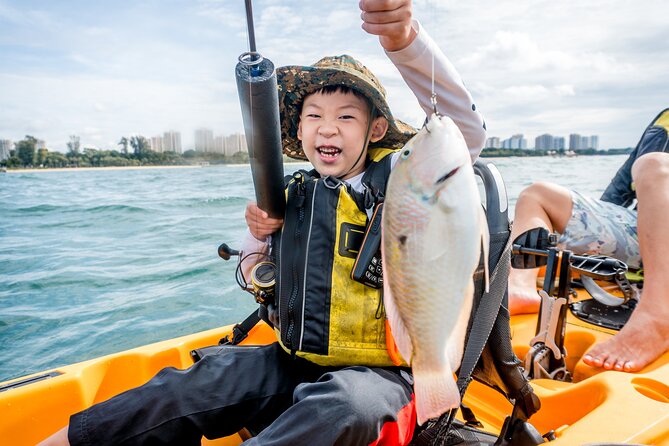
- Families with kids who benefit from structure, safety support, and a walk component at Pulau Ubin
- Friends who like the mix of sport plus photo-worthy scenery
If you’re the kind of person who likes to do things rather than watch things, you’ll probably enjoy the “active and therapeutic” feel people talk about—because you’re always doing something: pedaling, learning, casting, adjusting, moving.
If you hate heat or want purely calm sightseeing, you might still like it, but you should be strategic about timing and sun protection.
Should You Book Kayak Fishing Fever in Sentosa?
I’d book it if you want a guided kayak fishing in Singapore experience that feels like more than just a tutorial. The leg-powered Mirage Drive setup is a real quality upgrade, and the trip’s structure gives you multiple chances to practice technique while seeing a good mix of Sentosa coast, East Coast areas, and a nature-focused Pulau Ubin stop.
I’d pass or think twice if you’re very sensitive to sun and open-water conditions. Bring your hat, plan for heat, and pick a departure time that suits you. The best days here are the ones where you stay comfortable enough to enjoy the whole route.
If you’re ready for active fun with guided support, this is the kind of outing that leaves you with both memories and the satisfaction of learning a new skill.
FAQ
How long is the kayak fishing trip?
It runs for about 4 hours (approx.) and ends back at the meeting point.
Where does the tour start?
The meeting point is at 120 Tanjong Beach Walk, Singapore 098942.
How many people are in the group?
This activity has a maximum of 12 travelers.
What’s included, and do I need to bring my own gear?
You get a Hobie fishing kayak with a leg-powered Mirage Drive, a fishing rod and reel, bait, life jacket (PFD), bottled water, and a VHF radio. Photos of your trip are also included. The trip specifically says all you have to bring is your hat.
What fish can I target?
The trip describes targeting tropical fish such as snappers and groupers.
What happens if the weather is poor?
This experience requires good weather. If it’s canceled due to poor weather, you’ll be offered a different date or a full refund.