REVIEW · KRABI
Krabi: Klang Cave, Bangtong Temple with Bor Thor Kayaking
Book on GetYourGuide →Operated by Anda Krabi Seatour · Bookable on GetYourGuide
Dark caves and paddle strokes in one day? Krabi’s Klang Cave plus Bor Thor kayaking mixes big stalactites with wet, wild scenery. I love how the day shifts quickly from sea-cave calm to dark cave corridors, and I like that you end with a temple visit tied to the King. The main drawback to plan around: caves can get muddy and some paths aren’t smooth, so sturdy shoes matter.
The day starts with pickup around Ao Nang and nearby beach areas, then heads out to the Ao Luek District to trade city noise for jungle quiet. You’ll go with an English-speaking guide, get a flashlight for the cave, and enjoy lunch included before the temple.
There’s a lot packed into about 5.5 to 7 hours, so go in with a steady-pacing mindset: walking, cave halls, then shoe-off temple time.
In This Review
- Key highlights worth marking on your map
- How the Ao Luek District pickup shapes the whole day
- Bor Thor kayaking: sea caves, limestone walls, and wildlife moments
- Hua Ga Lok (Ghost Cave): the wall paintings you’ll want to see clearly
- Klang Cave’s 13 halls: stalactites, darkness, and the “watch your step” reality
- Flashlight, pacing, and how to avoid feeling rushed in Klang Cave
- Lunch at Bor Thor: fuel before the temple
- Wat Maha That Wachiramongkol (Bang Tong Temple) in rubber trees
- Price and value: does $81 feel fair for this packed 5.5–7 hour day?
- What to bring (and what to skip) for caves and temple shoe rules
- Small-group feel and English guidance: how it affects what you see
- Who this Krabi tour fits best
- Should you book Klang Cave + Bang Tong Temple with Bor Thor kayaking?
- FAQ
- How long is the tour?
- Where do you get picked up and dropped off?
- What’s included in the price?
- Do I need to bring a flashlight?
- What should I wear for the temple?
- Can I bring luggage or a big bag?
- Is kayaking included, and where does it take place?
- What about cancellation or booking flexibility?
Key highlights worth marking on your map
- Bor Thor sea-cave kayaking for limestone scenery and a good chance of seeing wildlife
- Hua Ga Lok (Ghost Cave) wall art estimated to be around 3,000 years old
- Klang Cave’s 13 interior halls plus the stalactite-stalagmite show
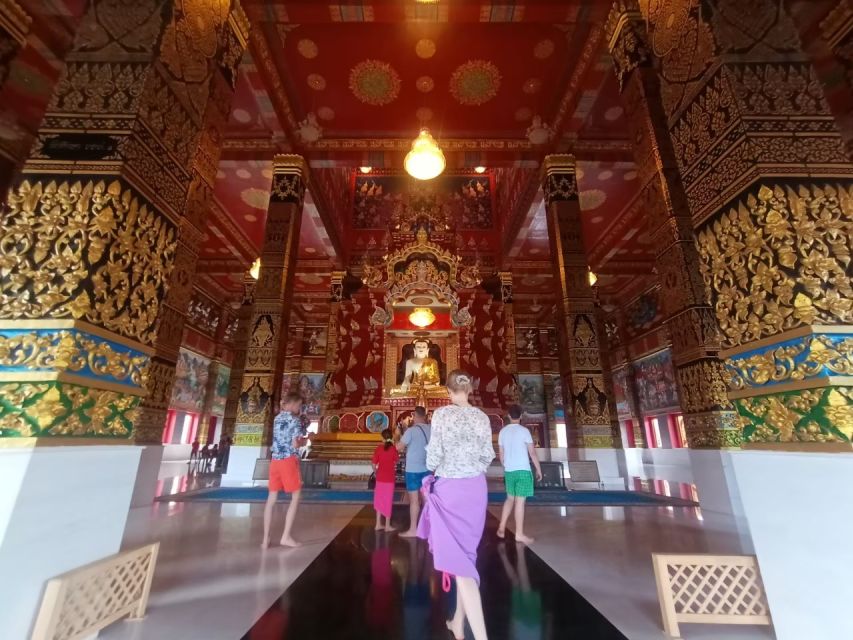
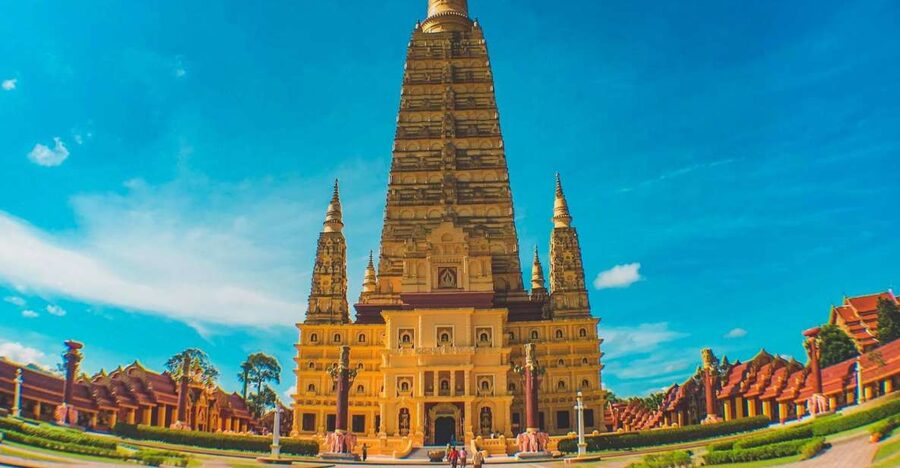
- Wat Maha That Wachiramongkol (Bang Tong) in a rubber plantation with a tall pagoda
- English-speaking guide support (including guides like Bee and Maan, known for practical explanations)
- Bring the right footwear and socks because mud happens and temple stones can feel hot
How the Ao Luek District pickup shapes the whole day

This is one of those Krabi days where the logistics actually help you enjoy it. You get hotel pickup from several spots around Ao Nang, Khlong Muang, Pak Nam, and Nong Thale, then you’re off toward Ao Luek District. The shift matters. Once you’re out of the main tourist bustle, the area feels cooler, greener, and quieter, which sets you up for caves that are tight, dark, and very close up.
Because you’re on a schedule (about 5.5 to 7 hours total), you’ll want to treat the morning as “get moving.” This tour keeps things efficient without feeling rushed, mostly because the activities are grouped: kayaking first, then cave time, then lunch, then the temple.
Also, the tour runs with small groups or private options, which usually makes it easier to follow the route, hear instructions, and ask questions when you need clarity.
You can also read our reviews of more tours and experiences in Krabi.

Bor Thor kayaking: sea caves, limestone walls, and wildlife moments
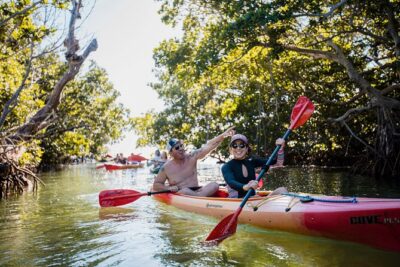
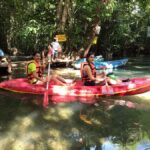
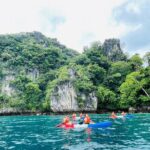
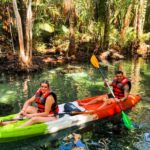
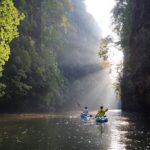
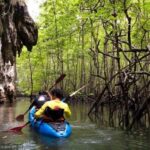
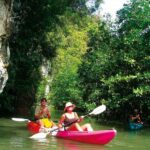
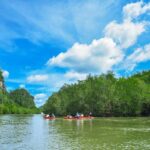
Kayaking at Bor Thor is the easiest part to love and the one most people remember clearly. You start by paddling through a sea cave where limestone formations shape the passage. Even if you’ve seen caves before, the difference here is the water setting: you’re moving slowly, watching rock textures from a new angle, and feeling how the cave shapes the light.
One small detail that can make your kayaking smoother: you’ll be in the water environment first thing, so expect splash and wet gear. If you’re worried about comfort, dress like you’re going to get damp. After rainy season, conditions can be extra slick, and that affects how you move on rock when you step in and out.
On the wildlife front, I’d keep your eyes open. It’s possible to spot monkeys and rare birds during the kayak segment. You won’t control what shows up, but the route gives you chances because you’re low to the water and moving at a human pace.
And yes, your guide matters here too. You’re not just rowing; you’re learning what you’re passing and why it’s worth noticing. People have had standout experiences with guides like Maan, praised for clear English and solid facts, and that’s the difference between seeing scenery and understanding it.
Hua Ga Lok (Ghost Cave): the wall paintings you’ll want to see clearly
After the sea cave paddle, the day continues to Hua Ga Lok, also known as Ghost Cave. The big draw is the ancient wall paintings, estimated to be around 3,000 years old. Even if you don’t read the paintings like a textbook, it’s the scale of age that hits you.
This is the part where being ready for cave conditions pays off. Cave lighting can be uneven. That’s why the tour provides a flashlight. It’s not about turning the place into a theme park. It’s about seeing the features you’re supposed to look at, and keeping you steady on the route.
If you’re visiting after rain, plan for damp stone and muddy areas. One practical lesson from real conditions: avoid super-fragile footwear. If your shoes are thin and delicate, mud and wet rock can ruin them fast. I’d rather you sacrifice comfort than traction.
Klang Cave’s 13 halls: stalactites, darkness, and the “watch your step” reality
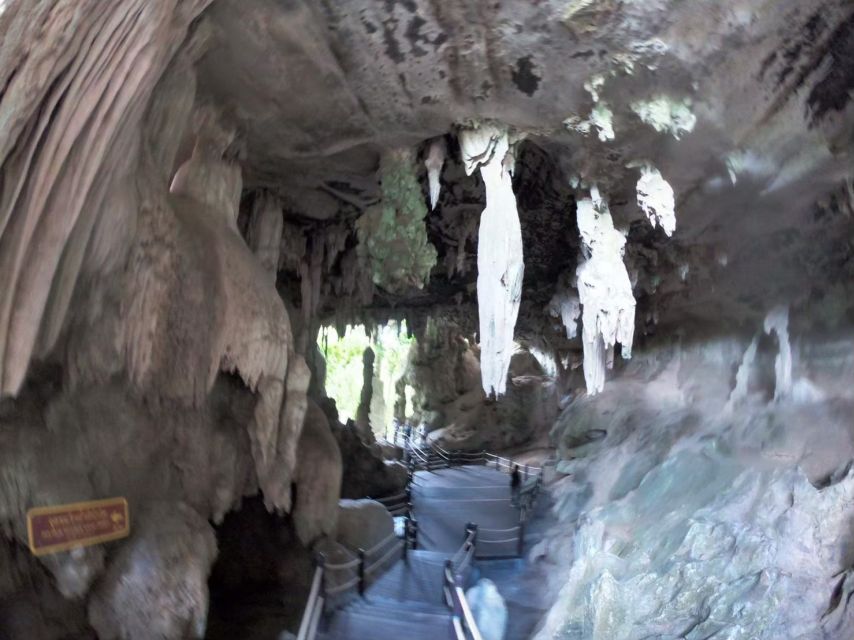
Klang Cave is the main show. It’s described as the second-ranked most beautiful cave in Asia, and it’s also known for being a completed stalactite-and-stalagmite cave experience. In plain terms: you come for the formations, but you stay for how the route is set up and paced.
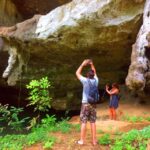
Here’s what to expect once you start: the walk begins through dark, deep, and fairly complex cave corridors. The tour moves through 13 interior halls, which means the cave isn’t one long tunnel photo session. You’re switching spaces, changing viewpoints, and getting repeated “wow” moments, especially once you hit the early highlights.
Timing is a useful guide. For non-cave explorers, about 1 to 2 hours is typical for taking in all halls. But if you’re wondering where to focus your attention, prioritize the first three rooms. Those early areas are worth it if you want the strongest memories without feeling like you have to rush the whole route.
Now the important consideration: the cave route isn’t always smooth. Some sections may need climbing activity, and parts of the trail can be uneven or require careful footwork. You don’t need to be an athlete, but you do need footwear that can handle wet rock and steps. A trekking or climbing-ready outfit (comfortable, not restrictive) will make the experience easier.
Also, the tour uses a guide-led approach, so listen before you go in. If anything looks tricky, ask how to handle it. You’ll feel less stressed when you’re moving with the right cues instead of guessing.
Flashlight, pacing, and how to avoid feeling rushed in Klang Cave
This is a cave day, so you should plan for “low visibility energy.” You’ll have a flashlight included, which helps you follow the route and see details. Still, don’t treat the light like a free pass to speed ahead. Moving carefully is what makes caves enjoyable instead of exhausting.
A simple rhythm works well:
- stop to look when your guide signals it
- keep your pace steady so you don’t get strung out from the group
- save extra attention for the early halls and then keep a relaxed focus
If you get a bit tired, that’s normal. Cave temperatures feel different, and darkness makes walking feel slower. Having an English-speaking guide helps because you’ll understand what you’re seeing and why the guide wants you to pause in certain spots.
And if your guide’s English isn’t perfectly smooth, that’s still okay. The cue you want is practical: where to step, when to stop, how to move safely. Guides like Bee and Maan have been praised for their ability to bring context, which is what makes the cave feel like a story instead of just a walk.
Lunch at Bor Thor: fuel before the temple
After the cave time, you’ll eat lunch at a local restaurant at Bor Thor. This is one of the best parts of a long day because it gives you a reset. You’ll have a chance to warm up, sit down, and get real food before your temple visit.
From what’s been served, the lunch is homemade Thai food made by the family behind the meal. That matters because it’s not a generic tourist buffet feel. You’re more likely to taste dishes that actually match the area and the day’s pacing.
One practical tip: if your body feels a little sticky from cave dampness, take your time before you start the temple segment. It’s a long day and temples require a different kind of attention than caves.
Wat Maha That Wachiramongkol (Bang Tong Temple) in rubber trees
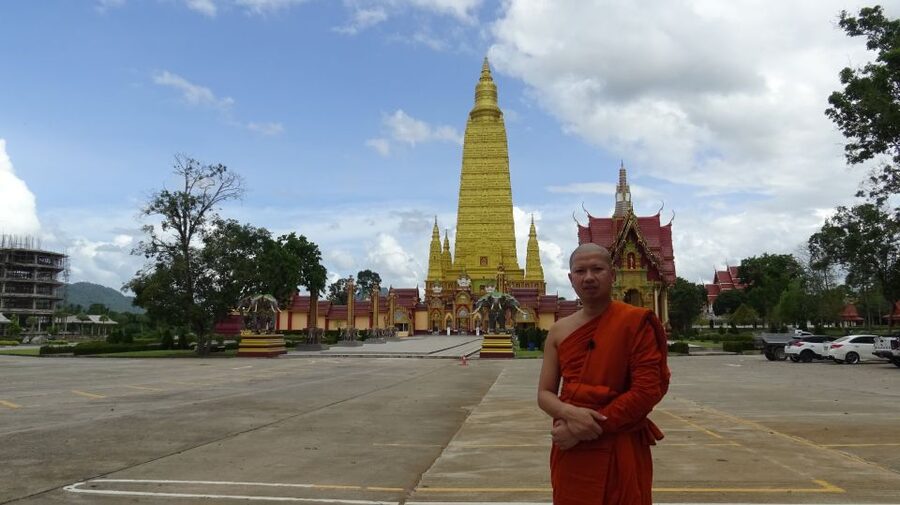
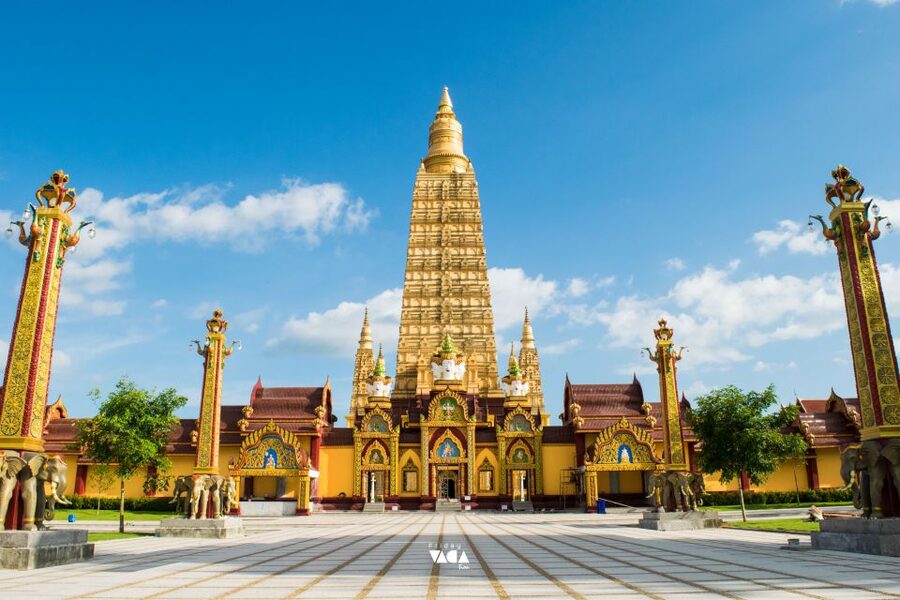
The last big segment is the temple stop, Wat Maha That Wachiramongkol, formerly known as Bang Tong Temple. This isn’t a quick photo-and-go. You’ll worship there and learn what the temple means to the local community.
The setting is striking. The temple sits in the middle of a rubber plantation, and it has a tall pagoda that’s described as a pride point for locals. That rubber-tree backdrop is part of why the temple feels grounded rather than staged. You’re not just inside a sacred building—you’re stepping into a living landscape of work, community, and worship.
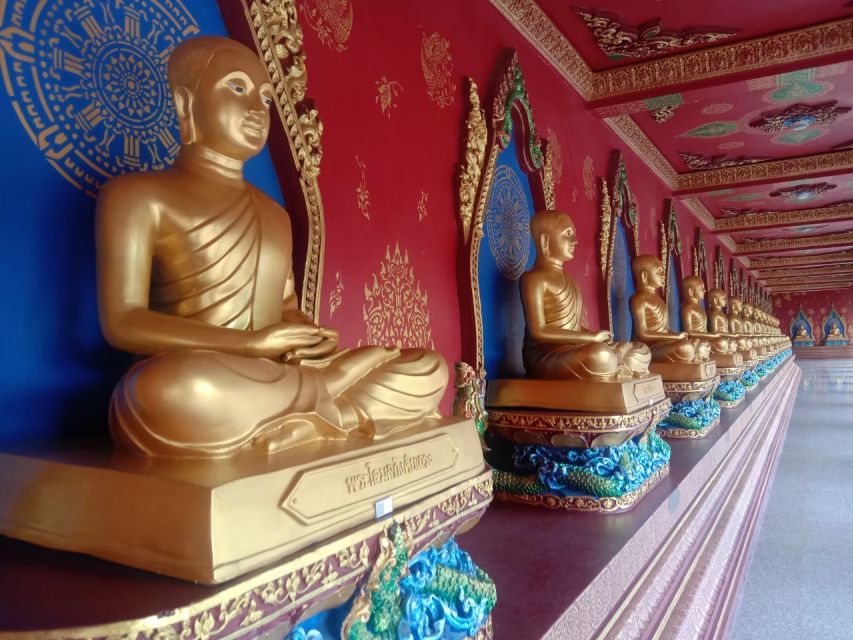
During the visit, you’ll hear about the temple’s history and its links to the King. You’ll also learn about holy relics found inside. Even if you’re not deep into religious study, this kind of context changes the experience. The temple becomes less about decorations and more about why people care for the place.
A key real-world note: you’ll be asked to dress modestly and to remove your shoes inside. Stones around temple areas can feel hot, especially under strong sun. To make shoe-off time easier, consider bringing socks, and plan for a quick swap into something you can walk in comfortably.
Price and value: does $81 feel fair for this packed 5.5–7 hour day?
At about $81 per person, this tour doesn’t feel like a cheap add-on, but it also doesn’t feel inflated for what you’re getting. You’re paying for multiple “cost centers” in one day:
- Transportation via hotel pickup and drop-off
- Lunch included
- Flashlight provided for the cave route
- An English-speaking guide
- Kayaking at Bor Thor, which is a distinct activity, not just a photo stop
- Accident insurance
The value really comes from the mix. Many Krabi tours do one cave or one temple. This one bundles sea-cave kayaking, a cave with ancient wall paintings (Hua Ga Lok), the bigger Klang Cave route, and then a temple tied to the King. If you’re short on time and you want variety without spending extra days hopping between sites, the structure makes sense.
The only reason it might not feel worth it is if you hate wet conditions or you know you won’t enjoy cave walking with uneven sections. If that’s you, another style of tour might suit better. But if you’re comfortable with caves and outdoors, $81 is a solid deal for a full day.
What to bring (and what to skip) for caves and temple shoe rules
Think practical. This is a day where details matter.
Bring:
- Comfortable shoes with grip for wet rock
- Socks, especially helpful since you may need to take shoes off at the temple and stones can run hot
- A modest outfit for temple time (shoulders covered, long pants or long skirts)
Skip:
- Any fragile items you’d hate to get wet or muddy
- Luggage or large bags, since those aren’t allowed
Dress code matters for the temple. Cover shoulders and wear long skirts/pants. Plan your clothing like you’re going to be outdoors, then respecting a sacred space afterward.
Also, this tour isn’t suitable for pregnant women. If anyone in your group has mobility concerns, you’ll want to choose carefully because the cave route can include climbing-type movements.
Finally, leave pets at home. No pets are allowed.
Small-group feel and English guidance: how it affects what you see
One underrated part of this experience is how much your guide shapes it. The tour includes English-speaking guidance, and you can end up with a big difference between seeing things and understanding them.
People have specifically mentioned guides like Bee and Maan. Bee’s English may not always be perfect, but the overall guidance approach can still be strong. Maan, on the other hand, has been praised for solid English and good facts. If you care about explanations—why certain cave areas matter, what you’re looking at, why the temple connects to the King—pick this tour partly for the guidance quality, not only the scenery.
Small or private group availability also helps. It makes it easier to stay together in caves and keep questions from turning into awkward timing issues.
Who this Krabi tour fits best
This is a great choice if you want:
- a single-day combo of kayaking + two cave experiences + a major temple
- active sightseeing that still comes with context
- a guide-led cave route where you don’t have to figure everything out yourself
It’s less ideal if:
- you’re very sensitive to mud or wet conditions
- you don’t do well with uneven cave floors or possible scrambling
- you need strict accessibility accommodations (the cave walk can involve climbing activity)
If you’re traveling solo, the small-group approach can still feel friendly. If you’re traveling with friends, this format reduces planning stress because pickup, guides, lunch, and activity sequence are handled.
Should you book Klang Cave + Bang Tong Temple with Bor Thor kayaking?
Book it if you want a real Krabi “variety day” that still feels coherent: water-world views, cave formations with real darkness, then a temple stop rooted in local community and royal connections. The biggest reasons to say yes are Klang Cave’s 13-hall route and the combination of sea-cave kayaking plus Hua Ga Lok wall paintings.
Don’t book it if you know caves aren’t your thing or if wet, muddy conditions would ruin the experience for you. Also be honest about clothing and footwear. If you can’t handle shoe-off temple time or uneven cave paths, you’ll spend the day thinking about discomfort instead of the sights.
If you’re the kind of traveler who likes nature plus cultural context, this tour is a strong match.
FAQ
How long is the tour?
The duration is about 5.5 to 7 hours. Starting times vary, so check availability for the schedule.
Where do you get picked up and dropped off?
Pickup and drop-off are available from multiple locations around Ao Nang, Khlong Muang, Pak Nam, and Nong Thale, including Tup Kaek Sunset Beach Resort.
What’s included in the price?
Hotel pickup and drop-off, lunch, flashlight, accident insurance, an English-speaking tour guide, and Bor Thor kayaking are included.
Do I need to bring a flashlight?
A flashlight is included, but you should still follow your guide’s instructions once inside the cave.
What should I wear for the temple?
Dress modestly: cover shoulders and wear long skirts or long pants. You’ll also need to remove your shoes.
Can I bring luggage or a big bag?
No. Luggage or large bags are not allowed.
Is kayaking included, and where does it take place?
Yes. Bor Thor kayaking is included, and you kayak through a sea cave with limestone formations.
What about cancellation or booking flexibility?
You can cancel up to 24 hours in advance for a full refund. You may also be able to reserve now and pay later, depending on the booking option shown.