REVIEW · MALLORCA
Pollença: Kayak Discovery – Snorkeling and Caves
Book on GetYourGuide →Operated by Mon d'Aventura · Bookable on GetYourGuide
A kayak, a cave, and clear water in Mallorca. This Pollença area route is a fun mix of turquoise paddling and sea-cave entry, with snorkeling and cliff jumps when conditions (and your nerve) allow. One key consideration: it’s not for non-swimmers, and the longer cave stop depends on sea state.
I like that you don’t just get thrown on the water. Before you paddle out, you get a proper safety briefing plus simple technique coaching (paddling, navigation, and rescue basics), so you’ll know what to do instead of guessing.
At about $88 for roughly 2.5 hours, the value is in what’s included: full technical equipment, a local professional guide, and serious safety gear like a first-aid kit plus VHF radio support. Just note: the live guide shares info in several languages, including English, which helps if you want to understand the coastline story while you go.
In This Review
- Kayak Discovery at Cala Molins: the route vibe you’re signing up for
- Cala Sant Vicenç coaching: why the safety talk matters more than you think
- Snorkeling and cliff-jumping: how the stop moments work in real life
- Entering a 40m sea cave by kayak: when it happens and what to notice
- The itinerary in plain terms: what you’ll do for 2.5 hours
- Price and value: is $88 a good deal for Mallorca kayaking?
- Who this tour suits best (and who should skip it)
- The guide experience: local know-how and calm leadership
- Should you book Pollença Kayak Discovery: Snorkeling and Caves?
- FAQ
- How long is the kayak tour?
- Where do we meet for the tour?
- Is snorkeling included?
- Do you actually go into sea caves?
- Can I go cliff jumping?
- Do you provide the equipment?
- Is the tour suitable for non-swimmers?
- What’s the minimum child age?
- What should I bring?
- What languages does the guide speak?
Kayak Discovery at Cala Molins: the route vibe you’re signing up for
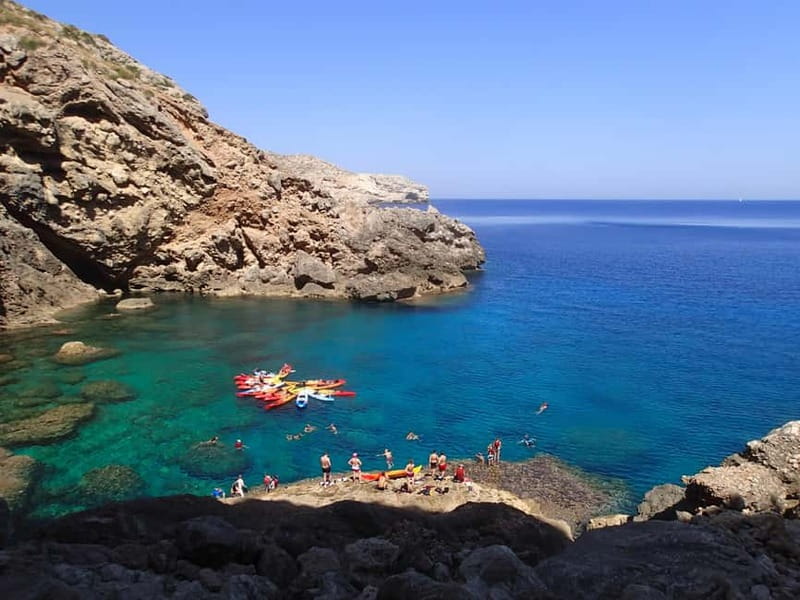
You meet at the beach at Carrer de Cala Molins, 4, with plenty of free parking nearby. Your kayak is set right on the sand, positioned where you can launch without a long carry—nice when you’ve still got sunscreen to apply and coffee to forget about. From there, the tour quickly gets you to the Cala Sant Vicenç area, where the water color turns properly eye-catching.
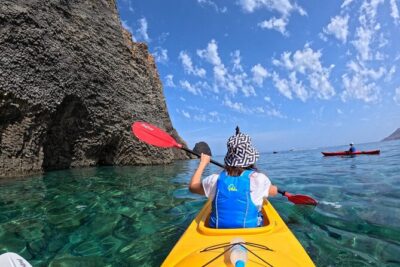
This isn’t a long, strenuous expedition. The emphasis is on moving calmly along the coast and using the coastline’s natural features—reefs, cliffs, and those limestone/karren shapes you see along the shore—to create short, memorable moments: pause for snorkeling, take a breath before another paddle section, and only do the cliff jump if you feel good about it.
The overall rhythm matters. You’re not stuck in a “line-wait-and-stare-at-the-guide” tour. You get guidance, then you get water time—enough to feel like you did something special, without turning it into a full-day challenge.
Cala Sant Vicenç coaching: why the safety talk matters more than you think
Before you start kayaking, you’ll do a short safety briefing—about 10 minutes—then get practical instruction that focuses on what keeps you steady and in control. The tour includes a theoretical explanation on land first, covering basic kayaking technique plus rescue basics, paddling, and navigation. It’s the kind of prep that helps you react fast if something feels off.
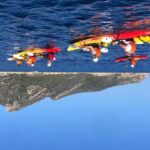
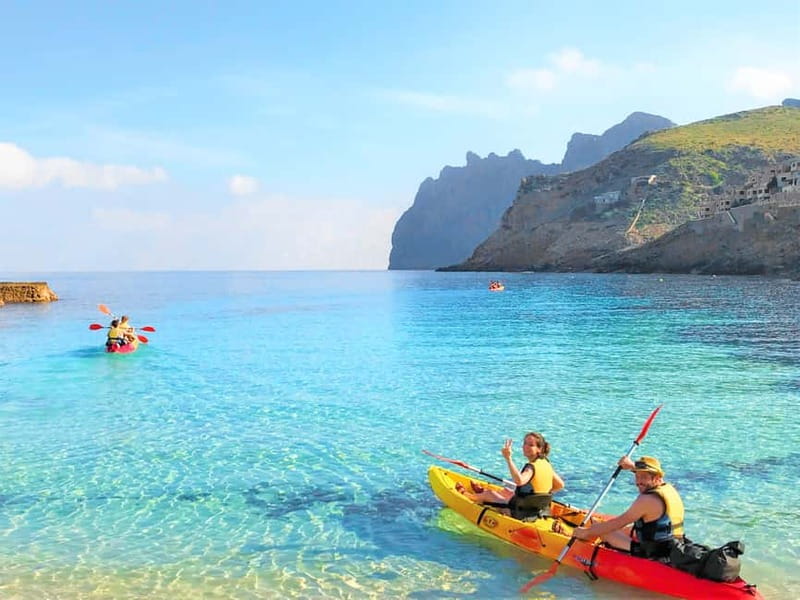
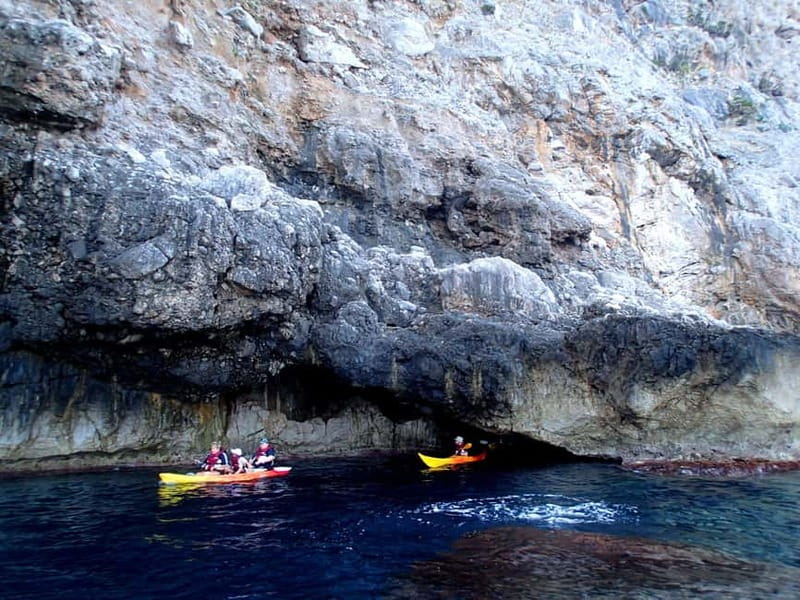
Once you’re on the water, the guide keeps things simple: you’ll paddle calmly through the bay, then move toward wilder corners of the area. Expect to go between reefs and under impressive cliffs that rise over 300 meters. That setting looks dramatic from shore, but on a kayak it becomes workable—because you’re traveling slowly and with a plan.
I also appreciate the “real-world safety” side of the setup. The tour includes accident insurance and liability coverage, plus a first aid kit, VHF radio, and a mobile phone. You might not think about those details until you need them, but they’re part of why this activity feels like a responsible way to play near the rocks rather than a DIY gamble.
You can also read our reviews of more tours and experiences in Mallorca.


Snorkeling and cliff-jumping: how the stop moments work in real life
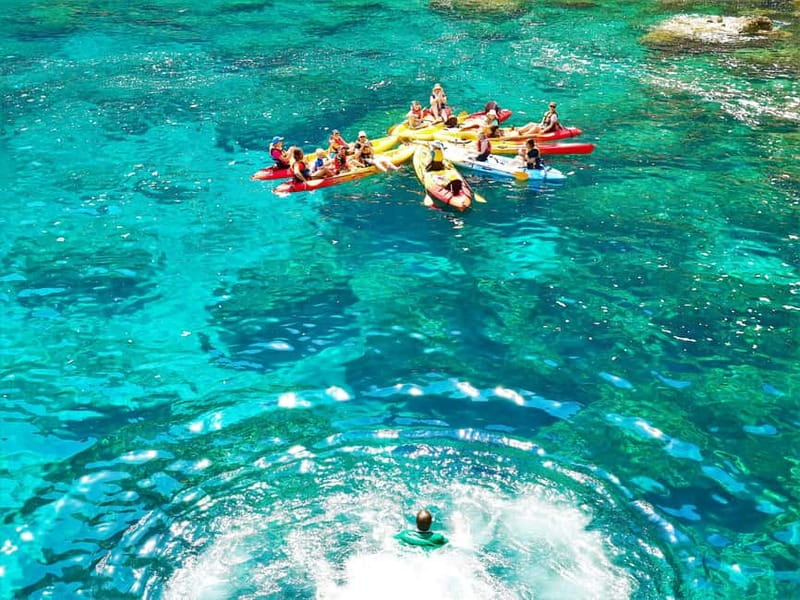
The fun part is the mix: snorkel, cliff-jump, or just relax. The tour builds in stops on demand, so you’re not locked into one rigid activity order. That flexibility is ideal in a family setting, because different people have different comfort levels.
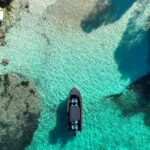
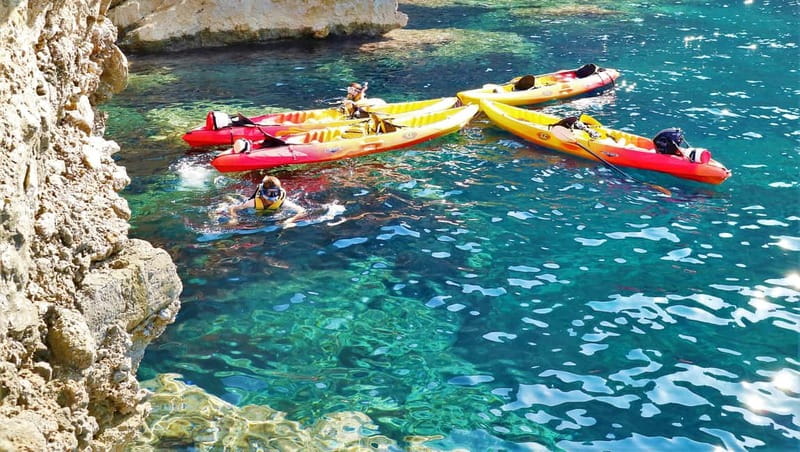
When you snorkel, you’re heading into transparent water where you can spot fish in different sizes and colors. That’s exactly what you want in Mallorca: clear visibility close to shore, not a distant “maybe there’s a fish” situation. If you’re new to snorkeling, the guide’s role is huge here—helping you get oriented and comfortable so you can actually enjoy what’s around you.
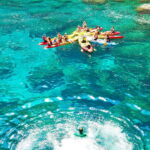
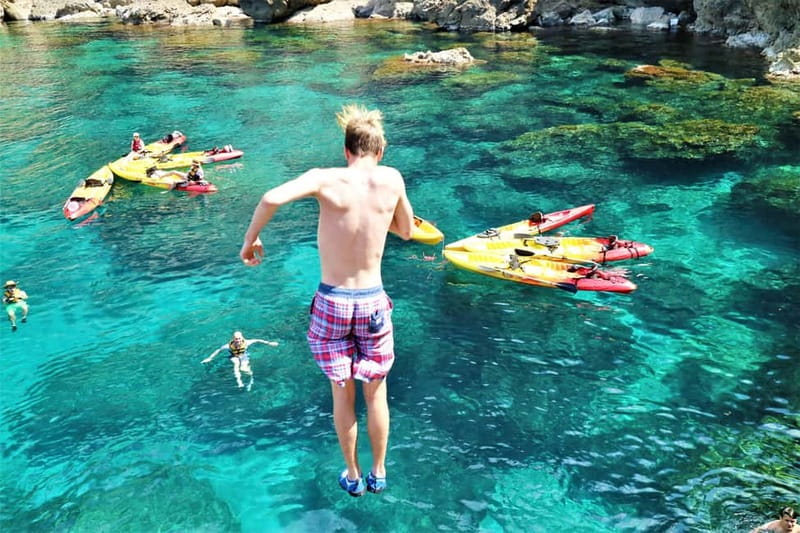
Cliff jumping is also part of the experience, but it’s rock-based and short-burst. You’ll be jumping into the sea from cliff/rock points, rather than doing anything that feels like a full stunt setup. In at least one instance, even people who weren’t expecting it ended up joining the jump activity—so long as the guide felt it was manageable. Still, if you’re cautious, you can always choose the “relax and swim” option and keep the day fun without forcing anything.
Tip for you: bring snacks and water. Between paddling and stopping for swimming time, you’ll work up an appetite faster than you expect.
Entering a 40m sea cave by kayak: when it happens and what to notice
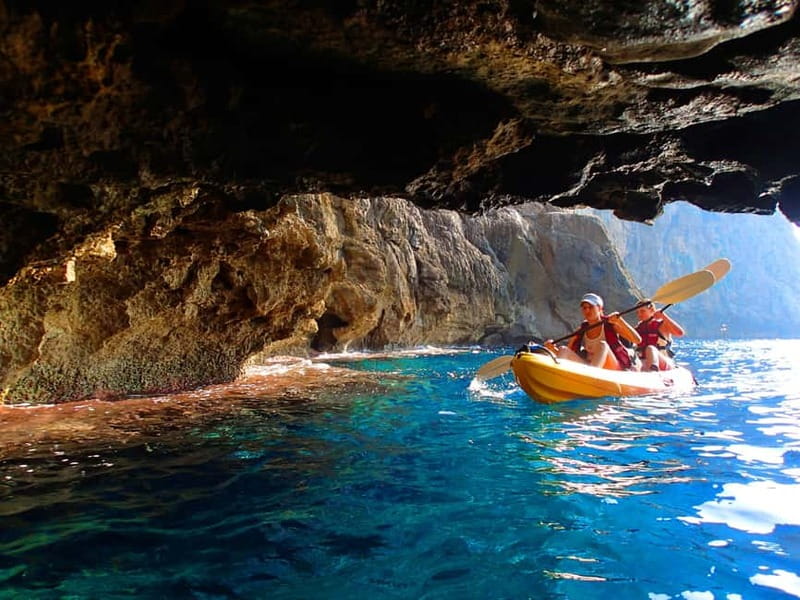
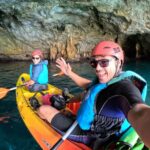
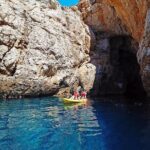
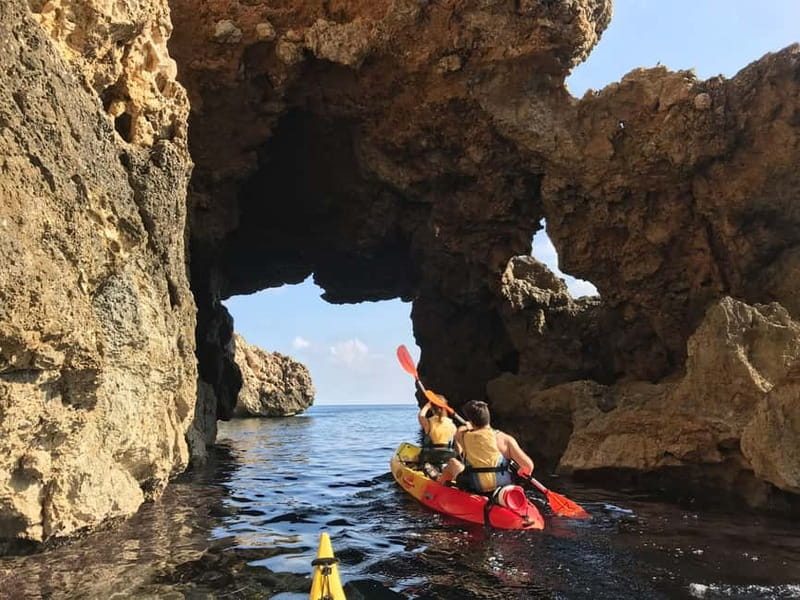
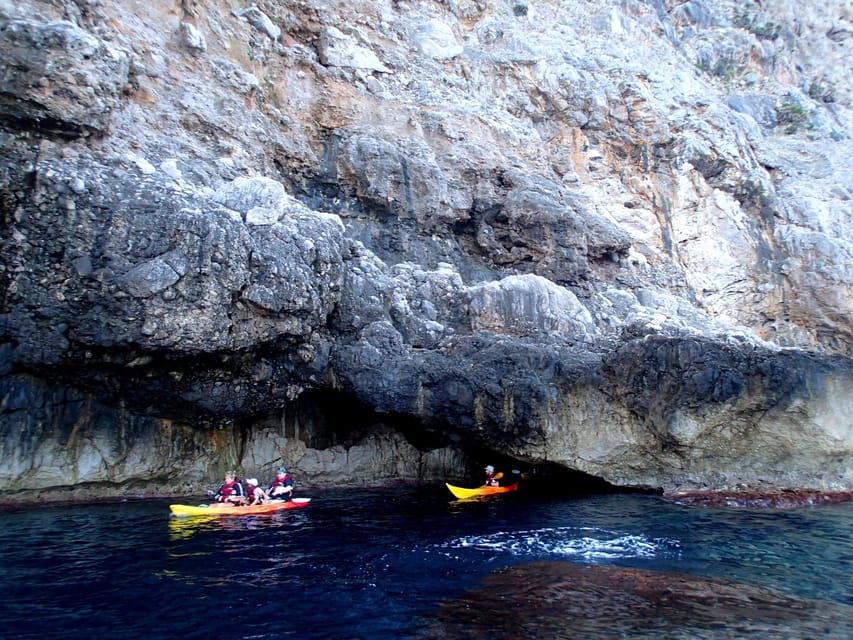
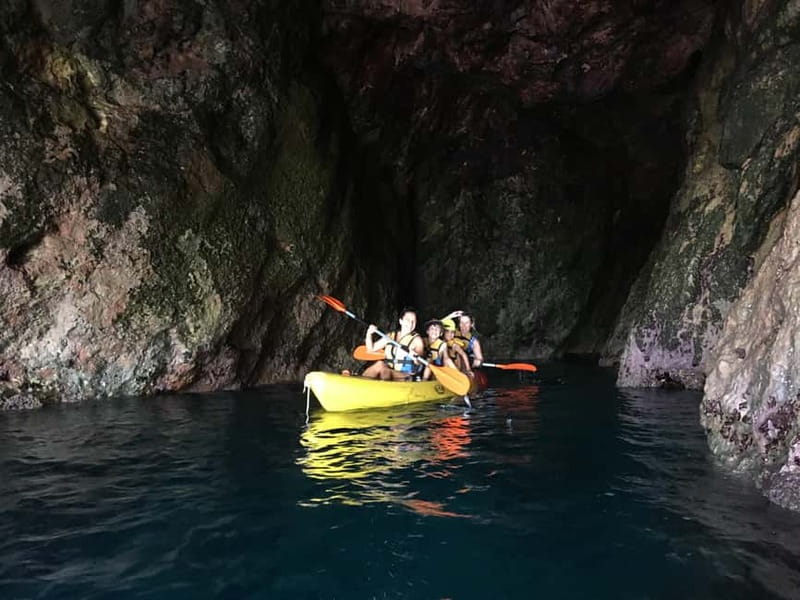
One of the most memorable claims here is kayaking into a sea cave that’s more than 40 meters long. If the sea conditions allow it, your guide will take you in—kayak-first, so you experience the cave as a moving pocket of water rather than a viewpoint.
A cave like this changes your sense of scale. Outside, the cliffs look massive; inside, the rocky walls feel close and the light shifts across the water surface. You also get a quiet kind of thrill—because you’re not just staring at a hole in the rock. You’re gliding into it, controlled by your own strokes and the guide’s pacing.
There’s one consideration to keep in mind: the cave stop is conditional. Even if you’ve booked the idea of “cave entry,” the tour notes that it depends on sea conditions. On a different day, you might focus more on snorkeling and coastal cruising than on pushing deeper into the cave system.
That flexibility can actually be a good thing. It prevents the tour from feeling reckless, and it means your time still works even if conditions aren’t ideal.
The itinerary in plain terms: what you’ll do for 2.5 hours
Here’s the tour flow as it feels on the water:
- You start at Carrer de Cala Molins, 4, meeting on the beach at Cala Molins.
- You move to Cala Sant Vicenç and begin with a safety briefing (about 10 minutes).
- Then you spend the bulk of the tour kayaking—around 2.33 hours—with calm paddling through the bay and onward toward more dramatic coastline sections.
- Along the way, you pause for snorkeling, cliff jumping, or simple relaxation depending on what you want to do and what the conditions allow.
- Finally, you return back the same way to the starting area at Carrer de Cala Molins, 4.
The key is that this structure keeps the day active without rushing. You get enough time to feel “on the water” and not just “on a boat for a quick photo.” And because activities are flexible, you can tailor your day: more snorkeling if you like marine life, more cliff time if you’re feeling brave, or a relaxed mix.
Price and value: is $88 a good deal for Mallorca kayaking?
For $88 per person (for roughly 2.5 hours), you’re paying for three things: instruction, gear, and safety planning. The cost isn’t just “a kayak rental.” You’re getting the guided experience along the coastline, with the guide teaching technique on land and then supporting you on the water.
You also get complete technical equipment, plus accident and liability insurance. Add the first-aid kit, and the fact that there’s VHF radio and mobile phone coverage, and you’re not just buying adventure—you’re buying a managed outing.
If your goal is to see Cala Sant Vicenç from the water, snorkel in clear coastal conditions, and try at least one “wow” moment like a cliff jump or cave entry, the package makes sense. If you’re only interested in paddling from point A to point B with no swimming or cave time, you might want a simpler activity. But if you want the full mix, this price lands in the reasonable zone for what’s included.


Who this tour suits best (and who should skip it)
This is a family-friendly kayaking experience in the practical sense: the route is designed to be manageable, and the guide supports you during technique and activity stops. That said, it’s not for everyone.
It’s not suitable for children under 7 years, and it’s also not for non-swimmers. If anyone in your group isn’t comfortable in open water, you’ll need to rethink this activity.
If you’re comfortable with water but still want help, you’ll likely enjoy the coaching format. And if you like coastlines, you’ll appreciate the combination of cliffs over 300 meters, reefs, karst formations, and those secret-feeling coves you can only reach by boat.
One more “fit” note: this tour works best when you bring swimwear, sunscreen, and snacks. You’re on the water long enough that basic comfort matters more than you think.
The guide experience: local know-how and calm leadership
The biggest difference between a fun kayaking day and a stressful one is the person running the show. Here, the guide is local and professional, and the languages offered include Spanish, German, French, Catalan, and English.
I’ve seen how much the guide can affect the day in conditions that don’t cooperate. When weather can be unpleasant, the experience can shift from “everyone does everything” to “more focused support for the group.” That kind of adaptation is a good sign, because it means the guide keeps safety and enjoyment balanced rather than forcing a set agenda.
In past trips, guides like Miquel have stood out for making the whole thing feel like a game—fun, structured, and not overly serious while still being responsible. If you like local coastline context, that human touch helps: the best days aren’t just about clear water, they’re about understanding what you’re looking at as you go.
Should you book Pollença Kayak Discovery: Snorkeling and Caves?
If you want a 2.5-hour Mallorca adventure that combines kayak time + snorkeling + a real coastline setting, this is a strong choice. The value is in what you get (equipment and safety support) and the variety in how you can spend your time on the water.
Book it if:
- you can swim confidently,
- you’re okay with a conditional cave stop depending on sea conditions,
- you want guided technique—not just a self-guided paddle,
- your group wants a mix of relaxing and action (cliff jumping is optional).
Skip it if:
- anyone in your group is a non-swimmer or under 7,
- you’re looking for a purely scenic paddle with no swimming elements,
- you need every single advertised feature guaranteed, regardless of sea state.
If you want your best shot at the cave moment, pick a calmer day when the sea looks cooperative. And arrive ready: swimwear on, sunscreen sorted, snacks packed, and a relaxed mindset.
FAQ
How long is the kayak tour?
It lasts about 2.5 hours, with a short safety briefing and then the main kayaking time on the water.
Where do we meet for the tour?
You meet on the beach at Carrer de Cala Molins, 4. Parking is available nearby.
Is snorkeling included?
Yes. Snorkeling stops are part of the experience and happen when conditions and the plan allow.
Do you actually go into sea caves?
You may enter a sea cave with your kayak, but it’s dependent on sea conditions.
Can I go cliff jumping?
Cliff jumping is part of the activities, and stops are handled on demand during the tour. Your guide will guide you on what’s appropriate.
Do you provide the equipment?
Yes. Complete technical equipment is included.
Is the tour suitable for non-swimmers?
No. It is not suitable for non-swimmers.
What’s the minimum child age?
Children under 7 years old are not suitable for this activity.
What should I bring?
Bring swimwear, snacks, sunscreen, and water.
What languages does the guide speak?
The live guide speaks Spanish, German, French, Catalan, and English.