REVIEW · FAJARDO
Bio Bay Kayak Tour in Fajardo
Book on Viator →Operated by Kayaking Puerto Rico · Bookable on Viator
Bioluminescence in mangrove darkness sounds unreal. This Bio Bay kayak tour from Fajardo is interesting because you paddle through the Las Cabezas de San Juan mangroves at night and then watch the water light up from microscopic plankton as your hands and paddle disturb it. I also like that the experience is guided by eco-guides who explain what you’re seeing and how the ecosystem stays balanced.
One consideration: this is dark-water kayaking, so it takes moderate physical effort and can feel like a workout. The glow level isn’t identical every night since it’s a natural phenomenon affected by conditions like moon and water factors, so manage expectations and enjoy the full night sky + mangrove adventure either way.
In This Review
- Key Points You’ll Actually Want to Know
- Where You Paddle: Las Croabas, Mangroves, and Laguna Grande
- The Main Event: How Pyrodinium Bahamense Creates the Glow
- What the Mangrove Night Feels Like (and Why It Matters)
- Pacing, Group Size, and the Tandem-Kayak Reality
- What’s Included (So You Don’t Waste Time Thinking About Gear)
- Fitness, Safety Limits, and Who This Tour Really Suits
- Price and Value: Why $89 Makes Sense (and When It Might Not)
- Tips to Improve Your Odds of Seeing More Glow
- Should You Book This Bio Bay Kayak Tour in Fajardo?
- FAQ
- How long is the Bio Bay kayak tour?
- Where does the tour start in Fajardo?
- Is this tour a single kayak or a tandem kayak?
- What’s the weight limit?
- What age is the minimum for the tour?
- What should I wear and bring?
- What’s included in the price?
- Is the bioluminescence guaranteed to be bright?
- Can I cancel for a full refund?
- What if the tour is canceled due to weather or not enough participants?
Key Points You’ll Actually Want to Know
- Tandem (two-person) kayak means you’ll paddle with a partner side-by-side for the whole route
- Laguna Grande is the payoff, where bioluminescent plankton create that glowing swirl in the water
- Pyrodinium bahamense is the star: microscopic plankton that produce light when touched
- Tarps and moon management are used to cut down light pollution on brighter nights
- USCG-approved life jackets, backrests, and paddles are included, so you’re not hunting gear
- 240 lbs per person max (up to 425 lbs combined per kayak) keeps the kayaks stable
Where You Paddle: Las Croabas, Mangroves, and Laguna Grande
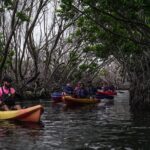
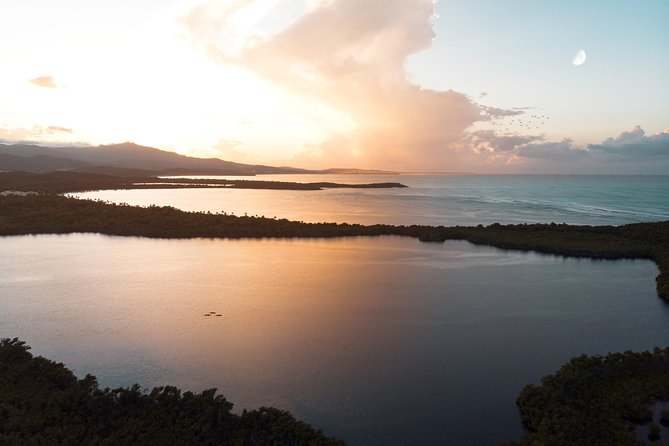
The tour starts in Fajardo at Kayak Village, 987 Street, and it’s designed as a true night paddle: you head out from Las Croabas and work your way through mangrove channels inside the Las Cabezas de San Juan Nature Reserve toward Laguna Grande. The ride is about more than just getting to the glow spot. The channels are the mood-setter—dark, quiet, and full of tiny life that you only notice once you slow down.
You’ll follow your guides through the waterways by matching the pace of the group ahead of you. In practice, that means you should expect a steady rhythm and some stamina use, especially if the current or water conditions feel a bit active. A couple of people also pointed out that visibility in the mangroves can be very low, so it’s smart to go in okay with limited sightlines and trust the route leaders.
You can also read our reviews of more tours and experiences in Fajardo.
The Main Event: How Pyrodinium Bahamense Creates the Glow
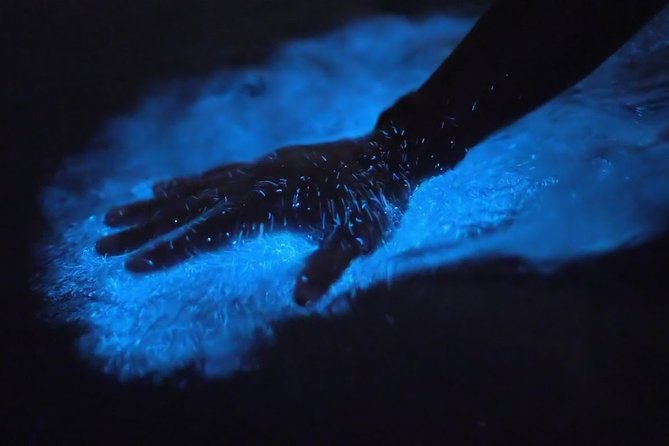
The bioluminescence comes from Pyrodinium bahamense, a microscopic plankton that can produce natural light when it’s touched or disturbed. What you’ll notice is that your paddle stroke can leave a faint trail that turns into a glowing swirl, and sometimes even fish seem to spark as they move through the illuminated water.
Here’s the practical part: the glow can be stronger or weaker depending on night conditions. People talked about nights with lower bioluminescence and nights that still felt magical, which makes sense because you’re watching a living system, not a light show on a switch. If you go in thinking every second will look like a movie scene, you’ll be disappointed. If you go in enjoying the whole process—paddle, pause, then watch the water respond—you’ll get more out of it.
On brighter nights, the crew can use tarps to reduce moonlight and keep the glow more visible. That’s a big deal for your photos too, because phone cameras struggle in low light, and strong moonlight can wash out the effect. The tour is built around helping you see the glow with your eyes first, then letting your phone try to capture what it can.
What the Mangrove Night Feels Like (and Why It Matters)
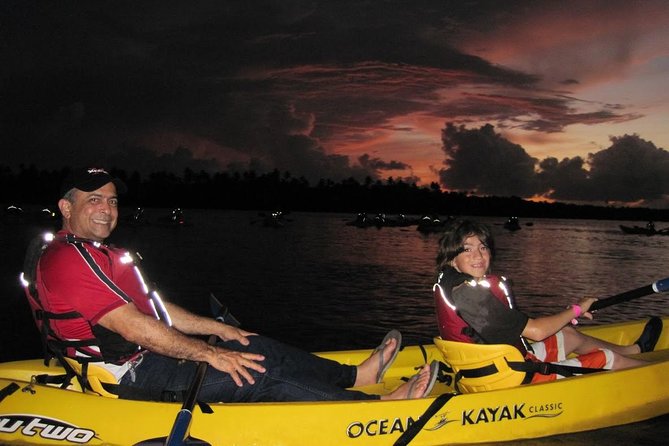
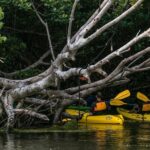
Kayaking through red mangroves at night has a specific feeling: it’s like your world gets smaller and your senses get sharper. You’ll hear night life, you’ll feel the kayak steady under you, and you’ll see the mangroves mainly as shapes against darkness—not as bright scenery. That darkness is also part of why the bioluminescence is visible. Too much light kills the contrast.
The guides also add another layer: you learn about the fragile ecosystem while you’re paddling. Eco-guides explain how that balance works in a sensitive lagoon environment, and they’ll also talk stargazing and the night sky while you’re waiting for the glow to show itself. One nice detail is that several guides were called out by name in feedback—Miguel, Brian, Lori, Daniel, Francisco, Noel, Fernando, and Ineliz/Inezil—and people consistently tied the overall fun to how those guides handled the group and shared facts at a good pace.
Pacing, Group Size, and the Tandem-Kayak Reality
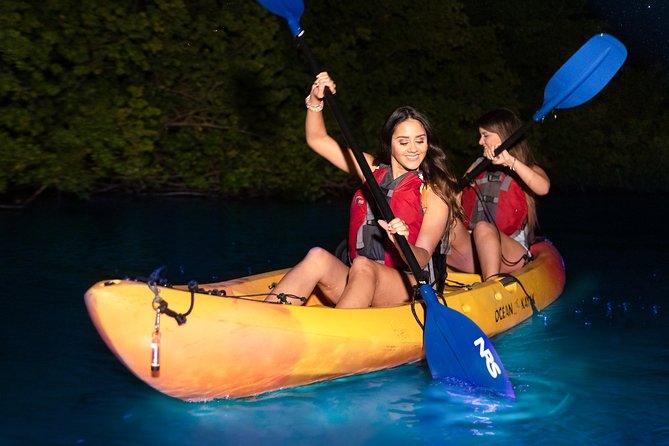
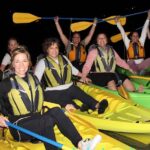
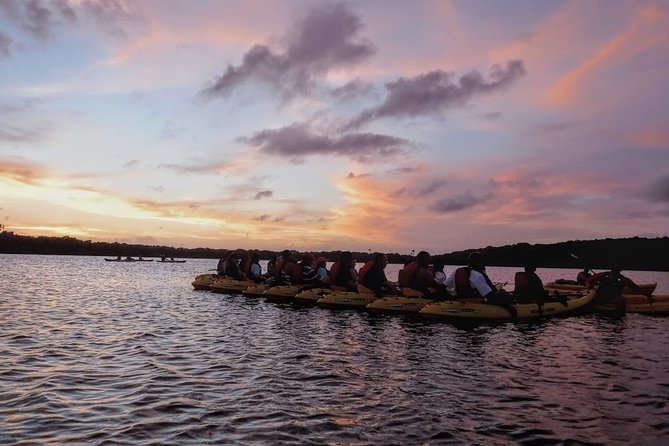
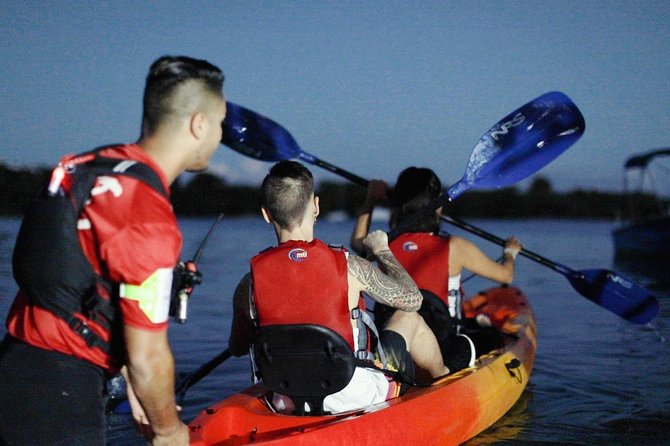
This tour caps at 30 travelers, and you’ll be in tandem (two-person) kayaks, not single kayaks. That matters because paddling effort is shared, but you still need both people to work as a unit. If your partner is brand new to kayaking, you’ll probably do more coordinating early on. If you’re both experienced, you’ll still need to match the rhythm of the group.
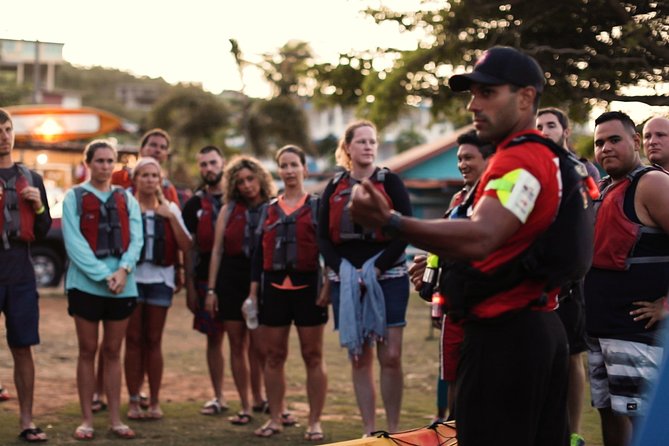
For logistics, you’ll do a quick kayaking 101 and safety pre-ride instruction before you head out. In many reviews, people highlighted how calm and supportive the staff was when someone needed help or felt overwhelmed. There were also a few complaints about communication and crowding when groups were large and the night felt rushed. The best way to protect your experience is to be mentally ready for a group paddle, keep a steady cadence, and ask questions early if you’re unclear on spacing or route.
Visibility plays into pacing too. Some people asked for a bit more light through the channel so they could see mangrove details and avoid obstacles during passing moments. If you’re someone who really wants to see everything clearly as you go, go in knowing this is intentionally dark-water kayaking—and focus on the glow experience rather than expecting a well-lit guided cruise.
What’s Included (So You Don’t Waste Time Thinking About Gear)
At this price point, a lot is already covered, and that’s part of the value. You’ll get:
- Paddles, backrests, and a USCG-approved life jacket (Extrasport)
- Eco-friendly insect repellent
- Light snacks and refreshments
- Comfortable basics for night paddling, like the safety and equipment setup that gets you on the water confidently
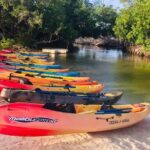
- Tandem kayaks with the gear you need to sit and paddle safely
You should plan to get wet. You’re in a mangrove lagoon at night, and your “dry” option is basically to be dry only above the waist. Bring a towel and change of clothes so you’re not stuck shivering after the paddle.
What to wear is straightforward and practical:
- Comfortable clothes that can get wet (bathing suit shorts work)
- Shoes that can get wet (flip-flops or water shoes)
- Bug protection even though repellent is provided
And yes, bring your cell phone. The tour notes that it may be needed for contact before your excursion.
Fitness, Safety Limits, and Who This Tour Really Suits
This activity is rated for people with moderate physical fitness. Even if you’re not a trained kayaker, the paddle to the lagoon takes effort, and several reviews used words like manageable workout or a bit vigorous. If you can handle an active 2-hour outdoor effort—plus moving at night with a group—you’ll likely be fine.
There are also clear safety boundaries:
- Weight limit: 240 lbs per person
- Max combined per kayak: 425 lbs
- Not recommended for back, neck, wrist/arm/leg problems, recent surgeries/injuries, or casts
- Not permitted for pregnant travelers
- Not recommended for people prone to panic attacks
- Minimum age 6 years old
- Service animals allowed
- Participants age 6–13 must be with an adult on the same kayak
- Participants 14–17 must have an adult participating on the tour
- For safety reasons, everyone should communicate in English or Spanish
If you’re a nervous paddler, the good news is that people described the crew as patient and willing to help when someone struggled. The mixed news is that the route in the dark can be tricky if you freeze or panic. So if you know darkness + water makes you uneasy, think carefully and decide honestly.
Price and Value: Why $89 Makes Sense (and When It Might Not)
At $89 per person for about 2 hours, the value is mostly in three places: (1) you’re getting guided paddling in a protected reserve at night, (2) your equipment and safety gear are included, and (3) you’re not just watching a sight—you’re learning how the ecosystem works while you’re physically interacting with it (paddle strokes creating glow patterns).
That’s also why reviews sometimes swing hard when expectations don’t match reality. The bioluminescence isn’t guaranteed to be “perfect glowing everywhere” every night. On nights where the glow is lower, the experience can still be worth it because you’re also getting mangrove navigation, night sounds, stargazing talk, and eco-interpretation. But if you’re booking mainly for a bright, constant glow and nothing else, you’re taking a gamble with nature.
Also, this tour requires a minimum number of participants (at least 6 total). If that minimum isn’t met, the operator will call you 1–2 days prior with options like rescheduling, private excursion payment options, or cancellation with no penalty. That’s not a dealbreaker, but it’s part of the “value math,” because group operations can change.
Tips to Improve Your Odds of Seeing More Glow
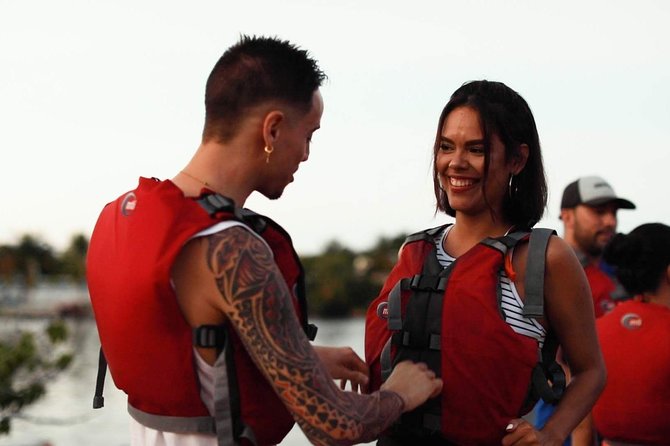
You can’t control Pyrodinium bahamense, but you can control your setup and your expectations. Here’s what helps based on what’s been shared:
- Aim for a darker night when possible. People specifically suggested that fuller moon nights reduce the chance of strong bioluminescence.
- Use the night-dark strategy: trust the guides, keep your eyes adjusted, and don’t rely on your phone screen to judge the glow.
- Use the provided repellent, and consider adding long-sleeve protection if you get bothered by insects easily.
- Wear clothes that you don’t mind getting wet, then bring dry items for afterward.
- If you’re sensitive to exertion, pace yourself from the start. The route is active, and trying to “catch up” suddenly in the dark can stress you out.
Should You Book This Bio Bay Kayak Tour in Fajardo?
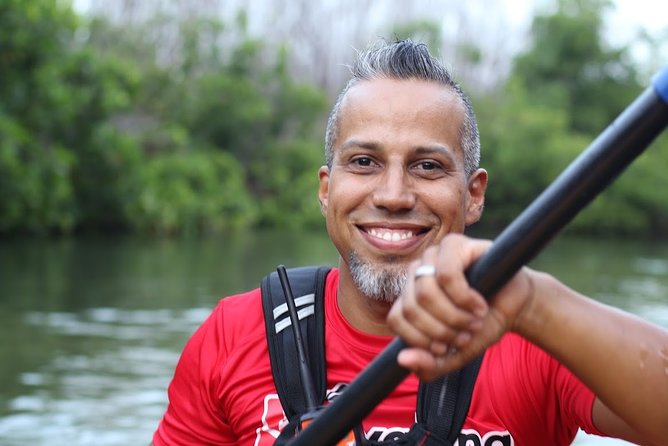
Book it if you want a guided night paddle through mangrove channels and you’re excited by the idea of watching living bioluminescence happen right where you touch the water. I especially like this tour for people who enjoy learning while they move—those eco-guide explanations and stargazing talk are part of why it feels more than a basic excursion.
Skip it (or switch to a different plan) if you can’t do moderate physical activity, hate very dark conditions, have panic triggers around darkness/water, or need strict accessibility for injuries. And if your only goal is maximum glow with no variation, know that nature doesn’t guarantee the same brightness every night.
If you go in prepared—wet clothes, steady effort, and a flexible mindset—you’ll likely think this is a rare Puerto Rico experience.
FAQ
How long is the Bio Bay kayak tour?
It’s approximately 2 hours.
Where does the tour start in Fajardo?
The meeting point is Kayak Village, 987 Street, Fajardo, 00738, Puerto Rico. The tour ends back at the meeting point.
Is this tour a single kayak or a tandem kayak?
It’s a tandem (two-person) kayak.
What’s the weight limit?
The maximum weight is 240 lbs per person and up to 425 lbs combined per kayak.
What age is the minimum for the tour?
The minimum age is 6 years old. Ages 6–13 must be accompanied by an adult on the same kayak, and ages 14–17 must have an adult participating.
What should I wear and bring?
Wear comfortable clothes that can get wet (like bathing suit shorts) and shoes that can get wet (flip-flops or water shoes). Bring a towel and a change of clothes for after.
What’s included in the price?
Included are kayaking 101 and safety instructions, kayaking through the red mangrove forest, a tandem kayak, light snacks and refreshments, eco-friendly insect repellent, and paddles plus backrests and USCG-approved life jackets.
Is the bioluminescence guaranteed to be bright?
The experience depends on natural conditions. Some nights have lower bioluminescence, and moon/light conditions can affect visibility. Tarps may be used to reduce moonlight.
Can I cancel for a full refund?
Yes. You can cancel up to 24 hours in advance for a full refund.
What if the tour is canceled due to weather or not enough participants?
If it’s canceled due to poor weather, you’ll be offered a different date or a full refund. If the minimum participant number isn’t met, you’ll be contacted 1–2 days prior with options like rescheduling, private options (payment), or cancellation without penalty.