REVIEW · FAJARDO
Puerto Rico Bio Bay Kayak Adventure Tour
Book on Viator →Operated by Yokahu Kayak Trips, Inc. · Bookable on Viator
A blue glow in your paddle wake sounds unreal, but it happens in Fajardo. This Puerto Rico bio bay kayak adventure takes you into the Laguna Grande area so you can see plankton light up in the water with every paddle stroke.
I love how the guides break down the science in plain terms while still keeping it fun, and I also like the practical pacing: about 2 hours on the water means you get the magic without burning a whole day. One thing to watch: the bioluminescence is a natural phenomenon and it can be dim some nights, even with good conditions and a tarp.
In This Review
- Key Highlights You’ll Feel on the Water
- Fajardo Bio Bay: What You’re Actually Chasing at Laguna Grande
- Meeting Yokahu Kayak Trips in Las Croabas and Getting Set Up
- The Route: Mangroves First, Then the Bioluminescent Bay
- Stop 1: Laguna Grande and the Mangrove Canal Section
- The Moment: Reaching the Glow Area
- When the Glow Is Bright (and When It’s Not)
- Pick darker conditions when you can
- The tarp: a simple trick with real impact
- Don’t panic if glow is faint
- How Hard Is It: Fitness, Current, and Double-Kayak Reality
- Odd-number groups and pairing
- Kids and who can join
- Weight and health limits
- Guides, Fun, and the Small Details That Make This Feel Worth It
- What’s Included, What’s Not, and What You Should Bring
- Swim gear helps
- Value Check: Is $65 for Two Hours a Good Deal?
- Weather, Timing, and the One Thing You Should Not Bet Against
- Should You Book This Bio Bay Kayak Adventure in Fajardo?
- FAQ
- Where does the Puerto Rico Bio Bay Kayak Adventure tour start?
- How long is the tour?
- What’s included with the tour price?
- Do I need moderate fitness or rowing experience?
- Are there age limits for kids?
- Is the bioluminescent glow guaranteed?
- What are the weight and health limits?
Key Highlights You’ll Feel on the Water
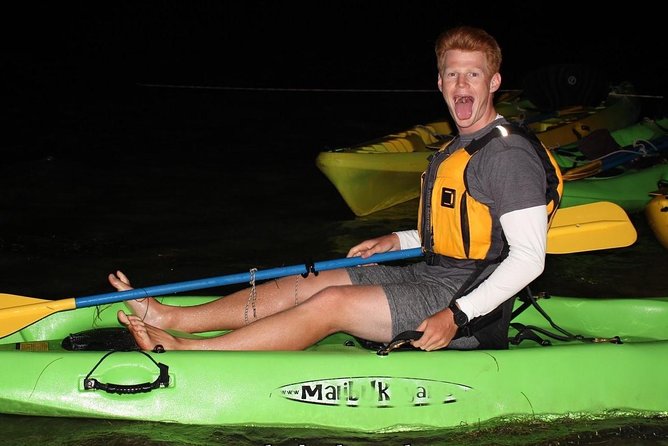
- Mangrove canal to Laguna Grande: you paddle through calmer passages and then reach the open bioluminescent bay area.
- Guides explain what causes the glow and the local ecosystem around the lagoon.
- Kayak motion helps the light show: paddles create water movement that triggers the plankton.
- Tarp option for bright nights so you can still see the glow when moonlight is strong.
- Two-person double kayaks: mostly easy and stable, but your group may pair up if numbers are odd.
Fajardo Bio Bay: What You’re Actually Chasing at Laguna Grande
This is one of those Puerto Rico experiences that doesn’t just look good on a screen. You are watching tiny plankton react to movement, so the moment comes in bursts, not as one constant neon sign. When you paddle, the water shifts. That disturbance is what makes the blue-green light appear around you.
The tour focuses on the Laguna Grande area near Fajardo, which matters because you’re not just doing a generic night paddle. The guides are there to point out what you’re seeing and connect it to the ecosystem you’re moving through. You’ll also get a better sense of why nights can vary, since this glow is natural and not something a company can force on demand.
In plain terms: go in ready to be wowed, but keep expectations flexible. Even with a great guide and the right setup, the intensity changes night to night.
You can also read our reviews of more tours and experiences in Fajardo.
Meeting Yokahu Kayak Trips in Las Croabas and Getting Set Up
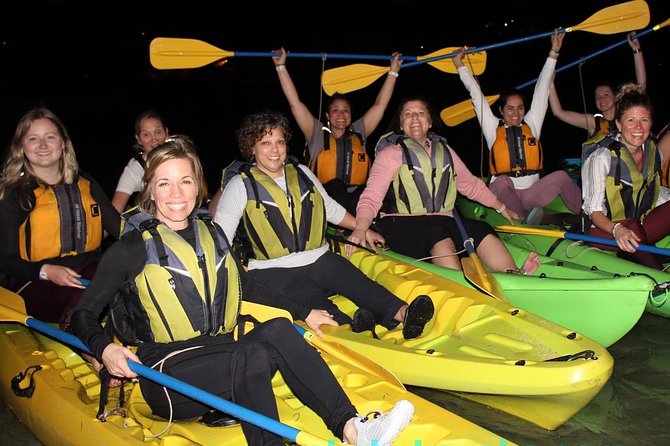
You’ll start at Yokahu Kayak Trips, PR-9987 in Las Croabas, Fajardo (and you’ll return to the same meeting point). The tour uses a mobile ticket, and you should plan to arrive on time so the safety briefing and equipment time stay smooth.
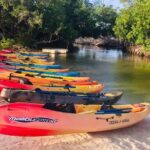
Once you’re checked in, you get the basics that make a big difference for comfort on a night paddle: a kayak, paddles, USCG life jackets, and a backrest. That backrest is underrated. It helps you last longer when you’re working your arms in low light.
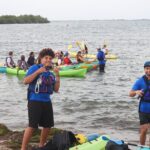
The guides also cover safety and how to handle the kayak and equipment before you head out. One reason people rave about this experience is that you’re not thrown into the dark with no instruction. You learn how to row, how to sit, and what to do if you feel unsure. That matters a lot when your tour is at night.
The Route: Mangroves First, Then the Bioluminescent Bay
Your time on the water is structured in chunks, and that helps you enjoy it instead of feeling rushed. You paddle from the reserve area toward Laguna Grande, you get the ecosystem talk along the way, and then you reach the bioluminescent part.
Stop 1: Laguna Grande and the Mangrove Canal Section
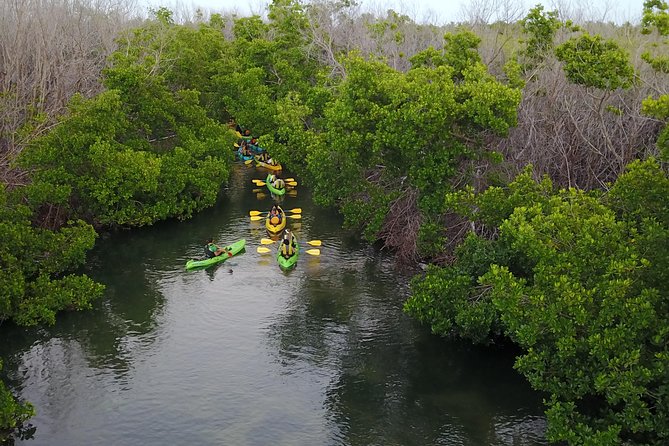
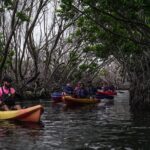
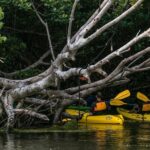
Early in the trip, the guides lead you through a mangrove canal. This is the calmer-feeling part for many people, and it’s also where you get the scenic contrast: the shadows of mangroves, narrow waterways, and turns you make slowly while staying aware of other kayaks.
The guides will explain what you’re passing through, including details about the surrounding ecosystem. It’s not just a script. The talk helps you understand why the area looks the way it does at night and what role it plays for the lagoon system.
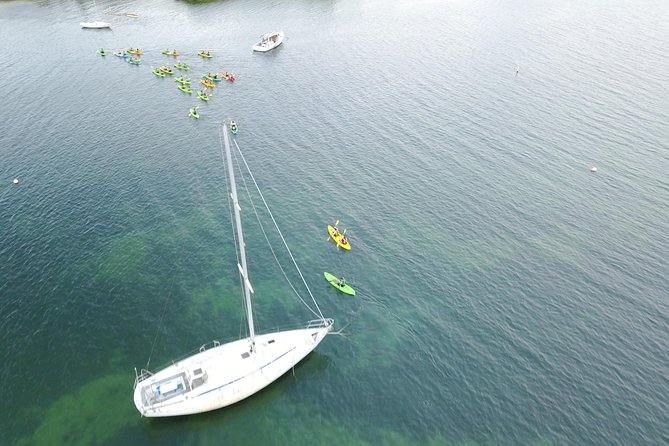
If you’re sensitive to motion or you haven’t rowed much, take note of something you may encounter here: currents and moored boats can make the open initial water feel a bit more active than the mangrove “tunnel” section. Some people describe the first part as more work than they expected. The good news is that once you’re inside the mangrove passage, navigation usually feels easier.
The Moment: Reaching the Glow Area
After the mangrove section, you reach the area where you can see the bioluminescence. This is the core of the tour, and the guides focus on what to do with your paddle stroke and your hands in the water.
Here’s the key idea you’ll want to remember: you’re not waiting for glow by luck. You’re triggering it with movement. The tour includes paddling techniques and moments where you can create water disturbance and watch the blue-green light appear.
When the Glow Is Bright (and When It’s Not)
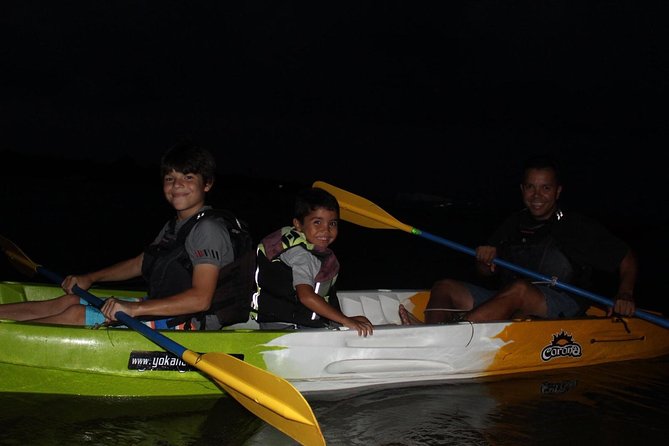
Let’s talk realism. The bioluminescent effect varies continuously, and it cannot be predicted or guaranteed at 100%. That line sounds boring on paper, but it’s actually the difference between a magical night and a mildly confusing one.
Pick darker conditions when you can
If you have choice, aim for nights when moonlight is lower. People often report better visibility on darker nights like new moon or heavier cloud cover. Still, even bright nights can be managed.
The tarp: a simple trick with real impact
When light conditions are not ideal, the tour can use a tarp over the group to reduce glare. You’ll hear this as part of how they deal with bright moon scenarios, and it’s a practical solution. The tarp helps you see the glow more clearly because it blocks outside light.
There’s a tradeoff: people note it can get warm and you spend some time under it. It’s worth it if it helps the glow become visible, but bring the mindset of an outdoor setup, not a theater experience.
Don’t panic if glow is faint
Even on a good night, you might see the effect as twinkles or streaks rather than full-water sheets of blue. Some nights are “low glow” and you still get interesting reactions if you move your paddle and hands correctly. If you get nothing you can clearly see, it can feel disappointing, so come prepared to enjoy the kayaking and the mangrove night even if the glow is subtle.
Also: some people report sargassum and seaweed smell. That doesn’t mean the tour is bad; it’s just the nature of coastal lagoon water. If you’re sensitive, you’ll be happier with bug spray, patience, and a flexible attitude.
How Hard Is It: Fitness, Current, and Double-Kayak Reality
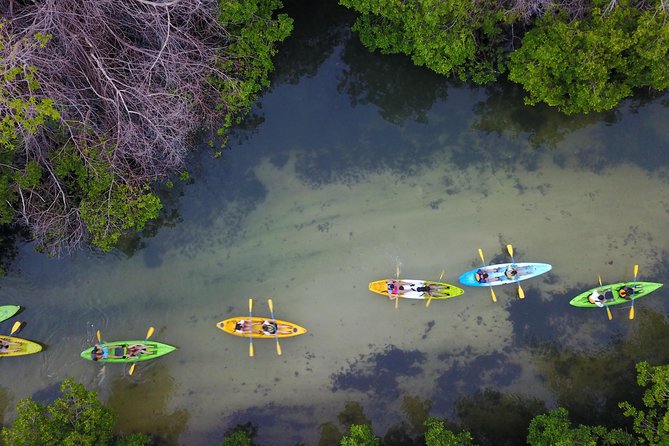
This tour asks for moderate physical fitness. That doesn’t mean you need to be an athlete, but it does mean you should be comfortable doing repeated paddling in the dark for the duration of the trip.
Here’s what matters most for your enjoyment:
- You need to be able to row and complete the tour.
- Some people report paddling against current during parts of the route, especially near the early water.
- On double kayaks, ideally at least one person in the pair is confident and physically able.
Double kayaks are common, stable, and usually easier for first-timers than you’d expect. But the group setup can affect your experience.
Odd-number groups and pairing
Kayaks are for two people, and if your group has an odd number, you’ll likely be paired with someone outside your party. Single kayaks are not guaranteed to odd-number situations.
That’s fine if you’re social and easygoing. If you’re the kind of person who hates sharing equipment space with strangers, plan to be flexible or book with a buddy so you keep your pair.
Kids and who can join
Children must be 6 years or older. Also, children will be assigned with their parents or family member from the same party, so you’re not sending a kid off alone.
Weight and health limits
There’s a maximum weight limit of 245 pounds per person, and customers are weighed at check-in for safety. Pregnant travelers cannot participate. The tour also won’t allow anyone under the influence of drugs or alcohol, or with misconduct.
Guides, Fun, and the Small Details That Make This Feel Worth It
A huge part of why this tour gets strong ratings is the guide style. On many departures, guides like Luis, William, Jose, Jason, Julio, Joshua, and Jonathan show up across different trips (names vary by group). The consistent theme is that you get a mix of safety focus and lively humor.
You’ll likely notice:
- clear instructions for kayaking in the dark
- guides stationed in a way that keeps an eye on kayaks throughout the group
- explanations that help you understand what you’re seeing rather than just pointing at the water
Snacks and water are included for the return portion. It’s a small thing, but after an evening paddle, having a light snack and something to drink keeps the post-trip from feeling like an energy crash.
What’s Included, What’s Not, and What You Should Bring
The tour includes:
- kayak and paddles
- USCG life jackets and backrest
- snacks and water plus light snacks
- professional guides with safety and equipment instruction
- ecosystem explanation for the bioluminescent bay area
What you should plan on bringing:
- bug spray (mosquitoes show up around mangroves, and it’s a consistent tip)
- a way to keep your essentials minimal since you’re getting wet
- a towel and a change of clothes if you want to feel comfortable after
People also recommend being ready to get wet. Even if conditions are calm, you’re in lagoon water at night, and you might splash when you adjust your paddle or reach toward the water to trigger glow. If you’re coming from Uber or a rental plan in San Juan, make sure you have access to a place to rinse or change.
Swim gear helps
Since you’re likely to get damp, wearing swimwear under dry clothes can make the whole evening easier. You can then use a towel afterward without scrambling.
Value Check: Is $65 for Two Hours a Good Deal?
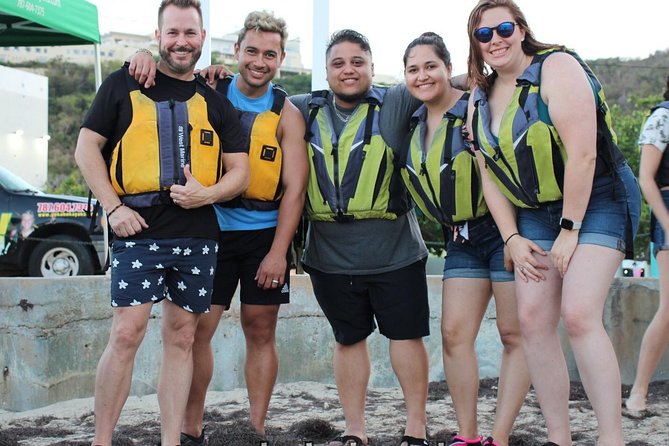
At $65 per person for about two hours (approx.), this is not a cheap add-on. But for what you’re paying for, it can feel fair.
You’re paying for:
- guided access to a very specific natural setting (Laguna Grande / bioluminescent bay)
- safety gear and instruction in a low-visibility environment
- a double-kayak setup with backrests, which improves comfort
- the tarp plan for bright moon conditions
- snacks and water
Also, the time is a factor. For many people, two hours is the sweet spot: enough time to paddle through mangroves and reach the bioluminescent area, but not so long that you’re exhausted before the glow.
If the bioluminescence ends up faint, the value question becomes more about whether you still enjoyed the kayaking night route. If you can appreciate the mangrove tunnel, the night water, and the guide experience, then even a low-glow night can feel like a win.
Weather, Timing, and the One Thing You Should Not Bet Against
This tour requires good weather. If it gets canceled due to weather, you’ll be offered another date or a full refund. It also has a minimum traveler requirement, so departures can be adjusted if minimum numbers aren’t met.
From a practical standpoint, this means you should build your schedule with some flexibility. If you’re only in Fajardo for one night, that’s when you’re most exposed to weather changes.
Timing-wise, you’re going out in the evening when darkness helps you see the glow. That’s the trade: it’s dark, it’s on water, and you’re relying on guides and safety briefings to make it comfortable and controlled.
If you’re trying to plan around the glow itself, remember the most honest expectation: the intensity is never 100%, so the goal is to create the conditions to see it as well as possible.
Should You Book This Bio Bay Kayak Adventure in Fajardo?
Book it if you want a night paddle with structure, safety, and a real shot at seeing bioluminescent plankton triggered by your own movement. I especially think it’s a strong fit if:
- you like kayaking and you don’t mind being in the dark
- you want guides to explain the ecosystem and the science
- you’re traveling on a schedule where two hours is a win
- you’ll bring bug spray and you’re okay getting a bit wet
Skip or reconsider if:
- you need a guaranteed glowing show (this effect can be dim or invisible on some nights)
- you have issues with sharing a double kayak pair when your group size is odd
- you have safety limitations like the weight limit or pregnancy restriction
If you treat it like a guided nature night with a chance at the wow-factor, it delivers. The mangrove kayaking alone is a memorable evening. And when the plankton light up, you’ll understand why people call it one of Puerto Rico’s most magical experiences.
FAQ
Where does the Puerto Rico Bio Bay Kayak Adventure tour start?
The tour starts at Yokahu Kayak Trips, PR-9987, Las Croabas, Fajardo 00738, Puerto Rico. It ends back at the same meeting point.
How long is the tour?
The kayak adventure is about 2 hours (approx.).
What’s included with the tour price?
You get the kayak, paddles, USCG life jacket and backrest, snacks and water/light snacks, and professional guides. The guides also provide safety management instructions and explain the bioluminescent bay’s ecosystem and surroundings.
Do I need moderate fitness or rowing experience?
Yes. The tour recommends moderate physical fitness, and all participants must be able to row the kayak and complete the tour.
Are there age limits for kids?
Yes. Children must be 6 years or older.
Is the bioluminescent glow guaranteed?
No. The bioluminescent effect varies continuously and cannot be predicted or guaranteed to be 100%.
What are the weight and health limits?
There is a maximum weight of 245 pounds per person, and customers are weighed at check-in for safety. Pregnant travelers cannot participate.