REVIEW · CHIANG MAI
Chiang Mai Biking & River Kayak : Gentle Thrills in a Lush Valley
Book on Viator →Operated by Chiang Mai Mountain Biking & Kayaks · Bookable on Viator
This is a Chiang Mai day trip that mixes mountain biking with river kayaking, so you get both countryside views and slow, quiet water time in one morning. You’ll ride through local villages and rice fields, then switch to a kayak on the Mae Ping River area where the sounds get noticeably calmer and more “forest” than city.
I like that it works for a wide range of fitness levels because the bike part is described as leisurely, and the kayaking is done in a way where you can be active without it turning into a workout contest. I also like the hands-on setup: helmets, life jackets, a following support truck, and a lunch spot with vegetarian and vegan options.
One thing to consider: the transportation experience may vary. Even though an air-conditioned van is the usual plan, some people end up in a covered vehicle where airflow isn’t great, so it helps to dress and plan for the morning heat.
In This Review
- Key Things I’d Focus On
- Why this pedal-and-paddle combo fits Chiang Mai
- Morning start: pickup, pro-shop setup, and getting oriented
- Wat Ban Den: a quick temple stop that resets your mindset
- Mae Ngat Valley biking: gentle riding through rice fields and villages
- Switching modes: from bike trails to the river edge
- Kayaking in the Mae Taeng Jungle Reserve: calm water and active steering
- Lunch at Mango Plantation Restaurant: where the day refuels
- Gear and safety: the details that make it feel low-stress
- Transportation and comfort: a practical heads-up
- Price and value: what you’re really paying for at $81.47
- Who should book this bike-and-kayak day
- Should you book Chiang Mai Biking & River Kayak?
- FAQ
- How long is the Chiang Mai Biking & River Kayak experience?
- What time does the tour start?
- Is hotel pickup included?
- What activities are included in the tour?
- What food is provided, and can it be vegetarian or vegan?
- Is safety gear provided for biking and kayaking?
- Is there an extra cost for the river fee?
- Do I need a passport for anything?
- How big are the groups?
Key Things I’d Focus On
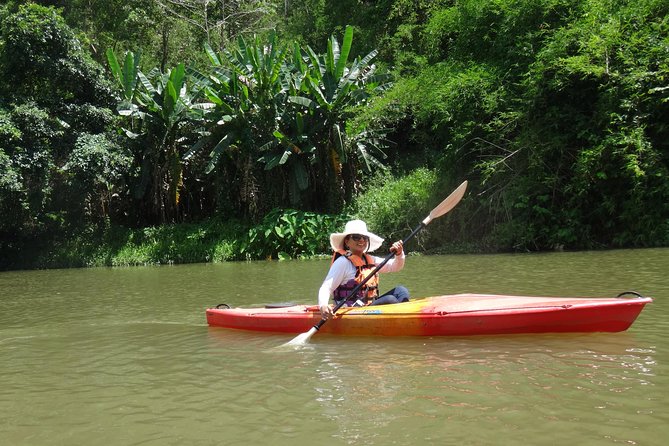
- Peace-first pacing: bike, snack stops, temple time, then a quiet river paddle
- You steer your own kayak: you’re the captain of your own boat, not just a passenger
- Real safety support: helmets, gloves, life jackets, plus guides trained in first aid and CPR
- Good food for different diets: vegetarian and vegan lunch is available at Mango Plantation Restaurant
- Small group feel: maximum of 15 travelers
- River fee is separate: budget THB 150 per person extra for river fee/insurance
Why this pedal-and-paddle combo fits Chiang Mai
Chiang Mai is packed with choices, but this kind of half-land, half-water day trip feels especially right for the region. You get the farmland side of northern Thailand—villages, produce stops, and temple sights—then you slide into a river setting where the day’s tempo slows down fast. It’s also a smart way to see beyond the old city without committing to a full day in a van.
The best part is how the activities complement each other. Biking is a social, steady “move through the countryside” experience. Kayaking is calmer and more reflective, with your attention switching from roads and fields to birds and water. If you like outdoor time but don’t want the day to feel like a forced march, this balance is the whole point.
You can also read our reviews of more tours and experiences in Chiang Mai.

Morning start: pickup, pro-shop setup, and getting oriented
You’ll start at 8:30 am with hotel pickup. The experience typically uses an air-conditioned van, and for smaller groups you may ride in a 4×4 SUV. Either way, the driver-and-guide structure matters because the day runs like one continuous route: temple first, then the biking section, then the river portion.
Before you hit the countryside, there’s pro-shop support that makes the equipment feel less like a last-minute rental. You can test the bike at the shop, and there’s also an orientation using Google Earth to help you understand what you’re moving through. That might sound like a small detail, but it helps you get your bearings fast so you don’t just wonder where you are while the day speeds along.
Wat Ban Den: a quick temple stop that resets your mindset
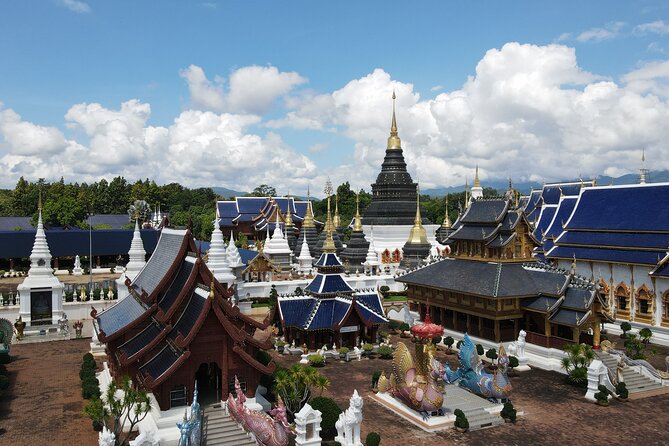
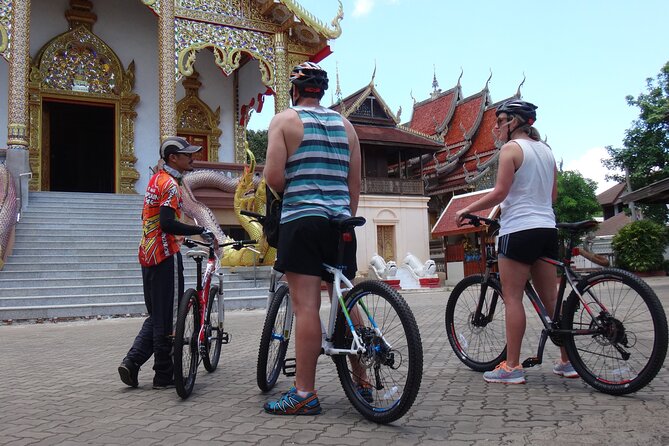
Your first stop is Wat Ban Den (Ban Den Temple). This is the moment where the trip stops being purely outdoor and becomes cultural. You’ll have time for a short exploration of the temple area, with a focus on the atmosphere and architecture rather than a long, exhausting walk.
This temple stop is valuable because it gives context to the day you’re about to have. You’re heading into rural Mae Ngat Valley, and a temple like this is often part of how local communities organize daily life. If you like your day trips to include at least one meaningful cultural moment before the scenery turns nature-only, this is a good match.
A small practical note: temple visits usually mean you should be ready for rules about respectful clothing and calm behavior. The day still moves at a gentle pace, so it’s not a “rush and pose” stop.
Mae Ngat Valley biking: gentle riding through rice fields and villages
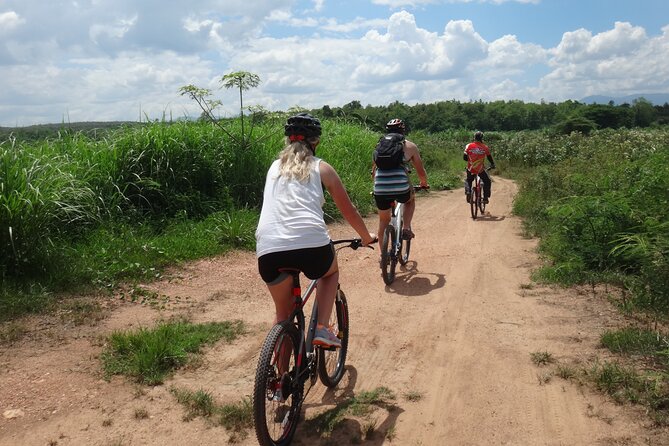
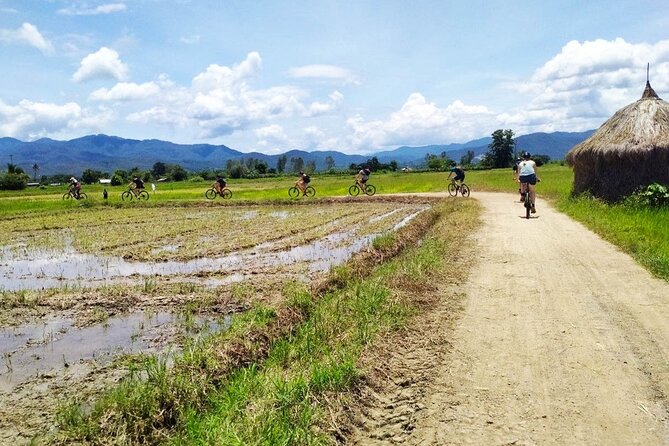
After Wat Ban Den, the ride shifts into countryside mode in Mae Ngat Valley. The bike portion is described as easy enough for different fitness levels, with the route passing through local villages and lush rice fields. You’ll also stop along the way—there’s a brief rest at a produce stand and a snack break later.
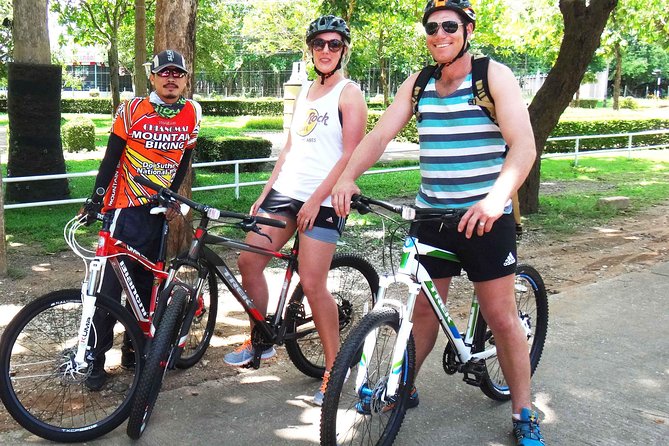
Here’s what makes this biking segment work in real life: mountain bikes and the presence of safety gear. Helmets and gloves are provided, and the bikes are described as high-quality and well-maintained in all sizes. That’s important because a “scenic ride” can still be uncomfortable if the equipment is worn out or the bike fit is off.
You might find the road surfaces a bit uneven or bumpy. One rider noted the paths were not perfectly smooth (which is common for rural routes). The good news is you’re on mountain bikes, and the ride is paced as a leisure experience with breaks rather than a fitness class.
Snack stops matter here. They’re not just free time; they keep the energy steady so you transition to kayaking without feeling drained. You may even encounter fruit and local snacks along the ride, which pairs nicely with the countryside setting.
Switching modes: from bike trails to the river edge
Once you finish the biking portion, the day changes gears. You’ll move into the kayak phase at the Mae Ping River area, specifically through the Mae Taeng Jungle Reserve. The change can feel dramatic in a good way: bike roads give way to water access, and the soundscape becomes birds and river ambience.
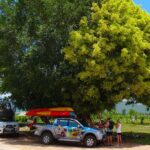
Logistically, this is where the tour’s support structure becomes noticeable. There’s a following support truck ready to help, and there’s secure storage for valuables. That means you’re not constantly worried about what to carry or where to stash your phone and wallet during gear changes.
The tour also provides a hydration-backpack and water is available throughout the event. For a morning that mixes heat, movement, and time outdoors, that makes a difference.
Kayaking in the Mae Taeng Jungle Reserve: calm water and active steering
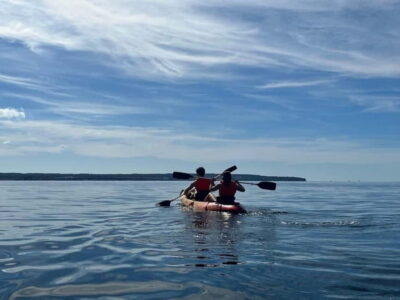
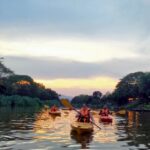
The kayak part is the headline for many people because it’s peaceful and scenic without demanding technical paddling skills. You’ll paddle through the Mae Taeng Jungle Reserve area with what’s described as exclusive access to a beautiful spot. The emphasis is on tranquility—wild bird chirps and a quiet atmosphere are part of the experience.
One of the nicest things about the setup is that you’re the captain of your own boat. That doesn’t mean you’re alone or unsupervised, but it does mean you’ll actually steer and paddle rather than just being taken along. Life jackets are provided, and the guides are there to keep everyone safe.
You get a choice of single or double kayaks, since the tour uses both hard-shell styles. If you’re going as a couple or want a bit more control, a single kayak is great. If you prefer sharing the work or chatting with a partner while you paddle, a double can make the time feel more social.
One real consideration about effort: the river’s movement can be slower toward the end of the paddle. That means you might need to do more actual paddling rather than relying on current to move you. If you’re okay with a gentle workout for the last stretch, you’ll probably love it.
Lunch at Mango Plantation Restaurant: where the day refuels
After kayaking, you’ll enjoy lunch at a local restaurant: Mango Plantation Restaurant. Lunch is included, and the tour specifically notes vegetarian and vegan options are available. That’s a big value point because it removes the “where do we eat now?” stress from your day.
This lunch stop is also strategically timed. By the time you sit down to eat, you’ve done two outdoor activities, so food tastes better and you’re less likely to feel hungry or cranky. It’s a reset before the return to your hotel.
Gear and safety: the details that make it feel low-stress
This tour is built around outdoor activities that could feel intimidating if the equipment and safety steps were sloppy. In this case, you get several reassuring items.
You’ll receive:
- a high-quality mountain bike
- helmet and gloves for biking
- a life jacket for kayaking
- hard-shell single and double kayaks
- first aid and CPR-certified instructors
- a following support truck for help and secure storage
Even the smaller elements help. You get hydration support via water and a hydration-backpack, plus there’s a clear guided structure with professional escorts.
From a rider’s perspective, I like that you can test your bike at the pro-shop before riding. From a peace-of-mind perspective, I like that there’s real first aid training listed and gear that’s standard for safety.
Transportation and comfort: a practical heads-up
Transportation is mostly taken care of with pickup and an included return to your hotel. The primary vehicle is described as an air-conditioned van, and for smaller groups it can switch to 4×4 SUVs.
Still, here’s the thing to plan for: depending on how the group is split, you might end up on a covered pickup or in seating that doesn’t feel strongly air-conditioned. I’d pack for heat and humidity anyway, and I wouldn’t count on getting cool during transit. The day’s worth it, but comfort on the vehicle isn’t guaranteed in the same way it is with a consistently modern bus.
Price and value: what you’re really paying for at $81.47
At $81.47 per person (for a roughly 5-hour experience), the key value is that you’re not only paying for “bike + kayak.” You’re paying for the full package that turns that idea into a smooth morning.
Included value points:
- round-trip pickup and transportation
- mountain bike plus helmet and gloves
- kayaking equipment plus life jacket
- hard-shell kayaks with single/double options
- a professional guide team with first aid and CPR certification
- hydration support (water and hydration-backpack)
- lunch at Mango Plantation Restaurant with vegetarian/vegan options
- a following support truck with secure storage
- Google Earth orientation and bike testing at the pro-shop
The one extra cost to budget: the river fee/insurance is THB 150 per person, and it’s not included in the base price.
So the question isn’t only whether the tour is “cheap.” It’s whether you want to pay for convenience, safety structure, and a guided day that covers gear, food, and transport. If you want to save time and avoid figuring out rentals and local access on your own, this price can be a solid deal.
Who should book this bike-and-kayak day
This is a great fit if you want:
- a gentle outdoor day that still feels like an adventure
- countryside exposure outside Chiang Mai without a full-day trek
- a mix of culture (Wat Ban Den) and nature time (river kayaking)
- an experience designed for many fitness levels
It also works for families, since the minimum age is 4 years and there’s the option of a tag-along bike for smaller children. If you’re traveling with kids who can pedal part of the way, that feature matters.
If you’re the type who wants a fast, intense challenge, this may feel too calm. The pacing is designed to be accessible, and the river portion can be slower toward the end—meaning you’ll stay in “peaceful effort” mode more than “sprint and sweat” mode.
Should you book Chiang Mai Biking & River Kayak?
I’d book this if you’re craving a morning that feels like Thailand—not just a city tour. You get temple time, rural biking through villages and rice fields, and then a quiet kayak paddle in a reserve area where birds and calm water do most of the work. The included lunch and diet options make it easy to plan, and the safety gear plus CPR/first-aid support keeps the vibe from turning stressful.
Skip it or reconsider if:
- you’re sensitive to vehicle comfort issues during transit
- you want a strong current or a very fast paddle experience
- you’re hoping for a long, high-intensity hike-style day
If you’re in the mood for a balanced, outdoorsy day that doesn’t require being a hardcore athlete, this one is an excellent bet.
FAQ
How long is the Chiang Mai Biking & River Kayak experience?
It runs for about 5 hours.
What time does the tour start?
The start time is 8:30 am.
Is hotel pickup included?
Yes. Round-trip hotel transport is included.
What activities are included in the tour?
You’ll do a biking portion through the Mae Ngat Valley area, then a river kayaking portion on the Mae Ping River through the Mae Taeng Jungle Reserve. There’s also a visit to Ban Den Temple and lunch.
What food is provided, and can it be vegetarian or vegan?
Lunch is included at Mango Plantation Restaurant, with vegetarian and vegan options available.
Is safety gear provided for biking and kayaking?
Yes. Helmets and gloves are provided for biking, and life jackets are provided for kayaking.
Is there an extra cost for the river fee?
Yes. There is a river fee/insurance of THB 150 per person.
Do I need a passport for anything?
The tour requests a passport number at check-in for insurance ID.
How big are the groups?
The tour has a maximum of 15 travelers.