REVIEW · GDANSK
Guided Sightseeing Kayak Tour at Gdansk
Book on Viator →Operated by Around Gdansk | Kayak Tours & Adventures · Bookable on Viator
Kayaking Gdansk feels like a history lesson on water. This guided 2.5-hour trip turns the city’s waterfront into a moving viewpoint, including The Crane and the busy Remontowa shipyard. I love the no-getting-lost navigation, and I also like that it’s active without feeling like a grind. One watch-out: you need to be able to swim and follow the safety rules closely, because the tour runs in all weather.
The guides make a big difference here. On different days, names like Nick, Szymon, Eric, and Eryk come up, and the common thread is clear instructions before you hit the water, plus steady guidance while you paddle. You’ll also get practical help with gear, including lockers and waterproof phone cases that can save you from that end-of-trip phone heartbreak.
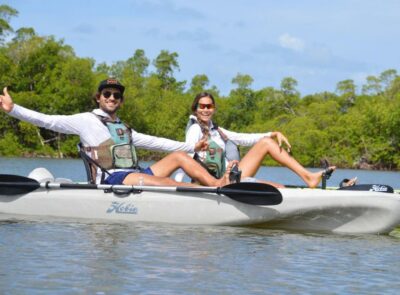
For couples, it’s a smart pick. Double kayaks are available, and the small-group size (up to 20) helps the whole thing stay friendly and controlled rather than chaotic. Just plan to arrive a few minutes early for the mandatory safety briefing, because late arrivals won’t be admitted.
In This Review
- Key things you’ll notice fast
- Why Gdansk looks different when you’re low to the water
- The Crane stop: medieval engineering you can actually picture
- SS Sołdek and the shipyard reality check
- The Motława loop: Granary Island and Olowianka Island
- Paddling level, safety briefing, and what to wear
- Couples and small groups: double kayaks and guided confidence
- Price and value: is $48.85 worth it?
- Where to start from and how to make the tour smoother
- Should you book this kayak tour in Gdansk?
- FAQ
- How long is the guided kayaking tour?
- What is the price per person?
- Is the tour offered in English?
- Is it a small group?
- Do I need to be able to swim?
- Is there a weight limit?
- Are double kayaks available for couples?
- Do they require a safety briefing before launch?
- Does the tour run in bad weather?
- What’s the cancellation policy?
Key things you’ll notice fast
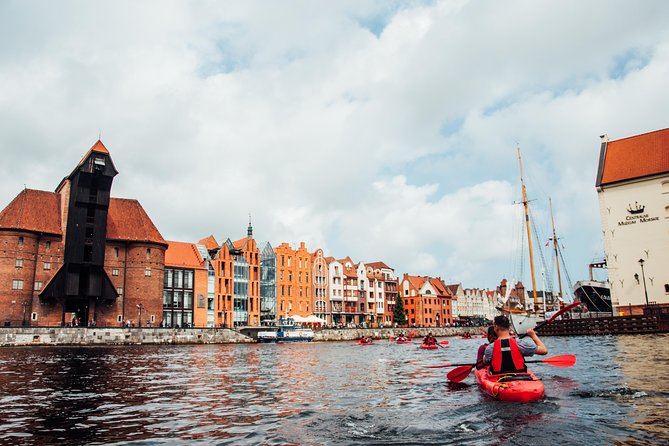
- The Crane from the water: medieval ship-hoisting engineering, viewed at eye level.
- SS Sołdek stop: a real Polish coal-and-ore freighter story, not just scenery.
- Remontowa Shipyard views: see ferries and large vessels in the middle of repair and work.
- Motława River + islands: paddle around Granary Island and Olowianka Island for variety.
- Guide-led navigation: you spend more time looking and paddling, less time figuring routes.
- Small group pace: multiple stops with information, without wearing you out.
Why Gdansk looks different when you’re low to the water
Gdansk is built around water lines: river routes feeding the Baltic, plus canals and harbor connections that shaped how the city grew. From land, you get the postcard angles. From a kayak, you feel the city’s scale and rhythm in a different way—especially near working docks where you’re close to the real infrastructure.
What I like is that the tour doesn’t treat the water as a backdrop. It explains why the city developed where it did and why modern daily life still revolves around these waterways. That context makes the paddle feel like more than moving through a few pretty spots.
Also, kayaking naturally slows you down. You’re moving at human speed, so you actually notice details: how boats sit alongside quays, how canal walls guide the route, and how the shipyard area changes the mood of the scenery.
You can also read our reviews of more tours and experiences in Gdansk.
The Crane stop: medieval engineering you can actually picture
The Crane is the centerpiece for a reason. It’s one of Gdansk’s defining symbols and it’s tied to the city’s trading heyday—the kind of era where ships brought heavy cargo and the shore needed serious lifting power.
This wasn’t just a decorative structure. Built in the mid-15th century as part of a double-towered shoreline gate, it was used to install/remove ship masts and to load or unload heavy cargo at the quay. The big detail that lands is its capacity: this human-powered crane could hoist loads up to 2000 kg, which is why it’s often described as the largest crane in medieval Europe.
On the kayak, that history is easier to grasp because you’re seeing it from the water route it served. You’re not imagining how ships lined up; you’re paddling along the same kind of shoreline access that made the crane useful.
Possible consideration: the Crane area can feel tight visually because you’re focused on the landmark and the water route at the same time. If you’re prone to getting distracted, keep a light grip on the paddle and let the guide set the pace.
SS Sołdek and the shipyard reality check
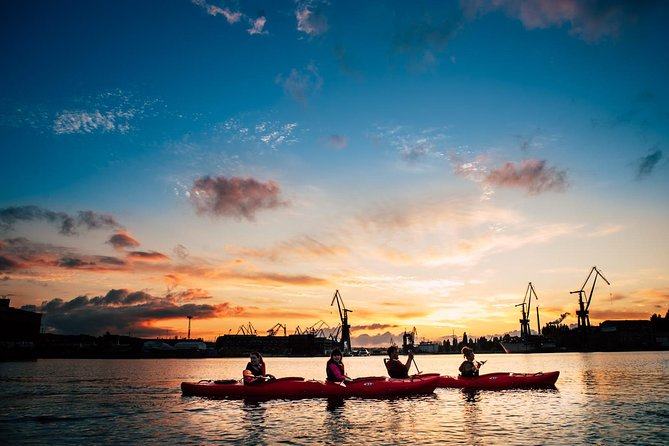
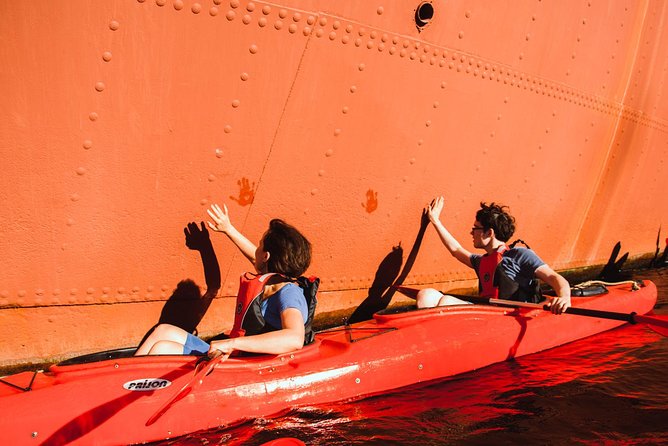
After the iconic landmark, the tour shifts into working-water territory. One stop includes SS Sołdek, a Polish coal and ore freighter. It’s the kind of vessel name that sounds like history text—until you see it in the water setting where freight ships actually belonged.
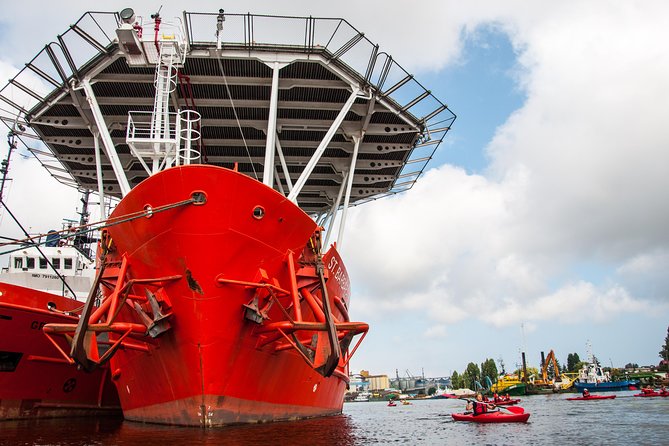
Then comes the Remontowa Shipyard area. This isn’t a preserved museum scene. It’s a working yard, with ships in different stages of repair or construction. If you like ships of all sizes, you’ll probably find this portion one of the most fun parts because you’re close enough to see what’s happening rather than reading about it.
A few things make this stop worthwhile:
- You get a different Gdansk than the one made for walking tours.
- You can watch movement and labor up close, including men working on ferries.
- The size contrast is striking when you’re in a small kayak near large ships.
One trade-off: because it’s a busy working zone, your attention is split between safety, paddling focus, and watching what’s going on. The guide helps you manage that, but it’s still a more industrial-feeling stretch than the purely scenic river sections.
The Motława loop: Granary Island and Olowianka Island
This is where the tour turns into a smoother sightseeing paddle. The route follows the Motława River around two islands of Gdansk: Granary Island and Olowianka Island. That island-and-canal setup gives you variety without making the whole day feel long.
Gdansk’s geography is unusual in a good way. It sits at the crossroads of sea and river routes, including waterways connected to the Vistula via the Baltic estuary, plus rivers such as Radunia and Motława. The tour uses this geography to explain why water shaped daily life and why drawings and literature show that same water-centered lifestyle.
On the water, that theme becomes practical: you’re seeing how the waterways function like corridors, guiding boats and shaping how the city faces the water. And because you’re in canals and river routes, you get freedom to see places ferries can’t access.
Possible drawback: if you’re hoping for long stretches where you do almost nothing, you might find it slightly more active than you expected. Even when conditions are calm, you still need steady paddling and basic balance.
Paddling level, safety briefing, and what to wear
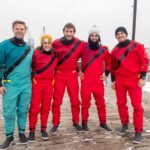
This is not an extreme workout. The overall pace tends to feel manageable, even for people in their late 50s, as long as you can follow instructions and keep your balance. You’ll get a mandatory safety briefing before launch, plus a basic demonstration of paddling and handling the kayak.
The most important safety rule to take seriously: you need to be able to swim, and you should not ignore the alcohol and smoking rules. Since the tour runs in all weather conditions, your comfort depends on dressing for wind, rain, or cool temperatures as needed.
What to wear:
- A warm layer if it’s cool, because you’re on open water for about 2.5 hours.
- Water-resistant outerwear if the forecast looks damp.
- Gloves can help if the water is chilly or if you prefer a better grip.
- Sunscreen and sunglasses if the day turns sunny, since kayaking gear doesn’t stop sunburn.
Small practical tip: save your energy for the entire route, not just the first half. Even on flatter water, paddling takes effort when you’re focused and holding steady.

Couples and small groups: double kayaks and guided confidence
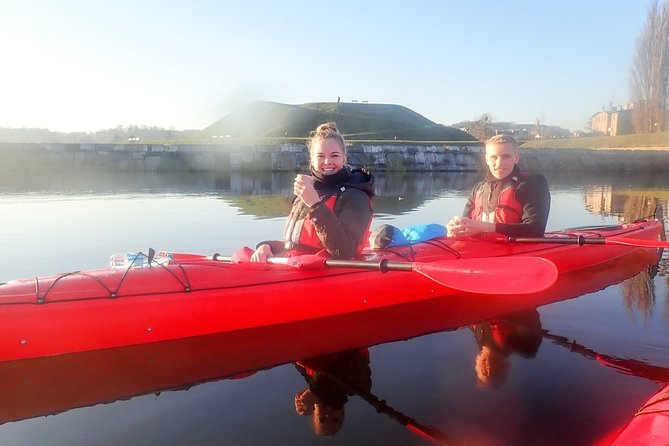
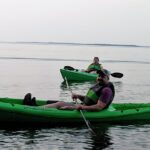
If you’re traveling as a couple, double kayaks are available, which can make this feel more like a shared experience and less like “tour plus gear management.” It also tends to be easier emotionally: you’re not constantly switching attention between separate kayaks and different paddling styles.
The small-group cap (up to 20 people) matters more than you might think. It helps the guide keep close control—especially for safety briefings and for adjusting guidance while you’re on the water. Many people also mention that instruction is detailed and that the guide matches the group’s ability level, which is exactly what you want when some people are first-time paddlers.
In other words: if you’re new to kayaking, you’re not being thrown into chaos. You’re being taught enough to feel confident.
Price and value: is $48.85 worth it?
At $48.85 per person for about 2 hours 30 minutes, the value comes from three things working together: time on the water, guided interpretation, and the rarity of the viewpoint.
You’re not just buying seat time. You’re paying for:
- A guide who navigates so you can focus on paddling and sights
- Multiple stops tied to specific Gdansk landmarks and maritime stories
- Access to shipyard views, island scenery, and canal routes that walking tours can’t replicate
A good rule of thumb: if you’re already planning a half day, this is a more “hands-on” way to see Old Town and the industrial waterfront in one go. It mixes light activity with real context—The Crane mechanics, a named freighter, and the working shipyard environment—so you come away with more than photos.
Where to start from and how to make the tour smoother
The meeting point is around Dockowa 1 in Gdańsk. That’s helpful because it’s not buried in a maze of back streets, and the operator notes it’s near public transportation.
Show up early. The safety briefing is mandatory, and late arrivals aren’t admitted. Also, plan your day so you’re not rushing from a long museum stop or a distant lunch.
If you want the best experience:
- Bring clothing you’re comfortable paddling in, and don’t overthink fashion.
- Keep your phone protected or use waterproof options if you have them available.
- Eat beforehand, but don’t go so full that you feel sluggish while paddling.
Should you book this kayak tour in Gdansk?
Book it if you want an active way to see more of Gdansk than walking-only routes allow—especially if you care about the city’s water connection, like The Crane’s role in maritime trade, and you’re curious about real shipyard work. It’s also a strong choice if you like guided history told in plain language while you’re moving.
Skip it or think twice if you can’t comfortably meet the swimming requirement, you’re not willing to follow the safety rules, or you hate weather-related changes. Since it runs in all weather, your enjoyment will depend on how well you dress for the day.
If you match those basics, you’ll likely end up with a very “I remember that” version of Gdańsk: canals, cranes, working ships, and a different scale of the city than you get on land.
FAQ
How long is the guided kayaking tour?
It runs for about 2 hours 30 minutes (approximately).
What is the price per person?
The price is $48.85 per person.
Is the tour offered in English?
Yes. The tour is offered in English.
Is it a small group?
Yes. The maximum group size is 20 travelers.
Do I need to be able to swim?
Yes. You need to be able to swim to participate.
Is there a weight limit?
Yes. The weight limit is 110 kg.
Are double kayaks available for couples?
Yes. Double kayaks are available.
Do they require a safety briefing before launch?
Yes. You’ll have a mandatory safety briefing, and you need to arrive several minutes early. Late arrivals won’t be admitted.
Does the tour run in bad weather?
It operates in all weather conditions. You’ll want to dress appropriately for the day.
What’s the cancellation policy?
You can cancel for a full refund if you cancel up to 24 hours in advance. If it’s canceled due to poor weather, you’ll be offered a different date or a full refund.