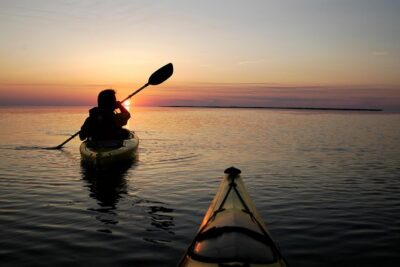
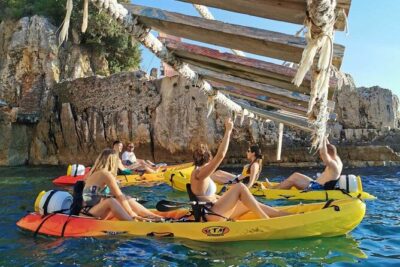
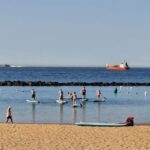
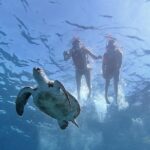
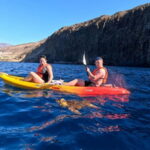
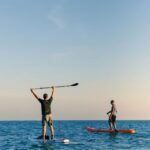
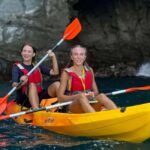
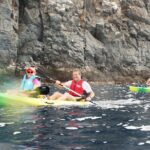
Kayaking and snorkeling in Tenerife sounds simple, but the small-group setup and the local pacing make it feel smooth and personal, with volcanic coastline views and a snorkel stop that can bring dolphins and turtles into the story. I really like how the guides handle both the logistics and the wildlife talk, and I like that you get proper gear plus a locker/bathroom setup before you head out. The one thing to consider is that this is about moderate fitness and you’re on the water for a full 3 hours, so you’ll want to feel comfortable paddling (even if the group stays friendly and no one rushes you).
The whole experience runs from a kayak center in Los Cristianos (south Tenerife). You’ll change, store your stuff safely, get a quick safety briefing, paddle together, then anchor for snorkeling in shallow, clear water before heading back to the same meeting spot. Guides I’ve read about, including Juju, Justas, and Manuel, come through as warm and attentive—especially for families and first-timers.
In This Review
- Key things that make this tour worth your time
- Where it starts: Los Cristianos, organized before you even paddle
- The paddle route: volcanic cliffs, fish farms, and chances for wildlife
- Stop 1: Montanas Guaza, seen from the water
- Stop 2: El Palm-mar and the feel of Tenerife’s south coast
- Stop 3: Playa de Los Cristianos, the return to shore
- Snorkeling in a shallow bay: clear water and fish identification help
- Safety, gear, and the small-group advantage
- How long it really takes and what the rhythm feels like
- Cost and value: is $42 worth it for kayak + snorkel?
- Weather matters in Tenerife, and the tour is built for that
- Who should book this kayaking and snorkeling adventure
- Should you book? My honest take
- FAQ
- What is the meeting address for the kayak and snorkeling tour?
- How long is the experience?
- What’s the group size limit?
- What snorkeling equipment is included?
- Are life jackets and kayaking gear provided?
- Do I need to bring a wetsuit?
- Is there somewhere to change and store personal items?
- What physical level do I need?
- Is the tour in English?
- What if the weather is bad?
Key things that make this tour worth your time
- Max 10 travelers means you’re not swallowed by a big crowd
- Locker space + bathroom access before you get wet is a real quality-of-life win
- Snorkeling mask and tube are included, and wetsuits are optional
- Volcanic cliffs and fish farms are part of the route, with wildlife sightings possible (dolphins and turtles)
- A calm, guided pace with time for questions and wildlife education
- Short photo upsell after the tour (20 euros per group), so you can focus on the water instead of taking pictures
Where it starts: Los Cristianos, organized before you even paddle
I like that this tour begins with practical comfort, not chaos. You meet at the kayak center in Los Cristianos, at C. Juan XXIII, 30. Before you step onto the beach, there’s space to change your outfit if needed, and you can leave personal belongings safely inside the office. There’s also toilet access on-site, which matters more than you might think once you’re dressed for the water.
Gear is handled in a straightforward way: each person gets a paddle, a life jacket, and a snorkeling mask with a tube. If you want extra warmth, wetsuits are available as optional. The tour also includes water, which keeps the whole plan from turning into a scramble.
Then there’s the short walk to the beach—about five minutes—so you don’t lose half your morning to transportation inside the area. Your guide gives a safety briefing right before you get in the kayaks, and they’re set up to answer questions so you start paddling confident rather than guessing.
You can also read our reviews of more tours and experiences in Tenerife.


The paddle route: volcanic cliffs, fish farms, and chances for wildlife
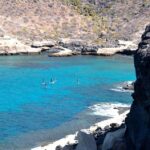
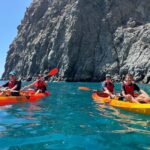
This is not a long grind where you’re trying to power through miles. The goal is to explore the coast together and keep your attention on the scenery and marine life. You’ll paddle while the group follows your guide, checking out volcanic cliffs along the way.
One of the most interesting parts is the route passing near fish farms. That doesn’t just sound like random coastline trivia—it’s part of why you may see more marine life. In the provided info, dolphins and turtles are specifically mentioned as possible sightings, and that lines up with what’s highlighted in the experiences people describe.
You may also notice a difference in how the guides talk about what you’re seeing. Guides named Juju, Manuel, and Justas show up in the feedback as friendly and enthusiastic, with enough time to explain the wildlife and the local area. That education isn’t tacked on like a lecture. It’s more like, you’re floating past something interesting, and the guide helps you understand why it matters.
Stop 1: Montanas Guaza, seen from the water
Montanas Guaza is one of the listed stops. From a traveler’s point of view, stops like this are about pacing: they give the group a sense of route milestones while also keeping the trip from feeling like one endless stretch. On the water, you tend to notice the shape of the coastline more than you would from shore, especially in Tenerife where volcanic rock creates dramatic edges.
A small drawback: you won’t get a sightseeing stop where you hop out for a long photo session. This is kayaking-first, so treat these stop names as route markers rather than long breaks.
Stop 2: El Palm-mar and the feel of Tenerife’s south coast
El Palm-mar is another listed stop, which signals that you’re traveling along the south Tenerife coastline rather than staying in one tiny corner. This matters because it changes the mood of the paddle. Instead of repeat scenery, you’re moving through different stretches of water while the guide keeps the group together.
You’re also still in the zone where fish farms can come into play. The guides talk about those fish farms as part of your wildlife education, and that makes it easier to understand why certain areas might attract marine life.
If you’re worried about being able to keep up, the small group size is your safety net here. With a maximum of 10 travelers, it’s easier for the guide to watch everyone’s pace and adjust when needed. In the feedback, the tone is repeatedly that you’re looked after and not rushed, including in family situations.
Stop 3: Playa de Los Cristianos, the return to shore
Playa de Los Cristianos is both where you set up and where you return. After snorkeling, you paddle back enjoying the coast on the way to shore again. That return leg can be a nice decompression moment because you’ve already done the main action (kayaking + snorkeling), and now it’s just about getting back with good views and a calmer rhythm.
A small consideration: since the total duration is about 3 hours, the trip doesn’t linger forever. If you’re the type who wants a long, extended snorkeling session, you should know this is a structured program. It’s designed to be efficient while still being relaxed.


Snorkeling in a shallow bay: clear water and fish identification help
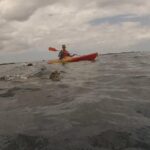
The snorkeling part is the headline for many people, and it’s set up in a sensible way. After paddling and exploring, you anchor in a shallow bay and then jump into crystal clear water for a swim. The shallow setting is practical: it’s easier to get comfortable and enjoy the water without needing advanced confidence to handle open conditions.
The fish list isn’t vague. You can see multiple tropical species, including parrot fish, trumpet fish, green fish, damsel fish, and schools of baracudas, plus many others. That doesn’t mean every species is guaranteed every time, but it tells you the guide is aiming for a vibrant underwater spot.
Here’s what I find especially valuable: you’re not just given a mask and told to go. The guides provide time for wildlife education and help you understand what you’re seeing—especially around the fish farms and nearby points of interest/landmarks.
One practical note: snorkeling equipment is included (mask and tube), but the tour’s wetsuit approach is optional. If you run cold, you might consider the wetsuit. If you’re comfortable in the water, you can probably skip it.
Safety, gear, and the small-group advantage
Safety is handled early. You get a life jacket, a quick safety briefing from your guide, and a group that stays together during the paddling and the snorkeling. That’s the base layer.
The bigger benefit is how the small group changes the experience feel. With up to 10 travelers, you’re more likely to get personal attention, more likely to hear instructions clearly, and less likely to get left behind. People describe the group as organized and paced well, with enough time for explanations and questions.
In the feedback, families with young children also mention that the small-group approach makes a noticeable difference versus larger tours. That doesn’t mean it’s a kids’ tour only, but it does mean the guide can manage variety without turning it into a chaotic sprint.
Also, there’s a real human touch in how guides are described—friendly, enthusiastic, attentive. One guide named Juju is specifically highlighted for keeping the group going toward the final point even when the route felt challenging. That tells me the guides aren’t just reading rules off a clipboard; they manage energy and confidence.
How long it really takes and what the rhythm feels like
You’re looking at about 3 hours total. That includes preparation at the center, the short walk to the beach, the safety briefing, kayaking time, anchoring for snorkeling, the swim itself, and then the return paddle and end back at the meeting point.
In at least one experience, the group stayed a little more than 3 hours, which suggests there’s sometimes flexibility if conditions and comfort allow. But don’t plan your day assuming a long extension. Treat 3 hours as the core plan and build buffer time around it.
The rhythm is: prepare → paddle together → snorkel in shallow water → paddle back. That structure is part of the value. You get two major activities without turning the day into a long schedule.
Cost and value: is $42 worth it for kayak + snorkel?
At $42.01 per person for a roughly 3-hour small-group outing, the value depends on what you compare it to.
Here’s what you’re getting that many similar activities charge extra for:
- Kayak guide
- Snorkeling equipment (mask and tube)
- Locker office space, plus bathroom access for changing and stowing belongings
- Water
- Wetsuit is optional (not forced)
- Life jacket and paddle as part of the kayaking gear
Also, it’s a max 10-person group. That can matter more than people expect, especially if you’re trying snorkeling for the first time or you want the guide’s attention.
What’s not included:
- Photos are available for purchase after the activity for 20 euros per group
If you want the convenience of gear plus a guided wildlife-focused route, this price looks fair. If you’re already bringing your own snorkeling gear and you only care about a quick swim, you might find other options cheaper—but you’d be giving up the guided setup and the organized plan.
Weather matters in Tenerife, and the tour is built for that
This experience requires good weather. If conditions aren’t right, the tour may be canceled and you’ll be offered a different date or a full refund. That’s not a flaw; it’s a sign the activity is dependent on real water conditions, not wishful thinking.
So, if Tenerife is in your travel plan, try to book this earlier in your stay (so you have backup days). And if you’re planning other beach activities on the same day, keep some slack.
Who should book this kayaking and snorkeling adventure
This tour is a strong fit if:
- You want small-group attention (max 10 travelers)
- You enjoy the idea of kayaking past volcanic cliffs and near fish farms
- You want snorkeling gear handled for you (mask + tube included)
- You prefer a guide who explains wildlife instead of rushing you
- You’re comfortable with moderate physical fitness demands for paddling
You might skip it if:
- You’re looking for a full-day outing with long breaks and lots of time on land
- You get uncomfortable in the water environment quickly
- You’re expecting a long, unstructured snorkeling session without guidance (this is structured)
Should you book? My honest take
I’d book this if you want a well-run 3-hour combo of kayaking plus snorkeling, with the coastline and marine life as the main point. The biggest strengths are the practical start (changing space, lockers, bathroom), the small-group size, and the guide attention that shows up in stories about families, first-timers, and wildlife education.
If you’re the type who likes your tours organized and human—gear ready, safety briefing done right, then out on the water—I think you’ll enjoy this a lot. Just make sure you’re comfortable paddling at a moderate level, since the experience is built around being active for the full time window.
FAQ
What is the meeting address for the kayak and snorkeling tour?
You meet at C. Juan XXIII, 30, 38650 Los Cristianos, Santa Cruz de Tenerife, Spain.
How long is the experience?
It’s about 3 hours (approx.).
What’s the group size limit?
The tour has a maximum of 10 travelers.
What snorkeling equipment is included?
Snorkeling mask and tube are included.
Are life jackets and kayaking gear provided?
Yes. Each participant receives a paddle and a life jacket.
Do I need to bring a wetsuit?
A wetsuit is optional. You’re provided other essential gear, and the wetsuit is offered if you want it.
Is there somewhere to change and store personal items?
Yes. There is locker office space to change your clothes, use a bathroom, and leave your personal belongings safely.
What physical level do I need?
The tour is for travelers with a moderate physical fitness level.
Is the tour in English?
Yes, it’s offered in English.
What if the weather is bad?
This experience requires good weather. If it’s canceled due to poor weather, you’ll be offered a different date or a full refund.