REVIEW · KO LANTA
Mangrove Tour by Kayaking in Ko Lanta With Lunch
Book on Viator →Operated by Diamond Cave Tour · Bookable on Viator
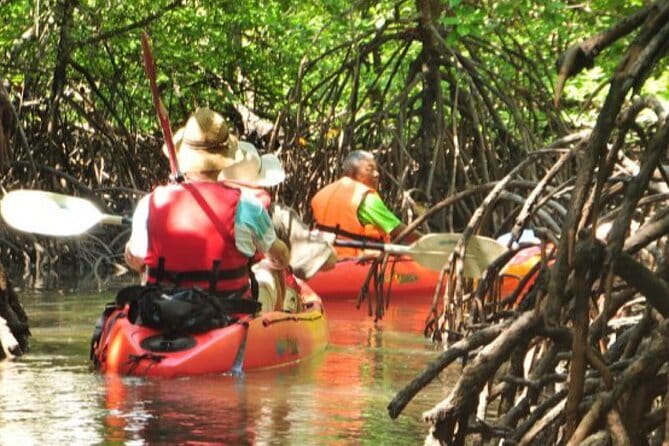
Mangroves feel like a quiet secret. This Ko Lanta kayaking trip takes you through the protected waters around Tung Yee Peng village, with plenty of wildlife on the route and a local guide keeping things friendly and practical. I also like that guides such as Karine and Ramadan bring the ecosystem to life without turning it into a lecture.
Two things I really like: you get a true mix of paddling plus community time, including a stop at a fish farm, and you finish with a proper lunch at a mangrove restaurant. You’re not just floating around either; you’re learning how fishermen raise fish and what makes this mangrove area worth protecting.
One consideration: monkeys can be bold. If they decide you’re part of the scene, keep valuables secured because they may investigate bags and gear during breaks on the water.
In This Review
- Key things to know before you go
- Tung Yee Peng Mangroves: calm paddling in a protected ecosystem
- Kayaking route: wildlife you can actually see, plus monkey awareness
- Tung Yee Peng village energy: learning the rhythm of local fishermen
- Fish farm stop: why it adds value beyond a kayak outing
- Lunch at the mangrove restaurant: fruits, soft drinks, and a real meal
- Price and what you’re really paying for ($25.96 plus a small extra fee)
- Getting there from Sala Dan: meeting at Tung Yee Peng Pier
- What to wear and how to act around monkeys (the practical stuff)
- Who this mangrove kayaking with lunch suits best
- Should you book this mangrove tour by kayaking in Ko Lanta?
- FAQ
- How long is the Mangrove Tour by Kayaking in Ko Lanta with Lunch?
- Where does the tour start and end?
- Is pickup included?
- What does the tour include?
- Is the entrance fee included?
- What group size should I expect?
- What should I do about monkeys during the kayak portion?
- Is lunch included?
- What is the cancellation policy?
Key things to know before you go
- Protected mangroves: shaded, calm paddling waters with lots of small life to spot
- Small group feel: maximum of 12 travelers, so you’re not lost in a crowd
- Wildlife interactions: birds, crabs, and sometimes monkeys on or near the kayaks
- Fish farm visit: a hands-on look at how locals raise fish the traditional way
- Lunch included: seasonal fruits, cold soft drinks, and a filling meal after paddling
Tung Yee Peng Mangroves: calm paddling in a protected ecosystem
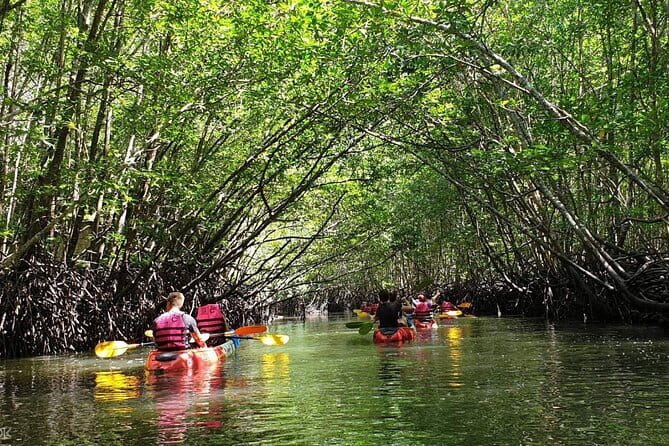
Koh Lanta has plenty of ways to enjoy the outdoors, but mangroves are special because the water isn’t just pretty. Mangrove forests are protected habitats full of aquatic life—shrimp, shellfish, crabs, fish, and other creatures that live partly in water and partly in the roots above. That mix is what makes your kayak route feel active even when the pace stays relaxed.
This tour starts at Tung Yee Peng Pier, right where the mangroves begin to open up for visitors. From there, you paddle through sheltered channels where the shade helps keep the experience comfortable, especially if you’re traveling in warmer months. The route is also designed for learning and observation—perfect if you enjoy wildlife spotting more than high-speed adventure.
You’ll also get a local guide with you the whole time. The role of the guide matters here. Mangroves can look like a green tunnel if you don’t know what to watch for. A good guide helps you notice the small stuff: signs of tiny life around the roots, movement you’d miss from shore, and how the ecosystem works as a nursery for fish and shellfish.
You can also read our reviews of more tours and experiences in Ko Lanta.
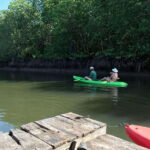
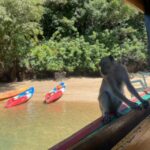
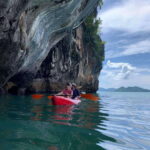
Kayaking route: wildlife you can actually see, plus monkey awareness
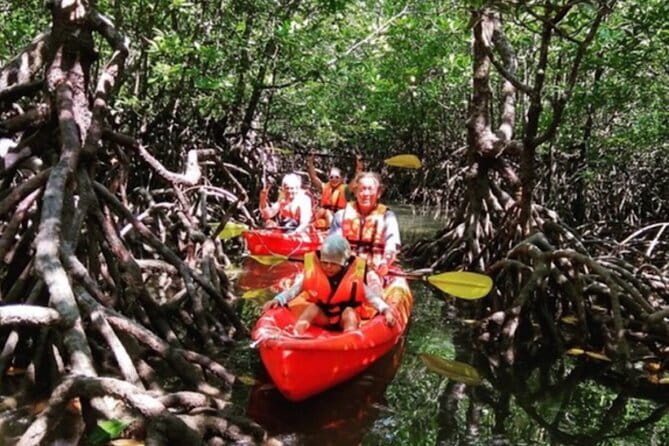
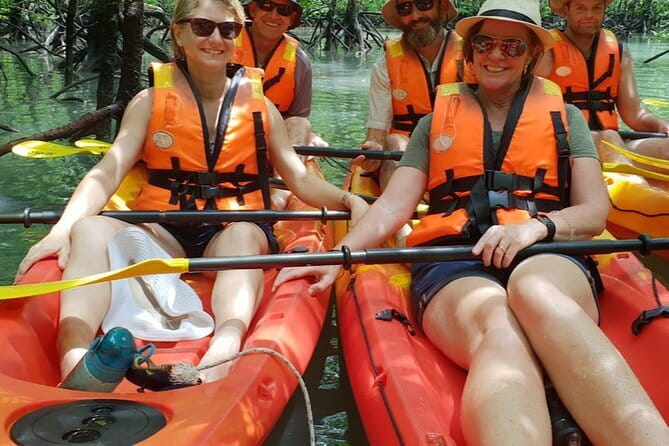
Kayaking in the mangroves is a full-body activity, but it’s not about sprinting. You’re using steady paddling technique to move through the water slowly enough to notice what’s around you. That slow pace is the point. If you rush, you’ll miss the birds perched in trees, the little flashes of movement near the waterline, and the general sense that you’re gliding through a living system.
The tour focuses on seeing wildlife such as birds and other aquatic creatures. You may also spot things like fiddler crabs along the margins and other small life in the shallow areas—exactly the kind of details that make mangroves feel more grounded than a typical “pretty nature” stop.
Now for the part you should mentally prepare for: monkeys. On this kind of kayaking trip, monkeys can show up around the mangroves, including near the kayaks during breaks. One practical tip you’ll hear from the guide is to keep valuables in your bag and secured. If you bring loose items, expect monkeys to investigate like they’ve got a hobby license.
This doesn’t have to ruin your day. It just means you act like a responsible wildlife observer: keep things tidy, don’t tease animals, and treat curious contact as a reminder to protect your gear. The best attitude is calm and practical—your kayak will still be fun, and the wildlife sightings usually feel like part of the mangrove story rather than a disruption.
Tung Yee Peng village energy: learning the rhythm of local fishermen
One of the most valuable parts of this experience is that it connects nature to people. You’re not only kayaking in a pretty protected area; you’re also learning how the local community depends on the environment nearby.
During the tour, you get to watch the way fishermen work in the broader mangrove setting. That includes the fish-raising element—how fish farms operate and why mangroves matter for coastal life. Even if you don’t know Thai and you’re not an expert in aquaculture, the basic logic is easy to understand when someone local explains it with real context.
This is where the tour feels more meaningful for me (and likely for you) if you like cultural learning that isn’t staged. You’re seeing daily livelihoods tied to the same water you’re paddling in. It also helps you understand why eco-tourism matters here. When visitors learn what the mangroves do—shelter, breeding, feeding grounds—they’re more likely to respect protections instead of treating the area like a backdrop.
Fish farm stop: why it adds value beyond a kayak outing
A lot of kayaking trips end right when paddling ends. This one keeps going. You visit a local fish farm and learn about the traditional way fishermen raise fish. That extra time changes how you feel when you return to dry land.
Why is this valuable? Because mangroves aren’t just for tourists. They’re functional habitats. Fish farms and fishing communities rely on knowledge of local conditions and seasonal rhythms. When you learn that from a guide, you stop thinking of the mangrove as a scenery type and start thinking of it as an active part of food systems.
You also get more than facts. You get a sense of how work and nature connect in a coastal village. If you enjoy seeing how everyday life works in Thailand—without the pressure of a classroom—you’ll probably appreciate this stop as one of the key reasons the tour is worth doing.
Lunch at the mangrove restaurant: fruits, soft drinks, and a real meal

After paddling, you’ll want food that doesn’t feel like a token snack. This tour includes lunch at a mangrove restaurant, which is exactly the kind of payoff that makes the experience feel complete instead of rushed.
You can expect seasonal fruits and cold soft drinks along with lunch. That combo helps you cool down after time in the sun and shade. In at least one guide-run meal experience, people were served a rice dish after kayaking, which makes sense for a tour like this: filling, familiar, and practical after physical activity.
One extra detail to plan around: after kayaking, you’ll probably be tired in a good way. That makes lunch timing important, and here it’s built in so you’re not scrambling for food afterward. This is also one reason the included meal feels like real value rather than an add-on.
And because the restaurant setting is tied to the mangrove experience, the meal fits the theme. You’re still in the zone, still close to the community atmosphere, and not suddenly transported back to a generic tourist buffet.
Price and what you’re really paying for ($25.96 plus a small extra fee)
The listed price is $25.96 per person, which is fairly reasonable for a 3-hour guided experience that includes kayaking gear, lunch, and transportation. The trick is looking at what’s covered versus what isn’t.
What you get included:
- round-trip transfer
- life jacket
- local guide
- insurance
- lunch
- seasonal fruits and soft drinks
- admission ticket included for the main activity
What’s not included:
- an entrance fee of 40 baht per adult
So your real budget is a bit more than the headline price once you factor in the 40 baht entrance fee. Still, that’s usually a small amount compared to tours that charge separately for guides, meals, and transfers. The value here is the combination of paddling time, wildlife spotting, community education via the fish farm, and a guided meal afterward.
Also, think about the “effort you save.” Round-trip transfer means you don’t waste time coordinating your own transport. A life jacket and guide support means you’re not guessing your way through the safest and easiest way to paddle the route.
Getting there from Sala Dan: meeting at Tung Yee Peng Pier
The meeting point is Tung Yee Peng Pier (Mangrove tour – Eco tourism), near Sala Dan in Ko Lanta, and your tour ends back at the meeting point. That matters because you don’t have to figure out a separate drop-off or scramble to arrange a return trip.
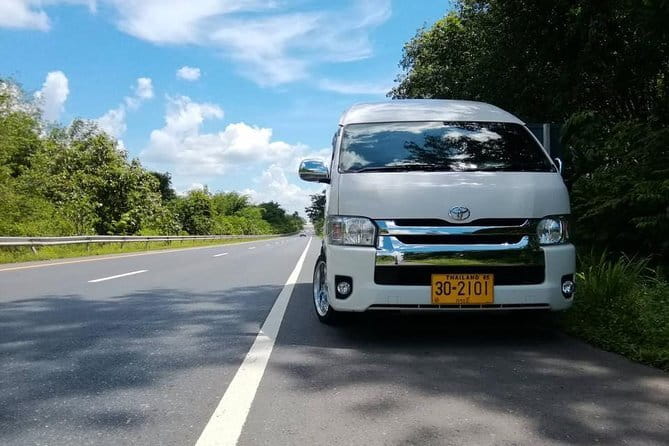
Pickup is offered, and the tour provides a mobile ticket. It also runs with a maximum of 12 travelers, which helps keep the experience from feeling crowded or chaotic. In a wildlife setting, smaller groups make a difference. You’re more likely to get quality attention from your guide and clearer chances to spot what’s happening around you.
The location is also described as near public transportation, so if you’re coordinating your own local movement, you’re not locked into only one method.
If you like your day planned but not overly scheduled, the timing works well. The total experience is about 3 hours, with kayaking taking a meaningful chunk of that time. In practice, it’s long enough to feel like you accomplished something, but not so long that you lose patience or energy before lunch.
What to wear and how to act around monkeys (the practical stuff)
The tour includes a life jacket, so you won’t have to worry about sourcing one. Beyond that, you’ll be happiest if you dress for warm coastal weather and occasional water splashes.
The monkey element means you should plan like an adult in a wildlife park:
- Keep valuables secured in your bag
- Don’t leave items loose on the kayak
- Treat curious monkey behavior calmly, not aggressively
That last point is key. If monkeys climb or get close, the goal is safe, respectful observation. The guide’s instructions are there for a reason, and they’ll help you avoid the most common “oops” moments—like an unlocked bag or a phone left where it can be grabbed.
This tour is still fun for nature lovers, not just for people who want to feel athletic. The kayaking is part of the experience, but the mangroves are the main event. Monkeys are just one unpredictable bonus of that natural setting.
Who this mangrove kayaking with lunch suits best
This is a good choice if you:
- want a calm outdoor activity with wildlife spotting
- like eco-tourism that supports local community life
- want kayaking plus a cultural component, not just time on the water
- prefer small groups and clear guidance
- appreciate having lunch handled for you
It also fits people who want “sport” without extreme effort. The tour is described as an exercise activity with kayaking, and you’ll use enough energy to feel like you did something, but it doesn’t sound designed for elite paddlers.
If you’re very uncomfortable around animals or you dislike the idea of monkeys approaching near gear, you’ll want to think carefully and pack wisely. With the right mindset and secure storage, most people can handle it.
Should you book this mangrove tour by kayaking in Ko Lanta?
Book it if you want a balanced morning or day activity that mixes nature, wildlife observation, and community learning, all wrapped up with a proper lunch. The value is strong because you’re getting transport, a guide, life jackets, meals, and insurance inside the price, with only a small entrance fee extra.
Skip or reconsider if you can’t handle the idea of monkeys getting curious around boats and bags. If that’s you, you can still enjoy mangroves in other ways, but you’ll need a different style of tour where animal interactions are less likely.
If your goal is to see mangrove life up close and leave with a better understanding of how local fishermen connect to the ecosystem, this is a smart pick.
FAQ
How long is the Mangrove Tour by Kayaking in Ko Lanta with Lunch?
The tour lasts about 3 hours.
Where does the tour start and end?
It starts at Tung Yee Peng Pier and ends back at the same meeting point.
Is pickup included?
Yes. Round-trip transfer is included, and pickup is offered.
What does the tour include?
Included items are a life jacket, lunch, seasonal fruits, soft drinks, a local guide, insurance, and admission ticket coverage for the activity.
Is the entrance fee included?
No. There is an entrance fee of 40 baht per adult that is not included.
What group size should I expect?
The tour has a maximum of 12 travelers.
What should I do about monkeys during the kayak portion?
Keep valuables secured in your bag, since monkeys may approach and interact with kayaks.
Is lunch included?
Yes. Lunch is included at a mangrove restaurant, along with seasonal fruits and soft drinks.
What is the cancellation policy?
You can cancel for a full refund up to 24 hours before the experience starts. If you cancel less than 24 hours before, the amount paid is not refunded.