REVIEW · MAUI
Stand-Up Paddle Board Lesson at Ka’anapali Beach
Book on Viator →Operated by Island Style Adventures - Maui Surf School Kaanapali · Bookable on Viator
Maui’s calm water makes learning SUP feel doable. I like the small-group instruction and the gear package that’s ready for you: board, rash guard, and water shoes. In the water, an instructor like Mario or Captain keeps the vibe patient and funny, even when you’re wobbly. One possible drawback: the company name can be easy to miss in your confirmation, so plan a little extra time to find the start spot.
Check in is 30 minutes before class, and the lesson begins with a 30-minute land safety and technique session. Then you’ll spend about an hour+ on your board, and there’s a staff photographer capturing photos throughout for optional purchase at the end. You’ll want moderate physical fitness for the balance work, but previous SUP experience isn’t required.
In This Review
- Ka’anapali Beach SUP: Why This Small-Group Lesson Works
- Timing and What Happens at Check-In (30 Minutes Before)
- Land Lesson First: Safety + Technique That Actually Helps
- In the Water for About an Hour+: What You’ll Do Out There
- Instructor Energy (Mario, Captain) and Small-Group Coaching
- Gear Included: Rash Guard, Water Shoes, and the Board
- Photos During the Lesson: Optional, but Convenient
- Parking Validation Up to 3 Hours: A Maui Practical Win
- Price and Value: Is $140 Worth It?
- Who Should Book This SUP Lesson at Ka’anapali?
- Should You Book This Ka’anapali Beach Stand-Up Paddle Lesson?
- FAQ
- How long is the stand-up paddleboard lesson?
- Where is the lesson meeting point?
- When should I check in?
- Do I need previous SUP experience?
- Is the lesson taught in a small group?
- What gear is included in the lesson?
- Are photos included?
- Is parking validated?
- What happens if weather is poor?
- What is the cancellation policy?
Ka’anapali Beach SUP: Why This Small-Group Lesson Works
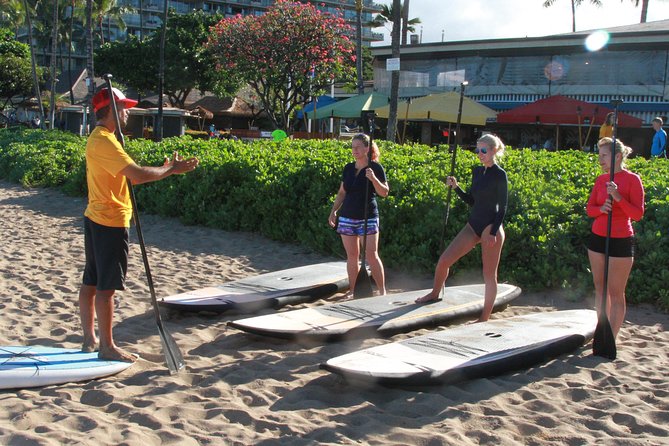
This is the kind of SUP lesson that makes sense for beginners because it doesn’t throw you in right away. You get a proper land start first, then you move into the water with the fundamentals already in your head: posture, how to hold the paddle, where your weight goes, and how to react when your board starts to drift.
The other big win is the group size. With a maximum of 15, you’re more likely to get real feedback rather than just a general demo for everyone. That matters when you’re learning the most awkward skill in the world: standing still on a moving plank while watching the water.
Also, Ka’anapali Beach is a great setting for a first attempt. One of the best themes from the instructors’ approach is that they aim for conditions that feel manageable—especially for early classes when the water tends to be calmer.
Timing and What Happens at Check-In (30 Minutes Before)
Your lesson doesn’t start when you show up. Plan on arriving early because check-in is 30 minutes before your scheduled start time.
That pre-lesson window is there for practical reasons: getting you matched with the right board, getting you into the rash guard and water shoes, and setting the group up so you can begin the land training on time. It also gives you a buffer if you’re still figuring out where to park and where the meeting point is.
If you’re the kind of person who hates running late, this structure is friendly. You’re not thrown into chaos at the last minute—you’re given time to get ready and focus.
Pro tip for your peace of mind: If the company name in your email isn’t immediately clear, don’t wait until the last second. Give yourself extra time to locate Island Style Adventures – Maui Surf School Kaanapali at 50 Nohea Kai Dr, Lahaina, HI 96761.
You can also read our reviews of more tours and experiences in Maui.


Land Lesson First: Safety + Technique That Actually Helps
After check-in, the lesson starts with a 30-minute land/safety session. This is where you’ll learn the “how” before the “try it.”
Even if you’ve never SUP’d, this part helps you understand what success looks like. You’ll get guidance on stance and balance, how to position your paddle, and the basic safety mindset you need in open water. The goal is to turn random flailing into simple actions you can repeat.
This is also the phase where the instructor’s personality becomes clear. Based on what people mention after the fact, guides here tend to be patient and energetic—exactly what you want when your first time on a board might include some laughter.
In the Water for About an Hour+: What You’ll Do Out There
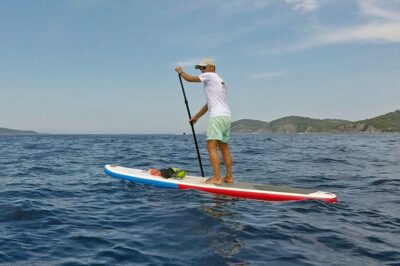
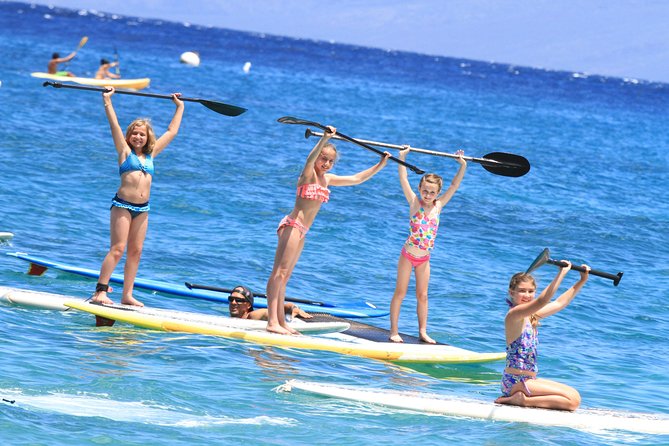
Once you’re geared up and briefed, it’s time for the real deal: more than an hour of SUP on the water. The lesson is set up so you don’t just paddle in circles. You’ll get time to practice standing, turning, and moving with control.
One detail that comes up in feedback is that many sessions include a paddle to the cliffs and back. That gives you a goal beyond just learning to stay upright. You get a real sense of what it feels like to move across the water while your surroundings stay interesting.
You should also expect some inevitable wobbling. Even people who do great usually fall at least once in the learning phase. The instructors keep it light, so falling becomes part of the lesson instead of a crisis.
And if you’re hoping for a confidence boost, early classes can help. When conditions are calmer, your board feels more predictable, and your first attempts at standing are more likely to click faster.
Instructor Energy (Mario, Captain) and Small-Group Coaching
A SUP lesson lives and dies by the instructor. Here, the pattern in the feedback is consistent: the guides have fun, teach with clarity, and adjust to the group in the moment.
In particular, you’ll hear appreciation for instructors being:
- Patient with brand-new learners
- Engaging, with a sense of humor that makes mishaps easier
- Focused on individual comfort, not just group performance
Two names show up clearly in the reviews: Mario and Captain. People highlight extra attention when someone needs reassurance—like staying positive and giving more hands-on guidance during the first standing attempts.
If you’re nervous about water sports or you just don’t want to feel rushed, this coaching style is a strong match. It’s also a nice fit if you’re traveling with someone who learns at a different pace than you do.
Gear Included: Rash Guard, Water Shoes, and the Board
The lesson includes the gear you’ll need to get comfortable quickly:
- Stand-up paddleboard
- Rash guard
- Water shoes
This is one of the best value points for $140. It means you don’t have to worry about renting equipment elsewhere or arriving unprepared. Rash guards help with sun and chafing, and water shoes give your feet traction and protection on the shore and in the water.
You’re also less likely to spend the first hour of your vacation hunting for gear. Instead, you can focus on learning.






Photos During the Lesson: Optional, but Convenient
A staff photographer takes photos during the entire lesson. That’s useful because you don’t have to juggle a camera while trying to balance.
Photos are optional for purchase at the end, so you keep control. If you like action shots (and you probably will after a lesson where you might fall, laugh, and then suddenly stand), it’s a nice add-on.
Just know it’s not a “bring your own photos” situation. You’ll be in the instructor’s rhythm, and the photographer captures the moments you’d miss.
Parking Validation Up to 3 Hours: A Maui Practical Win
Maui logistics can quietly make or break a day. The good news here: you get parking validation for up to three hours.
That’s a big help if you’re building your day around a morning or early-afternoon lesson. Even if you’re not sure how long the overall outing will take, three hours is usually enough to cover check-in, training, and time after you’re done.
Price and Value: Is $140 Worth It?
At $140 per person, this isn’t a budget activity. But it can be good value if you look at what’s included and how you’re taught.
Here’s why the price can feel fair:
- Instruction time is real: 30 minutes on land + about an hour+ on water
- Gear is included, including rash guard and water shoes
- The group is small (up to 15), which supports better coaching
- A staff photographer captures the lesson (optional purchase)
If you tried to piece this together separately—renting equipment plus booking a guide—you’d likely spend more in time and money. Also, beginners often benefit most from the structure of a lesson like this. You’re not paying just for a board. You’re paying to speed up the learning curve and avoid the common beginner mistakes.
One note: it’s popular. On average, it’s booked about 14 days in advance, so if you want a specific time (especially an early session for calmer water), you’ll want to plan ahead.
Who Should Book This SUP Lesson at Ka’anapali?
This lesson is a strong fit if:
- You’re new to SUP and want step-by-step instruction
- You prefer small-group teaching and more personal attention
- You want a fun water activity without needing to be an expert first
- You like learning with instructors who bring energy and patience (Mario and Captain come up often)
You might think twice if:
- You’re very concerned about balance or have limited physical confidence for standing work
- You need a totally self-directed experience (this is guided, with a set structure)
Moderate physical fitness is encouraged, which usually means you should be comfortable with standing, moving your legs for stability, and getting in and out of the water.
Should You Book This Ka’anapali Beach Stand-Up Paddle Lesson?
If your goal is a guided first SUP experience with gear included, clear safety coaching, and enough time on the board to actually learn something, I’d say yes, book it.
It’s especially worth it when you can match your lesson with better conditions—like an early class—because it makes standing and paddling feel less chaotic. And if you’re the type who learns faster with encouragement and humor, the coaching style here is a big part of the appeal.
Just give yourself a little extra time to find the starting point (the company name isn’t always obvious in the confirmation), and you’ll start the lesson relaxed instead of stressed.
FAQ
How long is the stand-up paddleboard lesson?
The duration is listed as about 1 hour 30 minutes (approx.), and the format includes a 30-minute land/safety lesson followed by about an hour and a half on the water.
Where is the lesson meeting point?
The meeting point is 50 Nohea Kai Dr, Lahaina, HI 96761, USA. The activity ends back at the same meeting point.
When should I check in?
Check in is 30 minutes prior to the lesson start time.
Do I need previous SUP experience?
No previous experience is necessary. A guide provides instruction first on land and then in the water.
Is the lesson taught in a small group?
Yes. The activity has a maximum of 15 travelers, which helps keep instruction more personal.
What gear is included in the lesson?
The lesson includes the stand-up board, plus a rash guard and water shoes.
Are photos included?
Photos are optional. A staff photographer takes photos during the lesson, and you can choose to purchase them at the end.
Is parking validated?
Yes, there is parking validation for up to three hours.
What happens if weather is poor?
This experience requires good weather. If it’s canceled due to poor weather, you’ll be offered a different date or a full refund.
What is the cancellation policy?
You can cancel for a full refund up to 24 hours before the experience’s start time. Within 24 hours, the amount paid is not refunded.