REVIEW · INTERLAKEN
Winter Kayak Tour of the Turquoise Lake Brienz
Book on Viator →Operated by Hightide Kayak School GmbH · Bookable on Viator
A winter paddle, no ski crowds. You slide across Lake Brienz in a kayak with your guide, with snow-covered peaks and Ringgenberg Castle reflected in the clear, calm water. It’s quiet, scenic, and a real change from the usual winter routine.
I also really like the small-group feel—up to six people—and the practical coaching that helps you get moving confidently. The main drawback is that this isn’t a totally relaxed sit-and-stare: you’ll need moderate fitness and you must be able to handle a kayak on your own while wearing a dry suit (and latex/neoprene contact materials).
In This Review
- Key things that make this winter kayak tour different
- Winter Lake Brienz by kayak: what the cold water really delivers
- Price and what you actually get for $202.06
- Meeting at Bönigen and getting kitted up the right way
- The 3-hour paddle around Brienz: what happens at each stop
- Stop 1: Hightide Kayak School (your “learn it fast” base)
- Stop 2: Lake Brienz (the moment it goes magical)
- Stop 3: Boenigen (glimpses of the lake’s villages feel different from water)
- Stop 4: Interlaken (Alps grandeur with city-scale context)
- Stop 5: The Beach – Strandbad Bonigen (a break point that changes the rhythm)
- Stops 6–8: Bernese Oberland, Jungfrau Region, Swiss Alps (scenery by zone, not by checklist)
- What the best guides do (and why it matters for your comfort)
- Clothing and dry-suit details that affect whether you enjoy it
- What you wear (under and outside)
- The allergy note you shouldn’t skim
- Fitness and sizing reality check
- Weather: fog, clouds, and clear days all feel different
- Who this tour is for (and who should skip it)
- Should you book this winter kayak tour on Lake Brienz?
- FAQ
- FAQ
- How long is the winter kayak tour?
- Where does the tour start?
- What is the group size?
- Is previous kayaking experience required?
- What fitness level do I need?
- What should I wear for winter kayaking?
- Are children allowed?
- Is the tour available in English?
- What about allergies to latex or neoprene?
Key things that make this winter kayak tour different
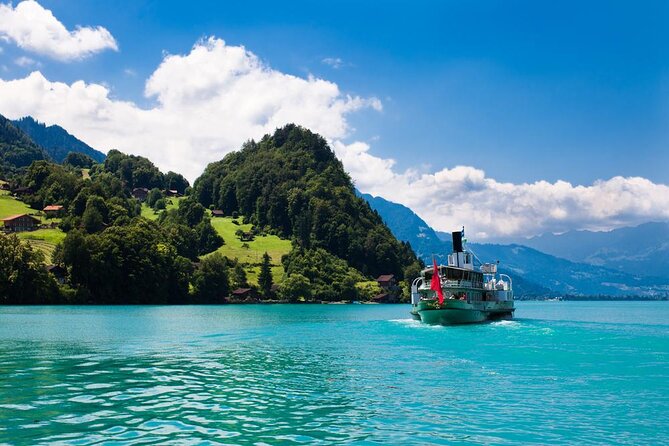
- Ringgenberg Castle views from the water with mountain reflections on the lake
- Max 6 people for real coaching and a calmer pace on the water
- Top-end dry-suit setup aimed at keeping you warm and dry
- Photo package included, so you’re not stuck with only phone shots
- Clear first-time guidance, from getting dressed to paddling technique
- Tea-break style moments on the lake can happen, depending on the day and guide
Winter Lake Brienz by kayak: what the cold water really delivers
Lake Brienz looks made for winter. When the wind drops, the water can go nearly mirror-flat, and the mountains around you look doubled—sky above, snow below. From a kayak, you’re close to that effect in a way you never get from the shoreline.
The standout visual is the combo of snow, dark rock, and bright castle silhouettes—especially the Ringgenberg Castle area. You’re not just “seeing” the Alps. You’re moving through them, slow enough to look around but active enough to feel like you did something.
And yes, it’s cold. But this tour is built around the right gear and the right pacing. The goal isn’t toughing it out—it’s keeping you comfortable enough to enjoy the views without rushing.
You can also read our reviews of more tours and experiences in Interlaken.
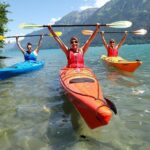
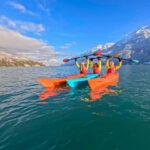
Price and what you actually get for $202.06
At $202.06 per person for about 3 hours, it’s not a bargain. Switzerland pricing can be steep, and outdoor activities are no exception. But I think the cost makes more sense when you itemize what’s included:
- Guided kayaking on Lake Brienz (so you’re not figuring out routes, timing, or safety)
- Kayak + equipment rental
- Warm layers/dry-suit style gear so you’re actually able to be on the water in winter
- A photo package (that’s part of the value, not an extra you have to request)
- Small-group limit (up to six people), which usually means more attention
If you’ve ever tried to rent equipment and then spend your “adventure time” troubleshooting cold gear or basic technique, the guided piece is the real value. Here, you’re paying for the whole day-fits-your-body setup—not just the boat.
Meeting at Bönigen and getting kitted up the right way
The meeting point is Am Quai 1, 3806 Bönigen, Switzerland. The tour ends back at the same place. It’s also near public transportation, which matters in Interlaken-area winter, when parking can be a headache.
Before you touch the water, plan for a proper get-ready process. This is not a casual “meet and go.” You’ll be fitted and dressed for cold-water conditions, using dry-suit equipment designed to keep you dry.
A few practical points that matter for comfort:
- You’ll need warm clothes under the dry suit. Thick socks, thermal top and bottom, and a thin jumper are specifically recommended.
- Bring extra layers if it’s very cold, plus a change of clothes in case you get sweaty or slightly wet during the session.
- Sunglasses and a sunhat help. Winter glare on snow and bright lake light can sneak up on you.
- Sunscreen is suggested (the kind of detail people forget until their nose starts complaining).
Also, you’ll get instruction on how to handle the kayak yourself. You do not need previous kayaking experience, but you do need to be able to manage the kayak on your own once the guide starts coaching you in the basics.
The 3-hour paddle around Brienz: what happens at each stop
You’ll spend roughly 3 hours on the experience, with the day paced to teach you quickly and still give you time for those famous winter views. Here’s what each part likely feels like in real life.
Stop 1: Hightide Kayak School (your “learn it fast” base)
This is where the tour gets practical. Expect dry-suit prep, equipment checks, and the first key lessons so you’re not guessing on the water.
From what I’ve seen emphasized by guides in past sessions, the best part of starting here is speed-to-confidence:
- Getting you sealed up in the dry suit and showing how to move in it
- Walk-through of paddle technique (the parts that affect balance and direction)
- Hand-on coaching so you know what to do, not just what to watch
A calm start is a big deal. If you begin cold and confused, you’ll spend the whole tour tense. Starting at the school sets the tone.
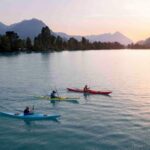
Stop 2: Lake Brienz (the moment it goes magical)
Once you’re on the lake, the tour shifts from instruction to enjoyment. Lake Brienz is the centerpiece: snowy mountains around you, reflections on the clear water, and the feeling of being slightly off the usual crowds.
In winter, that “quiet water” moment is the whole point. You’ll paddle in a way that feels more like gliding than racing, especially when the conditions are calm.
This is also where you’ll notice how the gear works. People usually care less about the tech talk and more about one thing: Are your legs and core comfortable? Are you actually dry? The setup here is designed for that.
Stop 3: Boenigen (glimpses of the lake’s villages feel different from water)
Boenigen is part of the Interlaken-area shoreline story. From the kayak, villages and shoreline buildings don’t look like background. They look like you’re part of the local geography.
You’ll likely get a bit of repositioning and route guidance here—think turns, small paddling adjustments, and the guide setting up the next scenic look.
This stop is useful because it breaks the “straight line” feeling. Your eyes get new cues, and the guide can coach your technique without making it feel like a class.
Stop 4: Interlaken (Alps grandeur with city-scale context)
Interlaken sits as the gateway to major viewpoints, so seeing it from the lake adds context. You get the scale contrast: the region looks both dramatic and organized, like the Alps are doing the talking while humans keep life close by.
You’ll probably spend time looking up and around more than you expect. The water slows you down, and that’s when the mountain views actually land.
If you’re used to quick photo stops, this is different. You’re moving through the scene, so it feels more real than a skyline snapshot.
Stop 5: The Beach – Strandbad Bonigen (a break point that changes the rhythm)
This is listed as a dedicated stop, and in practice, stops like this usually provide a change of pace: regrouping, a short reset, and often a moment to enjoy the lake without constant paddling.
Some guides have built in simple onboard treats—like tea and biscuits while floating in the kayak—so don’t be shocked if there’s a small “stay present” moment out there. Winter time moves faster than you think once you’re focused on breathing and balance. A break helps.
Stops 6–8: Bernese Oberland, Jungfrau Region, Swiss Alps (scenery by zone, not by checklist)
These final stops read like named regions, and that’s exactly how they’ll feel: you’ll be in a sequence of viewpoints that gradually expand your sense of where you are in the Alps.
- Bernese Oberland is the broader setting—big, steep, and dramatic.
- Jungfrau Region is the “okay, so that’s that valley/peak area” feeling—some travelers remember the route because it points toward the famous heights nearby.
- Swiss Alps is the big framing idea: you’re not just kayaking on a lake; you’re kayaking under winter mountain conditions.
Even when you can’t name every peak, you’ll recognize the overall geometry: steep slopes, snow lines, and that crisp winter air vibe.
What the best guides do (and why it matters for your comfort)
The difference between a fun first-timer outing and an awkward one usually comes down to the guide’s pace and teaching style.
In guides’ approaches I’ve seen referenced by name—people like Sean, Ryan, Patrizia, Manu, Dave and Davide, plus Chris, Barrie, and Ian—the common theme is confidence-building. They walk you through the steps in order. They check that everyone is set before moving on. They keep the group included.
A few things to look for in any small-group kayaking tour:
- You’re shown how to wear and adjust gear without rushing
- You get quick, practical paddling cues (not long speeches)
- You feel like the guide is reading the room—calming nerves if needed
- The day has humor and conversation, especially in winter when you’re focused on staying warm
You’ll appreciate that kind of guidance most if it’s your first time in a dry suit or on a kayak. It turns “I hope I’m doing this right” into “I get it now.”
Clothing and dry-suit details that affect whether you enjoy it
This is the part I’d take seriously before booking. Winter kayaking is mostly controlled by one variable: how well you manage heat and water protection.
What you wear (under and outside)
You should bring warm clothes to wear under the dry suit:
- Thick socks
- Thermal top and bottom
- A thin jumper
- Extra layers if it’s very cold
- Change of clothes
And yes, sunglasses and sunhat matter. Winter light on water can be intense.
The allergy note you shouldn’t skim
Dry suit materials matter. The wrist areas use latex gaskets, and the neck uses neoprene material called Glideskin. Direct contact with these materials is unavoidable. If you have a latex or neoprene allergy, participation may not be suitable depending on severity. It’s specifically recommended that you consult your doctor for personalized advice.
If you’re allergic, this isn’t a “maybe you’ll be fine” situation. It’s a “double-check first” situation.
Fitness and sizing reality check
- You should have moderate physical fitness.
- You don’t need prior kayaking experience, but you must be able to handle a kayak on your own.
- Children 15 and younger are not allowed.
- Maximum weight is 120kg.
- Maximum height is 120cm.
- If you have back, neck, lower back, joint, or muscular problems, you should carefully consider participation.
If any of those apply, read that as “plan carefully,” not “automatically no.” But be honest about how you handle cold effort and getting in/out of gear.
Weather: fog, clouds, and clear days all feel different
This tour depends on good weather. It’s not just about comfort—it affects safety and the ability to run smoothly.
When it’s clear, you get that famous “snow and castle reflected in water” look. On cloudy or foggy days, the scene turns moodier. Either way, the lake still provides the main payoff: you’re outside, you’re moving, and the mountains are close.
One practical tip: bring your sunny-day gear even if the forecast says cloud. Winter conditions can shift fast, and the lake light can surprise you.
Who this tour is for (and who should skip it)
I’d point this tour toward you if:
- You want something active but not complicated
- You like small groups and better personal attention
- You want winter scenery without dealing with ski-piste crowds
- You’re comfortable following coaching and learning paddling basics quickly
- You value included gear and a photo package so you don’t have to scramble for extras
I’d suggest you pass or think twice if:
- You can’t manage the kayak on your own after instruction
- You have significant musculoskeletal issues (neck/back/joints) and aren’t confident in the physical demands
- You have latex or neoprene allergies
- You’re expecting a leisurely, no-effort cruise
Should you book this winter kayak tour on Lake Brienz?
If your priority is winter views you can’t get from a parking-lot viewpoint, and you’re okay putting on real cold-water gear, I think this is an easy yes.
Book it if:
- You want the snow-and-reflection magic of Lake Brienz in a way that feels personal
- You like structured guiding with small-group attention
- You’ll appreciate learning a new skill (even if it’s your first try)
Skip it if:
- You’re not comfortable with a dry-suit fit and cold-water contact materials
- You expect a gentle stroll with zero physical effort
- Your schedule is too tight for weather-dependent operation
If you’re a first-timer, don’t overthink it. The tour is built for first-timers who can take direction, manage a kayak safely, and dress properly for the cold. That’s the sweet spot.
FAQ
FAQ
How long is the winter kayak tour?
It runs for about 3 hours.
Where does the tour start?
You meet at Am Quai 1, 3806 Bönigen, Switzerland, and the activity ends back at the same meeting point.
What is the group size?
It’s a small-group tour with a maximum of six travelers.
Is previous kayaking experience required?
No previous experience is required, but you must be able to handle a kayak on your own.
What fitness level do I need?
The activity is recommended for people with a moderate physical fitness level.
What should I wear for winter kayaking?
Wear warm clothes under the dry suit (thick socks, thermal top and bottom, and a thin jumper). Bring extra layers if very cold, sunglasses, a sunhat, and a change of clothes.
Are children allowed?
No. Children 15 and younger are not allowed.
Is the tour available in English?
Yes, it’s offered in English.
What about allergies to latex or neoprene?
This tour is not recommended for people with latex or neoprene allergies because the dry suits have latex gaskets at the wrists and neoprene Glideskin at the neck, with direct contact unavoidable.