REVIEW · CAPE TOWN
Cape Town: Stand-up Paddleboard Experience
Book on GetYourGuide →Operated by SUP Cape Town · Bookable on GetYourGuide
Wobbly at first, then Cape Town clicks into place. This SUP outing uses the V&A Waterfront canals so you can learn the basics and still enjoy real harbor-and-skyline views, not just a nearby stretch of water.
I also like the patient coaching, especially for people who are new to paddleboarding or traveling with kids. The vibe from the staff seems built for teaching, not just renting boards and sending you off.
One drawback: wind can turn the experience from easy-glide to extra-balancing work, and the operator may postpone or cancel when weather gets rough.
In This Review
- Quick hits
- Why SUP at the V&A Waterfront Works (Even for First-Timers)
- The 1-Hour Plan: Lesson, Practice, Then Cruising
- What You’ll See From the Board (And Why It Feels Better Than Photos)
- Coaching Style: Clear Instructions, Help When You Need It
- The Equipment and Balance Reality Check
- Wind, Weather, and When It Might Change
- Value for Money: Why $20 Makes Sense Here
- Who This SUP Experience Fits Best
- Before You Go: Small Tips That Make the Hour Easier
- Should You Book This Stand-Up Paddleboard Session?
- FAQ
- How long is the stand-up paddleboard experience?
- Where does the paddleboarding take place?
- What is included in the price?
- How much does it cost?
- Do I get instruction before I get on the water?
- What language are the guides or hosts?
- Is this activity offered as a small group?
- What if the weather is bad?
- What is the cancellation policy?
Quick hits
- V&A Waterfront canals keep conditions calmer for first rides
- A short lesson helps you get moving fast
- You get Cape Town views without fighting ocean chop
- Small groups mean you’re not lost in the crowd
- Staff stay alert and ready to help when you wobble
Why SUP at the V&A Waterfront Works (Even for First-Timers)
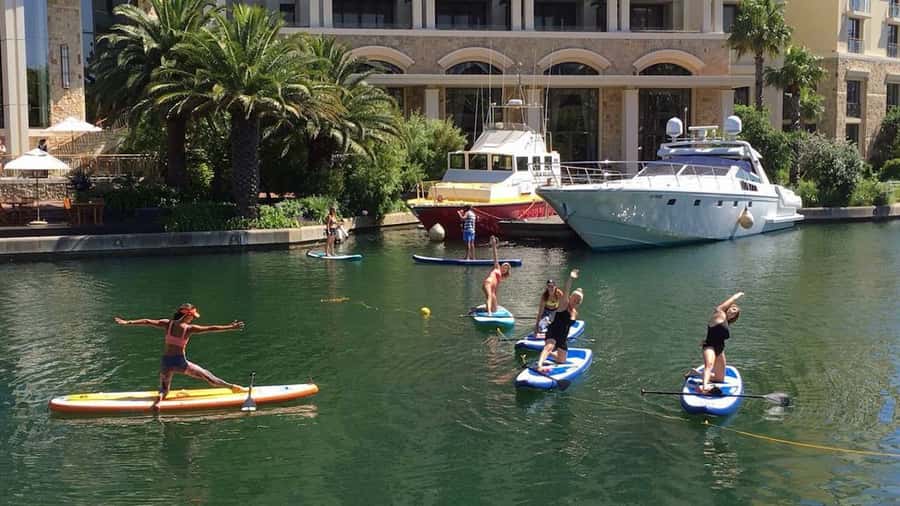
Cape Town is dramatic from almost anywhere, but stand-up paddleboarding gives you a totally different kind of seeing. You’re low to the waterline, you can track movement of boats and swimmers from a new angle, and the city looks closer than it does from shore.
The big reason this works is the setting: the protected canals of the V&A Waterfront. Canals don’t feel like an open-ocean paddle where you must fight waves and currents. Instead, you’re mostly learning control. That means your attention can go toward the basics—stance, grip, paddle rhythm—rather than survival mode.
If you’re worried about being watched by people who already look good on SUP, this location helps with that too. You’re in a practical training zone. It’s the sort of place where a “how do I do this?” moment turns into “oh, I get it now” pretty quickly.
You can also read our reviews of more tours and experiences in Cape Town.

The 1-Hour Plan: Lesson, Practice, Then Cruising
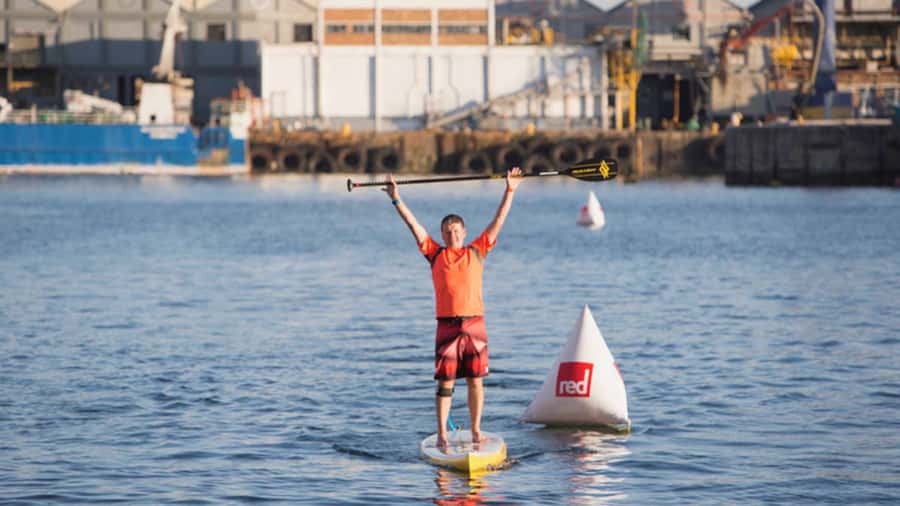
This experience is built around short time blocks that keep the learning curve reasonable. You’ll start with a short lesson from the instructor, then you’ll spend your time gliding across the calm canal waters.
In real terms, here’s how the pacing tends to feel:
- You begin on land and get taught the paddle basics and body position.
- You move onto the board with guidance, so your first attempts aren’t guesswork.
- Then you get enough time to actually repeat the motion and improve.
Some options focus on 30 or 60 minutes of board rental, but the total experience is described as 1 hour. Either way, the structure is clear: instruction first, then time on the water to make that instruction stick.
A note on expectations: paddleboarding can feel awkward before it feels automatic. Even people who are confident on their feet usually need a couple of minutes to find balance. That first wobble is normal. The best part of this setup is that the lesson helps you shorten the “panic thinking” stage.
What You’ll See From the Board (And Why It Feels Better Than Photos)
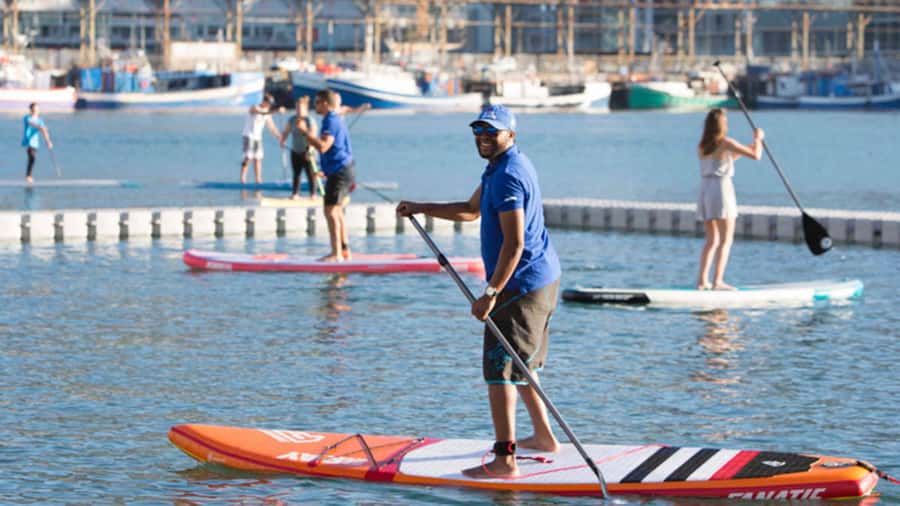
From the water at the V&A Waterfront, Cape Town looks like it’s being revealed in layers. You get a skyline view that feels more grounded, because you’re not standing on a fixed vantage point—you’re moving slightly, turning your head as you paddle.
You also get those small water-level details that photos can’t capture well:
- how boats pass nearby at human scale
- how reflections shift as you glide
- how the harbor feels quiet and close compared to the noise on the sidewalks
A lot of the excitement here isn’t about going far. It’s about getting a calm “meant-to-be-here” perspective. The canals keep things smooth enough that you can actually enjoy looking around, not just staring at your feet.
And since the activity is in the V&A area, you’re also near a place people recognize. That makes the experience feel instantly “Cape Town,” not like you’re far out on the edge of town with nothing memorable to look at.
Coaching Style: Clear Instructions, Help When You Need It
The quality of instruction is the difference between a fun hour and an hour of frustration. The best reviews repeatedly point to staff who explain clearly and stick with you long enough for your body to catch up to the idea.
What stands out is not just friendliness, but the teaching approach:
- guides who are patient with kids and nervous beginners
- staff who include everyone and keep the mood light
- assistance available if you need a hand while you’re on the water
One parent highlight: a coach worked well with two kids (ages 12 and 8), keeping them engaged and making sure they felt supported. Another common theme is that the guide helps people adjust quickly—especially when someone worries they won’t stay steady at first.
If you’ve ever tried a new sport and felt embarrassed after a stumble, you’ll probably appreciate the tone here. The staff seem to treat wobbling as part of learning, not a problem to hide.
Also, the equipment is included, which matters. You’re not scrambling to rent or figure out compatibility. The full setup removes friction—another quiet reason this can be a great value.
The Equipment and Balance Reality Check
This is stand-up paddleboarding, so let’s be honest: you’ll feel a little strange standing there at first. Even with a lesson, the board has its own personality. You’re learning how to distribute weight, how to keep the paddle steady, and how to move without overcorrecting.
The good news: the canal setting helps your brain learn faster. You’re not dealing with big environmental forces, so your balance problem is mostly you-versus-board, not you-versus-water conditions.
Here’s what I’d do before getting on:
- Wear gear that lets you move your ankles and knees.
- Expect your first minutes to be slower than your confidence wants.
- Plan to laugh at your own wobble. It usually passes fast.
And if you’re traveling as a couple or with family, this is a strong activity because the learning moment is shared. People can cheer each other on, and it doesn’t require a fitness background to enjoy it.


Wind, Weather, and When It Might Change
SUP is always weather-sensitive, and this one is too. The activity notes that it may be postponed or cancelled due to bad weather. Wind matters because it can add resistance and make balancing tougher, even in a protected area.
One review story specifically mentions someone choosing the windiest day of the year to try paddleboarding. The operator handled the situation by changing the day within the traveler’s timeframe, and the staff still made it an enjoyable experience. That’s a good sign of how flexible the team is when conditions don’t cooperate.
So how should you plan?
- Keep your schedule a bit flexible if you can.
- Dress for the possibility of shifting weather during your timeframe.
- If you’re sensitive to wind, choose times when conditions usually feel calmer.
Value for Money: Why $20 Makes Sense Here
At $20 per person for an hour-long SUP experience, this is priced like a practical activity, not a luxury thrill. That matters in Cape Town because you’ve got lots of options vying for your time.
What you’re really paying for is:
- equipment and board access included
- a short lesson that lowers the learning barrier
- a safe-feeling practice environment at the V&A canals
- guided help when you need it, especially for kids and first-timers
- the “Cape Town from the water” perspective without a full-day commitment
For comparison, many activities that teach a skill and provide equipment cost more and still leave you under-supported. Here, the reviews consistently mention clear instructions and patience. That’s what makes the price feel fair: you’re not just renting gear, you’re being taught how to use it.
Also, it’s short. A one-hour commitment is easier to fit into a day of sightseeing than longer tours. You get that memorable water-view moment without draining your energy before dinner.
Who This SUP Experience Fits Best
This outing is a strong match if you want:
- a first-time SUP session with instruction included
- something active but not punishing
- a shared experience for a family, couple, or small group
It’s especially good for families. Multiple reviews highlight kids enjoying it a lot and wanting to do it again. That usually happens when adults aren’t treated like spectators—when kids feel included and the guide adapts.
It’s also a good choice for couples who want something different from the usual waterfront walk. Being on the water turns the V&A area into a new setting. You’re still close to the action, but you’re experiencing it with a calm, slow-moving rhythm.
If you’re an experienced paddler, you might find the practice time more focused on fundamentals than advanced technique. But even then, the view and smooth canal environment can make it a relaxing break from harder training conditions.
Before You Go: Small Tips That Make the Hour Easier
You’ll get the best experience if you treat it like learning, not testing. Here are practical tips that align with what people seem to love about the session:
- Bring a positive attitude toward wobbling. It’s normal.
- Listen closely during the lesson. The first instruction you ignore will be the first issue you feel.
- Wear footwear or gear that won’t make you slip if you need to adjust your stance.
- If you’re with kids, remind them that balance improves through small corrections, not big reactions.
And mentally: set yourself up to enjoy it even if you don’t glide perfectly right away. The goal here is a fun hour where you leave feeling capable, not a badge for getting it “right” immediately.
Should You Book This Stand-Up Paddleboard Session?
If your priority is a calm, teach-you-first SUP experience with real Cape Town views, I think this is an easy yes. The value is strong for the price, and the recurring themes are clear: helpful staff, patience, and a session that feels fun even for kids and beginners.
I’d skip (or at least plan carefully) only if you’re very sensitive to wind and you can’t be flexible with timing, since weather can affect whether the activity runs as scheduled.
If you can fit in a short hour at the V&A Waterfront, you’ll likely come away with that rare travel souvenir that isn’t a photo. It’s the memory of gliding above calm water, looking back at Cape Town from a spot most people never try.
FAQ
How long is the stand-up paddleboard experience?
The experience is listed as 1 hour. Board rental time may be 30 or 60 minutes.
Where does the paddleboarding take place?
It takes place at the V&A Waterfront area, on the protected canals of the waterfront.
What is included in the price?
The price includes stand-up paddleboard rental and all equipment.
How much does it cost?
It’s listed at $20 per person.
Do I get instruction before I get on the water?
Yes. You’ll begin with a short lesson from an instructor before you paddle.
What language are the guides or hosts?
The host or greeter is listed as English.
Is this activity offered as a small group?
Yes. Small group options are available.
What if the weather is bad?
The activity may be postponed or cancelled due to bad weather.
What is the cancellation policy?
Free cancellation is available up to 24 hours in advance for a full refund.