REVIEW · LANGKAWI
Half-Day Geopark Mangrove Kayaking Adventure
Book on Viator →Operated by Langkawi Wild Buddy · Bookable on Viator
Kayaking through mangroves feels almost otherworldly. In Langkawi’s Kilim Geopark, you paddle winding channels surrounded by mangroves, limestone scenery, and chances to spot wildlife—plus you stop for a bat cave visit and a satisfying lunch. It’s a half-day nature outing that mixes calm paddling with real geology and a guide who explains what you’re actually seeing.
I especially love the combination of guided paddling and the chance to explore different water sections, from easy-to-enter mangrove paths to a more challenging second channel. I also liked that the guide (Qin) keeps the experience practical—safety briefing first, then steady instruction—so you spend less time guessing and more time enjoying the park. The one thing to consider is that the activity depends on good weather, so plans may shift if conditions aren’t right.
In This Review
- Key Highlights You’ll Care About
- Kilim Geopark Mangrove Kayaking: what makes this route special
- Meeting at Kilim River Tourism Jetty: simple start, clear start time
- First leg by boat: bat cave and fish farm before you paddle
- Kayaking through narrow mangrove channels: your main adventure window
- Wildlife spotting: what to do with your eyes
- Nature talks with Qin: turning scenery into real knowledge
- Limestone and eagles: why these stops matter on the water
- Second mangrove stretch: a bit more effort, more payoff
- Lunch at the fish farm: what’s included and why it’s a smart pause
- Bat cave visit: ancient plant stories and a different kind of stop
- Price and value: is $67.68 worth it?
- Who this tour fits best (and who should rethink)
- Should You Book This Kilim Geopark Half-Day Kayak?
- FAQ
- FAQ
- Where does the tour start and end?
- What time does the half-day tour start?
- How long is the kayaking adventure?
- What’s included in the price?
- Do I need to bring my own life jacket or kayak?
- Is transportation included from your hotel?
- What if the weather is bad?
Key Highlights You’ll Care About
- Small group size (up to 10) means easier spotting, more personal attention, and smoother pacing.
- Boat transfer to bat cave and fish farm gets you started without a long slog.
- Dry bag + life jacket + kayak gear included, so you’re ready the moment you arrive.
- Nature talks with Qin add meaning to the scenery—geology, ecology, and wildlife behavior.
- Lunch at the fish farm (fried rice plus orange juice) keeps the half-day feeling complete.
- Dinosaur-era plant mention adds a cool story layer to the bat cave stop.
Kilim Geopark Mangrove Kayaking: what makes this route special
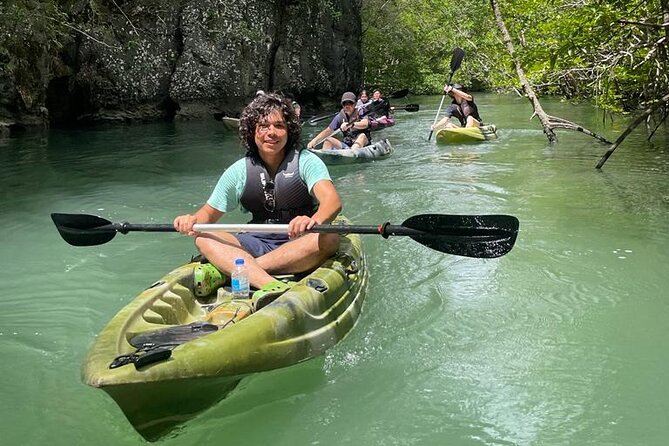
This is not just a scenic kayak ride. You’re traveling through Kilim Geoforest Park, where mangroves, limestone formations, and wildlife all overlap in the same area. The result feels more like moving through a living field guide than doing a checklist of stops.
I like that your day begins with a short briefing and then you’re taken to the water via boat. That matters because you’re not wasting your energy at the start. You get time on the kayak when you’re fresh, and you build confidence as you go—especially if you’ve never kayaked through mangroves before.
Also, the geopark angle is real. You’re guided to limestone areas, and you’re given context for what you’re seeing beyond “trees and water.” When the guide explains why certain places look the way they do, the whole trip clicks.
You can also read our reviews of more tours and experiences in Langkawi.

Meeting at Kilim River Tourism Jetty: simple start, clear start time
Your pickup point is the Kilim River Tourism Jetty in Kampung Kilim, 07000 Langkawi. The activity starts at 10:00 am and ends back at the same meeting point.
It’s nice when an outing doesn’t turn into a half-day of getting lost or waiting. Since it’s near public transportation, you can build your Langkawi day around it without needing a private car. Still, if you’re staying far from Kilim, plan buffer time so you arrive relaxed—water-based tours run on their schedule.
First leg by boat: bat cave and fish farm before you paddle
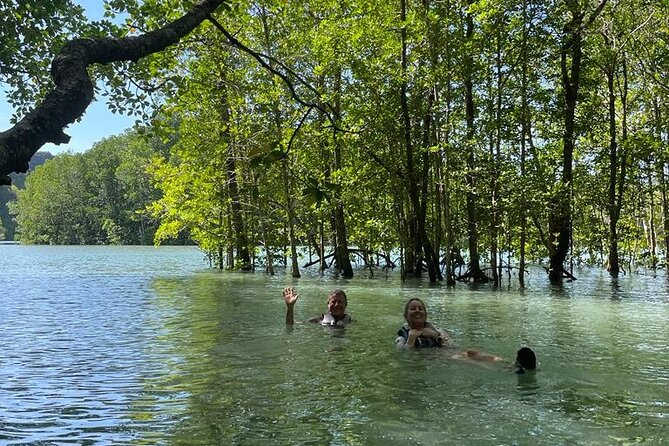
Before you get in the kayak, you’ll travel by boat toward the bat cave area and the fish farm. This sets the tone: you’re not immediately paddling in open chaos. You’re easing into the environment.
At this stage, you also get kayak instruction and a safety briefing. Even if you’re comfortable on the water, this part is worth paying attention to. Mangrove waterways can be tight and a little winding, so you want to know how the guide expects you to paddle and stay positioned.
You’ll then start kayaking from the fish farm and paddle toward the first narrow mangrove forest. Think of this as the learning stretch: enough variety to feel exciting, but organized enough that it doesn’t feel frantic.
Kayaking through narrow mangrove channels: your main adventure window
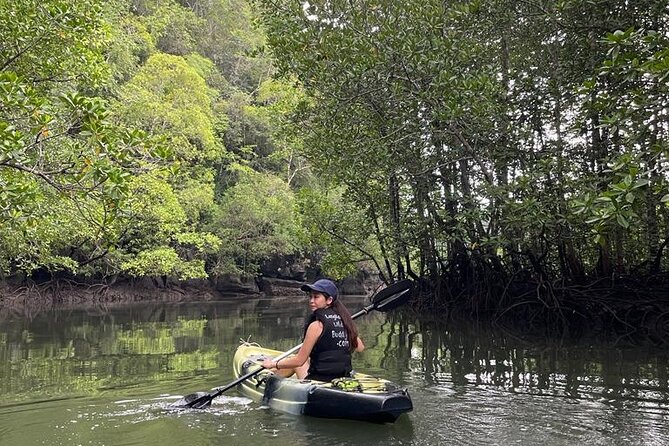
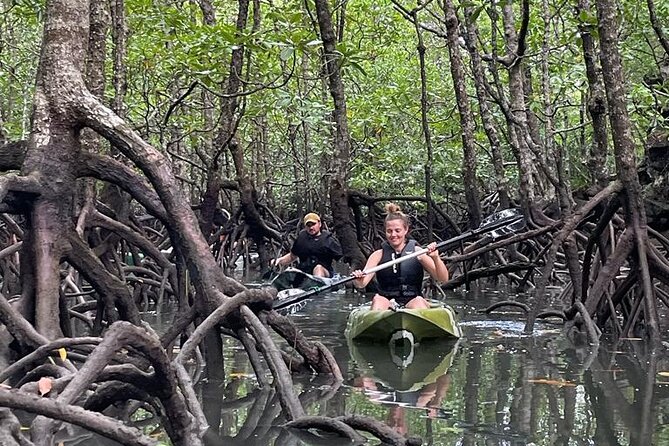
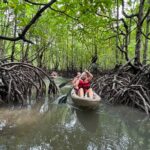
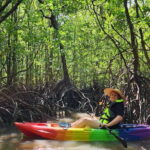
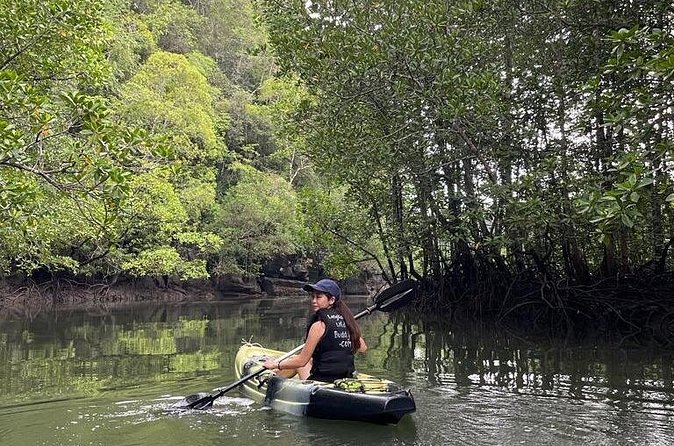
The core of the experience is your paddle from the fish farm through multiple mangrove areas. You start by entering the first narrow mangrove forest, then move toward areas described as the eagle area and limestone area, along with general mangrove scenery.
This is where the small-group setup helps. With a maximum of 10 people, the guide can keep everyone together without rushing. You get chances to slow down and look without turning the trip into a single-file march.
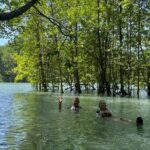
What you’ll likely love most is the feeling of being inside the mangrove system. The channels guide you, and the walls of greenery make the ride feel sheltered. It’s also one of the best ways to see how mangroves work at close range—roots, shade, and the way water moves between them.
Wildlife spotting: what to do with your eyes
You may see wildlife such as eagles, monkeys, and otters depending on conditions. You won’t control that part. But you can control your attention.
When Qin gives nature talk, treat it like a prompt list. Listen for cues about where animals tend to be and what behaviors to watch for. That’s how wildlife-spotting stops being random and becomes part of the story.
Nature talks with Qin: turning scenery into real knowledge
The tour includes nature talk led by a professional nature guide. In the best moments, this doesn’t feel like a lecture. It feels like the guide pointing out what you’re already seeing—then adding the “why.”
From the way Qin is described, he’s especially good at connecting biology and ecology to the geopark environment. That means you’re not just paddling past mangroves; you’re learning how this place fits together: waterways, limestone features, and the living community that makes it work.
There’s also a storytelling angle tied to time. In addition to wildlife and mangroves, you’ll hear about geological and plant history connected with the bat cave visit—so the day covers both living nature and the older layers that shape it.
Limestone and eagles: why these stops matter on the water
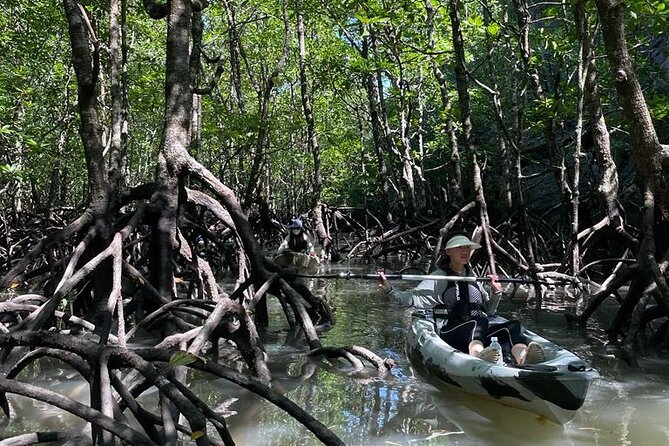
The route includes a limestone area and an area referred to as the eagle area. Even if you only catch glimpses, these destinations are meaningful because they show how the geopark is more than vegetation.
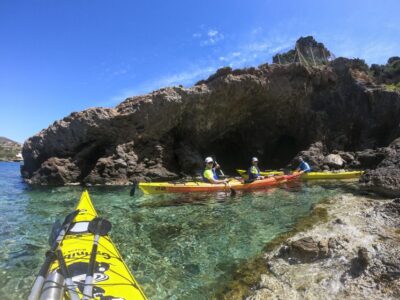
Limestone features often stand out visually, and when the guide explains them, you start noticing textures and shapes in the walls and shorelines. It’s one of those small shifts that changes your whole experience: you start scanning for geology the way you’d scan for wildlife.
As for the eagle area, the value is in the patience. You’re not guaranteed a dramatic landing moment. Instead, you’re giving yourself time in the right habitat while the guide helps you focus on what to look for.
Second mangrove stretch: a bit more effort, more payoff
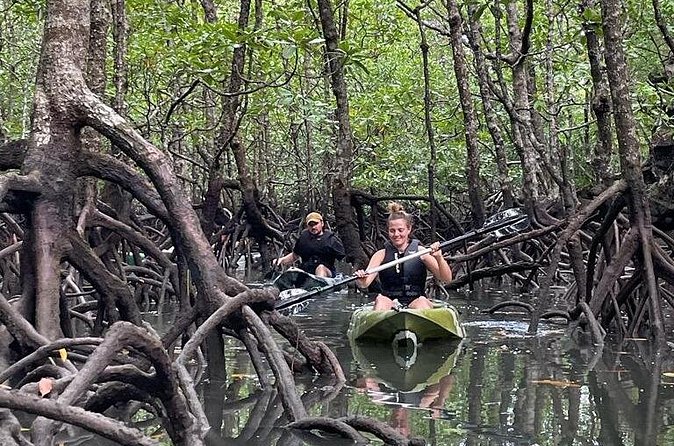
After the first section and nature talk, you’ll head into second mangrove channels described as more challenging to explore. This is a key part of the day, because it adds movement and variety.
If you’re new to kayaking, “more challenging” can sound scary—but it usually just means less open space and more active paddling. You’re still with the guide, with life jackets on, and with the group staying together.
Then you’ll return toward the fish farm for lunch. This timing works well because it prevents the trip from turning into pure exertion. You get a physical rhythm: paddle, explore, paddle again, then fuel up.
Lunch at the fish farm: what’s included and why it’s a smart pause
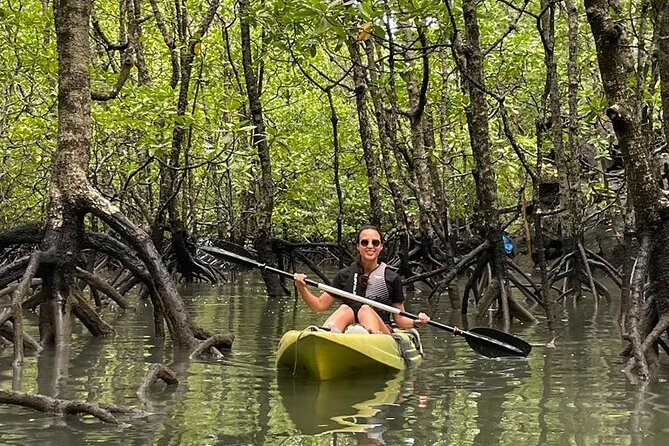
Lunch is included at the fish farm: chicken fried rice or veggie fried rice, plus cordial orange juice. Bottled water is also provided, and you’ll have the rest of the gear with you as you take your break.
This is a practical feature that affects how much you enjoy the day. When lunch is included and close to where you are, you don’t lose time searching for food or paying for transport. For a four-hour experience, that matters.
It also gives you a chance to dry off, catch your breath, and regroup before the bat cave segment.
Bat cave visit: ancient plant stories and a different kind of stop
The tour includes a bat cave exploration. Even beyond the bats (which you may or may not see clearly at any given moment), the cave stop is interesting because of the plant and time connection mentioned during the day.
You’ll also hear about an ancient plant said to have existed since dinosaur times. That kind of detail turns a short stop into a memorable moment because it reframes what you’re looking at as something tied to deep time—not just a “cave on the route.”
If you’re someone who likes your nature with context, this is the part that often makes the day feel special.
Price and value: is $67.68 worth it?
At $67.68 per person, this half-day can feel like a splurge compared to DIY kayaking. But when you break down what’s included, the price starts making sense.
You’re paying for:
- Guided navigation through mangrove channels
- Safety instruction and support while paddling
- Provided kayak gear, including life jackets and paddles
- A dry bag for protecting belongings
- Lunch (fried rice options) and orange juice
- Bottled water
- Access to the included park activities and fees
You don’t have to rent equipment or arrange a guide. And since the group is capped at 10, you get more guidance per person than you’d likely get with bigger tour groups.
What’s not included is private transportation. So your real “value” depends on how you get to the jetty. If you can reach Kilim easily, this price feels more reasonable. If you need an expensive private transfer, the total cost rises.
Who this tour fits best (and who should rethink)
This half-day kayaking tour fits best if you want:
- A structured way to kayak in mangroves (not winging it)
- A mix of water time, wildlife possibility, and geopark-style storytelling
- Included lunch that saves you time
The tour also calls for moderate physical fitness. That’s the right level for many people, as long as you’re comfortable paddling for a few hours and doing some seated movement. If you have strong mobility limits or expect you can’t manage active paddling, you should double-check before booking.
Should You Book This Kilim Geopark Half-Day Kayak?
If your idea of a great Langkawi day is nature with meaning—mangroves, limestone, wildlife possibilities, and a guide like Qin who adds context—then yes, I’d book it. The half-day format keeps it efficient, and the included gear and lunch reduce the usual “tour math” that makes outdoor plans stressful.
Book it especially if you like learning while you move. This tour isn’t only about being outdoors; it’s about understanding the place you’re in.
FAQ
FAQ
Where does the tour start and end?
The tour starts at Kilim River Tourism Jetty (Kampung Kilim, 07000 Langkawi, Kedah, Malaysia) and ends back at the same meeting point.
What time does the half-day tour start?
The start time is 10:00 am.
How long is the kayaking adventure?
The duration is about 4 hours.
What’s included in the price?
The tour includes lunch (chicken fried rice or veggie fried rice) with cordial orange juice, bottled water, and all fees and taxes. You also get a dry bag, life jackets, paddle, and kayak.
Do I need to bring my own life jacket or kayak?
No. Life jackets, paddles, kayaks, and a dry bag are provided.
Is transportation included from your hotel?
No. Private transportation isn’t included.
What if the weather is bad?
This experience requires good weather. If it’s canceled due to poor weather, you’ll be offered a different date or a full refund.