REVIEW · OSLO
Oslo Sea Kayak Tour: Explore The Incredible Oslofjord
Book on Viator →Operated by Mad Goats Norway · Bookable on Viator
Kayaking past Oslo landmarks is a city tour with muscles. On this Oslofjord kayak outing, you follow a guided route that hugs the water and lines up classic sights like the Opera House and Aker Brygge. I like that it’s set up for beginners, and I also like how the guides focus on real skills first, then sights second. The main thing to consider is that conditions can get choppy, so the route length or pace may change for safety and comfort.
You start and end in central Oslo at Tjuvholmen, a quick walk from the station. You get kayaks, paddles, and life jackets, plus changing rooms and secure storage for your stuff. It’s billed as about 2 hours from start to finish, though your actual time on the water may be around 1.5 hours depending on the group and conditions.
In This Review
- Key things to know before you go
- Kayaking the Oslofjord City Route: What It’s Really Like
- Price and Value: Does $117.86 Feel Worth It?
- Meet at Tjuvholmen: Easy Access, Storage, and Gear Setup
- First-Time Paddlers: Instruction That Actually Helps
- Stop-by-Stop on the Water: Opera House to Hovedoya
- Oslo Opera House: The most famous shoreline view
- Aker Brygge: Harbor life at human speed
- Akershus Castle and Fortress: Fortress vibes from waterline height
- Astrup Fearnley Museet and the Munch area: Art on the edge
- Tjuvholmen Bystrand: Your base feeling, just before the open water
- Deichman Bjørvika: A modern stop with a practical view
- Oslofjord and Hovedøya: The open-water sense of space
- Weather Reality: Wind, Choppy Water, and Possible Dips
- Who This Tour Suits Best (Kids, Families, and First-Timers)
- Guides, Safety, and the Small-Group Feel
- What to Pack (So You Don’t End Up Cold, Wet, or Frustrated)
- Photos and the Little Extras
- Should You Book This Oslo Sea Kayak Tour?
- FAQ
- How long is the Oslofjord kayak tour?
- Where does the tour start and end?
- Do I need any kayaking experience?
- What age is the tour suitable for?
- What’s included in the price?
- What should I bring since it isn’t included?
- What language is the tour offered in?
- How big are the groups?
- Is the activity dependent on weather?
- Can I cancel for a full refund?
Key things to know before you go
- Central start at Tjuvholmen means less commuting and more time on the fjord.
- Beginner-friendly instruction before you’re out among harbor traffic and choppy water.
- Icon lineup on the water: Opera House, Aker Brygge, Akershus, museums, and island viewpoints.
- Small group size (max 15) helps the guide keep an eye on everyone’s technique.
- You may get route adjustments on windy or choppy days to keep things fun and safe.
- Extra gear support: waterproof bags are available to borrow if you want them.
Kayaking the Oslofjord City Route: What It’s Really Like
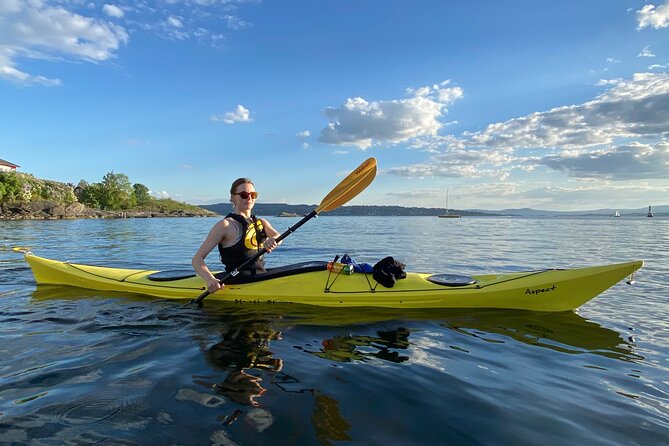
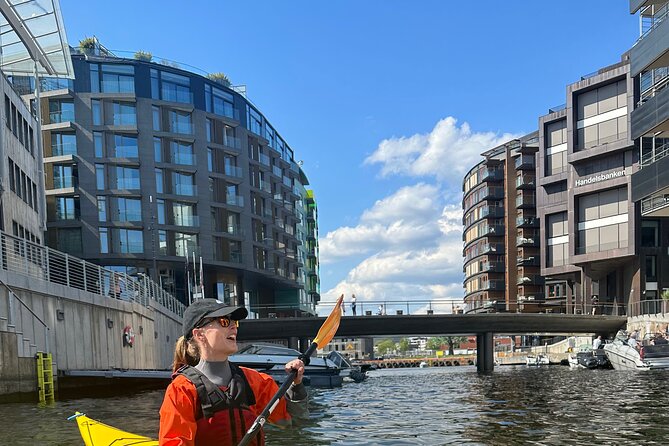
If you’ve only seen Oslo from streets and viewpoints, this tour changes the angle fast. The sea kayak sits low, so you get a close water-level look at buildings, bridges, and harbor edges. And unlike a bus tour, you move at a human pace. That matters because you can actually see how Oslo’s waterfront connects to the fjord system, not just admire it from above.
What I love about this format is the pacing. You don’t feel rushed to “tick off” landmarks. You get taught how to handle the kayak first, then the guide uses the route to connect the dots between sights. That’s why beginners usually feel comfortable pretty quickly.
The one drawback to plan around is the water itself. The harbor can be windy, and sea-kayak days can turn choppy. On one windy outing, the group had the option to shorten the kayaking portion, while the guide still kept instruction going and safety tight. That’s not a failure of the tour. It’s how responsible operators adapt.
You can also read our reviews of more tours and experiences in Oslo.
Price and Value: Does $117.86 Feel Worth It?
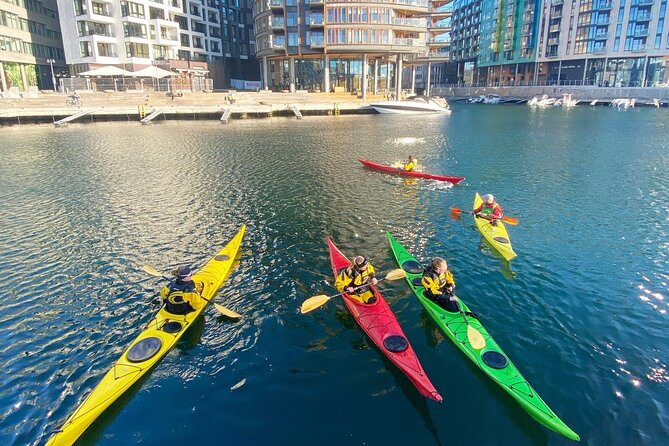
At $117.86 per person for about 2 hours, this isn’t a bargain like a free city stroll. But it also isn’t just you “renting a kayak.” You’re paying for the whole package: guided route + instruction + safety gear + help with getting ready.
Here’s where the value shows up:
- Gear is included: kayak, paddle, and life jacket. You’re not hunting for rentals or borrowing equipment last minute.
- Guides are part of the price. Multiple people mention guides teaching technique and keeping everyone safe even when water got rough.
- The start point is central. You’re not spending extra time and money getting to some remote launch site.
- You get the chance to move between major waterfront landmarks without doing all the walking yourself.
If you’re traveling with kids or you want a structured activity that’s still outdoorsy, the price starts to make more sense. If you’re already an experienced kayaker and you’re confident navigating local conditions on your own, you might decide you don’t need a guide. For most people, though, this strikes a good balance between fun, learning, and access.
Meet at Tjuvholmen: Easy Access, Storage, and Gear Setup
The meeting point is Mad Goats Tjuvholmen Strandpromenaden, 0252 Oslo. The best part of the location is how central it is. You can get there on foot from Oslo Central Station without a complicated transfer plan.
Once you arrive, the operator provides:
- Changing rooms
- A secure place to store your belongings
- Kayaks, paddles, and life jackets
- Waterproof bags to borrow if you want them
This sounds small, but it makes the experience smoother. You can travel lighter and avoid worrying about your phone and wallet getting splashed. One small note: bottled water and wet-weather clothing are not included. So if you’re going in cooler months, dress for wind off the water and pack what you need.
Also, the tour uses a mobile ticket, and it’s in English. That matters if you want a clear explanation of paddling technique and safety rules without language friction.
First-Time Paddlers: Instruction That Actually Helps
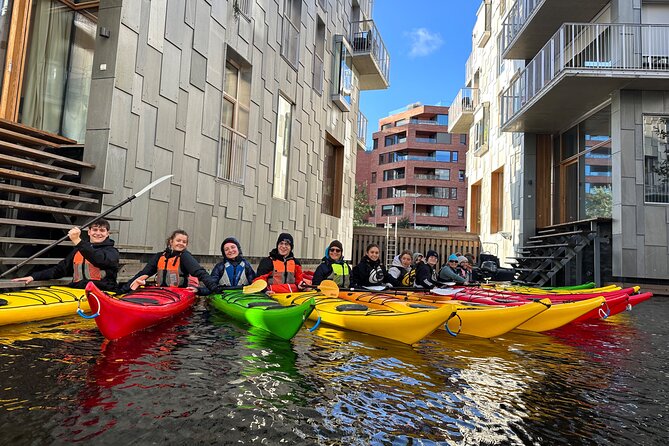
This tour is meant for people with no kayaking experience. Still, the water can feel intimidating at first, especially if you’ve never held a paddle for real.
What makes it work is the “learn first, then go” approach. Guides give a tutorial on how to row and maneuver, and you get coaching during the paddle. Several people highlight that kayaks are surprisingly easy to navigate, and that the guide’s instructions helped them settle into a rhythm fast.
If you’re nervous, you’ll probably relax once you realize two things:
- Your kayak control improves quickly with guidance.
- The guide keeps the group together so you’re not stuck figuring out everything alone.
Do bring a basic sense of adventure. You don’t need to be athletic, but you do need a little willingness to try. And the tour recommends a moderate fitness level and that you know how to swim, since it can be nice to take a dip in the Oslofjord after the tour.
Stop-by-Stop on the Water: Opera House to Hovedoya
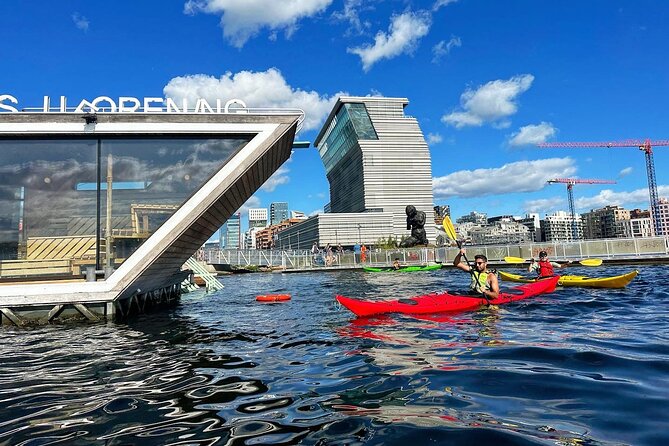
The route is designed like a moving photo gallery with a purpose. You’re not just paddling in circles. Each segment connects a different kind of Oslo waterfront scene.
Oslo Opera House: The most famous shoreline view
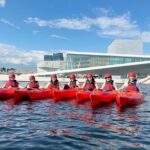
Starting with the Oslo Opera House makes sense because it’s instantly recognizable and very water-facing. From a kayak, you get a different feel for the scale of the building and how the fjord setting frames it. It also helps you settle in: you’re moving, but the landmarks anchor your bearings.
Possible drawback: on windy days, you may want to focus on technique rather than staring too hard. That’s not a problem—your guide will keep you oriented.
Aker Brygge: Harbor life at human speed
Next is Aker Brygge, the kind of waterfront area where the city meets boats, docks, and promenade energy. From the kayak, you get a low-angle look at buildings and activity along the edge—more intimate than a sidewalk view.
This section tends to feel “lively” because you’re closer to where people actually gather along the water.
Akershus Castle and Fortress: Fortress vibes from waterline height
Paddling past Akershus Castle and Fortress is where the trip starts to feel like a historical stroll—just done from the water. The stonework and waterfront setting create strong contrast, especially when the light hits the water surface.
If you’re the type who likes architecture, this stop is a highlight. If you’re more focused on the experience of paddling, you’ll still enjoy it because the landmark helps break up the effort.
Astrup Fearnley Museet and the Munch area: Art on the edge
The itinerary includes Astrup Fearnley Museet and Munch (the Munch area is part of the waterfront museum complex experience). These spots are good reminders that Oslo doesn’t treat its fjord as scenery only. It treats it like part of the city’s identity.
Water-level viewing also changes how you perceive the museums. You’ll notice angles and spaces that you don’t get from the promenade.
Tjuvholmen Bystrand: Your base feeling, just before the open water
Tjuvholmen Bystrand brings you back into the neighborhood rhythm of the harbor. It’s also the kind of spot that helps you switch mentally from “landmarks” to “paddle flow” as you continue onward.
If you’re traveling with kids, this can be a nice waypoint—still scenic, but closer to the feeling of a short adventure.
Deichman Bjørvika: A modern stop with a practical view
Deichman Bjørvika sits along the waterfront in a way that suits a kayak perspective. You get a modern Oslo vibe here—clean lines and strong waterfront placement. Even if you don’t plan to visit the building later, you’ll appreciate how it faces the water.
Oslofjord and Hovedøya: The open-water sense of space
Then you’re into Oslofjord and Hovedoya, which is where the trip shifts from “harbor landmarks” toward “real fjord time.” This is the part that makes people call it the highlight of their trip.
On one windy day, the guide still created a fun and safe experience, with tips for kayaking technique and pacing. That’s what you want on the fjord: a guide who can turn rough conditions into something manageable rather than intimidating.
Hovedoya specifically is a good payoff because you’re no longer only viewing buildings. You’re getting a sense of fjord geography and open water scale.
Weather Reality: Wind, Choppy Water, and Possible Dips
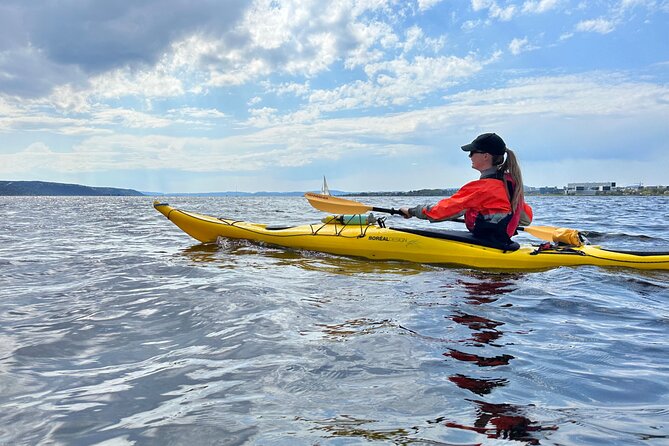
This experience requires good weather. That’s not just a fine-print detail. Wind can change how the water feels quickly, and harbor chop can test new paddlers.
If conditions are rough, the guide may shorten the kayaking portion to keep things safe and enjoyable. One review noted that after choppy waters, the instruction was still helpful and the group adapted.
The good news: you’re not being “stuck.” The guides aim to keep the tour fun, and they give tips to help you handle the waves and paddle control. If you’re sensitive to feeling unstable, focus on technique early and follow instructions closely.
Also, the tour recommends you know how to swim, and it can be nice to take a dip after the tour. If swimming is not your thing, you can still enjoy the kayak without taking the optional dip.
Who This Tour Suits Best (Kids, Families, and First-Timers)
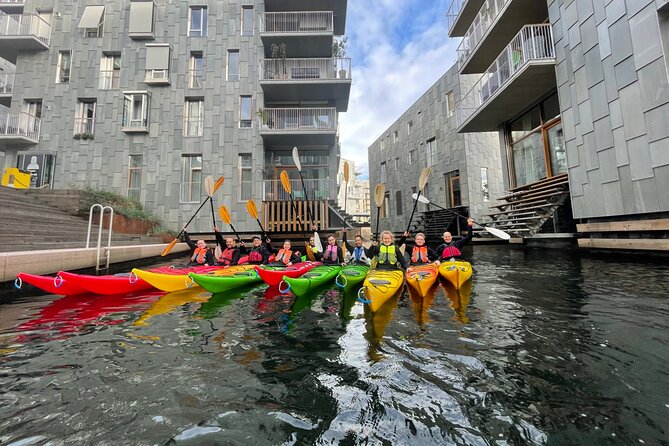
This tour works for a range of ages and experience levels, with some important rules.
- Minimum age is listed as 4
- Kids ages 4 to 12 must ride in a double kayak with an adult
- The tour is suitable for kids 5 and up, but the double-kayak requirement affects how families plan
This setup makes it a strong family option because you can still do the same overall route. Multiple families called it a great trip because it wasn’t too strenuous, and the guides were friendly and supportive.
For adults, it’s also a smart way to get oriented to Oslo’s waterfront without guessing where to paddle. The group size cap of 15 helps the guide manage everyone’s safety and pacing.
If you’re the type who wants total control and you hate adapting to wind, you may find the “conditions change the route” reality annoying. But if you’re flexible, it’s often part of the fun.
Guides, Safety, and the Small-Group Feel
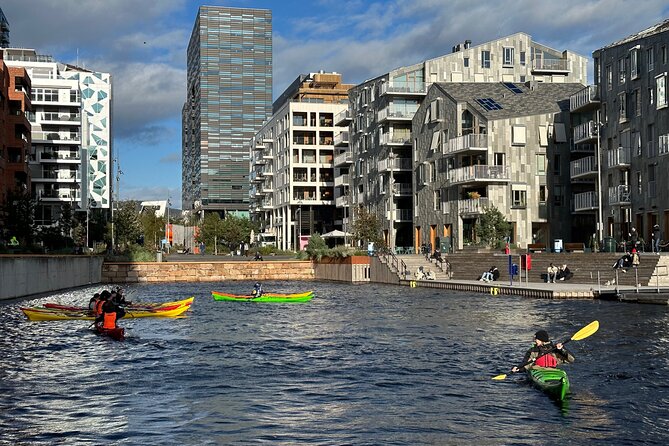
Safety here isn’t theoretical. You get life jackets and instruction, and guides actively manage the group. On choppy days, people specifically praised the guides for keeping everyone safe while still making it feel like an adventure.
Guide names that show up in feedback include Christian, Olivia, Dean, Chris, and Melina. While each guide will have their own style, the theme is the same: teach technique, keep the pace workable, and adjust if the group needs it.
There is one practical consideration: if your kayak speed differs from the rest of the group, you can end up waiting. One person mentioned there was a slower kayak that led to more waiting than they expected. In general, small-group kayaking reduces this issue compared with huge tours, but it can still happen.
If you want to avoid that, go in ready to follow the guide’s instruction on paddling cadence and stay alert for signals.
What to Pack (So You Don’t End Up Cold, Wet, or Frustrated)
The tour includes the core kayaking gear and provides waterproof bags to borrow. But you still need to dress for Oslo water-level weather.
Not included:
- Bottled water
- Sunscreen and sunglasses
- Private transportation
- Waterproof clothing / wet weather gear
My practical advice:
- Wear layers that can handle wind. The deck of a kayak can feel colder than you expect.
- If you have it, bring sunglasses with a strap. Splash happens even in good conditions.
- Bring sunscreen if the forecast looks clear. Snowy-looking days can still reflect light off water.
- If you expect rain or cold, dress for wet conditions even if the day starts okay.
Photos and the Little Extras
Some nice small perks show up in feedback. One group reported that souvenir photos were shared via AirDrop at no extra cost. Another note: if photos don’t arrive as expected, there’s an email listed for contact ([email protected]) from a support response.
Not every trip will have the same photo workflow, so treat any photo-sharing as a bonus, not a guarantee. But it’s worth asking the guide on the day so you know how it will work for your group.
Should You Book This Oslo Sea Kayak Tour?
I think you should book if you want:
- A guided way to see Oslo’s waterfront from the water
- Beginner-friendly instruction that makes paddling feel doable
- A central start near the station, so the day stays efficient
- A small-group outdoor activity that’s fun even if it’s not summer-perfect weather
You might skip it if:
- You strongly prefer calm, predictable conditions and hate schedule changes due to wind or chop
- You want a purely “walk up and do it yourself” experience without instruction or route adjustments
- Your group includes kids who can’t handle the double-kayak rules for ages 4 to 12
Overall, for most visitors, this is a very solid way to experience the Oslofjord and the city’s waterfront in one go, with real guidance and safety support.
FAQ
How long is the Oslofjord kayak tour?
It runs for about 2 hours from start to finish, including getting ready and packing up.
Where does the tour start and end?
The tour starts at Mad Goats Tjuvholmen Strandpromenaden, 0252 Oslo, Norway and ends back at the same meeting point.
Do I need any kayaking experience?
No experience is required, but you should be comfortable with a healthy sense of adventure. Basic swimming ability is recommended.
What age is the tour suitable for?
The minimum age is 4. Kids ages 4 to 12 must ride in a double kayak with an adult.
What’s included in the price?
Kayaks, paddles, and life jackets are included, along with kayak instructions and professional guides. Changing rooms and secure storage are provided, and waterproof bags can be borrowed if desired.
What should I bring since it isn’t included?
Bring what you’ll need for comfort and weather: bottled water is not included, and sunscreen and sunglasses are not included. Waterproof clothing is not included, so dress for the day’s conditions.
What language is the tour offered in?
The tour is offered in English.
How big are the groups?
The maximum group size is 15 travelers.
Is the activity dependent on weather?
Yes. The experience requires good weather. If it’s canceled due to poor weather, you’ll be offered a different date or a full refund.
Can I cancel for a full refund?
Free cancellation is available up to 24 hours in advance for a full refund. If you cancel less than 24 hours before the start time, the amount paid is not refunded.