REVIEW · OAHU
Paddleboard Yoga Class in Honolulu
Book on Viator →Operated by Yoga Floats, LLC · Bookable on Viator
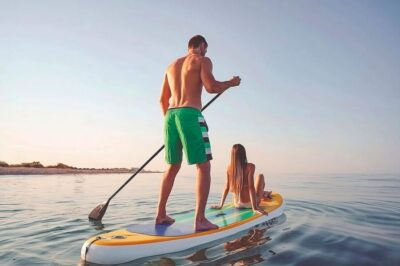
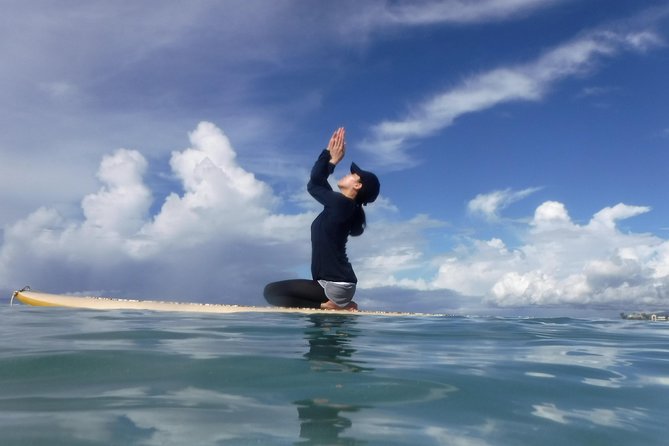
Yoga on a paddleboard sounds wild. It’s also strangely calm, especially at Ala Moana Beach Park where you learn how to adapt familiar poses to the water, then finish with a lying meditation that gently rocks with the waves. Small-group teaching (max 10) and clear, beginner-friendly coaching are the big wins here, helping you find balance without feeling rushed. One thing to know: you stay in shallow, close-in water, so it’s safe and steady, but you’re not going far out offshore.
Meet the group at Yoga Floats at Magic Island/Ala Moana Blvd Park, get a safety briefing, and then head out to waist-deep water with your board anchored in place. Savasana on the board is the moment most people remember, because you’re finally done “trying” and just letting the ocean move you. The only potential snag for some folks is photos: there’s an optional add-on, and the guide controls the photo-taking rather than letting you roam with your own camera for every shot.
In This Review
- Key Points That Matter
- Why Paddleboard Yoga Feels Different at Ala Moana
- From Magic Island Meeting Spot to Your Safety Briefing
- The Shallow-Water Setup That Makes It Beginner-Friendly
- The On-Board Sequence: Meditation, Warmups, Then Standing Work
- Free Time on the Board: Practice What You Actually Want
- Instructors and Instruction Style: Clear, Welcoming, No-Drama
- The Big Finish: Lying Savasana Rocking in Hawaiian Waves
- Price and Value: Is $57.36 Worth It?
- Photos and the Camera Question
- Logistics That Keep It Easy (And What to Plan For)
- Who Should Book This SUP Yoga Class
- Should You Book Paddleboard Yoga in Honolulu?
- FAQ
- Where is the paddleboard yoga class meeting point?
- How long is the class?
- What’s the group size?
- What language is the class taught in?
- Do I need prior yoga or paddleboarding experience?
- Is transportation to and from the activity included?
- Are children allowed?
- What happens if the weather is bad?
Key Points That Matter
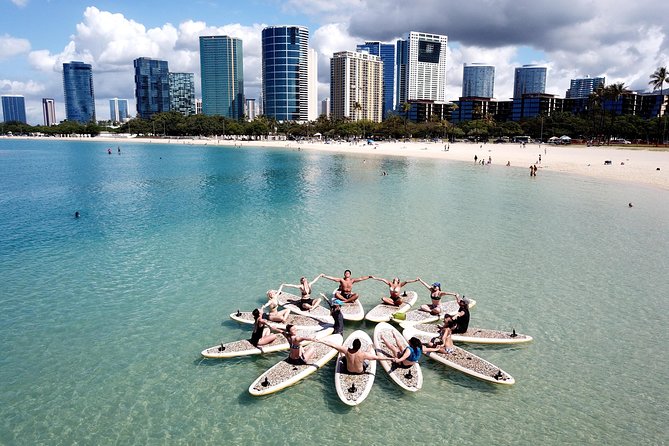
- Up to 10 people keeps the class personal, not crowded.
- Shallow water anchoring makes balance skills feel learnable instead of scary.
- You start seated and kneeling, then build to standing, sun-salutation style flows.
- Free time for pose practice lets you focus on what you want, not just what fits a script.
- You end with resting meditation (savasana) while lying on the board, rocking in the Hawaiian waves.
- You can expect optional motion-sickness support if you need it.
Why Paddleboard Yoga Feels Different at Ala Moana
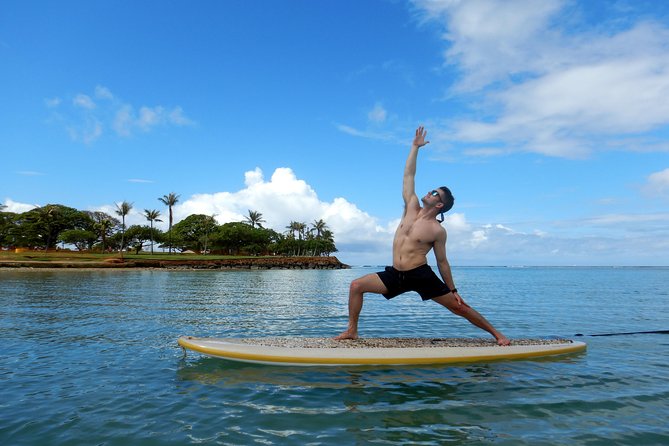
If you already do yoga on land, you’ll recognize the shapes right away. Then the ocean shows up and quietly changes everything. On a SUP board, balance becomes the main “teacher.” Every shift of your weight matters, even when the pose looks simple.
Ala Moana Beach Park is a smart place for this kind of class because the vibe is casual and the setting is easy to find. You’re not scrambling across rocky coastlines or guessing how the water will behave. The class is built for comfort: you meet, learn, and only then enter the water once everyone has the basics.
And that final part is key. The lying meditation—savasana—on the board turns the whole experience from a workout into a reset. Instead of thinking about form the entire time, you get to feel the waves do the moving.
You can also read our reviews of more tours and experiences in Oahu.
From Magic Island Meeting Spot to Your Safety Briefing
The experience starts at Yoga Floats, near Magic Island, Ala Moana Blvd Park. After you check in, you’ll meet your instructor and your small group. The tone is very practical: this is about how to stay centered while you’re on a board that can rock.
Before you head out, you get a safety briefing. That matters more than people think. Water-based yoga can look casual in photos, but the class keeps you focused on simple rules like how to maintain stability and what to do when the board shifts under you.
Then you get the mindset shift you need to enjoy it. The instructor helps you understand how to adapt familiar poses for water balance—so you’re not just copying shapes you learned on a mat. The goal is to learn what to change and why.
The Shallow-Water Setup That Makes It Beginner-Friendly
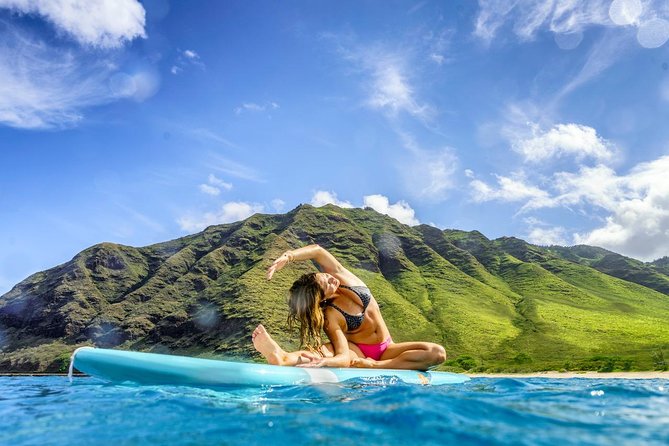
Once you’re ready, you wade out with your board to waist-deep water. Then the board is anchored. That small detail makes a huge difference for your confidence.
Anchoring means you’re not fighting the current while trying to balance in a new pose. You can focus on what you feel in your legs and core, and you can actually learn. For first-timers, that removes the biggest fear: the idea that you’ll instantly drift away from where you started.
Most importantly, it keeps the class inclusive. You’re still challenged, but you’re challenged in a controlled way. It’s the difference between learning how to drive in a parking lot versus learning on a highway.
The On-Board Sequence: Meditation, Warmups, Then Standing Work
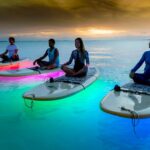
The class structure is smooth and logical. You begin seated on the board with a meditation. It’s not just a nice start—it’s training. Seated meditation helps you get familiar with the board’s movement before you add balance-heavy positions.
Next comes a progression through sitting and kneeling warmups. This is where you build control without feeling like you’re one wobble away from disaster. Kneeling also gives you a stable base while your body learns the rhythm of the ocean.
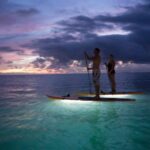
Then you stand. You’ll try a few sun-salutation style flows to test your balance and build confidence step by step. It’s not about being perfect. It’s about learning how to react when your weight shifts.
One of my favorite parts of this setup is the “try it, then adjust it” feeling. You don’t just get told to do one version. The instructors provide options so you can choose a variation that matches your comfort level.
Free Time on the Board: Practice What You Actually Want
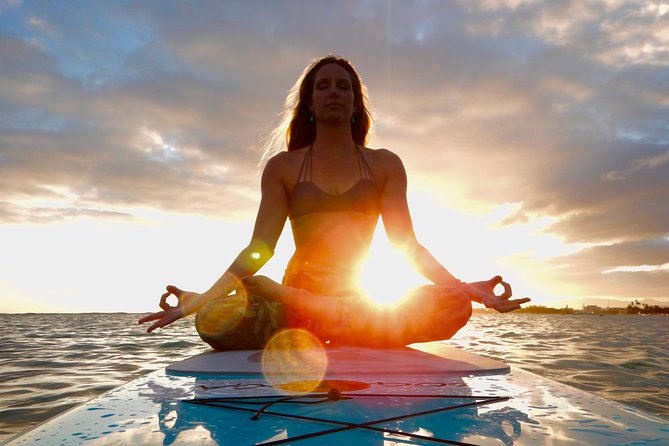
After the main flow and standing work, the class includes some free time. This is when you can focus on what interests you—either challenging yourself with a tougher balance posture or shifting into something slower and more relaxing.
This part is where the small group size pays off. With a maximum of 10, you’re more likely to get quick coaching tweaks instead of waiting your turn. If you’re a yoga person who wants to explore, you get room to do it. If you’re a beginner who wants calm success, you still leave feeling like you learned something real.
For me, this is the secret value. A lot of “fun classes” stay generic. Here, you can shape the experience around how you want to feel by the end.
Instructors and Instruction Style: Clear, Welcoming, No-Drama
The instructor’s role is huge in any SUP activity. If the teaching is vague, your nervous system takes over. The best part of Yoga Floats is how the guidance stays supportive and clear.
I’ve seen that in the way different instructors teach. Some names that come up include Kelsey (owner), Julie, Blake, Stacy, Emily, Jen, Krysta, and Karin. The common theme is the same: friendly coaching that helps you feel at ease while still pushing you to try.
They also seem to plan for common first-timer issues. One helpful detail is that the team has had motion sickness bands available for people who need them. Even if you’re fine usually, it’s nice to know the class has a practical solution ready.
Also, you should expect a challenge—especially if you’re used to stable studio floors. But it’s the right kind of challenge: you’re learning balance and body awareness, not just testing grit.
The Big Finish: Lying Savasana Rocking in Hawaiian Waves
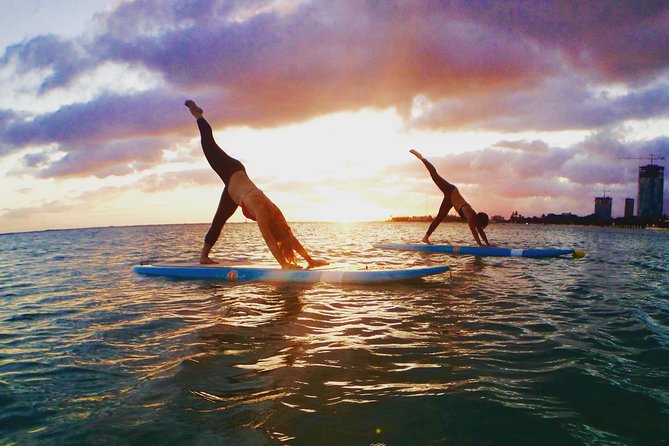
Savasana is usually quiet on a mat. Here, it’s quiet in a different way. You end with deep stretching and then a restorative meditation done lying down on the board, rocking gently in the ocean.
That rocking effect is the point. Your breath settles. Your muscles stop working so hard. And the ocean becomes part of your relaxation instead of something you’re bracing against.
This is also why the experience feels memorable, even for people who don’t think they’ll be good at yoga. Lying still on a floating board is oddly effective at turning “performance” into surrender.
Price and Value: Is $57.36 Worth It?
At $57.36 per person for about 1 hour 15 minutes, it’s not a bargain, but it also isn’t trying to be one of those low-cost “quick activity” options. You’re paying for three things:
First, you’re paying for instruction that actually matches the water reality. That’s the difference between doing poses on a board by accident versus learning how to adapt them.
Second, you’re paying for a small group with a maximum of 10. You feel it in the attention you get while you’re wobbling, trying, and learning.
Third, you’re paying for a finish that’s hard to replicate on your own trip. That lying meditation on the board is not something you casually stumble into during a beach day.
If you’re the type who enjoys structured activities with a clear start, middle, and unwind moment, it’s strong value. If you hate any added fees, pay attention to the photo situation (more on that below).
Photos and the Camera Question
There’s an optional photo add-on. One review detail points out that photos cost $10 per picture, and the company doesn’t seem to operate as a hands-free, take-your-own-photos experience. Instead, the instructor captures images and you can choose to purchase them.
If photos are part of your memory-making, this could be worth it—especially if you’re on a board and your hands are busy. If you prefer to control every shot yourself, this setup might feel limiting. Either way, it’s smart to know up front so you can decide before you’re in the moment.
Also, sunscreen matters. Even with a class timing that often starts in the morning, you’ll be outside near the water, and you’ll want a buffer.
Logistics That Keep It Easy (And What to Plan For)
Transportation isn’t included, so you’ll want to handle getting to the meeting point near Magic Island. The good news is that it’s a straightforward location and is described as near public transportation.
You’ll need a moderate physical fitness level. That doesn’t mean you need to be athletic. It means you should be comfortable enough to stand, balance, and move through kneeling and stretching positions without feeling completely out of your depth.
Also, the class is English language, uses a mobile ticket, and has clear rules for children under 17 (they must be accompanied by an adult).
Finally, the class requires good weather. If conditions are poor, you’ll be offered a different date or a full refund.
Who Should Book This SUP Yoga Class
This is a great fit if you want:
- Yoga that feels more playful than a studio session
- A class that teaches balance with supportive coaching
- A calm, scenic activity with a strong relaxation finish
It’s also a solid pick for mixed groups. Even if some people are newer to paddleboarding or yoga, the way the class builds from seated to kneeling to standing helps everyone participate.
If you’re expecting deep-water exploration, you might feel a little underwhelmed. This experience keeps you close and controlled in shallow water. For most people, that’s a positive. For the ones who want adventure far offshore, it won’t match that expectation.
Should You Book Paddleboard Yoga in Honolulu?
I’d book it if you want a morning (or part of your day) that combines real skill-building with a genuinely relaxing ending. The small group limit, the shallow-water setup, and that rocking-board savasana are a rare combo.
I’d think twice if you’re sensitive about extra photo costs or you really want to take your own pictures during the class. Otherwise, this is a fun, learnable way to do something very Honolulu without turning it into a stressful production.
FAQ
Where is the paddleboard yoga class meeting point?
You meet at Yoga Floats at Magic Island, Ala Moana Blvd Park, Honolulu, HI 96814, USA.
How long is the class?
The class runs about 1 hour 15 minutes.
What’s the group size?
The experience has a maximum of 10 travelers, with a small-group format.
What language is the class taught in?
The class is offered in English.
Do I need prior yoga or paddleboarding experience?
The activity is described as suitable for different comfort levels, and it includes instruction while you’re on shore and in the water. No prior experience is required for participation.
Is transportation to and from the activity included?
No. Transportation is not included.
Are children allowed?
Children under 17 must be accompanied by an adult.
What happens if the weather is bad?
This experience requires good weather. If it’s canceled due to poor weather, you’ll be offered a different date or a full refund.