REVIEW · OAHU
North Shore Stand-Up Paddleboard Lesson
Book on Viator →Operated by North Shore Surf Girls - Surf School · Bookable on Viator
Sea turtles and stand-up boards in one calm morning. This 2-hour North Shore lesson takes you up the Anahulu River from near Haleiwa Harbor, where fresh-and-salt water makes slow, beginner-friendly paddling. I especially like the way the trip stays peaceful while still feeling like an accomplishment, with real chances to see sea turtles along the route.
One possible drawback: there’s no hotel pickup, so you’ll want your own ride (and you may need extra time for parking in Haleiwa). If you show up rushed, the whole experience starts off a little more stressful than it needs to be.
In This Review
- Key Highlights You’ll Care About
- First Steps on the Anahulu River (where SUP feels easier)
- Your 2-Hour Paddle Plan: Upstream, the Turn, and Waialua Bay Waves
- Stop-by-stop flow: what happens and why
- What makes this itinerary good for beginners
- Lesson Style in Action: Standing Up, Staying Safe, and Learning Fast
- How beginners are taught to balance
- Guides who bring good energy (and patience)
- Photos and encouragement
- Banzai Pipeline and North Shore Stops: Context Without the Rush
- What’s Included, What to Bring, and What You’ll Pay For Separately
- Included
- Not included
- What to bring for comfort (and fewer sun regrets)
- Price and Value: Is $80.13 a Smart Spend?
- Who This SUP Lesson Suits Best (and who should consider another day)
- Tips for a Smooth Morning in Haleiwa
- Should You Book This North Shore SUP Lesson?
- FAQ
- How long is the North Shore SUP lesson?
- What’s the meeting point?
- What do I get with the tour price?
- Do I need to arrange my own transportation?
- Is there a minimum age?
- What should I do if weather is poor?
Key Highlights You’ll Care About
- Small-group coaching with lessons designed for beginners, typically 2–4 students per instructor
- Anahulu River pace: slight current, almost effortless gliding (especially for first-timers)
- Turtle spotting odds in quiet brackish water with frequent wildlife sightings
- Turnaround on the upstream route after about 60 minutes, then drift back down
- Optional “wave try” in Waialua Bay over a safe sand bar
- Guides like Aimee, Charlotte, Paige, and Carol are known for patient, clear instruction
First Steps on the Anahulu River (where SUP feels easier)
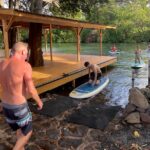
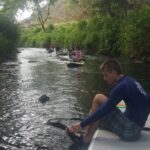
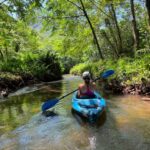
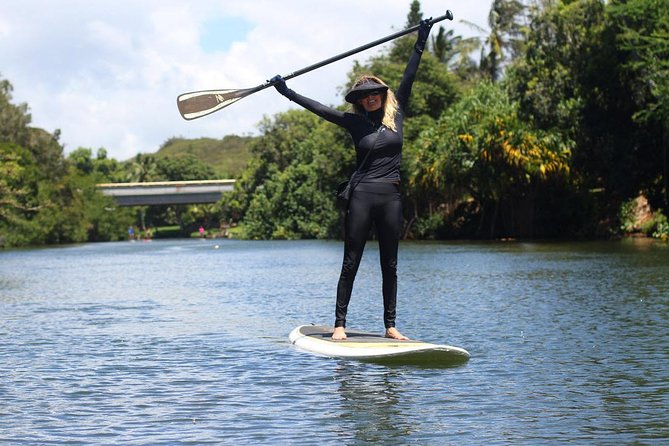
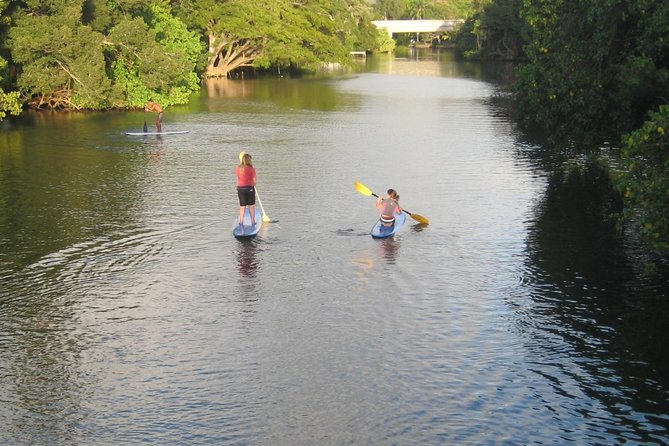
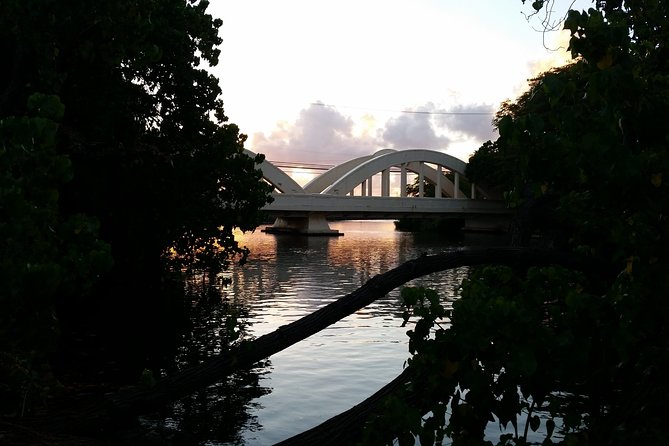
SUP on the North Shore has a reputation for fun-but-scary at first. This lesson changes the odds by starting you in calm, sheltered water. You launch near Haleiwa Harbor at the mouth of the Anahulu River, then head upstream. The mix of fresh and saltwater creates those brackish hues you associate with quieter, less-touristed corners of Hawaii—good news when you’re trying to balance instead of fighting waves.
The river’s current is so slight that it feels close to gliding. That matters because your brain needs to learn three things at once: where your board wants to go, how the paddle steers, and how your legs react when the board shifts. When the water cooperates, learning clicks faster.
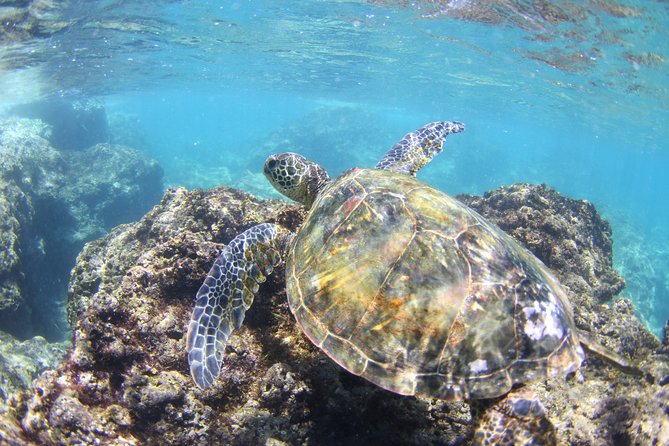
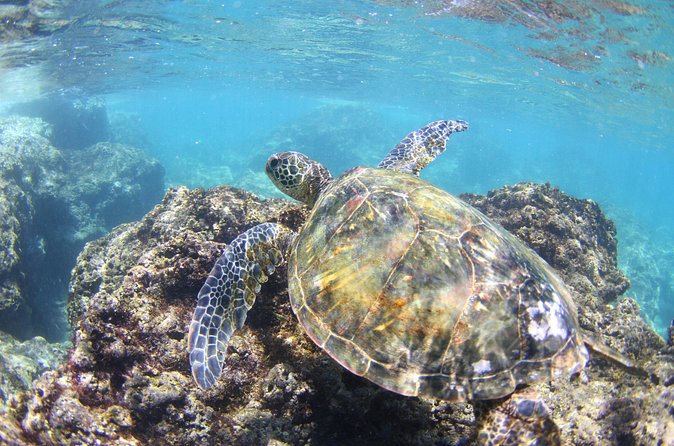
And yes, there’s wildlife to keep your eyes moving. Sea turtles are a frequent sighting here. Even if you’ve never spotted one before, the river environment gives you time to look without adrenaline taking over.
You can also read our reviews of more tours and experiences in Oahu.
Your 2-Hour Paddle Plan: Upstream, the Turn, and Waialua Bay Waves
This outing is built around a simple rhythm, with enough structure to learn and enough freedom to enjoy.
Stop-by-stop flow: what happens and why
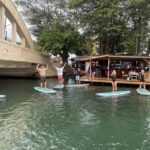
You start at the river mouth near Haleiwa Harbor. From there, you paddle upstream with the guide. The goal is to get you comfortable before you cover more distance, so you’re not learning balance while also trying to “win” the race to the turnaround point.
About 60 minutes in, you reach the river’s end zone, where it transitions into a more tranquil mountain stream feel. The water still stays gentle, but the scenery changes enough that it doesn’t feel like you’re doing the same paddle on repeat.
Then comes the best part: you turn around and follow the gentle current back. The trip down is where a lot of people relax, settle into a rhythm, and start enjoying the views instead of counting paddle strokes.
When you reach Waialua Bay, you cruise in calmer water with a small, optional bonus. If you want, you can try riding the small waves that usually break over a safe sand bar. This isn’t about surfing in full-on wave mode. It’s a controlled taste of movement and balance at the edge of the bay’s shoreline.
What makes this itinerary good for beginners
The upstream portion gives you practice. The turnaround makes it feel like progress, not like a long grind. And the bay stop gives you a payoff moment without turning the day into a test.
You’ll also likely notice you’re not constantly dodging chaos. There’s a big difference between a lesson that teaches you SUP and a tour that just happens to include a board. This one is built to teach and then reward.
Lesson Style in Action: Standing Up, Staying Safe, and Learning Fast
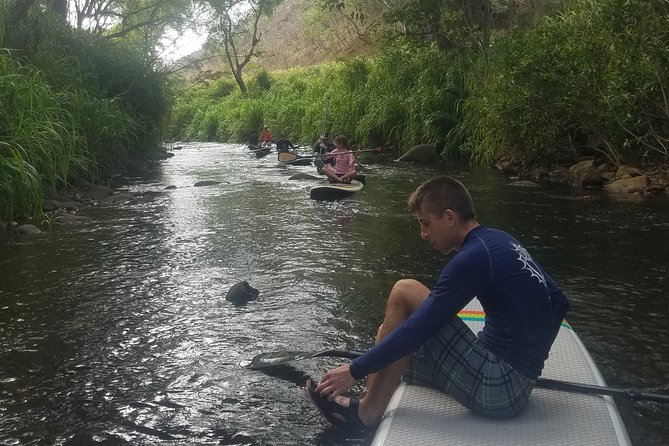
What you’re really buying here is instruction time, not just board time. This is where the small-group setup matters. The lessons are limited to small family and group sizes—typically two to four students per instructor, with a maximum group size of 10. That means you’re not stuck watching others while the instructor helps someone who’s already comfortable.

How beginners are taught to balance
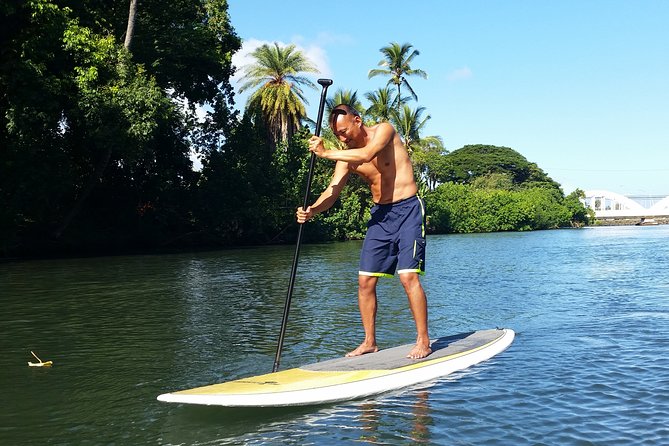
If you’re brand new, you’ll get step-by-step guidance. A common starting point is learning stability first on your knees, then moving toward standing. The pacing is slow enough that you can understand what to do before you’re asked to do it.
For example, Charlotte’s approach (based on real first-timer coaching) included a short period of practicing on your knees and then balancing at the center of the board. That’s exactly what you want early on: keep your upper body quiet, feel how the board responds, and then let your feet do the work.
Guides who bring good energy (and patience)
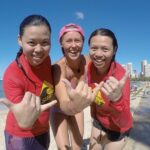
You might paddle with instructors including Aimee, Charlotte, Paige, or Carol. The thread across these names is consistent: clear directions, patient coaching, and an eye for safety. One instructor style that stood out was making sure everyone keeps up—especially when families include a mix of ages and experience levels.
If you want a relaxed lesson where nobody rushes you, this vibe usually fits well.
Photos and encouragement
Some instructors also help capture a few photos during the trip. If you like having memories without fuss, that’s a nice little extra.
Banzai Pipeline and North Shore Stops: Context Without the Rush
Even though the heart of the experience is the river and bay, the lesson route includes time around well-known North Shore landmarks. You’ll make stops associated with the Banzai Pipeline area and the North Shore itself, giving you a sense of where you are on Oahu beyond just the water.
These stops matter because they connect your paddle day to the island’s shoreline culture. The North Shore isn’t only about surfing—it’s about ocean rhythms, weather patterns, and the way the landscape shapes water movement. On your way to the calm water, it’s helpful to hear what makes this stretch of Oahu different.
Practical note: since you’re driving yourself, treat these stops as bonus orientation—not guaranteed sightseeing time like you’d get on a full day tour with lots of stops. The SUP lesson stays focused on paddling.
What’s Included, What to Bring, and What You’ll Pay For Separately
Included
You get the gear you need:
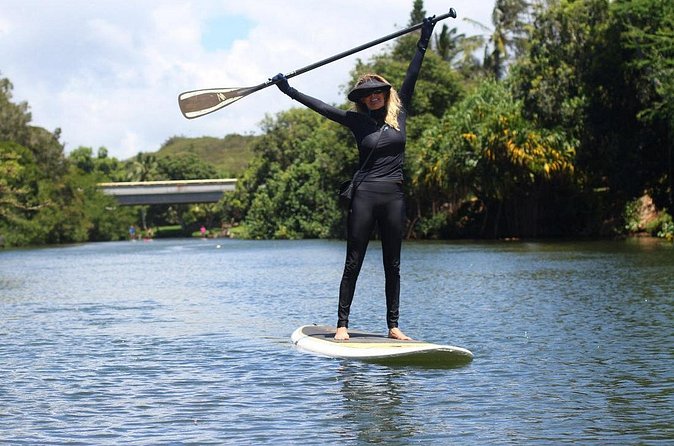
- Stand-up paddleboard
- Paddle
- Surf shirt
- An experienced SUP instructor
That’s a big value point. Renting SUP gear plus paying for instruction separately can quickly cost more than a single organized lesson.
Not included
You’ll handle:
- Food and drinks
- Hotel pickup and drop-off
So plan a light snack or a meal before you go. Bring water if you tend to get thirsty easily, even though food isn’t provided.
What to bring for comfort (and fewer sun regrets)
The day is outdoors, and you’ll be near the water’s edge for the full lesson. Bring:
- Sunglasses with a strap
- A hat or other sun protection
- A swimsuit or clothing that can get wet
A sun strap isn’t just convenient. It prevents that classic “drop-sunglasses-into-the-unknown” moment. And since you’ll likely be sweating a bit, quick-dry fabric is your friend.
Price and Value: Is $80.13 a Smart Spend?
At $80.13 per person for about 2 hours, the value is solid when you look at what’s included.
You’re getting:
- A board, paddle, and surf shirt
- A trained instructor guiding you step by step
- Small-group attention (often 2–4 students per instructor)
- A full experience that includes a long upstream section, a return, and optional bay wave time
If you tried to DIY this—renting gear, finding the right launch area, and figuring out how to stand safely—you’d burn time and probably still pay for instruction elsewhere. Here, the lesson is structured so you learn without needing prior knowledge.
This also explains why the highest praise repeatedly points to the coaching. When the instructor helps you stand, you leave feeling like you did something real, not just floated around.
Who This SUP Lesson Suits Best (and who should consider another day)
This is a strong fit if:
- You’re new to paddleboarding and want a gentle place to learn
- You want a calm, nature-centered outing without heavy surf conditions
- You’re traveling with family members who need patience and close guidance
- You like the idea of quiet wildlife viewing, especially sea turtles
It might be less ideal if:
- You expect a “big workout” only. You’ll get core and upper-body work, but the pace is designed for learning and safety first.
- You hate driving on your own. There’s no hotel pickup, and you’ll want time for parking.
A family mix often works well here, because the small-group format keeps the instructor responsive.
Tips for a Smooth Morning in Haleiwa
A little prep makes a big difference.
- Arrive early. Parking can be tricky in the area, and you don’t want to rush your pre-lesson briefing.
- Wear or bring sun protection you trust. Sunglasses with a strap and a hat are your simplest upgrades.
- Dress for getting wet. Even if you don’t fall, the ocean breeze and river water splash are part of the reality.
- Go with the mindset of learning. If you treat it like a race, you’ll fight the board. If you treat it like balance practice, it becomes fun fast.
- Watch for wildlife without staring too hard. The best turtle moments happen when you paddle calmly and let your eyes scan naturally.
Should You Book This North Shore SUP Lesson?
If you want a SUP experience that actually teaches you, this is one of the better options on the North Shore. The calm river setup makes it beginner-friendly without feeling boring, and the structure gives you both practice and a sense of adventure.
I’d book it if you’re traveling with kids (minimum age is 8 for the small-group lesson), want a relaxed morning with nature, and you’d enjoy the chance of seeing sea turtles while you paddle. Add in the included gear and instructor time, and the price starts to feel fair rather than “tour-costy.”
If you’re hoping for a nonstop thrill ride, you may feel the pace is too gentle. But if your goal is learning balance, paddling scenic water, and leaving proud you stood up, you’ll likely be happy you chose this river route.
FAQ
How long is the North Shore SUP lesson?
The lesson is about 2 hours.
What’s the meeting point?
You meet at 62-611 Kamehameha Hwy, Haleiwa, HI 96712, USA. The activity ends back at the same meeting point.
What do I get with the tour price?
The tour includes SUP equipment (stand-up paddleboard and paddle) plus a surf shirt, along with an experienced instructor.
Do I need to arrange my own transportation?
Yes. Hotel pickup and drop-off are not included, so you’ll need to get yourself to the meeting point.
Is there a minimum age?
Yes. The minimum age for the small-group lesson is 8 years old.
What should I do if weather is poor?
This experience requires good weather. If it’s canceled due to poor weather, you’ll be offered a different date or a full refund.