REVIEW · OAHU
Family, Private & Group Standup Paddle Lessons in Waikiki
Book on Viator →Operated by Ohana Surf Project · Bookable on Viator
Waikiki’s water looks friendly, but it still takes coaching. This 2-hour standup paddle-style lesson through Ohana Surf Project makes it practical for beginners, with a smooth shuttle ride, step-by-step instruction, and time in the lineup.
I especially like the included gear and training. You don’t waste vacation time figuring out rentals, and the lesson is paced so you can actually get up and try. Instructors like Jaden and Kai are specifically praised for being calm, encouraging, and ready to explain each step clearly.
One thing to keep in mind: even when you book semi-private, the ocean area can still include other groups at the same time. That means it’s not totally exclusive, even though you’ll get hands-on help in the water.
In This Review
- Key Points to Know Before You Go
- Getting to the Ohana Surf Center: The Waikiki Shuttle Routine
- Your 2-Hour Lesson Schedule: From Check-In to the Water and Back
- Learning the Basics on Waikiki: Standing, Paddling, and Riding Waves
- Gear, Fit, and Comfort: Rashguard, Reef Shoes, and Belongings Storage
- Semi-Private vs. Reality: How Instruction Feels With a Max of 8
- Instructor Style That Actually Helps: Names You’ll Hear a Lot
- Price and Value: What $118.84 Covers in Waikiki
- Photos and Videos: Buying Proof Without Guesswork
- Weather, Seasickness, and Swim Limits: Practical Pre-Trip Tips
- Should You Book This Waikiki Lesson? My Straight Answer
- FAQ
- How long is the lesson?
- Is transportation included from Waikiki hotels?
- What gear is included?
- Are photos and videos included?
- What if someone in our group can’t swim?
- What happens if the weather is bad?
Key Points to Know Before You Go
- Round-trip Waikiki transportation from select hotels, plus a check-in shuttle to the Ohana Surf Center area
- Up to 8 people max, which helps keep coaching focused without feeling chaotic
- All equipment included (rashguard, reef shoes, paddleboard, paddle), plus a safe place to store belongings
- Small-group instruction with photo/video capture so you can remember what you accomplished
- All levels welcome, and lessons are adjusted based on your comfort and skill
Getting to the Ohana Surf Center: The Waikiki Shuttle Routine
This experience is built around one simple idea: make it easy to get from your Waikiki hotel to the water without stress. Check-in happens at the Ohana Surf Center, which is at the Waikiki Beach Marriott area (you’re shuttled there after you arrive).
In the pickup window, you’ll get courtesy transportation from four standard spots in Waikiki, arriving 10–45 minutes before your lesson time. Those pickup points are the Ilikai Hotel, Romer Waikiki (Ambassador Hotel), Don Ho Lane Van Depot, and the Hyatt Regency. If you’re at certain hotels like Ala Moana, Hale Koa, Kahala, The Ritz-Carlton, or The Ka La’i Waikiki Beach, a closer pickup may be arranged with a notification call or email at least 24 hours ahead.
The shuttle itself is air-conditioned and easy to spot: a clean yellow bus or a white van with the company logo. That matters more than you’d think. Waikiki traffic and parking can eat up your morning. This setup protects your time so you can spend it learning rather than hunting down your meeting place.
There’s also a clear anchor point if you’re meeting directly: 2552 Kalākaua Ave, Honolulu, HI 96815. The activity ends back at the starting point, so you’re not stuck figuring out a return plan.
You can also read our reviews of more tours and experiences in Oahu.


Your 2-Hour Lesson Schedule: From Check-In to the Water and Back
The rhythm is straightforward. You’ll arrive for check-in, gear up, do a quick safety briefing, and then go to the beach. After your time in the water, you head back to the Surf Center to review photos and videos and shop if you want.
What I like about this flow is that it feels paced. You get the rules and setup before you’re out there paddling, not after you’re tired and already in the waves. And you’re not stuck in endless downtime. You’re typically in the water long enough to feel progress, especially because the team uses instructor support to keep you moving toward the next attempt.
Another practical detail: your lesson isn’t just a group lecture. You meet your instructor, talk about your experience and comfort level, and then you go in with a plan that fits you. Beginners get the basics first; more confident paddlers get coaching aimed at catching more waves and improving technique.
Learning the Basics on Waikiki: Standing, Paddling, and Riding Waves
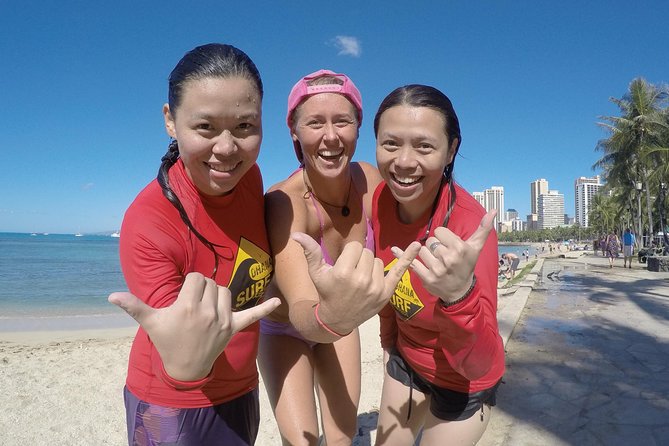
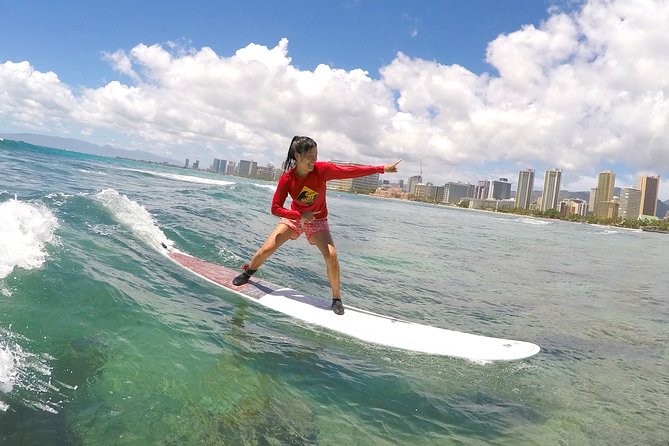
This is marketed around learning to surf/wave ride with board skills and coaching. The highlight that keeps showing up in people’s experience is how quickly you go from standing on the board to actually riding something. The lesson includes the basics plus guidance on how to use all the gear properly.
Since this activity includes a paddleboard and paddle, expect a strong focus on fundamentals like:
- getting your balance when you’re standing,
- learning how to paddle efficiently,
- understanding what to do when you’re waiting for the next wave,
- and then applying technique to ride toward shore.
A couple of recurring coaching themes show up in the instructor praise: patience, step-by-step explanation, and feedback right after you try. People often mention that instructors encourage you to catch as many waves as possible during the full session—so the goal is not just to stand once, but to build momentum through the 2 hours.
Even if you don’t swim well, you’re not automatically out of luck—just plan ahead. You’re asked to advise staff if anyone can’t swim, because a private lesson may be required if needed. And if you have medical conditions or injuries, tell them ahead of time so the plan can match your situation.
Gear, Fit, and Comfort: Rashguard, Reef Shoes, and Belongings Storage
One of the best values here is that everything needed for the water is included. You get:
- a rashguard (useful for comfort and sun protection),
- reef shoes (helpful for Waikiki’s shoreline surfaces),
- the paddleboard and paddle, and
- a safe place to store your belongings.
I find this kind of included kit especially important in Hawaii. Sand, sun, and getting your feet right can make or break the experience. Reef shoes also reduce the worry factor when you’re learning and moving around before you’re in the water.
They also tell you exactly how to come prepared: wear your bathing suit, bring a towel, and apply sunscreen ahead of time. That’s one of those small reminders that actually saves you on arrival—because when you show up ready, you spend more time learning.
Semi-Private vs. Reality: How Instruction Feels With a Max of 8
This activity has a maximum of 8 travelers. That cap is a big deal in Waikiki, where many water activities pack people together.
That said, there’s a nuance. Even in semi-private setups, the ocean area can include other participants in the water at the same time. So while you get hands-on support and guidance, you’re not getting a private, empty-beach experience.
Still, the overall teaching experience seems to land well for many people because multiple instructors support different groups, and you’re not left alone. Some people even mention scenarios where after the initial group instruction, an instructor per pair helps keep feedback coming. The best outcome is when you keep trying right away instead of hesitating between attempts.



Instructor Style That Actually Helps: Names You’ll Hear a Lot
Coaching quality is the make-or-break factor in first-time lessons, and the instructors here get consistently praised for being encouraging, fun, and clear.
Names that show up in people’s accounts include Mark, Markus, Kai, Jaden, Tyler, Miguel, Kevin, Damien, Chelsea, Keola, Romeo, and Marcus. The common thread is how they teach: not just telling you what to do, but helping you get unstuck and try again.
A detail I really appreciate is the described approach to pacing. If you get tired paddling, instructors help manage the next attempt so you don’t burn all your energy before you catch a wave. That’s especially helpful for beginners who underestimate how much leg and core strength it takes just to get into position.
Price and Value: What $118.84 Covers in Waikiki
At $118.84 per person for about 2 hours, this pricing isn’t trying to be the cheapest option. It’s paying for three big components that usually cost extra elsewhere:
- Professional instruction
- All necessary equipment (including rashguard and reef shoes)
- Transportation from select Waikiki locations
In Waikiki, transportation alone can be a hidden cost if you’re trying to book a lesson and then figure out parking or rideshare. Here, the shuttle is part of the package, and it’s timed to pick you up before your session.
One more value angle: you also get a built-in photo/video component. Those aren’t included in the price, but the lesson ends with you reviewing the day’s captures at the Surf Center. That means you’re not hoping someone took a few blurry pictures on your phone—you’re getting a pro record of your attempts.
So the value math is best if you want the full “show up and do it” experience: gear, coaching, shuttle, and the chance to buy photos/video if it feels worth it.
Photos and Videos: Buying Proof Without Guesswork
Photos and videos are not included, but they’re offered after the session. The process is simple: you return to the Surf Center, view your captures, and then decide what to purchase (and you can also browse merch).
If you’re trying to decide whether to buy anything, my advice is to wait until you see the results. First-time surfing or wave riding is chaotic in a good way—sometimes the money shots are better than you expect. When you’ve got a clear record of your attempts, it’s easier to judge whether the price matches what you’ll actually want later.
Weather, Seasickness, and Swim Limits: Practical Pre-Trip Tips
This lesson requires good weather. If it’s canceled due to poor conditions, you’ll either be offered a different date or a full refund. That’s not just good customer service; it also protects you from wasting a beach window when waves or wind aren’t right.
If you’re prone to seasickness, take it seriously before you go. The instructions recommend bringing a remedy you’re accustomed to using and checking with your doctor for advice. Waikiki water can be calm one minute and change quickly, and learning to balance on a board adds motion to the equation.
Swim ability also matters. You should tell staff ahead of time if anyone cannot swim, because you might be required to shift to a private lesson. And if you have injuries or medical conditions, disclose them early so the team can plan safely.
Language support is there, but with one caution: materials are available in Spanish, Japanese, Korean, and Chinese, and the team does their best to accommodate. They can’t guarantee a speaking-instructor in those languages without enough advance notice.
Should You Book This Waikiki Lesson? My Straight Answer
Book it if you want an efficient Waikiki activity that’s built around real coaching, not just renting a board and hoping for the best. The biggest reasons to say yes are the included instruction + gear + shuttle, and the frequent praise for instructors who stay patient and keep you trying during the full 2 hours.
Skip or consider a different format if you’re chasing a totally private, no-other-people-in-the-water vibe. Semi-private here still means the ocean can feel shared. Also, if you’re highly prone to seasickness, plan ahead—this isn’t “sit still on a tour boat” calm.
Overall, if your goal is to leave Waikiki with the feeling that you learned something real—balance, paddling, and wave riding—this is a strong bet.
FAQ
How long is the lesson?
It runs for about 2 hours.
Is transportation included from Waikiki hotels?
Yes. You can get courtesy pickup from select Waikiki locations, typically 10–45 minutes before your lesson time. The start is also tied to a meeting point at 2552 Kalākaua Ave.
What gear is included?
All necessary equipment is included: rashguard, reef shoes, paddleboard, and paddle, plus gear guidance and storage for your belongings.
Are photos and videos included?
No. Photos and videos are available for purchase after the lesson.
What if someone in our group can’t swim?
Tell the staff ahead of time. If a participant cannot swim, a private lesson may be required depending on the situation.
What happens if the weather is bad?
The activity requires good weather. If it’s canceled due to poor weather, you’ll be offered another date or a full refund.